Otter Symbolism: Spirit Animal Meaning and Omens Explained
Seeing an otter is traditionally read as a sign to lighten up, trust your curiosity and stop treating play as wasted time. Across Celtic, Native American and East Asian traditions the otter is the animal that works hard underwater and surfaces grinning, and its symbolism follows that split between effort and joy.
The otter also carries older, more serious weight. Irish and Scottish legend treats it as a guide and a guardian of water, and several Native American nations place it among the most powerful medicine animals. What an otter sighting means depends on which tradition you are reading from and where the encounter happened.
Otter symbolism centers on joy, play, curiosity and feminine water energy, with a strong secondary theme of loyalty and family. Seeing an otter is a good omen in nearly every tradition: Celtic lore treats it as a helper and guide, Native American traditions as powerful medicine, and modern spirit animal readings as a call to balance work with genuine rest.
| Situation | Common meaning | Tone |
|---|---|---|
| Otter crossing your path | Permission to take a lighter route | Positive |
| Otter seen while on water | Protection during a transition | Positive |
| Otter playing or sliding | A reminder that rest restores capability | Positive |
| Otter with young | Family bonds and shared responsibility | Positive |
| Dead otter found | Joy suppressed too long, water out of balance | Cautionary |
| Otter in a dream | Emotions moving freely, or longing for play | Depends on context |
What Is the Spiritual Meaning of Seeing an Otter?
The spiritual meaning of seeing an otter is a prompt toward lightness and trust. Because otters live between land and water, traditions that classify animals by element read them as creatures of the emotional realm who stay playful in it rather than being overwhelmed.
The second reading is curiosity rewarded. River otters (Lontra canadensis) investigate everything in their range, and folk symbolism takes that as encouragement to look into the thing you have been circling. Is it rare to see an otter? In most US states, yes, which is part of why sightings are treated as significant at all.
Otter Symbolism Across Traditions
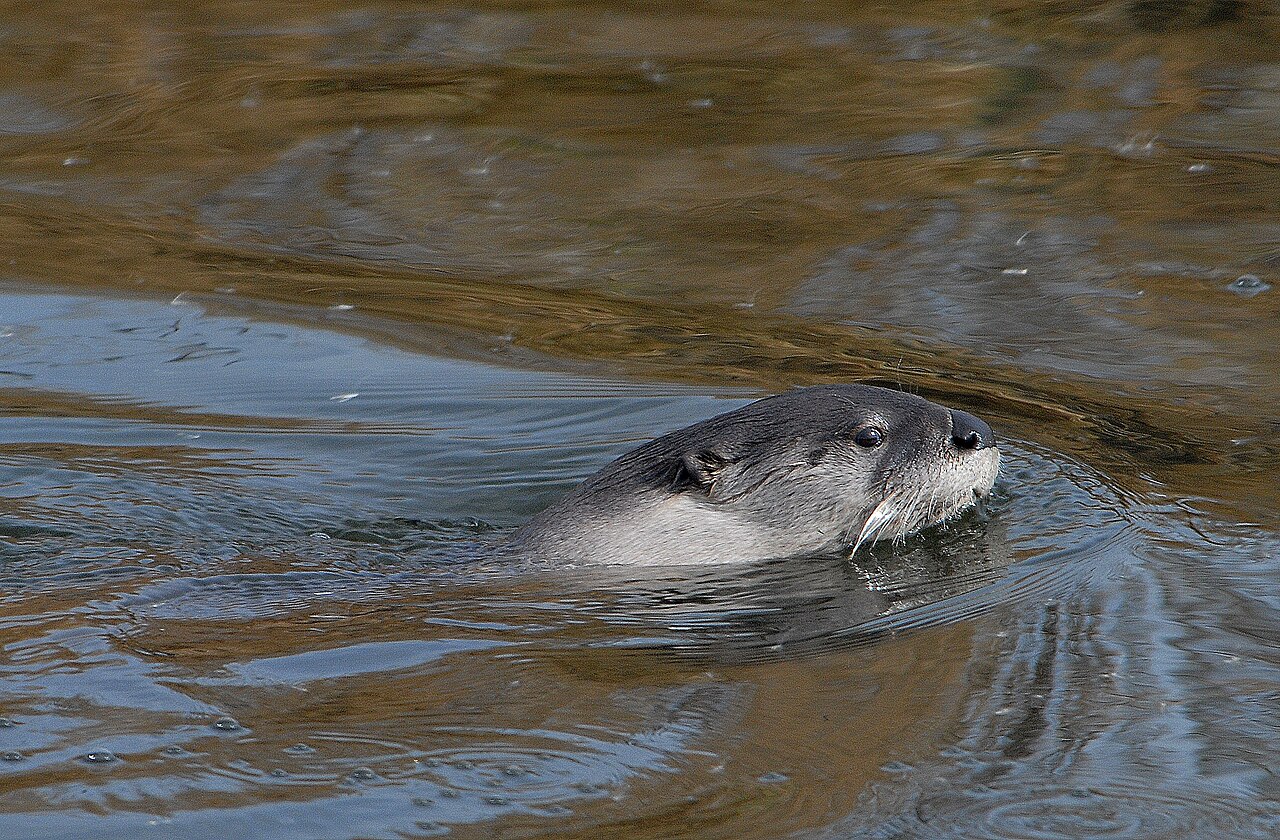
The otter is one of the few animals where the major traditions mostly agree, though they emphasize different qualities.
Celtic and Irish folklore. In Celtic tradition the otter is called the water dog and appears as a helper. Irish legend has otters guarding the body of Saint Cuthbert and warming his feet after prayer in the cold sea, and Scottish stories feature a king otter whose pelt grants protection. The otter here is a guide across water, which in Celtic symbolism means across the boundary between worlds.
Native American meanings. Otter symbolism in Native American traditions is strongly positive. Among several Plains and Great Lakes nations the otter is central to medicine society bundles and is associated with healing, and Chippewa tradition places the otter as a teacher figure who brought sacred knowledge. Some Northwest Coast traditions take a more cautious view of the sea otter, reading it as a shape shifter.
Christian and biblical readings. Otters do not appear in scripture, so Christian symbolism comes from the Cuthbert story and later monastic writing. There the otter reads as humble service and as creation attending to the faithful, a gentler emblem than the wolf or the raven.
East Asian associations. Japanese folklore is the outlier. The kawauso is a trickster and a shape shifter that deceives travelers near water, placing it closer to the fox in function. Chinese tradition is milder, linking otters to skill in fishing and to abundance from rivers.
Otter as Spirit Animal and Totem

People with the otter as a spirit animal are described as sociable, curious, hard to discourage and allergic to unnecessary seriousness. The otter spirit animal is traditionally called on when work has crowded out everything else, or when grief has made play feel inaccessible.
As a totem the otter governs family and shared effort. Sea otters raft together and hold hands while sleeping, a behavior that has driven much of the modern symbolism, while river otters raise young cooperatively. Otter personality traits in humans are usually listed as playful, adaptable, loyal and easily bored.
Spiritual Meaning of an Otter Crossing Your Path
An otter crossing your path is read as permission rather than warning. Where a fox crossing suggests cunning and a coyote crossing suggests disruption, the otter suggests the easier route is also the correct one, and that you have been making something harder than it needs to be.
If the otter stops and watches you, which they often do, the traditional reading is an invitation to engage with something you have been observing from the bank. Encounters on water are read as protection during change, in the same way crane symbolism attaches to journeys and dragonfly symbolism attaches to the surface of still water.
Finding a Dead Otter: Meaning and Context
A dead otter is read as joy that has been suppressed too long, or as an imbalance in the emotional water of a situation. It is one of the heavier animal omens precisely because the living animal stands for lightness.
There is a literal layer worth keeping. Otters are indicator species, and dead otters often signal contaminated or depleted water. The US Fish and Wildlife Service tracks sea otter populations for exactly this reason. The symbolic warning and the ecological one point the same direction, much as dead bird symbolism does.
Otter Spiritual Meaning in Love and Relationships
In relationship readings the otter stands for partnership that stays playful, and it is one of the few animals whose symbolism is explicitly about loyalty without heaviness. Sea otters wrapping themselves in kelp and holding paws so they do not drift apart while sleeping has become the dominant modern image, and most love readings trace back to it.
Traditional versions are less sentimental. Celtic lore pairs the otter with faithfulness that survives separation, since the animal moves between water and land and always returns. An otter appearing during a difficult stretch in a relationship is read as a prompt to rebuild through shared play rather than through more serious conversation, and an otter tattoo is usually chosen for that same meaning of joyful loyalty.
Dreaming About Otters
Otters in dreams usually involve emotion in motion. An otter swimming freely points to feelings moving as they should, an otter trapped or stranded points to play or affection that has nowhere to go, and an otter leading you somewhere is read as guidance toward something you already want.
Playing with an otter in a dream is commonly read as reconnection, often with a person or a version of yourself that got set aside. As with all dream symbolism, context beats any fixed list, and the feeling the dream left you with carries more weight than the imagery. The same approach applies across bird symbolism and squirrel symbolism, where the situation shapes the reading far more than the species.
Frequently Asked Questions
Is an otter a good omen?
In nearly every tradition, yes. Celtic, Native American and Chinese readings all treat otter sightings as favorable, pointing to joy, healing or abundance. The main exception is Japanese folklore, where the kawauso is a trickster that misleads travelers, and some Northwest Coast traditions that treat sea otters warily.
What animal is mistaken for an otter?
Muskrats, beavers, mink and nutria are the usual confusions. Muskrats are much smaller with a thin, laterally flattened tail, beavers have a broad paddle tail and swim with the head high, and mink are slimmer with a bushy tail. River otters are 3 to 4 ft long including the tail and move in a distinctive rolling dive.
What is an otter’s favorite food?
River otters eat mostly fish, favoring slow species like suckers and catfish, plus crayfish, frogs and the occasional bird. Sea otters specialize in sea urchins, clams, crabs and abalone, cracking shells with stones. Both eat roughly a quarter of their body weight daily to fuel a very high metabolism.
Why are otters considered special?
Otters use tools, play without obvious purpose, and sea otters are a keystone species whose urchin hunting keeps kelp forests alive. That combination of visible personality and outsized ecological role is unusual, and it explains why both folklore and conservation give them far more attention than their numbers alone would justify.
What is a group of otters called?
A group on land is a romp, a group in water is a raft, and either can be called a bevy or a family. Raft is used most often for sea otters, where groups of dozens to hundreds float together, while river otters typically travel as a mother with her pups.