Roadrunner Symbolism: What It Means to See One, Omens and Spirit Animal
Seeing a roadrunner is traditionally read as a sign that you are being told to move, and to move now. Across the desert Southwest the bird carries a reputation for speed, sure footing and protection on a journey, and in several Native American traditions its tracks are treated as a shield against anything that would follow you.
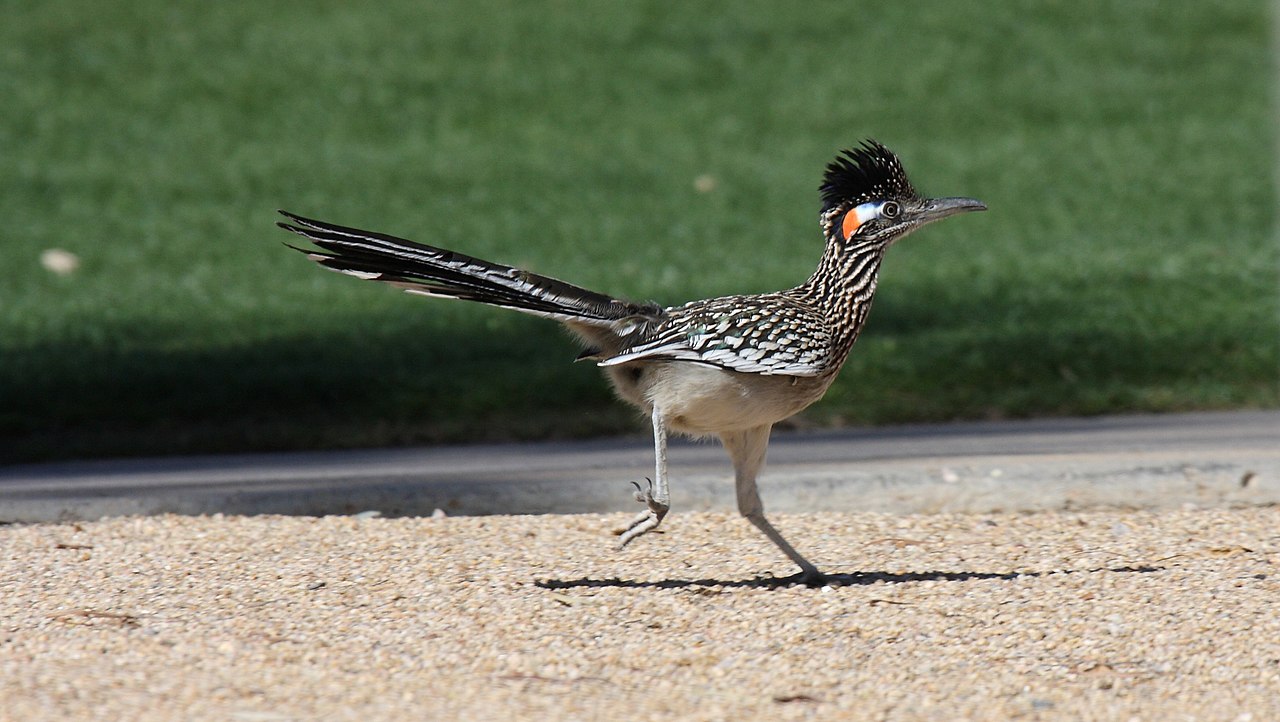
The symbolism sits on top of a genuinely strange animal: a ground dwelling cuckoo that kills rattlesnakes, runs at twenty miles an hour and leaves a four toed X shaped print with no front or back. Those three facts drive almost every meaning attached to it.
In most traditions a roadrunner is a good omen. It is read as a messenger of speed, adaptability and protection, and in Hopi and Pueblo belief its X shaped tracks are said to confuse evil spirits and guard travelers. Seeing one is commonly taken as a sign to act quickly on a decision you have been delaying.
| Where you saw it | Common interpretation |
|---|---|
| Crossing your path | A decision needs speed, not more thought |
| In your yard or garden | Protection of the home, pests being cleared out |
| At your window | A message arriving, often about a move or a trip |
| Calling at night | A warning to stay alert, read as unusual rather than bad |
| Repeatedly, over days | A pattern you keep avoiding is being pointed at |
| Found dead | The end of a phase of running, time to settle |
| In a dream | Energy you are not using, or a path you already know |
What Does It Mean to See a Roadrunner?
The nearly universal reading is forward motion. A roadrunner rarely flies and almost never stands still, so folk interpretation treats it as the opposite of a bird that watches from a branch: it commits to the ground and covers it. People who report a sighting at a crossroads come away with the same message, that hesitating is the actual risk.
The second layer is resourcefulness. This is a bird that eats scorpions, lizards and venomous snakes, survives on almost no standing water and nests in cholla cactus, which reads symbolically as making a hostile situation work for you instead of waiting for better conditions. In the broader patterns of bird symbolism, ground dwelling habits consistently mean practical rather than spiritual power.
Roadrunner Symbolism in Native American Traditions

In Hopi and Pueblo belief the roadrunner is a protective bird, and the protection is tied specifically to its footprint. Because the two forward and two backward toes leave a mark with no obvious direction of travel, the track is said to mislead anything following a person, and in Hopi tradition the X shaped print has been drawn around a home or a grave to keep harmful spirits from finding their way in. Roadrunner feathers have been placed with infants in some Pueblo communities as a ward.
Other nations read it differently. In some Pima and Papago stories the bird is a medicine figure and a creature of endurance, credited with carrying messages across distances no one else could manage, and in parts of Mexico the paisano is a bird of luck and a protector of the household. These are distinct traditions, and collapsing them into a single “Native American meaning” misrepresents all of them.
Christian and Biblical Meaning of the Roadrunner

The roadrunner does not appear in the Bible, since it is a New World bird, so any biblical reading is applied rather than scriptural. Where Christian symbolism is used, it usually borrows the snake killing habit: a bird that attacks and eats rattlesnakes maps readily onto the serpent as a figure of temptation, and the sighting gets read as victory over something that was hunting you.
The second common Christian reading draws on the desert as the place of testing, so the bird becomes a sign of provision in a hard season and the message is endurance rather than rescue. This is interpretation, not doctrine.
Celtic and East Asian Parallels
There is no Celtic roadrunner symbolism, because the bird never occurred outside North America and northern Mexico. Celtic tradition offers analogues instead: the crane and heron as birds of vigilance, the wren as a small bird of outsized cunning. Writers who claim a Celtic meaning are transferring one of these.
The one genuine parallel runs through the cuckoo family. In Chinese and Japanese poetry the cuckoo is a bird of seasonal change and urgent messages, often delivered at an inconvenient hour, which fits the sign most people take from a roadrunner. The connection is real rather than borrowed: the roadrunner is a cuckoo, and the range of cuckoo sounds and what they mean includes the slow dove-like coo it gives.
Roadrunner Spirit Animal, Totem and Power Animal
In contemporary spirit animal practice, people with the roadrunner as a guide are described as fast movers who make decisions on the ground and in motion, poor at long deliberation and good in emergencies. The stated lesson is usually about pacing: the bird can sprint but cannot sustain flight, so the reading warns against treating every situation as a sprint.
As a totem the emphasis shifts to protection of a family or a place, following the Hopi footprint tradition, and as a power animal it is called on for courage against something venomous, literal or human. The distinction between the three terms is modern rather than traditional. The slow, deliberate meanings behind bison symbolism are often described as the roadrunner’s opposite.
When a Roadrunner Crosses Your Path or Appears in Your Yard
A roadrunner crossing in front of you is the most reported sighting, and the traditional reading is that the crossing itself is the message: a line is drawn, and the decision you carry belongs on the other side of it. Southwestern folk belief treats direction as meaningful too, with a bird moving left to right read as a go ahead and right to left as a caution to check your footing.
In the yard the meaning turns domestic. Because the bird clears scorpions, centipedes and snakes, its presence is taken as the home being cleaned out, and one that returns daily counts as a resident guardian rather than a visitor. At the window the reading is news in transit, usually about a move. Found dead, it marks the end of a period of running, the one situation most traditions treat as a prompt to rest rather than a bad omen. Similar readings attach to altitude instead of speed in blackbird symbolism and the spiritual meaning of the bald eagle, while a yard sighting paired with sudden good news is the setup described in american goldfinch symbolism. For the natural history behind the sightings, the National Park Service keeps species accounts for the Southwestern parks where roadrunners are common.
Frequently Asked Questions
Are roadrunners a good omen?
Yes, in nearly every tradition that mentions them. Hopi and Pueblo belief treats the bird and its X shaped tracks as protective, Mexican folk tradition calls the paisano a bringer of luck, and modern readings emphasize speed and resourcefulness. Negative interpretations are rare and usually attach to finding one dead.
What does it mean when a roadrunner crosses your path?
It is read as a signal to act on a decision rather than keep weighing it. Some Southwestern accounts add direction: left to right as encouragement, right to left as a caution. The underlying idea is that the bird marks a boundary you are meant to step across.
Is a roadrunner a good luck charm?
The footprint is used that way more often than the bird. The four toed X print has been drawn on and near homes in Hopi tradition to mislead harmful spirits, and roadrunner feathers have served as protective tokens in some Pueblo communities. The bird itself is protected by law and should never be collected.
What does a roadrunner tattoo symbolize?
Most people choose it for speed, independence and desert identity, and it is a common design in New Mexico, where the Greater Roadrunner is the state bird. Those who know the Hopi tradition often pick the track instead, for its protective meaning.
What does it mean to see a roadrunner in a dream?
Dream readings usually point to unused energy or a route you already know but have not taken. A roadrunner standing still in a dream is commonly interpreted as capability going to waste, while one running ahead of you is read as a path being shown rather than a chase.