Types of Swallows: A Complete Guide
North America is home to several types of swallows, most familiarly the barn swallow, tree swallow, and purple martin, along with cliff swallows, bank swallows, and others. These graceful aerial acrobats are known for catching insects on the wing, their long-distance migrations, and their varied nesting habits. This guide covers how many types of swallows there are, common species you can see, how to tell them apart, where they live, and how to attract swallows to your yard.
| Swallow | Key Features |
|---|---|
| Barn Swallow | Deep forked tail, orange below |
| Tree Swallow | Iridescent blue-green, white below |
| Cliff Swallow | Square tail, pale forehead |
| Purple Martin | Largest, dark, colonial |
| Bank Swallow | Small, brown breast band |
| N. Rough-winged Swallow | Brown, dusky throat |
| Violet-green Swallow | Green and violet, western |
| Cave Swallow | Pale throat, southern |
How Many Types of Swallows Are There?
There are several species of swallows in North America, part of a family of small, aerial insect-eating birds. The most familiar are the barn swallow, the tree swallow, and the purple martin, but the group also includes the cliff swallow, the bank swallow, the northern rough-winged swallow, the western violet-green swallow, and the cave swallow. Swallows are sleek, streamlined birds with long, pointed wings and often forked tails, superbly adapted for catching flying insects in the air, which they do with remarkable agility and grace. Many are strong, long-distance migrants that travel great distances between breeding and wintering grounds. Swallows vary in their nesting habits, with some building mud nests on structures, others nesting in tree cavities or nest boxes, and still others digging burrows in banks. This combination of aerial skill, migration, and varied nesting makes swallows a fascinating group, as covered in our guide to the eastern bluebird, another cavity nester.
Common Types of Swallows
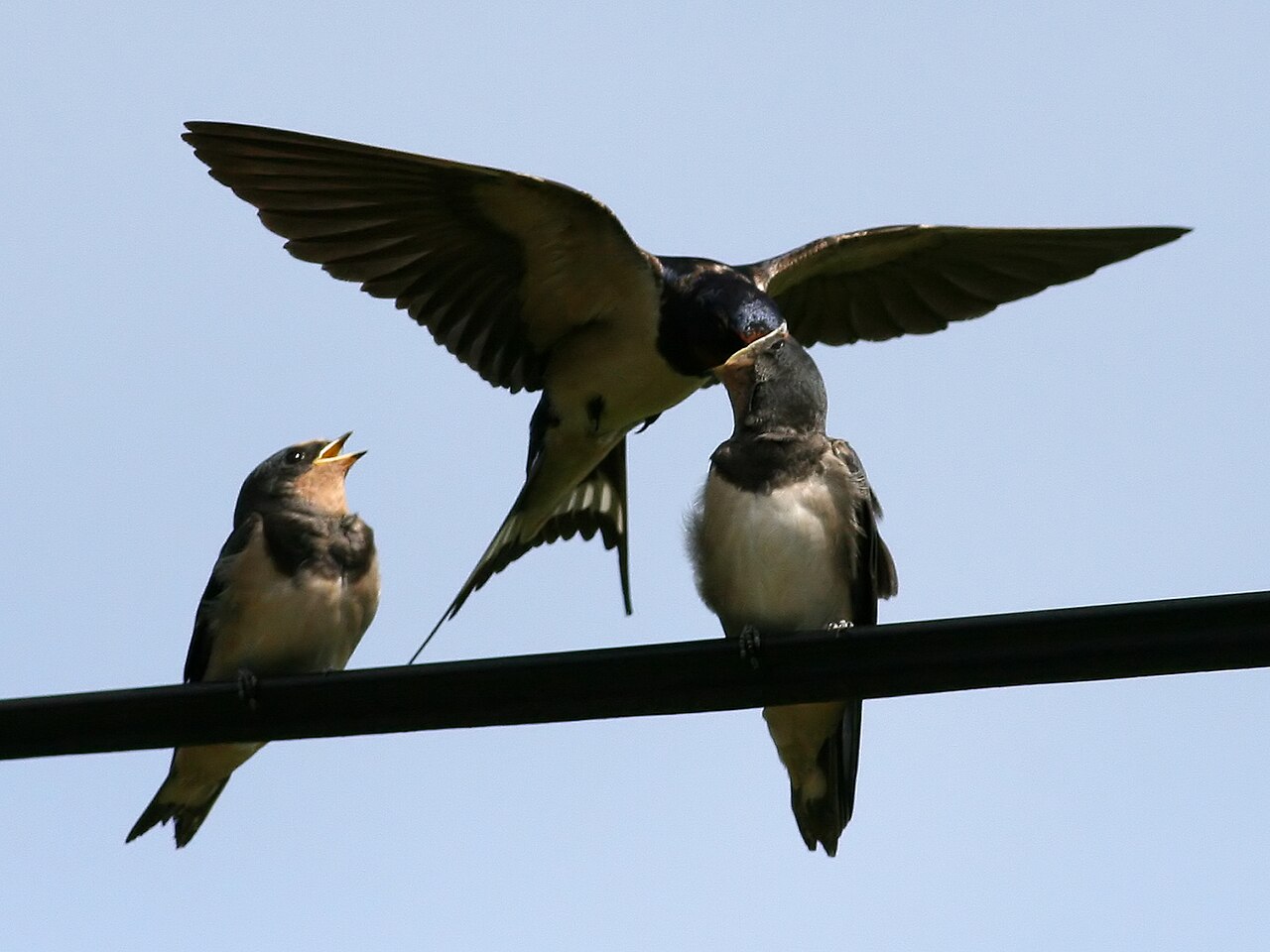
Several types of swallows are especially common and worth knowing. The barn swallow is perhaps the most familiar, a graceful swallow with glossy blue upperparts, orange underparts, and a deeply forked tail, often nesting in barns and under bridges. The tree swallow is iridescent blue-green above and clean white below, and it nests in tree cavities and nest boxes, readily using boxes meant for bluebirds. The purple martin is the largest North American swallow, the male a dark glossy blue-purple, and in the East it nests almost entirely in human-provided martin houses in colonies. The cliff swallow has a squarish tail and pale forehead and builds gourd-shaped mud nests in colonies under bridges and eaves. The bank swallow is a small brown swallow with a breast band that nests in burrows in banks, and the northern rough-winged swallow is a plain brown swallow. Each has its own look and nesting style, but all share the swallows’ aerial grace.
How to Tell Swallows Apart
Telling swallows apart is easier when you use color, tail shape, and behavior. Start with the underparts and overall color, since the barn swallow has orange underparts, the tree swallow is clean white below with blue-green upperparts, and the brown swallows like the bank and rough-winged are dull brown. Note the tail, as the barn swallow has a deeply forked tail, while the cliff swallow has a squarish tail and a pale forehead. Size helps, since the purple martin is notably large and dark. Look for specific marks, such as the bank swallow’s brown breast band or the cliff swallow’s pale forehead and rump. Nesting behavior and habitat are also useful, since some nest in mud structures, others in boxes or burrows. Because swallows are often seen flying fast, watching their color, tail shape, and flight style, and noting where they nest, allows you to identify most species, a rewarding skill for a graceful group, as explored in our guide to bird symbolism.
Where Swallows Live
Swallows live in open habitats across North America, generally where flying insects are abundant. They favor open country such as fields, meadows, farmland, marshes, lakeshores, and areas near water, where they hawk for insects over open ground and water. Their nesting sites vary by species: barn and cliff swallows nest on structures like barns, bridges, and buildings, tree swallows and violet-green swallows use tree cavities and nest boxes, purple martins use martin houses, and bank swallows and rough-winged swallows nest in burrows in earthen banks. Most swallows are present in the warmer months, arriving in spring to breed and gathering in large flocks before departing in late summer and fall to migrate south, some traveling all the way to South America. During migration, huge numbers may be seen. This reliance on open, insect-rich habitats and varied nest sites means swallows are widespread but tied to suitable conditions, as detailed in our guide to plants that attract birds.
How to Attract Swallows
Attracting swallows to your yard is very rewarding, especially if you can provide the right nesting sites. For cavity-nesting swallows like the tree swallow, putting up nest boxes, including bluebird-style boxes placed in open areas, can attract nesting pairs, and offering a martin house in suitable open habitat may draw a colony of purple martins, which in the East depend on such houses. Keeping your yard and its surroundings open and insect-friendly helps, since swallows feed on flying insects, so avoiding pesticides and maintaining natural areas supports their food supply. A nearby water source is also attractive. Some people provide mud during the nesting season for species that build mud nests, and leaving suitable eaves or structures can invite barn swallows. By offering nest boxes or martin houses, keeping open insect-rich space, and providing water, you can enjoy the aerial grace of swallows and help these beneficial, insect-eating birds thrive around your home.
Swallows as Aerial Insect Hunters
The defining feature of swallows is their extraordinary skill at catching insects in flight, which shapes everything about them. According to the Cornell Lab of Ornithology, swallows are aerial insectivores that catch flying insects on the wing, and species like the tree swallow readily use nest boxes while purple martins in the East depend almost entirely on human-provided housing. Their long, pointed wings and streamlined bodies make them agile, graceful fliers, able to twist and turn to snatch insects from the air over fields and water. This aerial diet means swallows are beneficial birds that consume large numbers of flying insects. Their close relationship with people is notable, since several species nest on human structures or in provided boxes and houses, making them relatively easy to attract and help. Understanding their aerial hunting and nesting habits deepens appreciation for swallows, graceful birds that, like the cavity-nesting eastern bluebird, benefit from nest boxes.
Swallows, Migration, and People
Swallows have a long and close association with people, tied to both their nesting habits and their famous migrations. Many swallows nest on or in human structures, with barn swallows building mud nests in barns and under bridges, cliff swallows plastering colonies of mud nests under eaves, and purple martins in the East nesting almost entirely in martin houses put up for them, a tradition going back centuries. This closeness makes swallows familiar and beloved. Swallows are also celebrated migrants, and their spring arrival and fall departure in large, gathering flocks have long been seen as markers of the changing seasons. Some swallows travel enormous distances, migrating all the way to South America and back. This blend of a close relationship with people and impressive long-distance travel gives swallows a special place in the human imagination, and providing housing and open habitat helps them thrive, as detailed in our guide to supporting backyard birds.
Frequently Asked Questions
How many types of swallows are there?
North America has several swallow species, including the barn swallow, tree swallow, purple martin, cliff swallow, bank swallow, rough-winged swallow, and violet-green swallow.
What is the most common swallow?
The barn swallow is one of the most familiar swallows, recognized by its glossy blue upperparts, orange underparts, and deeply forked tail, often nesting on structures.
What is the difference between a barn swallow and a tree swallow?
The barn swallow has orange underparts and a deeply forked tail, while the tree swallow is clean white below with iridescent blue-green upperparts and a shorter tail.
What is the largest swallow?
The purple martin is the largest North American swallow. The male is a dark glossy blue-purple, and in the East, martins nest almost entirely in human-provided houses.
Do swallows use nest boxes?
Yes, tree swallows readily use nest boxes, including bluebird-style boxes, and purple martins use martin houses. Other swallows nest in mud structures or burrows.
How do you attract swallows?
Put up nest boxes or martin houses, keep open insect-rich areas by avoiding pesticides, and provide a water source. Some swallows also use mud for their nests.
Where do swallows live?
Swallows live in open country such as fields, farmland, and areas near water across North America in the warmer months, then migrate south, some as far as South America.