Broad-Winged Hawk: Migration Specialist
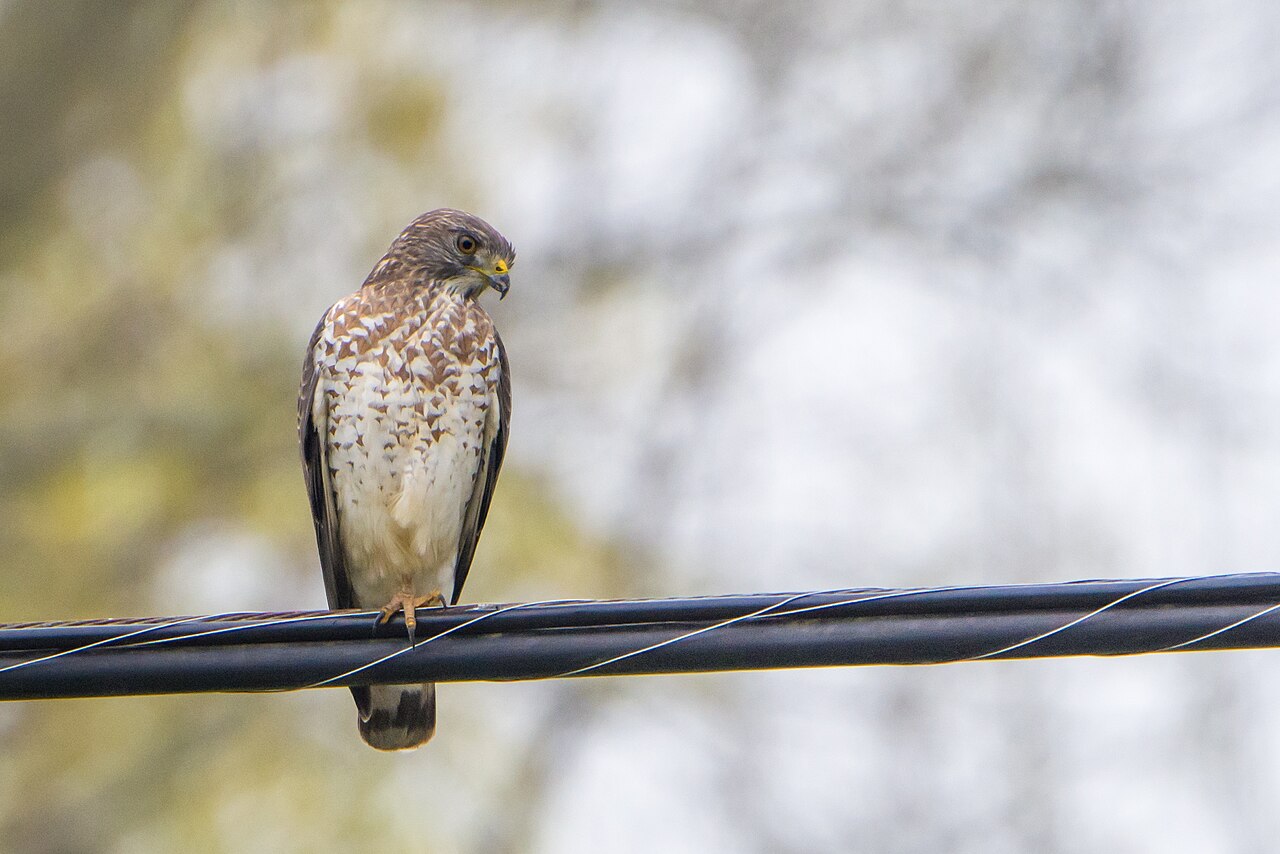
A Broad-Winged Hawk is a small, compact buteo identified by its stocky build, broad wings with a dark border along the trailing edge, a short tail with wide black and white bands, and rust-colored barring across the chest in adults. It is best known for its dramatic fall migration, when tens of thousands of individuals ride rising columns of warm air called thermals in swirling flocks known as kettles on their way to wintering grounds in Central and South America.
| Fact | Detail |
| Length | 13.4 to 17.3 inches |
| Wingspan | 31.9 to 39.4 inches |
| Weight | 9.3 to 19.8 ounces |
| Key field mark | Wide black and white tail bands |
| Habitat | Deciduous and mixed forest |
| Migration | Long-distance, travels in large kettles |
| Wintering grounds | Mexico, Central America, northern South America |
How to Identify a Broad-Winged Hawk
A Broad-Winged Hawk is noticeably smaller and more compact than a Red-Tailed Hawk, with pointed wingtips and a short tail crossed by two or three broad black and white bands, a pattern visible even at considerable height during migration. Adults show rust-red barring across the chest and a dark brown back, while in flight the wings show a distinctive dark border along the trailing edge that contrasts with a paler flight-feather interior. Juveniles are streaked below rather than barred and lack the crisp tail banding of an adult until their second year.
The Famous Fall Migration
Broad-Winged Hawks are one of the most concentrated migrants in North America, funneling along mountain ridges and coastlines each September in enormous numbers as they travel from breeding grounds across the eastern United States and Canada to wintering areas in Mexico, Central America, and northern South America. Rather than flapping continuously, migrating birds ride rising thermal columns in tight, swirling groups called kettles, gaining altitude with minimal effort before gliding toward the next thermal, a strategy that conserves enormous amounts of energy over a journey that can cover thousands of miles.
Where to Watch Broad-Winged Hawk Migration
Established hawk-watch sites along the Appalachian ridgelines, the Great Lakes shorelines, and the Gulf Coast are the most reliable places to witness large kettles, with some sites regularly counting tens of thousands of Broad-Winged Hawks passing overhead in a single peak day in mid-September. Because the species migrates in such a narrow window compared to many other raptors, timing a visit to a known hawk-watch site during the second and third weeks of September offers the best chance of witnessing the spectacle firsthand.
Diet and Breeding Habitat
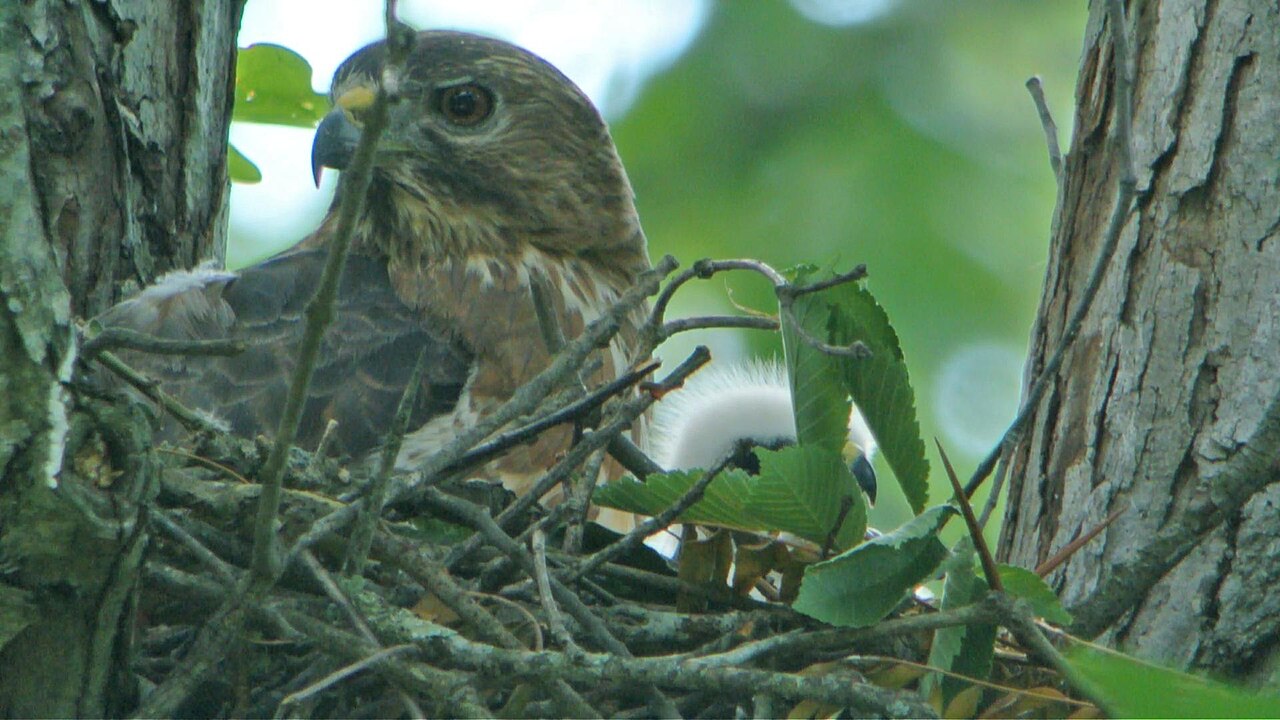
During the breeding season, Broad-Winged Hawks hunt from a perch inside dense deciduous or mixed forest, taking small mammals, amphibians, reptiles, and large insects, a diet that reflects the moist, forested habitat the species depends on for nesting. Unlike open-country hawks, Broad-Winged Hawks are rarely seen perched along roadsides or in open fields during the breeding season, staying instead within continuous forest canopy where they are often detected by their thin, whistled call before they are ever seen.
Conservation Status
According to the Cornell Lab of Ornithology, Broad-Winged Hawk populations are considered stable, though the species depends on large tracts of continuous forest for breeding, making habitat fragmentation a more significant long-term concern than it is for adaptable, open-country hawks like the Red-Tailed Hawk. Its concentrated migratory routes also make it a useful indicator species for hawk-watch monitoring programs tracking raptor population trends across an entire continent.
Range and Habitat
Broad-Winged Hawks breed across the eastern United States and southern Canada in mature deciduous and mixed forest, then migrate almost entirely out of the country each winter, unlike more sedentary species such as the Red-Shouldered Hawk. This near-total migration means the species is essentially absent from its breeding range during the winter months, a stark contrast to hawks that simply shift territory slightly or remain resident year round.
Broad-Winged Hawk vs Red-Shouldered Hawk
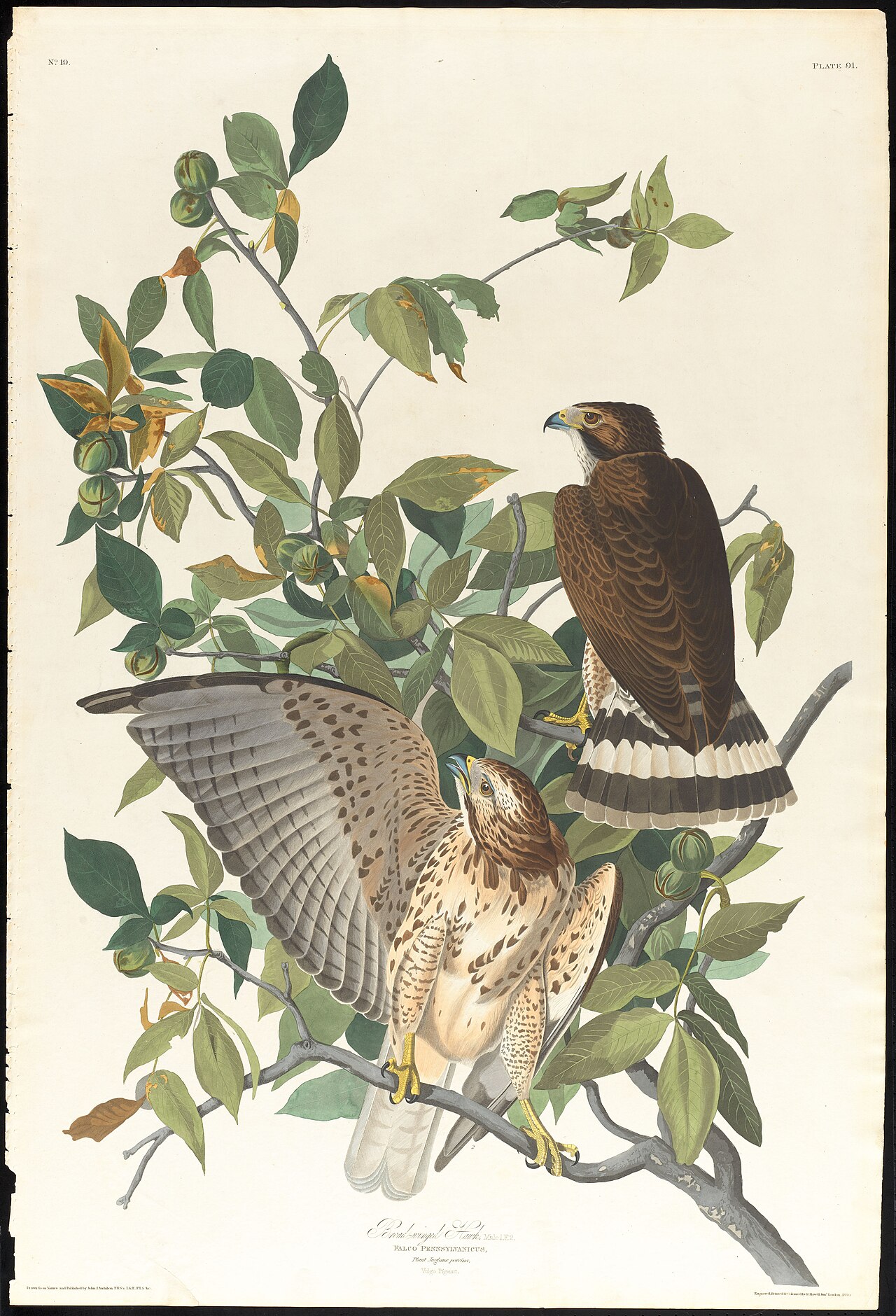
Both species share similar deciduous forest habitat during the breeding season, but a Broad-Winged Hawk is noticeably smaller and stockier, with a shorter tail showing broad, high-contrast black and white bands rather than the narrower, more numerous bands of a Red-Shouldered Hawk. Voice is another useful clue: the Broad-Winged Hawk gives a thin, high, slurred whistle quite different from the louder, more strident repeated scream typical of a Red-Shouldered Hawk defending its year-round territory.
Hawk Watching as a Conservation Tool
Long-running hawk-watch counts at sites tracking Broad-Winged Hawk migration have become an important tool for monitoring raptor populations more broadly, since consistent annual counts at the same location over decades can reveal population trends that would be difficult to detect through breeding-season surveys alone, given how secretive the species is within dense forest canopy. These counts also track other migrating raptors passing the same corridors, including Sharp-Shinned Hawks and occasional Northern Harriers, making a single well-placed hawk watch a surprisingly efficient way to monitor several species at once during peak migration weeks.
Why the Species Depends on Continuous Forest
Broad-Winged Hawks are considerably more sensitive to forest fragmentation than adaptable species like the Red-Tailed Hawk, since breeding pairs need large, unbroken tracts of mature deciduous or mixed forest to successfully raise young rather than the scattered woodlots and forest edges many other hawks tolerate. Studies of breeding density have generally found that Broad-Winged Hawk numbers drop off sharply once a forest block falls below a certain minimum size, making large-scale forest conservation, rather than isolated patches of habitat, the more effective long-term strategy for protecting stable breeding populations across the species’ eastern range.
A Quiet Forest Resident Between Migrations
Outside the dramatic fall kettles that make it famous, a Broad-Winged Hawk spends its breeding season as one of the quieter, less conspicuous forest raptors, typically detected by its thin whistled call rather than by sight in the dense canopy it favors. This split personality, an almost invisible forest resident for most of the year that suddenly becomes one of the continent’s most visible migratory spectacles for a few weeks each September, is part of what makes the species such a compelling study subject for researchers tracking both breeding ecology and long-distance migration in the same bird.
Counting a Kettle
Experienced hawk watchers rarely try to count every individual bird in a large, swirling kettle one at a time, instead estimating numbers in blocks of ten or more as the flock streams past, a technique that lets official count sites report totals in the tens of thousands on a strong migration day without undercounting fast-moving birds. Peak single-day counts at some of the best-known eastern hawk watches have exceeded twenty thousand Broad-Winged Hawks, numbers that make the species by far the most numerous single raptor recorded at many fall count sites across its migratory corridor. These counts, compiled over decades, remain one of the best long-term datasets available for any North American raptor population, giving scientists an unusually clear window into how a single migratory species responds to changing climate and land use over time, decade after decade, at the exact same ridgeline count sites staffed faithfully by dedicated volunteer observers every single fall migration season without exception or interruption.
Frequently Asked Questions
How do you identify a Broad-Winged Hawk?
Look for a small, compact buteo with pointed wingtips, rust barring on the chest, and a short tail crossed by two or three broad black and white bands, often seen migrating in large, dense swirling flocks each September, sometimes numbering in the many thousands over a single ridge.
How big is a Broad-Winged Hawk?
Broad-Winged Hawks measure roughly 13 to 17 inches long with a wingspan of 32 to 39 inches, making them one of the smaller buteos found in North America.
What is a hawk kettle?
A kettle is a swirling flock of migrating hawks riding a rising column of warm air called a thermal, gaining altitude together before gliding toward the next thermal on their migratory route.
When is the best time to see Broad-Winged Hawk migration?
Mid-September, particularly on clear, sunny afternoons, produces the largest kettles at established hawk-watch sites along ridgelines and coastlines in the eastern United States.
Where do Broad-Winged Hawks spend the winter?
Most of the population winters in Mexico, Central America, and northern South America, migrating almost entirely out of their North American breeding range each year.
What does a Broad-Winged Hawk eat?
Its diet consists mainly of small mammals, amphibians, reptiles, and large insects, hunted from a perch within the dense deciduous and mixed forest it depends on for breeding.
Are Broad-Winged Hawks common?
Yes, populations are considered stable, and the species is actually one of the most numerous raptors counted during fall migration, though it depends on large tracts of continuous forest for successful breeding.