Seeing a Red Bird Meaning: Is It a Sign From Heaven?
Seeing a red bird, almost always a male northern cardinal (Cardinalis cardinalis), is read in American folk belief and Christian devotion as a sign of comfort, hope and the presence of someone you love. That is belief and interpretation, not biology.
Spiritually, a red bird means you are not alone. Most people take it as comfort or a visit from a loved one who passed, some as good luck or a sign that God is near. What you were thinking or feeling when it appeared tells you which.
What Does Seeing a Red Bird Mean Spiritually?
Red is the color of blood and heartbeat, so a red bird stands for life and vitality at full strength. The bird is small, loud and impossible to miss. It gets noticed, and being noticed is the whole job of a sign. It lives in your yard, not in remote wilderness, so it works as a visible bridge between ordinary life and whatever you believe sits beyond it.
A flash of red in a gray January hedge is the clearest version of this. Everything else has gone quiet and brown, and one creature refuses to fade. That image of hope persisting through a hard stretch is the core of red bird symbolism across cultures. Treat the sighting as an invitation to pause and name what was on your mind, not as a forecast of events.
Is a Red Bird a Sign From a Loved One Who Passed?
Yes, this is the most common meaning of all. A red bird after a death counts as a visit, or at least as reassurance, from the person who died. The saying “when cardinals appear, angels are near” circulates through American grief circles, sympathy cards and memorial gifts, and it has become the default explanation for a cardinal that shows up in the weeks after a loss.
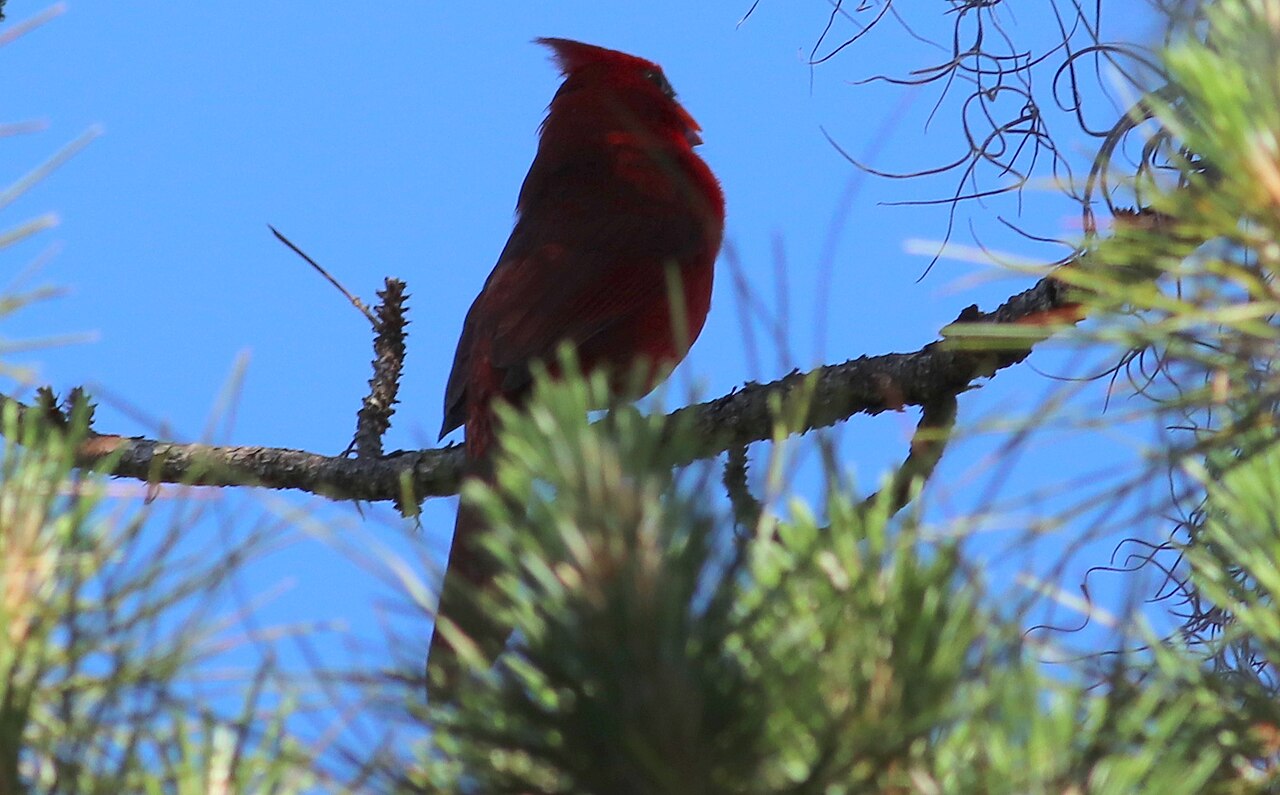
Sightings get noticed around funerals, death anniversaries and birthdays because those are the days you are already looking. A cardinal on the porch rail on what would have been your mother’s seventieth birthday lands with force. Many people first notice a red bird showing up in the weeks right after a loss, when they are already watching for a sign. Taken literally, the bird carries the person to you for a moment. Taken as memory, the bird triggers the thought of them, and that thought is the visit.
Are Red Birds Considered Good Luck?
Yes, in American folk tradition a red bird is good luck, and the specific version is that good news is on its way. The custom is to make a wish the moment you see a cardinal, before it flies off.
The luck means positive energy and renewed drive rather than a guaranteed outcome. At a winter feeder the sign shifts toward abundance in lean times, because the bird thrives when the landscape is bare. The red bird has a darker side in older lore too. Kentucky Superstitions (1920) records that a redbird flying into the house warns of fire, and some Southern Appalachian sayings tie a redbird circling the house to a coming death. Those readings have faded, and today the cardinal counts almost entirely as a good sign.
What It Means at the Window, in the House, on Your Path or at Night
A cardinal that taps or flutters against your glass, day after day, is a territorial male fighting his own reflection. This peaks in spring when he defends a nesting area. The spiritual meaning is persistence, a message you have been ignoring. The practical fix is to break the reflection with a screen or decals on the outside of the pane.
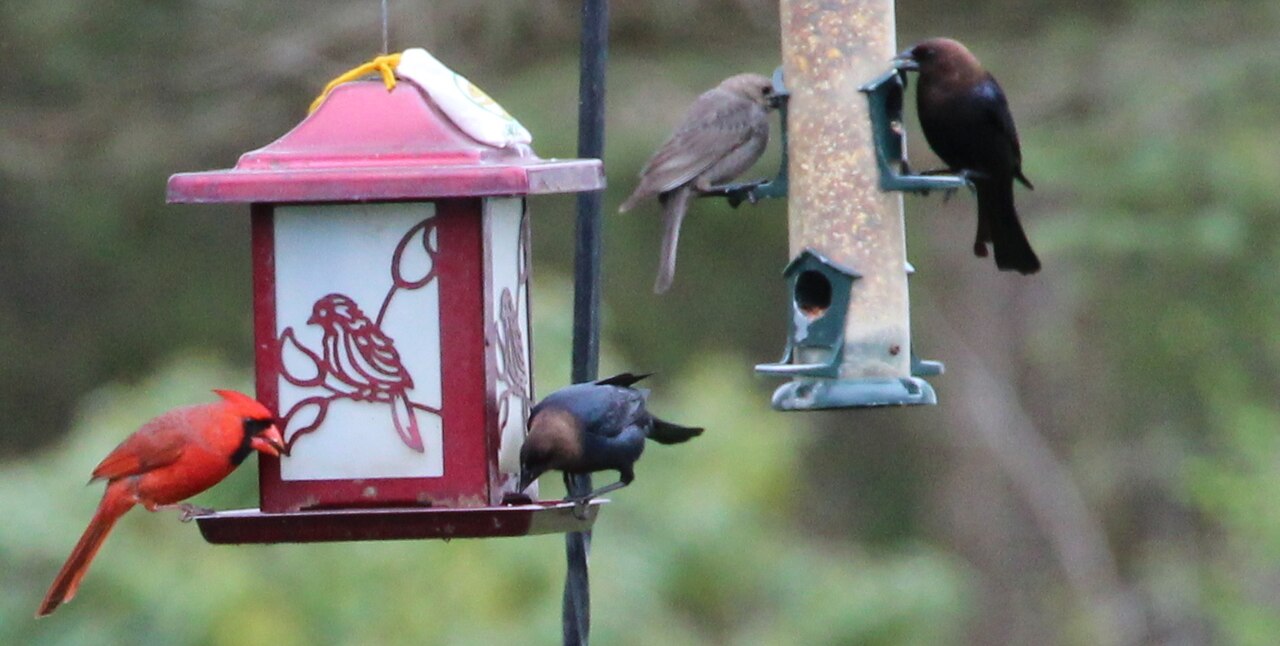
A red bird inside the house is rare. Open a window, dim the room and let it find its own way out. Older lore read any bird in the house as a death omen, but today most people take it as a strong call to pay attention. A cardinal that comes to the feeder every day stands for home and stability. The red birds you see in a yard are mostly this one species, and a local pair stays nearby through the year.
A red bird that crosses your path has the oldest folk reading of all. In Kentucky tradition the direction mattered. Crossing to the right meant good luck, crossing to the left meant bad luck, and one flying across the road ahead meant a letter was coming. Modern readers take it as a nudge toward a decision you have been circling. Night is the odd one. Cardinals are among the last birds at the feeder at dusk, but they roost in dense cover after dark, so a sighting at night breaks the pattern and feels charged.
What Does It Mean to See a Male and Female Cardinal Together?
A male and female cardinal together mean partnership and loyalty in a relationship. The pair is the symbol, not either bird alone. He is bright red, she is warm tan with red edges, two colors that are different and still clearly matched.
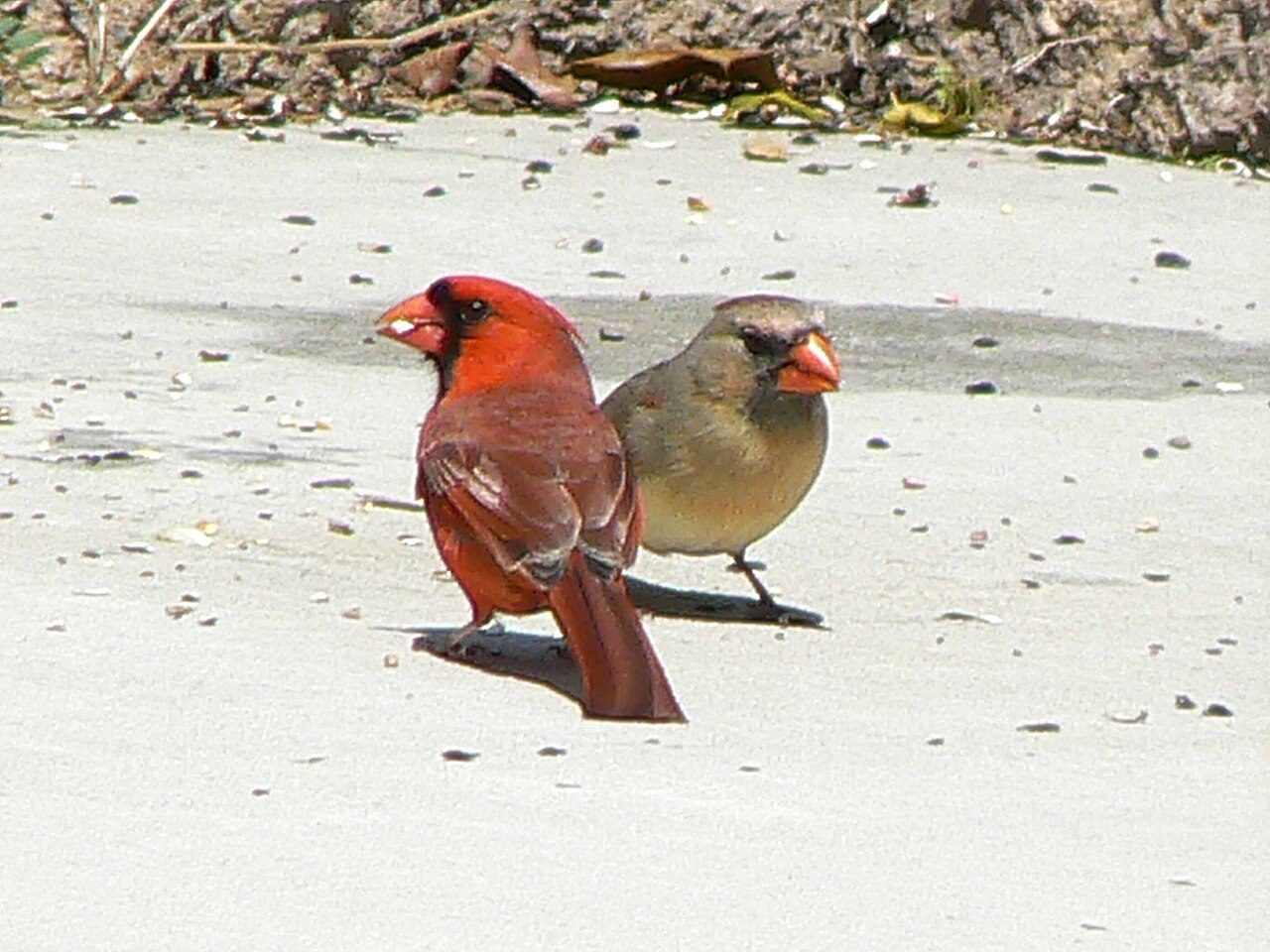
Many pairs stay together through winter, so a February feeder often shows both. In spring the male feeds the female beak to beak during courtship, passing her a seed while they both perch. Single people take a pair as love approaching, couples as reassurance after a conflict or a blessing on a shared step like a move or a pregnancy.
Does God Send Red Birds as Signs?
Yes, in the belief of a great many Christians, and that belief rests on scripture about birds in general rather than on any verse about cardinals. Cardinals are New World birds, so the Bible never names them. Two passages carry the weight. In Matthew 10:29 Jesus says that not one sparrow falls to the ground apart from the Father, and believers cite it to mean that God notices every small bird and therefore notices you. Matthew 6:26 points to the birds of the air, which neither sow nor reap and are still fed, as proof of God’s daily care.
Red itself stands in Christian symbolism for the blood of Christ and for the fire of the Holy Spirit at Pentecost, so the color carries a heavy charge in a church context. A cardinal that appears right after a prayer becomes, for the person praying, that prayer being heard. No church requires you to see it this way. Some Christian teachers caution against treating birds as messages from the dead and point to Deuteronomy 18, so this stays a matter of personal faith.
What Are the Signs a Bird Is Trying to Tell You Something?
Timing is the first sign. The bird appears right after you thought of someone, said their name out loud or asked for a sign. Repetition is the second. The same bird at the same spot, at the same hour, several days in a row, is a pattern rather than a coincidence.
Unusual closeness is the third. Cardinals are wary and keep a few yards between themselves and a person, so one that lands near you and stays is acting out of character. Write it down. Note the date, the place and what was on your mind. Over several weeks a notebook either shows a pattern or shows that the visits are spread evenly across your moods.
How Rare Is It to See a Red Cardinal?
Not rare at all across the eastern and central United States, where cardinals live year-round in backyards and city parks. They do not migrate. A sighting feels rare because the male is the brightest thing in the landscape against snow and bare branches.
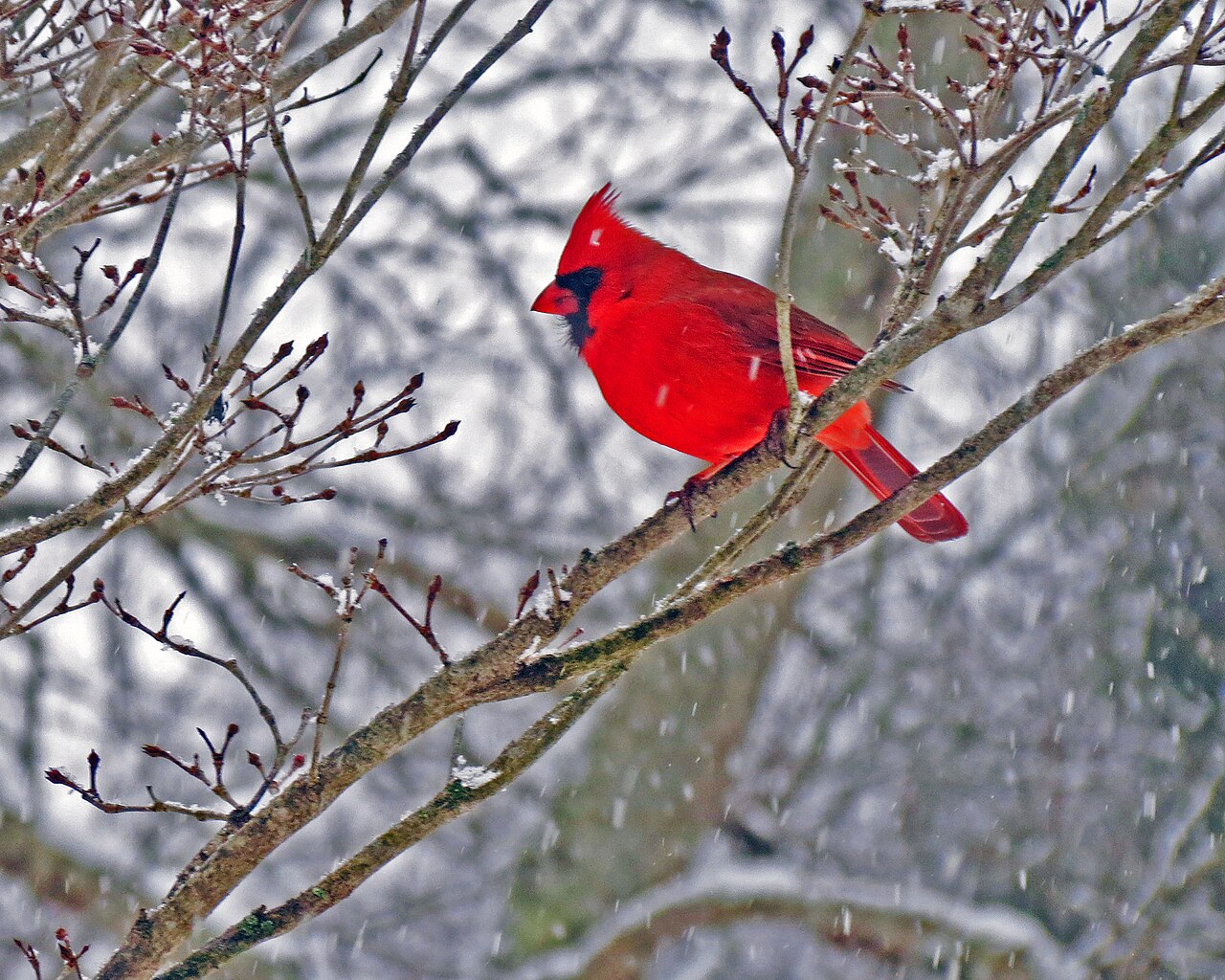
In the far West, where cardinals are scarce, most red birds people report are house finches, so someone in Seattle who sees a cardinal has had a genuinely unusual encounter. One genuinely rare variant is the yellow cardinal, a bird with a color variation, probably genetic, that turns the red to yellow. Rarity does not change the meaning.
Seeing a Red Bird That Isn’t a Cardinal
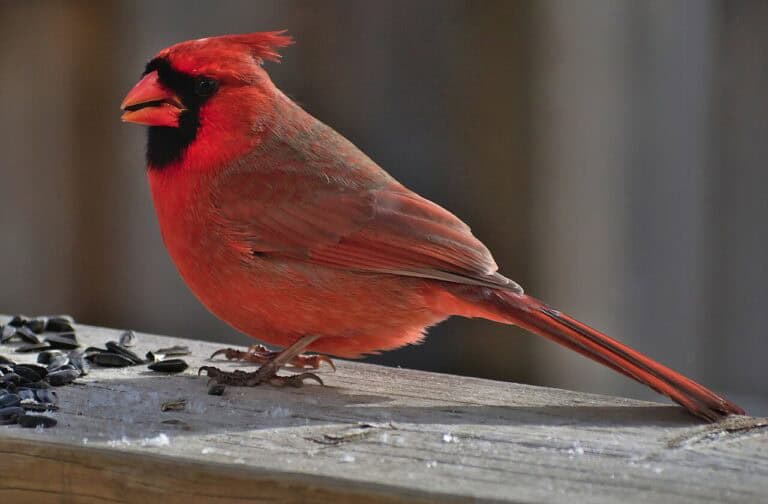
If the bird had no crest and no black face mask, it was not a cardinal. The male cardinal has a pointed crest, a black patch around a thick orange bill, and red over the whole body.

No crest and no mask means a summer tanager, scarlet tanager or house finch, and the field marks of red birds that are not cardinals sort them out. Folk readings attach to the red color, so the meaning stays the same.
| When you see it | Typical reading | Question to ask yourself |
|---|---|---|
| Early morning | A fresh start, encouragement for the day ahead | What do I want to begin today? |
| Evening or dusk | Reassurance before rest, a day being closed | What can I set down tonight? |
| Deep winter | Hope persisting through a bare stretch | Where am I still showing color? |
| Spring | Renewal, courtship, a new chapter opening | What is ready to grow? |
| Holiday | A loved one joining the gathering | Who do I wish were at the table? |
| Death anniversary | A visit, a message that they are near | What would I say to them right now? |
Frequently Asked Questions
Is the cardinal a symbol of Jesus?
No. In traditional Christian art the pelican, shown feeding its young with its own blood, stands for Christ, and the goldfinch in Renaissance paintings of the Christ child points to the Passion. The dove stands for the Holy Spirit. The cardinal’s link to Christ comes only from its red color and modern American devotion.
Does a lone female cardinal mean something different?
Yes, a little. The female is warm tan with red-tinged wings, crest and tail, and her softer color means nurturing and care rather than the bold vitality of the male. A lone female counts as a mother figure checking in, or as a reminder to tend to the people under your own roof.
Does a singing red bird mean something different?
Yes. Song means encouragement to speak up, to say the thing you have been holding back. Female cardinals sing too, which is unusual among North American songbirds, so a singing red bird is not always the male.
Is it the same cardinal that keeps coming back?
Yes from March to August, when a pair defends a territory and the male returns to the same perches daily. In winter cardinals gather in loose flocks at feeders, sometimes a dozen or more, so the morning visitor may be a different bird. Either way the repeat visit means ongoing reassurance.
How do you know God is sending you a sign?
There is no single test in Christian teaching. Most believers look for a sighting that answers a specific prayer and brings peace rather than fear, and they test it against scripture rather than the bird alone.
Does a red bird at the window mean a death?
No. Older lore read a bird tapping at the window or entering the house as a death omen, but a cardinal at the glass in spring is a male fighting his reflection, and modern readers take it as a call to pay attention rather than a warning.
Sources
- Cornell Lab, All About Birds: Northern Cardinal
- Bible Gateway, Matthew 10:29 and Matthew 6:26
- Kentucky Superstitions (1920), Bird Superstitions