House Finch Spiritual Meaning: Symbolism and Signs
The house finch is traditionally associated with joy, resilience, community, and finding contentment in ordinary life, and seeing one is commonly read as a reminder to appreciate what you already have rather than a sign of dramatic change coming. Its symbolism differs from most bird omens precisely because the house finch is so unremarkable: it is a small, common, cheerful bird that thrives almost anywhere, and the meaning attached to it reflects exactly that.
The species also carries a genuine story of survival that has shaped the modern reading. House finches were native only to the western United States and Mexico until the 1940s, when illegally sold cage birds were released on Long Island to avoid prosecution. From that handful of birds, the species spread across the entire eastern half of the continent. This guide covers the symbolism, the biblical and cultural context, what a red versus a brown finch means, and the real bird behind it.
The house finch symbolizes joy, resilience, community, and contentment with ordinary life, and seeing one is usually read as encouragement rather than warning. The male’s red colouring comes from carotenoids in his diet and is linked in folklore to passion and vitality. The species also carries a survival story: eastern populations descend from cage birds released in 1940.
| Element | Traditional Meaning |
|---|---|
| House finch generally | Joy, resilience, contentment |
| Red male | Vitality, passion, health |
| Brown female | Nurture, practicality, family |
| Finch song | Encouragement to speak or create |
| Finch flock at a feeder | Community and abundance |
| Nesting near a home | Blessing on the household |
| Biblical association | God’s care for small things |
What Does the House Finch Symbolize?
The house finch symbolizes ordinary joy and adaptability, and it is one of the few bird omens that is almost entirely positive without being grand. Where an eagle signifies power and a raven signifies mystery, the house finch signifies making a good life out of whatever is available, which is a quieter message and, for many people, a more useful one.
Resilience is the strongest thread. House finches survive in parking lots, on building ledges, in hanging baskets on apartment balconies, and in every kind of suburban and urban setting, and they sing through most of the year including in winter. The reading that follows from this is straightforward: the bird persists cheerfully in circumstances that would not suit most species, and seeing one is taken as a nudge toward the same attitude.
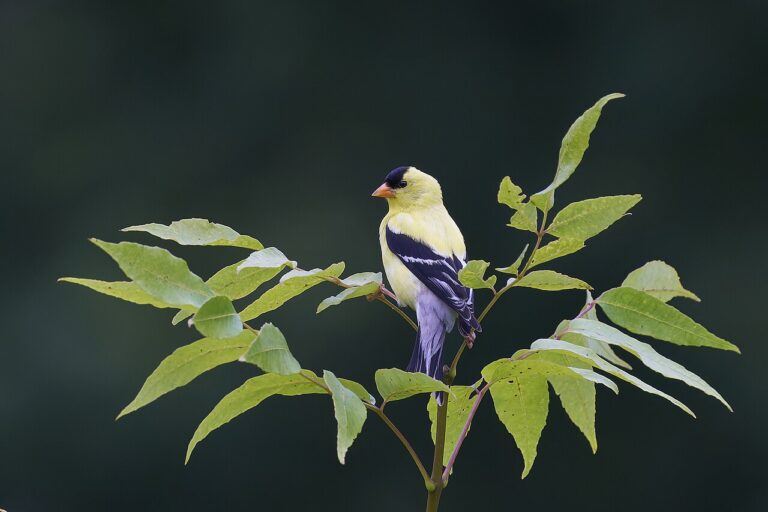
Community is the second thread. House finches are highly social, feeding in flocks year-round and often arriving at feeders in groups of a dozen or more, and they do not defend feeding territories the way many birds do. In symbolic terms this is read as an emphasis on family, neighbours, and shared rather than solitary success. Other finches carry related meanings, and the American goldfinch symbolism guide covers the closest relative in that tradition.
What Does It Mean to See a Red House Finch?
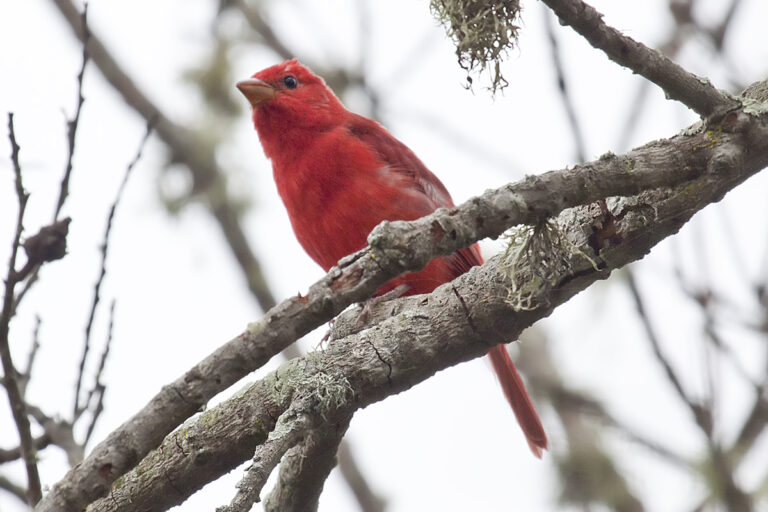
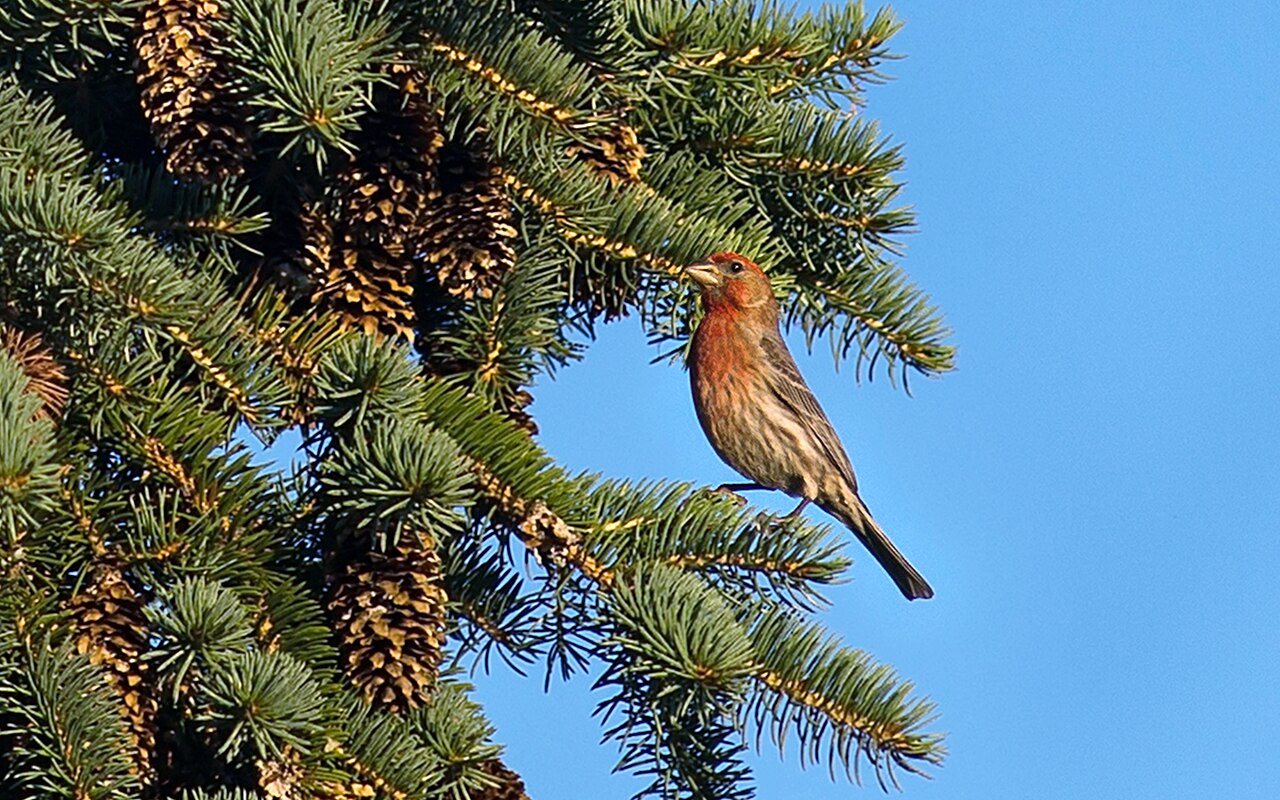
A red male house finch is traditionally read as a sign of vitality, passion, and good health, and the intensity of the colour is taken to strengthen the message. This reading has an unusual amount of biological truth behind it, because the redness of a male house finch is a direct measure of how well he has been eating.
House finch red comes from carotenoid pigments the bird cannot produce itself and must obtain from food, principally from fruits and seeds. A male with access to abundant, high-quality food develops deep red plumage on the head, breast, and rump; a male on a poorer diet ends up orange or even yellow. Females actively prefer the reddest males, and research has shown that redder males are better providers at the nest, so the colour is an honest signal of condition.
This means the folklore reading of red as vitality is, unusually, close to correct. A brilliantly red house finch genuinely is a well-fed, healthy bird in good condition. Orange and yellow variants are not a different species and not diseased; they are simply birds that ate differently. The house finch guide covers the plumage variation in detail, and the house finch vs purple finch comparison covers the species most often confused with it.
What Does a Brown House Finch Mean?
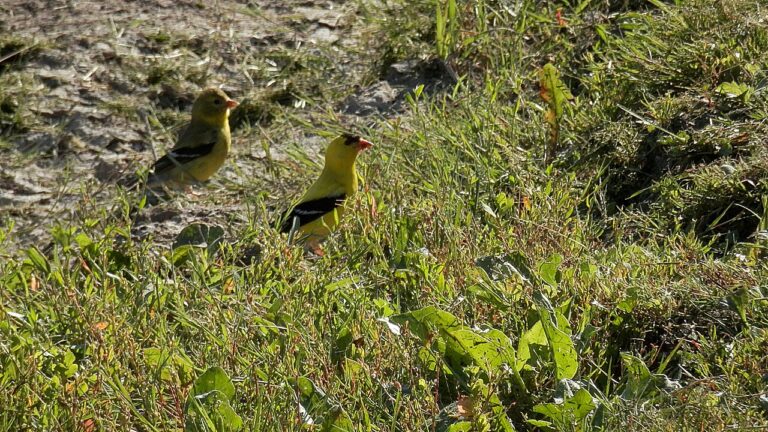
A brown or streaked house finch is a female or a juvenile, and in symbolic terms she is associated with nurture, practicality, and quiet competence rather than the display and vitality of the male. Some traditions read a female finch sighting as a message about home, family responsibilities, or the value of unglamorous work.
Female house finches are plain grayish-brown with blurry streaking below and no red anywhere, and they are frequently mistaken for sparrows. The distinguishing features are a plain face without the strong head pattern of most sparrows, a stubby conical bill with a curved upper edge, and the blurry rather than crisp streaking. The female house finch vs sparrow guide covers the identification, which trips up a great many feeder watchers.
The female does all the incubating and most of the nest building, while the male feeds her during incubation, which is where the symbolic emphasis on partnership and provision comes from. Pairs often stay together across a breeding season and raise two or three broods, and the sight of a pair at a feeder, one red and one brown, is read in some traditions as a sign of balance between drive and steadiness.
What Do Finches Symbolize in the Bible?
Finches are not named in the Bible, and any specific biblical symbolism attributed to house finches is a modern extension rather than scriptural. What scripture does contain is a well-known passage about small common birds: the reference in Matthew and Luke to sparrows, noting that not one falls without God’s knowledge and that people are worth more than many sparrows.
That passage is the source of nearly all Christian symbolism around small brown birds, and it is applied to finches, sparrows, and wrens more or less interchangeably. The reading is about the value of what appears insignificant and about divine attention extending to the smallest creatures, which fits the house finch’s ordinariness neatly.
The European goldfinch, a different species from the American goldfinch, does carry specific and well-documented Christian symbolism in art. It appears in hundreds of Renaissance paintings of the Madonna and Child, where it represents Christ’s Passion, because the bird feeds on thistles and thorns and has a red face said to have been stained by blood from the crown of thorns. Anyone researching finch symbolism will encounter this, and it belongs to that species rather than to the house finch.
What Does It Mean When a Finch Visits Your Home?
A finch nesting on or near a house is traditionally read as a blessing on the household, indicating that the home is a place of safety and warmth. This is one of the more common folk readings across European traditions for any small bird choosing to nest under a roof, and house finches choose houses so consistently that they earned the name.
They nest in hanging flower baskets, wreaths on front doors, ledges over porch lights, gutters, dryer vents, and ivy against walls, and they show remarkably little fear of human traffic beneath them. A pair will often use the same site year after year. This is genuinely why the bird is called a house finch: its association with buildings predates its eastern spread.
Practically, a nest in a wreath or basket needs to be left alone until the young fledge, which takes about two weeks of incubation and another two to three weeks in the nest. House finches are protected under the Migratory Bird Treaty Act, so removing an active nest with eggs or young is illegal. Watering around a basket with a nest, rather than through it, keeps the plant alive for the duration. The house finch eggs guide covers the nesting cycle.
What Does Finch Song Mean?
House finch song is read in folklore as encouragement to speak, create, or express something that has been held back, drawing on the association between birdsong and voice that runs through most bird symbolism. The house finch is a persistent singer, and males sing through much of the year rather than only in the breeding season, which reinforces the reading of steady, undramatic expression.
The song itself is a long, warbling, slightly scratchy series of notes, often ending in a distinctive upward or downward slurred note, and it is one of the more recognizable feeder-bird songs once learned. Males sing from exposed perches such as wires, TV aerials, and rooftops, and females sing too, which is less common among North American songbirds.
Song learning in house finches produces regional dialects, and birds in different cities have measurably different song structures. Young males learn from adults nearby during a sensitive period, so the songs in a neighbourhood tend to converge. The bird symbolism guide covers how song is interpreted across species.
The Real Story Behind the House Finch
The house finch’s actual history is a better resilience story than any of the folklore. Until 1940 the species occurred only in the western United States and Mexico. Birds were being trapped and shipped east to be sold illegally as cage birds under the name Hollywood finch, and when authorities in New York began investigating, dealers on Long Island released their stock to avoid prosecution.
A small number of birds survived, bred, and spread. Within a few decades house finches had colonized the entire eastern United States and southern Canada, meeting the westward-expanding native population in the Great Plains. The eastern population is estimated in the tens of millions, all descended from that founding group, and the species is now among the most abundant birds in North America.
The story has a darker chapter. In 1994, a bacterial eye disease, mycoplasmal conjunctivitis, appeared in eastern house finches and spread rapidly through the dense feeder-visiting population, causing swollen crusted eyes, blindness, and death, and reducing eastern numbers substantially. Cornell Lab of Ornithology (allaboutbirds.org) volunteers tracked the outbreak in one of the first large citizen science disease studies. The disease persists, and it is the main reason feeder hygiene matters: cleaning feeders every two weeks with a dilute bleach solution meaningfully reduces transmission.
House Finch Symbolism Compared With Other Birds
House finch symbolism sits at the modest end of bird omens, and the contrast is instructive. Cardinals are read as visits from the dead, hawks as messages about vision and focus, owls as wisdom or ill omen, and ravens as transformation and mystery. All of these are dramatic. The house finch offers something smaller: keep going, appreciate what you have, sing anyway.
Other small feeder birds carry similar quiet readings. Goldfinches are associated with joy and positivity, chickadees with cheerfulness and curiosity, wrens with resourcefulness, and sparrows with community and the dignity of the ordinary. These birds share a set of meanings that reflect their shared characteristics rather than distinct traditions for each species.
What makes the house finch worth singling out is the honesty of the fit. A bird that survived an illegal pet trade, an emergency release, a continental colonization, and an epidemic, and that still shows up at feeders singing in February, has a reasonable claim to the resilience it is credited with. The cardinal symbolism guide covers the red bird most often confused with a house finch at a distance.
Frequently Asked Questions
What does the house finch symbolize?
Joy, resilience, community, and contentment with ordinary life. Unlike most bird omens it carries no warning element, and seeing one is generally read as encouragement to appreciate what you already have.
What does it mean to see a red house finch?
Vitality, passion, and good health. The reading has real support: the red comes from carotenoids in the diet, so a deeply red male genuinely is a well-fed bird in good condition, and females prefer them.
Why are some house finches orange or yellow?
Diet. The pigments that produce red must come from food, so a male with poorer access to carotenoid-rich fruits and seeds develops orange or yellow plumage instead. They are not a different species or diseased.
What do finches symbolize in the Bible?
Finches are not named in scripture. The relevant passage concerns sparrows, noting that not one falls without God’s knowledge, and it is applied to small common birds generally. The European goldfinch does carry specific symbolism in Renaissance art.
What does it mean when a finch nests at your house?
It is traditionally read as a blessing on the household. House finches genuinely favour buildings, nesting in hanging baskets, door wreaths, and ledges, which is how they got their name.
Is it rare to see a house finch?
No, they are among the most abundant birds in North America. Eastern populations descend entirely from cage birds released on Long Island in 1940 and now number in the tens of millions.
What does a brown house finch mean?
A brown streaked finch is a female or juvenile, associated with nurture, practicality, and home. Females are often mistaken for sparrows and are told apart by their plain face and stubby curved bill.