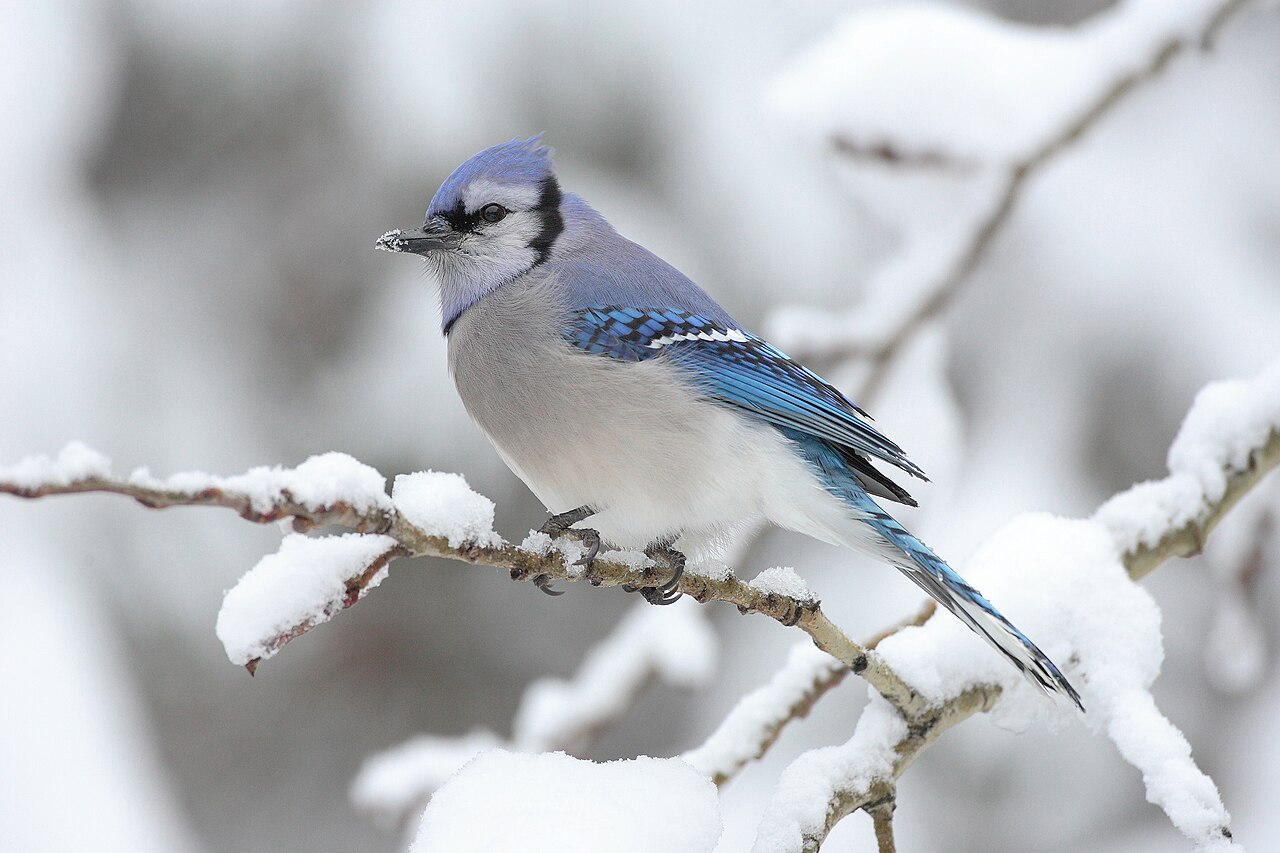
Types of Jays: A Complete Guide
North America is home to several types of jays, most familiarly the blue jay in the East and Steller’s jay in the West, along with the scrub-jays, the green jay, the Canada jay, and others. These bold, intelligent birds are members of the crow family, known for their striking colors, loud calls, and clever behavior. This guide covers how many types of jays there are, common species you can see, how to tell them apart, where they live, and what makes jays special.
| Jay | Key Features |
|---|---|
| Blue Jay | Blue crest, black necklace, East |
| Steller’s Jay | Dark head, blue body, West |
| California Scrub-Jay | Blue and gray, no crest |
| Florida Scrub-Jay | Blue, crestless, Florida only |
| Green Jay | Green and yellow, south Texas |
| Canada Jay | Fluffy gray, northern forests |
| Pinyon Jay | All blue, pinyon pine country |
| Mexican Jay | Blue, gray, southwestern oaks |
How Many Types of Jays Are There?
There are around ten species of jays in North America, part of the corvid family that also includes crows, ravens, and magpies. The most familiar are the blue jay of the East and Steller’s jay of the West, but the group also includes several scrub-jays, the colorful green jay, the fluffy Canada jay of northern forests, the pinyon jay, and the Mexican jay of the Southwest. Jays are generally medium-sized, boldly patterned birds, many of them blue, with strong bills and often loud, varied voices. As members of the crow family, they are highly intelligent, known for problem-solving, memory, and complex social behavior, and many jays are famous for caching food, hiding seeds and nuts to eat later. They can be bold and inquisitive around people. This combination of intelligence, striking looks, and lively behavior makes jays a fascinating group, as covered in our guide to the blue jay.
Common Types of Jays
Several types of jays are especially notable. The blue jay is the familiar eastern jay, blue above with a crest, black necklace, and white markings, and a loud, varied voice. Steller’s jay is its western counterpart, a crested jay with a blackish head and forebody and a deep blue rear, found in western forests. The scrub-jays, including the California, Woodhouse’s, and Florida scrub-jays, are blue and gray birds without crests, with the Florida scrub-jay being a threatened species found only in Florida scrub habitat. The green jay of southern Texas is a stunning green, yellow, and blue bird. The Canada jay, also called the gray jay, is a soft, fluffy gray bird of northern and mountain forests, famously bold around people. The pinyon jay is an all-blue, crestless jay of pinyon-juniper country, and the Mexican jay lives in southwestern oak woodlands. Each has its own look and habitat, but all share the jays’ intelligence and character.
How to Tell Jays Apart
Telling jays apart is manageable when you use color, crest, and especially geographic range. Start with the overall color, since most jays are blue, but the Canada jay is gray and the green jay is green and yellow, which immediately narrows things down. Note whether the bird has a crest, as the blue jay and Steller’s jay are crested while the scrub-jays, pinyon jay, and others are not. Range is extremely helpful, because jay species tend to occupy distinct regions, so a crested blue jay in the East is a blue jay, a crested dark-and-blue jay in the West is Steller’s jay, and a crestless blue-and-gray jay depends on the local scrub-jay species. Look at the pattern, such as the blue jay’s black necklace and white spots, and the habitat, since some jays favor oak woodlands, others pinyon pines or northern forests. By combining color, crest, pattern, and range, you can identify most jays, a rewarding skill for a striking group, as explored in our guide to birds that look like blue jays.
Where Jays Live
Jays live in a wide variety of habitats across North America, with different species favoring different regions and settings. The blue jay is common in eastern forests, woodlands, parks, and suburbs, often near oak trees whose acorns it loves. Steller’s jay inhabits western coniferous and mixed forests, including mountains. The scrub-jays occupy their namesake scrub, chaparral, and oak habitats, with the California scrub-jay in western gardens and the Florida scrub-jay restricted to Florida’s threatened scrub. The green jay lives in dense brush and woodlands of southernmost Texas, while the Canada jay favors northern boreal and high mountain forests. The pinyon jay is tied to pinyon-juniper woodlands, and the Mexican jay to southwestern oak and pine-oak forests. This means that across the continent, from eastern backyards to western mountains and southern brushlands, there is usually a jay adapted to the local habitat. Many jays readily visit feeders, especially for nuts and seeds, as detailed in our guide to what blue jays eat.
Jays and Their Intelligence
One of the most remarkable things about jays is their intelligence, which is among the highest of any birds. According to the Cornell Lab of Ornithology, jays belong to the corvid family, the crows and their relatives, which are renowned for their intelligence, and many jays cache food, hiding seeds and nuts to retrieve later. This caching behavior is impressive, since jays can remember the locations of numerous hidden food stores, and by burying acorns and other seeds that they never recover, they even help plant trees. Jays are also known for problem-solving, curiosity, and complex social behavior, and some can mimic sounds, including the calls of hawks. Their boldness and adaptability allow many jays to thrive around people. This combination of remarkable memory, cleverness, and social sophistication places jays among the most fascinating of birds, much like their crow relatives explored in our guide to blue jay symbolism.
The Blue Jay and Steller’s Jay
The two crested jays, the blue jay and Steller’s jay, are the ones most people picture, and together they cover much of the continent. The blue jay is the crested jay of the East, blue above with a black necklace and white markings, while Steller’s jay is the crested jay of the West, with a blackish head and forebody and a deep blue rear. The two are close relatives that largely replace each other geographically, meeting only in a narrow zone where they can occasionally hybridize. Both are bold, vocal, and intelligent, known for their loud calls, their fondness for acorns and nuts, and their willingness to visit feeders and yards. Because they are crested, colorful, and conspicuous, these two jays are among the most recognizable birds in their respective regions. Understanding them provides a foundation for appreciating the whole jay group, centered on the familiar bird in our guide to the meaning of birds.
Attracting Jays to Your Yard
Many jays are easy and rewarding to attract to a yard, especially the bold, adaptable species. Jays are particularly fond of nuts and large seeds, so offering whole or shelled peanuts, black oil sunflower seeds, and even acorns on platform or hopper feeders is one of the best ways to draw them in, and blue jays and Steller’s jays will readily take these foods. Providing a reliable water source for drinking and bathing also appeals to jays. Because jays like to cache food, you may see them carrying off multiple peanuts or seeds at once to hide for later, which is fascinating to watch. Native oak trees are a natural draw, since acorns are a favorite food. Keep in mind that jays are large and assertive and may dominate feeders, though their intelligence and striking looks make them a joy to host. By offering nuts and seeds, water, and ideally some oaks, you can enjoy the lively presence of jays, as explored in our guide to what blue jays eat.
Frequently Asked Questions
How many types of jays are there?
North America has around ten jay species, including the blue jay, Steller’s jay, the scrub-jays, the green jay, the Canada jay, the pinyon jay, and the Mexican jay.
What is the most common jay?
The blue jay is the most familiar jay in the East, while Steller’s jay is its common counterpart in western forests. Both are crested and boldly colored.
Are all jays blue?
No, most jays are blue, but the Canada jay is soft gray and the green jay of southern Texas is green, yellow, and blue. Color and range help identify each species.
What is the difference between a blue jay and a scrub-jay?
The blue jay has a crest, a black necklace, and white markings, while scrub-jays are crestless, blue-and-gray birds. They also occupy different regions and habitats.
Are jays related to crows?
Yes, jays belong to the crow family, the corvids, along with crows, ravens, and magpies. Like their relatives, jays are highly intelligent and often bold and social.
Do jays store food?
Yes, many jays cache food, hiding seeds and nuts such as acorns to eat later. This caching behavior helps them survive winter and can even help plant trees.
Where do jays live?
Jays live in eastern and western forests, scrub, oak woodlands, and northern forests across North America, with different species favoring different regions and habitats.