Ferret Sounds Explained: 6 Noises and What Each One Means
Ferret noises fall into six recognizable groups, and each one tells you something specific. A soft clucking chuckle called dooking means the ferret is happy and playing, squeaking means mild complaint or curiosity, hissing means back off, barking means sudden excitement, screaming means pain or real fear, and coughing or wheezing means a call to the vet.
Most of these sounds are quiet. A ferret is not a loud animal, and a household with one usually hears nothing for hours and then a burst of chuckling as the animal wakes for its evening play. Loud, repeated vocalizing from a ferret is unusual enough to be worth checking rather than ignoring.
The most common ferret sound is dooking, a rapid soft clucking that signals excitement and play. Squeaking and chirping mean curiosity or mild protest, hissing means annoyance or fear, barking means alarm or high excitement, and screaming means pain, panic or a fight. Coughing, wheezing and frequent sneezing are medical signs, not communication.
| Sound | What it means | When you hear it | Confused with |
|---|---|---|---|
| Dooking | Happy, excited, playing | Dawn and dusk play bouts | Soft chicken clucking |
| Squeaking | Curiosity or mild protest | Handling, wrestling, waking | Rat or mouse squeak |
| Hissing | Annoyance, fear, warning | Rough play, cage disputes | Cat or snake hiss |
| Barking | Alarm or peak excitement | Rare, during surprises | Small dog yip |
| Screaming | Pain, panic, serious fight | Injury, trapped limb, fights | Rabbit distress call |
| Coughing or wheezing | Respiratory or heart problem | Any time, often at rest | Normal sneezing |
Dooking: the ferret dooking sound
Dooking is the signature ferret sound and the one owners fall for. It is a rapid series of soft clucks, something between a chicken’s contented muttering and a low chuckle, delivered with the mouth half open while the animal bounces sideways. The pace picks up as excitement builds and stops the moment the ferret settles.
It almost always comes with the weasel war dance: arched back, open mouth, frantic hopping into furniture. Nothing about it is aggressive, even though the body language looks wild. A ferret that dooks at you is inviting you into the game, and the reliable trigger is a new object on the floor or a human willing to chase.
What does it mean when ferrets squeak?
A squeak is a complaint or a question, not a crisis. Ferrets squeak when they are picked up in a grip they dislike, when a wrestling partner bites too hard, when they want out of the cage, and when they are startled awake. The sound is short, thin and higher than dooking, and it usually stops as soon as the cause does.
Pay attention to repetition. One squeak during handling is normal; a ferret that squeaks every time you touch a particular spot is telling you something hurts. Kits squeak far more than adults, and some ferrets keep a squeaky, chatty voice into old age without any problem behind it.
Chirping and whining

Chirping sits between dooking and squeaking, a single rising note that most owners read as mild curiosity. You hear it when a ferret investigates a new smell, finds a hiding spot occupied, or wants your attention from across the room. Some individuals chirp constantly and others never do.
Whining is lower and drawn out, and it usually means frustration: the toy rolled under the couch, the cage door is shut, the sleeping bag is in the wash. It is the ferret equivalent of grumbling. Persistent whining paired with pacing and loss of appetite moves out of the behavior column and into the health column.
Hissing

Hissing is the clearest warning a ferret gives. It is a sharp exhale through the teeth, shorter than a cat’s hiss, and it means the animal wants distance. Context separates the serious version from the social one. During play wrestling, a quick hiss is simply one ferret calling a foul, and both animals carry on.
A hiss delivered from a corner with the body low, the tail puffed and the ears back is genuine fear or anger, and reaching in at that moment earns you a bite. Give the ferret a minute and let it come out on its own. Among animals that hiss, ferrets are mild; alligator hisses and cat hisses carry much more air behind them.
Barking and chattering
Barking is rare and startling the first time. It is a short, sharp yip, usually a single note, and it comes out at peak excitement or genuine alarm: a dog lunging at the cage, a sudden fall from furniture, a fight breaking out. Wild relatives bark more readily than domestic ferrets do.
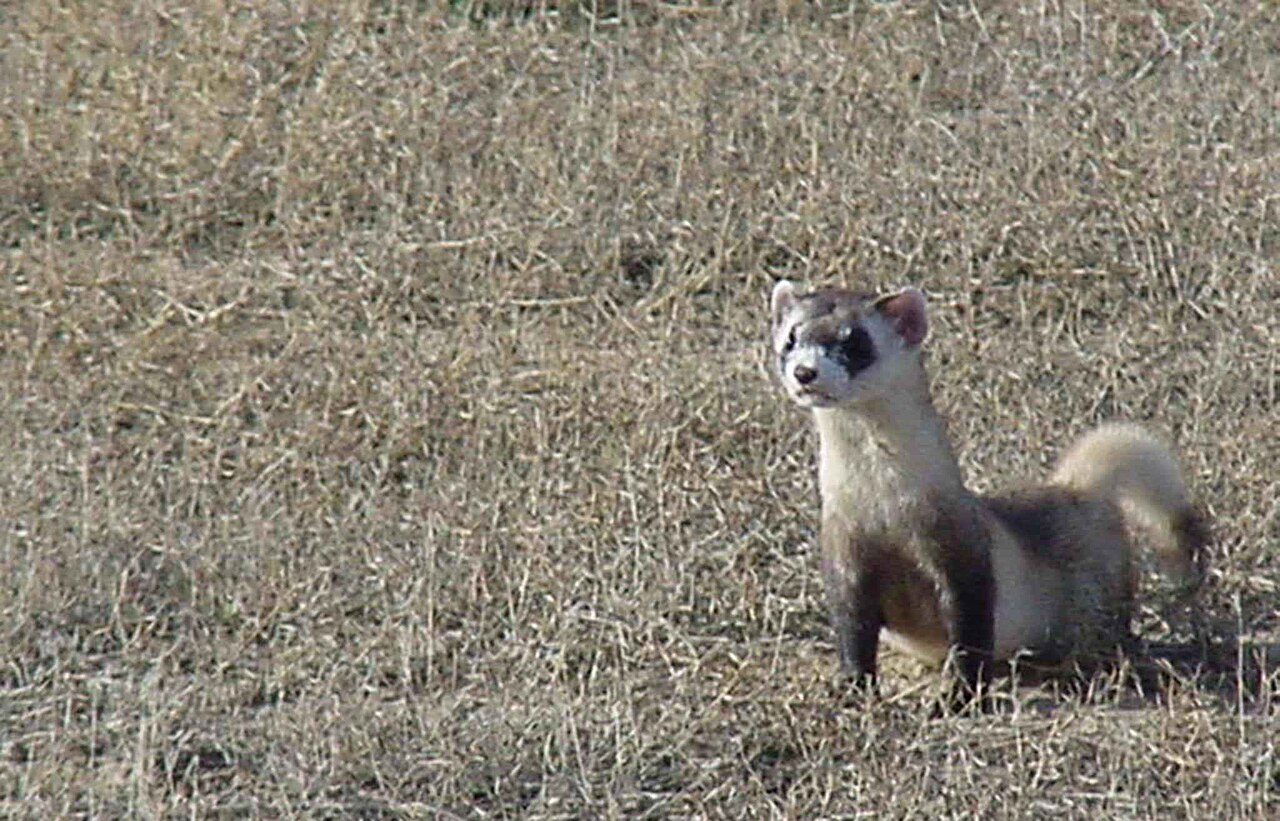
Chattering is a stuttering, rattling series of notes that mixes alarm with aggression. The black-footed ferret (Mustela nigripes), North America’s only native ferret, chatters and barks at intruders near its prairie dog burrows, documented by the U.S. Fish and Wildlife Service recovery program. In alarm value the sound works like the harsh calls of a blue jay: it announces a threat to everything nearby.
Screaming: the sound that needs a response
A ferret scream is a loud, piercing shriek, and a healthy relaxed ferret never makes one. The causes are narrow: real pain, a trapped foot or tail, a fall, a serious fight, or terror. If you hear it, go look immediately rather than waiting to see whether it repeats.
Check the obvious traps first, which are reclining chairs, drawers, laundry, cage bars and closing doors. Screams during a fight between two ferrets mean the wrestling has crossed a line and the pair needs separating. For sheer volume a ferret cannot match a bobcat scream, but in a quiet house the effect is the same.
Kit sounds in the first weeks
Baby ferret noises are almost entirely squeaks and whimpers. Newborn kits are blind, deaf and nearly hairless, and they locate their mother by touch and smell while producing a thin steady peeping that keeps her oriented toward the nest. The volume rises when a kit gets separated or chilled.
Hearing opens at around 32 days, and the vocabulary fills in fast after that. By eight weeks a kit dooks, hisses and squeaks like an adult, just at a higher pitch and far more often. A kit that goes silent after being noisy is a concern, since quiet in a young ferret usually means it is unwell.
Sneezing, coughing and wheezing
Ferrets sneeze normally. They hunt with their noses to the carpet, they pick up dust and litter particles, and a few sneezes in a row after waking or after digging through bedding mean nothing. Sneezing that comes with nasal discharge, watery eyes, lethargy and loss of appetite is different, because ferrets catch human influenza and give it back.
Coughing and wheezing are never routine. The common causes are respiratory infection, heart disease and an inhaled foreign object, and all three need a veterinarian. Weird breathing noises at rest, open-mouth breathing or a blue tinge to the gums are emergencies. Make the appointment rather than searching for a home remedy.
Teeth grinding and sleep sounds
Teeth grinding is the sound owners most often miss and the one that matters most. A soft crunching or clicking from the jaw, usually while the ferret hunches, indicates nausea or abdominal pain, and in ferrets it points toward stomach ulcers, insulinoma or a blockage. It warrants a vet visit even when the animal still eats.
Sleep sounds, by contrast, are harmless. Ferrets snore, squeak, twitch and sometimes whimper while dreaming, and they sleep so deeply that an owner’s first thought is often the worst one. Ferret dead sleep is normal: the animal goes limp and unresponsive for a minute or two before waking up as though nothing happened.
When ferrets are loudest
Ferrets are crepuscular, which means the noise comes at dawn and again in the evening. A typical pattern is 4 hours of sleep, 30 to 60 minutes of loud activity, then sleep again, repeated around the clock. The evening bout is the one most households notice, and it is the best time to interact.
Spring raises the volume in intact animals. Breeding season brings more vocalizing, more scent marking and more squabbling, and hormonal males become both louder and smellier. Most US pet ferrets arrive already neutered, which flattens the seasonal spike almost entirely.
Night noises that are not a ferret
If you are hearing scratching and chittering in a wall or attic in North America, a ferret is an unlikely answer. Domestic ferrets only turn up outdoors as escapees, and the native black-footed ferret lives in prairie dog colonies, not buildings. Scratching overhead at night is usually rats, mice, squirrels, raccoons or a roosting colony of bats.
Sort by the sound. Rapid light scratching with squeaks points to rodents, heavy thumping and rolling to raccoons, and a drawn-out shriek to the resident barn owl. A deep croaking outdoors is a bullfrog, not a mammal at all. Wild mink and weasels chitter much like ferrets but stay near water and cover, not insulation.
Frequently Asked Questions
What is the 3-3-3 rule for ferrets?
The 3-3-3 rule comes from dog rescue and gets borrowed for ferrets: three days to decompress, three weeks to learn the routine, three months to settle in. There is no official ferret version and no research behind it, but the timeline matches what adopters report, so treat it as a rough expectation.
Can ferrets recognize their owners?
Yes. Ferrets identify people primarily by scent and secondarily by voice, and they respond differently to familiar handlers than to strangers. Many learn their names well enough to come when called, especially when a treat follows. Recognition after weeks of separation is commonly reported by owners.
Do ferrets get attached to you, and how can you tell a ferret likes you?
They do. The signs are dooking when you walk in, the war dance aimed at your feet, licking your hands, falling asleep against you and bringing stolen objects to your spot. A ferret that seeks you out instead of hiding when loose is a ferret that likes you.
Are boy or girl ferrets nicer?
Neither reliably. Neutered males tend to be larger, calmer and more tolerant of handling, while females are often faster and more independent, but individual personality outweighs sex in every survey of owners. Temperament at the shelter predicts behavior at home far better than the label on the cage.
What is the downside of owning a ferret?
The honest list: a musky odor even in neutered animals, 3 to 4 hours of daily supervised play, a strong drive to squeeze into dangerous spaces, expensive veterinary care with adrenal disease and insulinoma common after age three, and a lifespan of only 6 to 10 years. They are also illegal in California, Hawaii and New York City.
How high is a ferret’s IQ?
Ferrets do not have an IQ, since the scale is built for humans. In problem-solving tests they perform roughly on the level of cats and dogs, with strong spatial memory, fast tunnel and latch learning and poor impulse control. Expect an animal smart enough to defeat most cage latches.