Orange Frog: 6 Species You Are Most Likely Seeing in the US
An orange frog in the United States is almost always one of six things: a wood frog, a spring peeper, a bronze-phase green frog, a red-legged frog, a color morph of a normally green species, or a red eft, which is not a frog at all but a juvenile salamander with skin toxins. Size, the markings on the face and back, and the state you are standing in narrow it down fast.
Orange is not a common base color in native North American frogs, so an orange animal usually means one of three situations: a species that is naturally tan to rusty orange, a normally green species showing a rare pigment morph, or an escaped pet. This guide covers the dangerous one first, then works through each species with the field marks that separate it from its lookalikes.
No native orange frog in the United States is dangerous to touch, but the bright orange red eft, a juvenile eastern newt, carries tetrodotoxin in its skin and should not be handled or licked. The most common genuinely orange frog in the US is the wood frog (Lithobates sylvaticus), a 2 in woodland frog with a dark robber’s mask across each eye.
Are Orange Frogs Dangerous? Safety First
No frog native to the United States is dangerous to pick up, and none can poison you through intact skin on your hands. The real risks with an orange amphibian are three: the red eft, which is a salamander loaded with tetrodotoxin and a genuine hazard if it goes near a mouth; captive-bred poison dart frogs, which are harmless in captivity but still get handled carelessly; and plain soap and sunscreen residue on your hands, which kills frogs through their skin.
Bright orange in the amphibian world usually is a warning signal, and in the case of the red eft it is an honest one. Dogs that mouth an eft typically drool heavily and vomit, and a small dog that swallows one needs a vet. Native orange frogs, in contrast, use the color as camouflage against leaf litter rather than as a warning.
If you want to move a frog, wet your hands first, lift it from below, and put it down in damp shade within a few feet of where you found it. The identification can wait for the photograph.
Wood Frog: The Most Common Orange Frog in the US
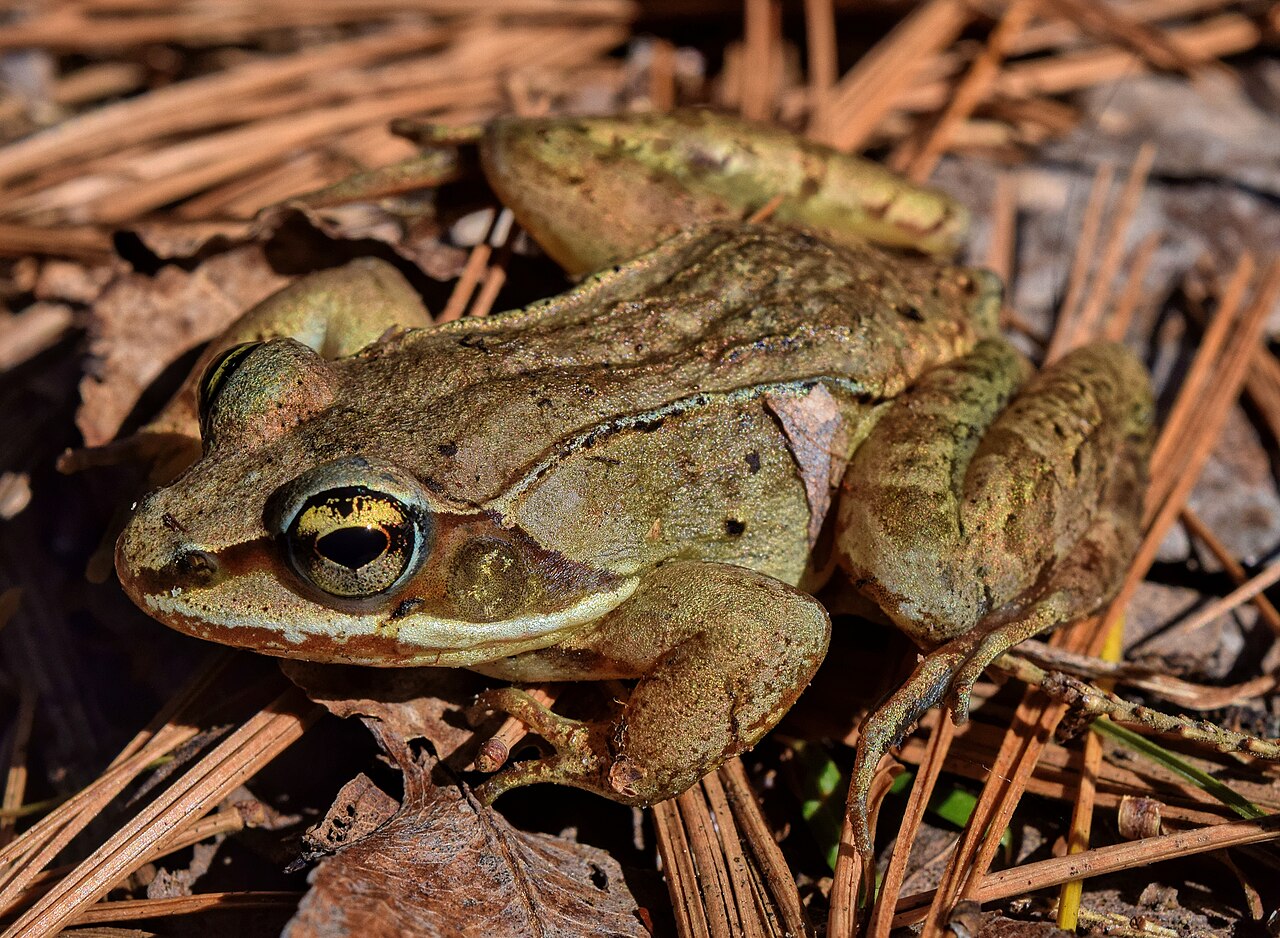
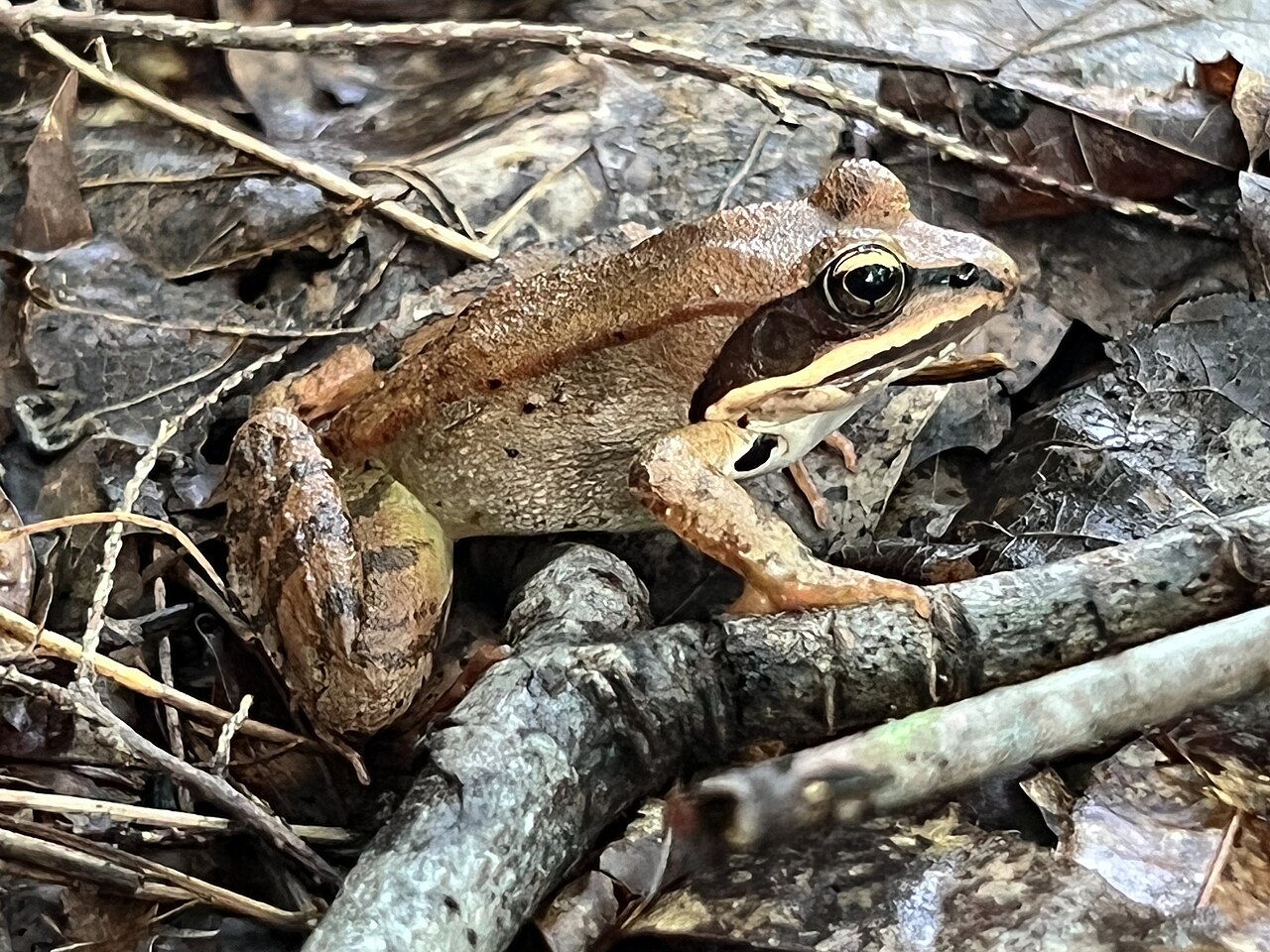
The wood frog (Lithobates sylvaticus) is the frog most people actually mean by orange frog. Adults run 1.5 to 3 in long, with a base color from pale tan through coppery rust to deep burnt orange, and a hard black mask running back from each eye across the eardrum.
That mask is the giveaway and no other orange frog in North America has it. Behind it, the back carries a pair of raised ridges running from behind each eye to the hip, and the belly is cream with dark mottling at the sides.
Wood frogs have the widest range of any North American amphibian, from Georgia and the Appalachians north through all of Canada and into Alaska and above the Arctic Circle. They breed explosively in fish-free vernal pools in late winter and early spring, often with ice still on the edges, then spend the rest of the year in moist forest leaf litter well away from water. That is why most wood frog sightings are a surprise orange hop beside a woodland trail rather than a frog at a pond.
Spring Peeper: Small, Tan-Orange and Very Loud
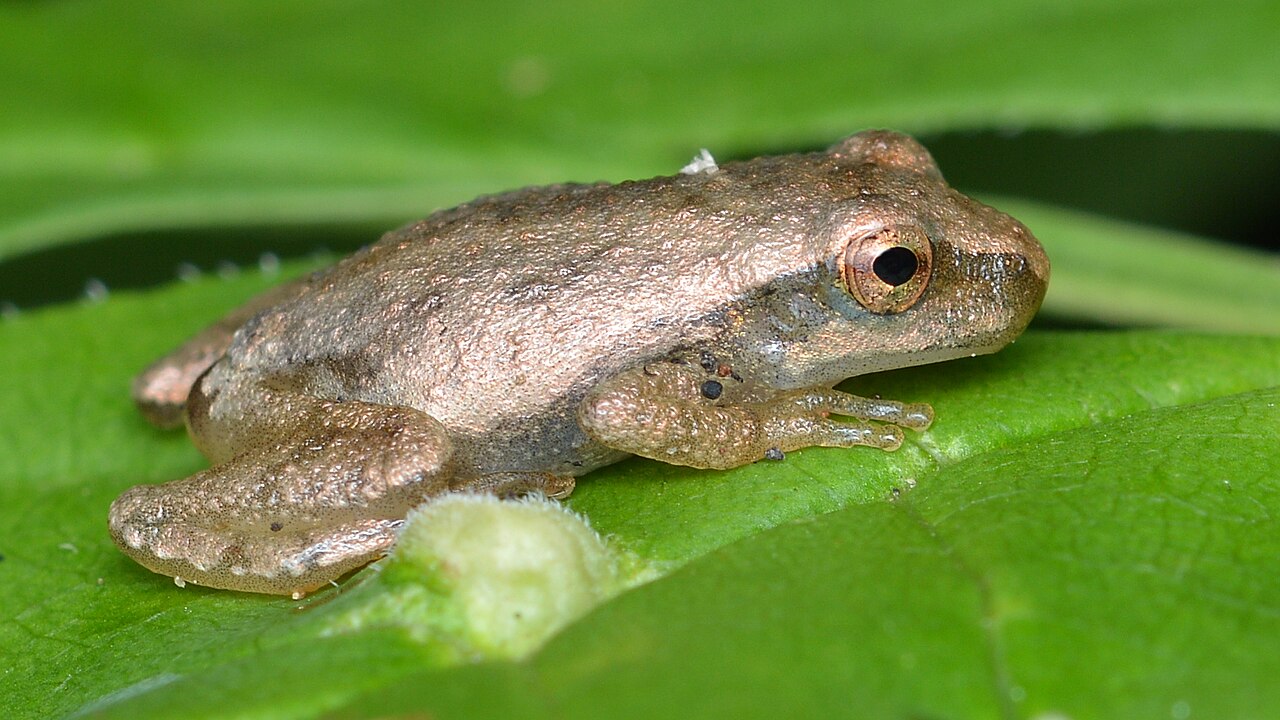
The spring peeper (Pseudacris crucifer) is a 0.75 to 1.5 in treefrog in tan, pinkish brown or light orange, marked with an irregular dark X across the back. An orange frog small enough to sit on a quarter, found anywhere east of the Great Plains, is a peeper far more often than anything else.
The X can be broken or faint, so check the toes instead: peepers have rounded sticky toe pads that wood frogs lack entirely. Color shifts with temperature and background, and the same individual may look cream in the morning and rich orange by afternoon.
They are heard far more than seen. From March through May a chorus can be deafening from 100 yards, and in late summer single males call sporadically from woodland edges. More on the call is in the species comparison below and in our guide to the yellow frogs that share the same habitat.
Green Frog: The Bronze Morph That Looks Orange
The green frog (Lithobates clamitans) is the species behind most orange frog sightings at the water’s edge, because its southern subspecies, the bronze frog, is coppery brown to orange-bronze rather than green. Adults are 2 to 4 in long, and the key feature is a pair of ridges running down the back that stop short of the hip rather than continuing to it.
Bronze individuals are common throughout the Southeast and turn up anywhere in the range, so an orange frog sitting half in the water on a pond edge in Georgia or Alabama is usually this. The call is a single abrupt note like a plucked banjo string, repeated every few seconds.
Green frogs stay close to permanent water all year, which separates them from wood frogs immediately on habitat alone. A green frog in its green phase is not rare at all; the bronze orange phase is simply a regional and individual variation in the same species.
Red-Legged Frogs: The Orange Frog of California and the Northwest
Search for orange frog California and you will mostly find two species: the California red-legged frog (Rana draytonii) and the northern red-legged frog (Rana aurora). Both are 2 to 5 in frogs with reddish to orange undersides on the belly and the backs of the hind legs, and a brown to reddish back with black flecking.
Turn the frog’s leg posture into the check: the orange is strongest on the lower belly and inner thighs, visible when the animal is sitting or swimming, while the upper surface stays dull. The California red-legged frog is federally threatened and found in coastal drainages and foothill ponds from Marin County south, and the northern species runs from Mendocino County up through Oregon, Washington and into British Columbia.
Because the California red-legged frog is protected, handling it is not legal without a permit. Photograph it from where you stand and move on.
Red Eft: The Bright Orange Animal That Is Not a Frog
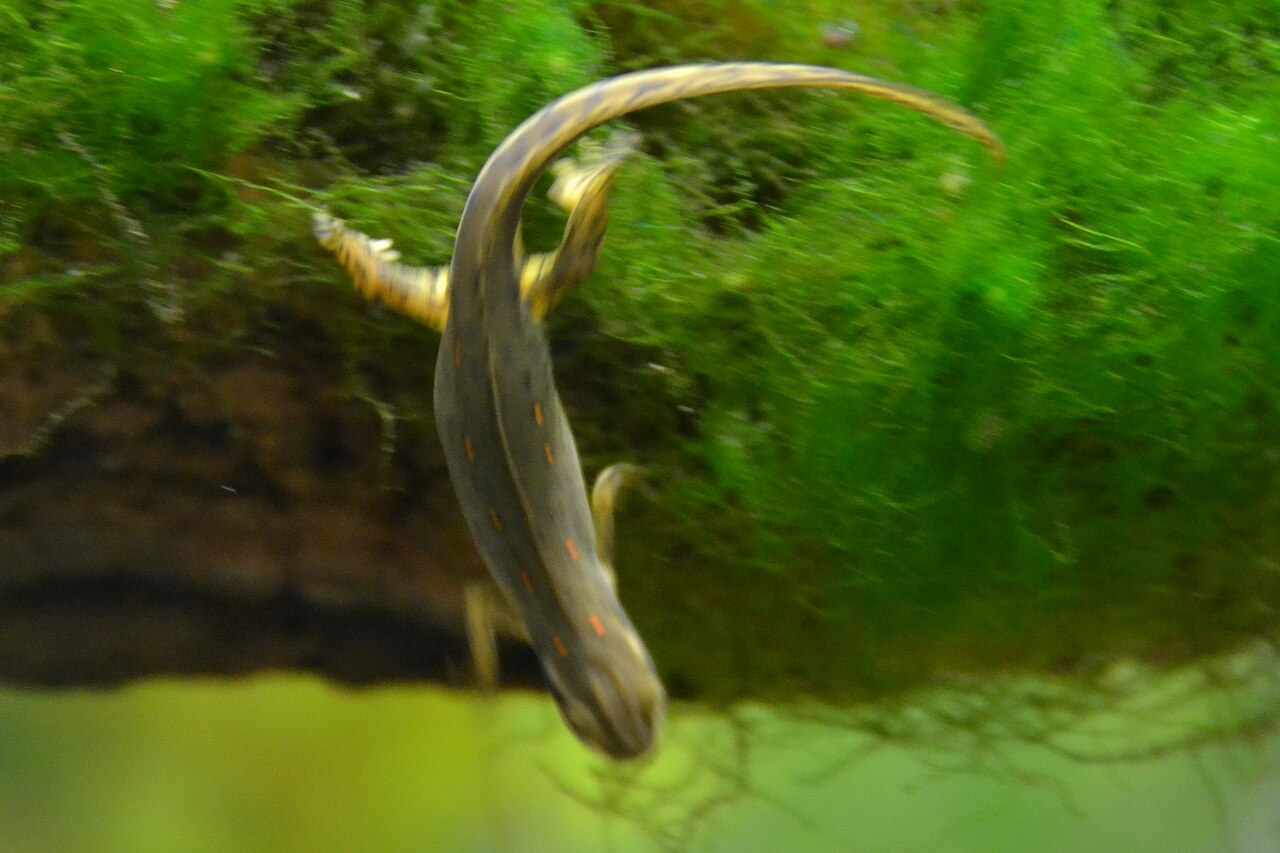
The single most reported orange amphibian in the eastern United States is the red eft, the terrestrial juvenile stage of the eastern newt (Notophthalmus viridescens). It is 1.5 to 3.5 in long, brilliant orange, with a row of small black-ringed red spots down each side, and it walks across the forest floor in broad daylight, often after rain.
It is a salamander, not a frog: it has a tail, four legs of similar size, no hopping, and a slow deliberate walk. The bright orange advertises tetrodotoxin in the skin, the same class of toxin found in pufferfish, which is why nothing eats efts and why they wander openly when every frog is hiding.
Efts are harmless to look at and photograph. Do not let children or dogs put one in their mouth, and wash your hands if you move one off a trail. After two to three years on land the eft transforms again into a drab olive aquatic adult, which is why nobody connects the two animals.
| Feature | Wood frog | Red eft | Spring peeper |
|---|---|---|---|
| Body shape | Frog, long hind legs | Salamander with tail | Frog, slender, tiny |
| Length | 1.5 to 3 in | 1.5 to 3.5 in | 0.75 to 1.5 in |
| Face mark | Black mask behind eye | None, black-ringed spots on sides | Dark bar between eyes |
| Movement | Long fast hops | Slow walk | Short hops, climbs |
| Toes | Pointed, no pads | Blunt, no pads | Round sticky pads |
| Safe to handle | Yes, wet hands | Look only, toxic skin | Yes, wet hands |
| Where you see it | Forest floor, vernal pools | Open forest floor by day | Shrubs, pond edges |
Orange Morphs of Normally Green Frogs
A frog that should be green and is bright orange instead is usually showing xanthism or erythrism, pigment conditions in which the yellow or red pigment cells dominate because the blue-reflecting layer underneath is missing or reduced. Green treefrogs, American bullfrogs and leopard frogs all turn up in orange versions this way.
These animals are genuinely rare, somewhere in the range of one in several thousand individuals, and they make up a large share of the orange frog photographs that go viral. The shape, size and call stay completely normal, so identify the species from its structure and treat the color as an accident.
A sudden orange cast on a frog you have watched for weeks is different and usually just temperature or background. Treefrogs in particular shift between green, brown and orange within an hour. Related color questions are covered in our guide to pink frogs and the purple frog question.
Orange Frog Pet Species: Dart Frogs, Pacman Frogs and Tomato Frogs
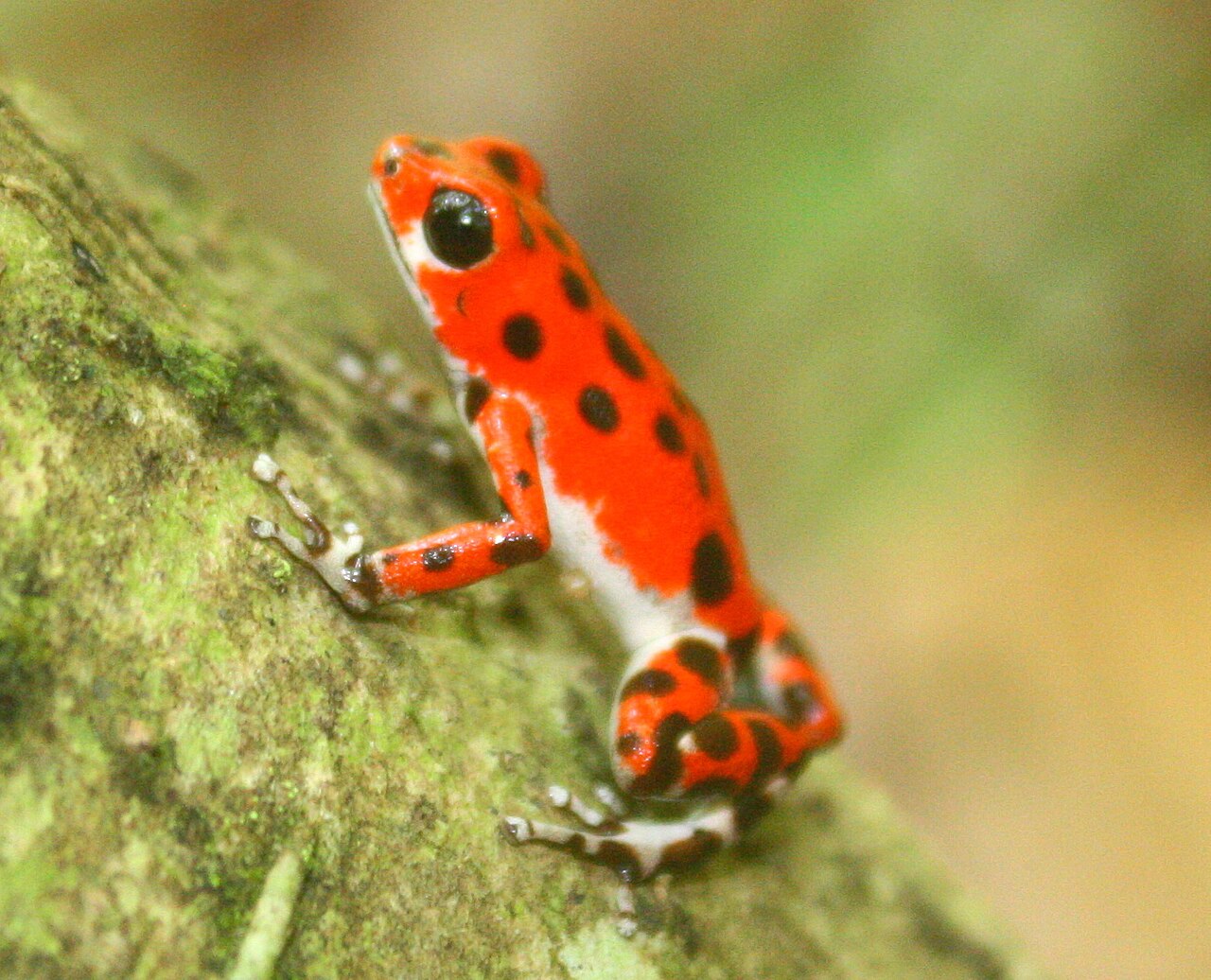
In the pet trade, orange frog means something else entirely. The usual candidates are the strawberry poison dart frog (Oophaga pumilio) in its orange populations, the bumblebee and orange morphs of Dendrobates species, apricot and albino morphs of the Cranwell’s horned frog or Pacman frog (Ceratophrys cranwelli), and the tomato frog (Dyscophus species) from Madagascar.
Captive-bred dart frogs are not toxic. Wild dart frogs build their alkaloid defenses from the mites and ants they eat, and that diet does not exist in a terrarium, so a captive-bred animal has nothing to deliver. They are still delicate 1 in animals that should not be handled casually.
If you find a bright, evenly orange frog with a smooth glossy skin and no native field marks in a US yard, an escaped or released pet is a reasonable first guess, and so is a red eft seen quickly. Escaped pets should be reported to a state wildlife agency rather than released.
Orange Frog Sound: Telling the Species Apart by Call
Call is often faster than color. Wood frogs make a short, dry, clucking quack that sounds like a distant flock of ducks and only lasts a few weeks in late winter. Spring peepers give a single high rising peep once per second, repeated by hundreds of males at once.
Green frogs and bronze frogs sound like a loose banjo string plucked once. Red-legged frogs call weakly, often underwater, in a stuttering series that is easy to miss entirely. Red efts make no sound at all, which is itself a useful clue: a silent orange amphibian walking by day is an eft.
Recording the chorus on a phone and comparing it to reference clips is the most reliable route for anyone who is not out there nightly, and it works the same way as sorting orange birds by song rather than plumage.
What Is the Orange Frog Called? Naming the Animal You Found
There is no species called the orange frog. The name is a color description people reach for, and matching it to a real animal means answering four questions: how long is it, does it have a tail, what mark is on its face or back, and which state are you in.
Work the list in that order. A tail means a salamander and almost certainly a red eft in the East. Under 1.5 in with sticky toe pads is a spring peeper. A black mask is a wood frog. Orange only on the belly and inner thighs in California, Oregon or Washington is a red-legged frog. Ridges that stop at the hip, beside permanent water, is a bronze green frog.
For range maps and current conservation status on any of these, the US Geological Survey amphibian monitoring program is the authoritative starting point, and state herpetological atlases fill in the local detail.
Can You Get Orange Frogs in Your Yard?
Yes, and the fastest way is to stop managing the yard so hard. Wood frogs and peepers need damp leaf litter, logs and shade within a few hundred feet of a fish-free pool that holds water into June, and they will colonize a suburban lot that offers those three things.
Skip the lawn chemicals, leave a brush pile, and let the leaves stay where they fall in at least one corner. Frogs absorb through their skin, so pesticide and fertilizer runoff does far more damage to them than to the insects it targets. A small unlined pool without fish will often pull in breeding wood frogs within two seasons.
What you cannot do is buy orange frogs and release them. Moving amphibians between watersheds spreads chytrid fungus and ranavirus, both of which have wiped out local populations, and in most states it is illegal on top of that.
Frequently Asked Questions
What is the orange frog theory?
The Orange Frog is a workplace positivity book and training program, not a biological idea, and it has nothing to do with amphibians. If you reached this page looking for it, the frog you want is a metaphor. If you reached it holding a photograph of a real orange frog, start with the wood frog and the red eft.
How rare is a green frog?
Green frogs are one of the most common frogs in eastern North America and are not rare at all. The confusion comes from the bronze phase, which is orange-brown and makes people think they have found something unusual. A genuinely rare color is an orange or blue morph of a normally green species.
What is the rarest frog?
Globally, species such as the Sehuencas water frog and several Atelopus harlequin toads are down to tiny remnant populations. In the United States the rarest native frogs are the dusky gopher frog, with a wild population in the low hundreds in Mississippi, and the mountain yellow-legged frog in California.
What color is a female frog?
Female frogs are usually the same color as males of the same species, and color is not a reliable way to sex a frog. Females are typically larger, with a plumper body during breeding season, while males often have darker throats, enlarged thumb pads and in some species a visible vocal sac.
What is a frog’s worst enemy?
For adult frogs the main predators are snakes, herons, raccoons and large fish, and tadpoles lose heavily to dragonfly larvae and fish. Across whole populations, though, the worst enemies are habitat loss, road mortality and the chytrid fungus Batrachochytrium dendrobatidis, which has driven dozens of species to extinction.
Can you get orange frogs as pets legally?
Captive-bred dart frogs, Pacman frogs and tomato frogs are legal to keep in most states and are sold routinely. Native species are a different matter: many states prohibit collecting wild amphibians without a permit, and federally listed frogs such as the California red-legged frog cannot be taken at all.
Color-first identification works for more than frogs. The same method applies in our guides to orange snakes and orange caterpillars, both of which include species people mistake for something dangerous.