Pink Frog Identification: 9 Species and Morphs That Are Really Pink
Pink frogs are real, but almost none of them are naturally pink. The pink frog you see in a photo is usually an albino pet morph, a wild frog with a pigment quirk, or a reddish species that photographs far pinker than it looks in hand. Only a handful of species in the United States ever show pink tones, and the strongest pink animals come from the pet trade.
That matters for identification, because color is the least reliable thing about a frog. A single species can shift shade within minutes, and two frogs of the same species can look rose and olive side by side. Safety first: the pink dart frogs sold as “strawberry” morphs carry skin toxins, and a pink Pacman frog bites hard enough to draw blood. Nothing pink in North America is dangerous to touch, but every frog should be handled with wet hands or not at all.
There is no frog species that is pink as its normal color. Pink frogs are albino or leucistic morphs (most often bullfrogs and Pacman frogs), erythristic wild individuals, or red species like the tomato frog and strawberry poison dart frog that read as pink in photos. Wild pink frogs are rare accidents of pigment, not a breed.
| Frog | How pink it really is | Size | Where | Safe to handle? |
|---|---|---|---|---|
| Albino American bullfrog | Pink to peach, true albino | 3.5 to 6 in (9 to 15 cm) | Pet trade, rare wild finds | Yes, wet hands |
| Albino Pacman frog | Apricot pink with cream | 3 to 5.5 in (8 to 14 cm) | Pet trade only | No, strong bite |
| Strawberry poison dart frog | Red to rose, some morphs | 0.7 to 1 in (18 to 25 mm) | Central America | No, skin toxins |
| Tomato frog | Orange red, pink in flash photos | 2.5 to 4 in (6 to 10 cm) | Madagascar, pet trade | Briefly, sticky secretion |
| Mexican burrowing toad | Purple gray body, warm stripe | 2.5 to 3.5 in (6 to 9 cm) | South Texas, Mexico | Yes, wet hands |
| Northern cricket frog | Pink to rust dorsal stripe | 0.6 to 1.5 in (15 to 38 mm) | Eastern and central US | Yes, very delicate |
Are There Any Pink Frogs?
Yes, pink frogs exist as individuals, but no species is pink by default. Every verified pink frog falls into one of three buckets: a captive-bred albino line, a wild animal missing one pigment layer, or a red or orange species whose color photographs pink under flash. Herpetologists treat “pink frog” as a description of an animal, never as a species name.
The practical test is to look at the eyes and the pattern. An albino has pink or ruby eyes and no dark markings anywhere. A wild erythristic frog keeps its normal dark eyes and usually keeps a faint version of its species pattern. A red species like the tomato frog has normal eyes and even color with no washed-out look at all.
Why a Frog Turns Out Pink: Albinism, Leucism and Erythrism
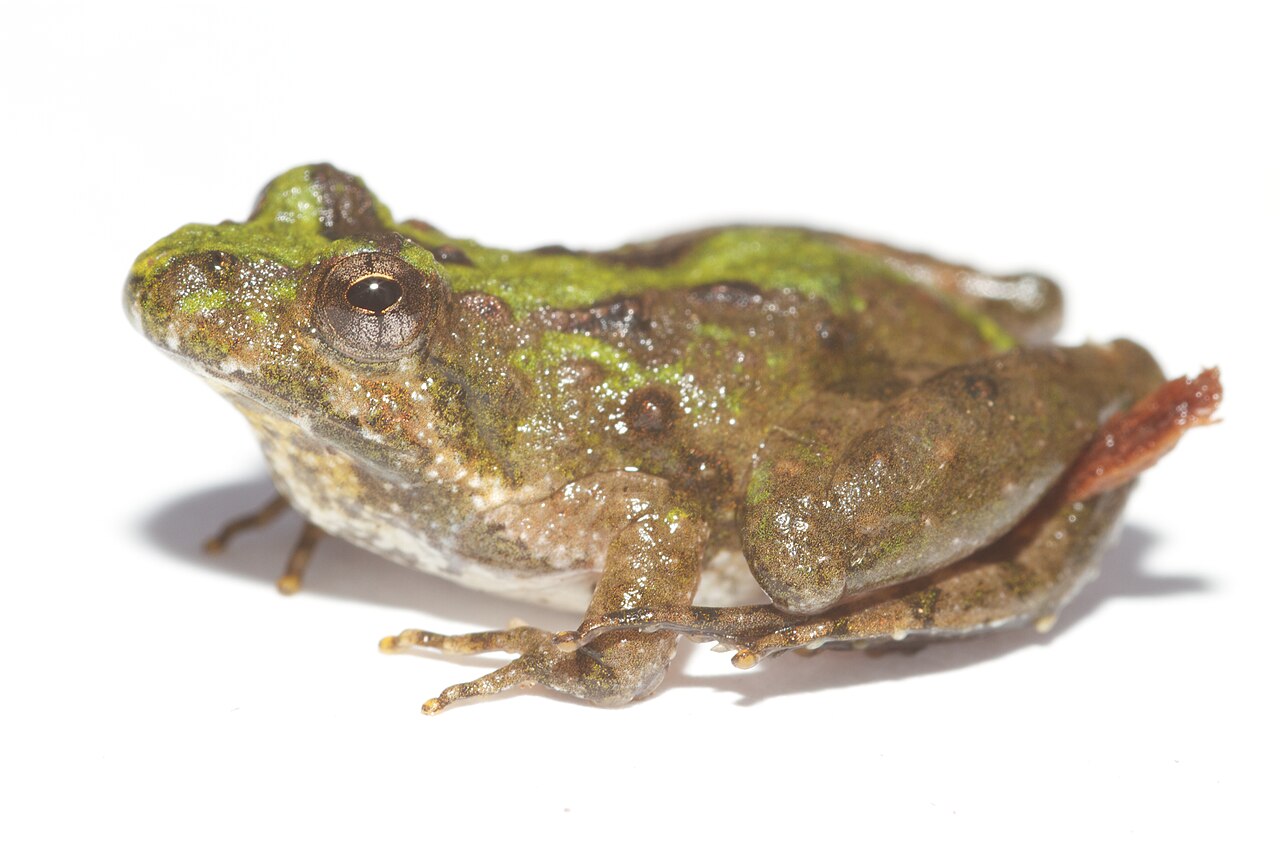
Frog color comes from three stacked layers of pigment cells. Melanophores hold the dark browns and blacks, iridophores reflect blue light, and xanthophores carry the yellow and red pteridine pigments. Green frogs are green because blue reflection passes through a yellow filter, which is why a frog never needs green pigment at all.
Remove the dark layer and the blue reflection and only the warm pigments are left, which is how a frog ends up pink or peach. That is albinism when melanin is absent entirely and leucism when pigment cells failed to reach the skin. Erythrism is the opposite problem, an excess or dominance of red pigment, and it produces the rose-colored wild frogs that occasionally turn up in survey photos. The same mechanics in reverse create blue frogs, which is why a blue morph of the American green tree frog shows up far more often than a pink one.
Albino American Bullfrog: The Pink Frog You Are Most Likely to See
The albino American bullfrog (Lithobates catesbeianus) is the closest thing to a reliably pink frog. These animals are pale peach to salmon with ruby eyes and translucent skin that shows blood vessels, which pushes the overall impression firmly into pink. They are bred for the pet and aquarium trade and reach 3.5 to 6 in (9 to 15 cm) in body length.
Wild albino bullfrogs are documented but very scarce, because a pink tadpole in a green pond is an easy meal. If you find one, photograph it and report it to a state wildlife agency rather than collecting it. Normal bullfrog tadpoles are a different story entirely and are covered in our guide to the frog life cycle.
Pink Pacman Frogs and Their Morphs
Cranwell’s horned frog (Ceratophrys cranwelli) is sold under morph names like albino, apricot and strawberry pineapple, and the best of those animals are genuinely pink. They are round, nearly as wide as they are long, and spend their lives half buried waiting for prey to walk past. Adults reach 3 to 5.5 in (8 to 14 cm).
Do not treat a pink Pacman frog as a handling animal. They have strong jaws, odontoid projections in the lower jaw that work like teeth, and a feeding response that does not distinguish a finger from a cricket. Bites are not venomous but they bleed, and the frog will hold on.
Strawberry Poison Dart Frog: Are Pink Poison Dart Frogs Poisonous?
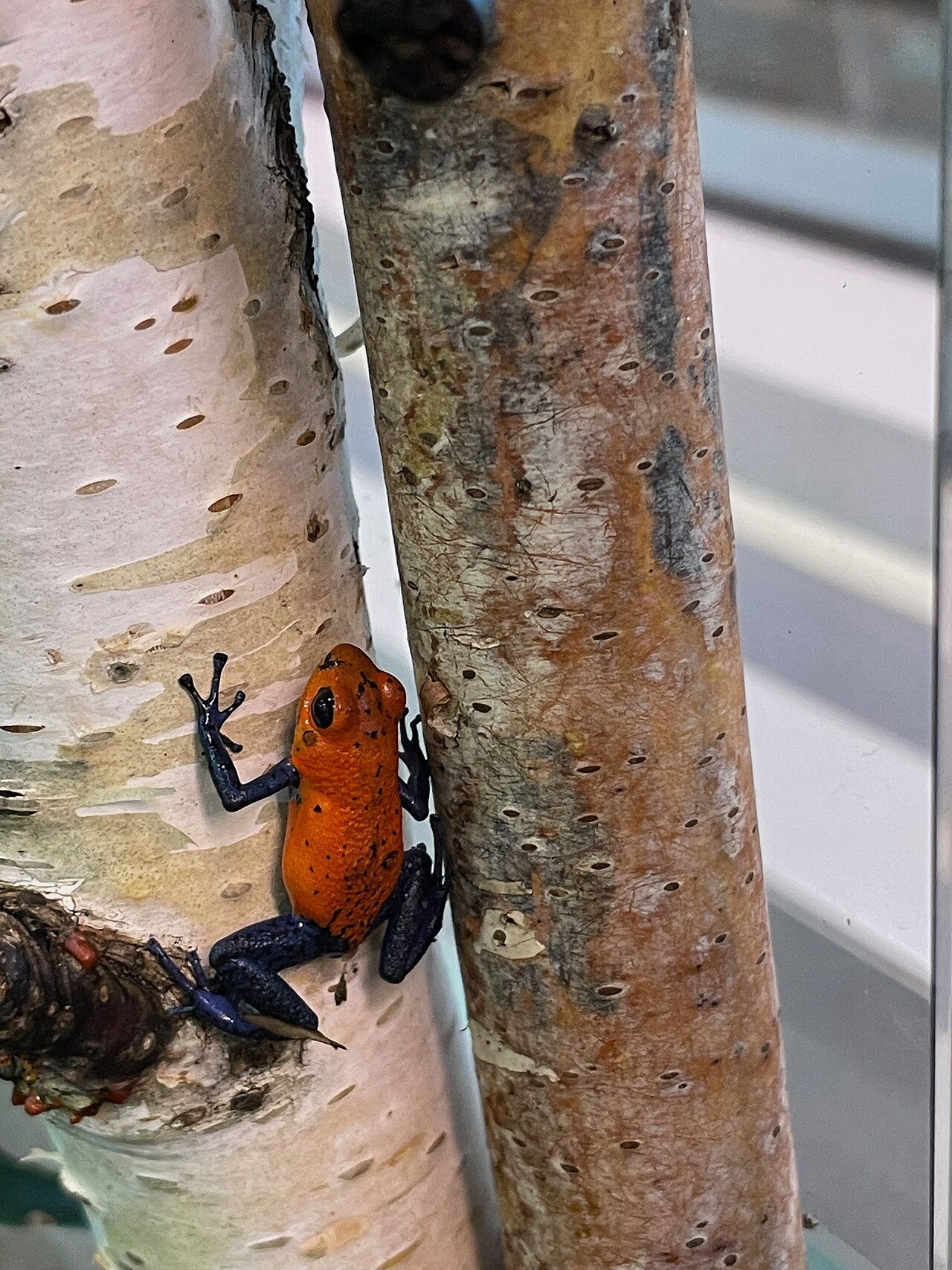
Yes, pink poison dart frogs are poisonous, and the pink ones are usually the strawberry poison dart frog (Oophaga pumilio) from Nicaragua, Costa Rica and Panama. Wild animals carry alkaloid toxins in their skin, concentrated from the mites and ants they eat. The toxins are a defense against being swallowed, not a weapon, so the risk comes from handling then touching eyes or mouth.
This species is famous for its color morphs, and some island populations in the Bocas del Toro archipelago are rose, salmon or pale pink rather than the classic red. Captive-bred animals lose their toxicity within a generation because the dietary source is gone, which is why keepers handle them without incident. For a cooler-toned relative, see the blue poison dart frog.
Tomato Frog: Red, Pink and Mildly Sticky
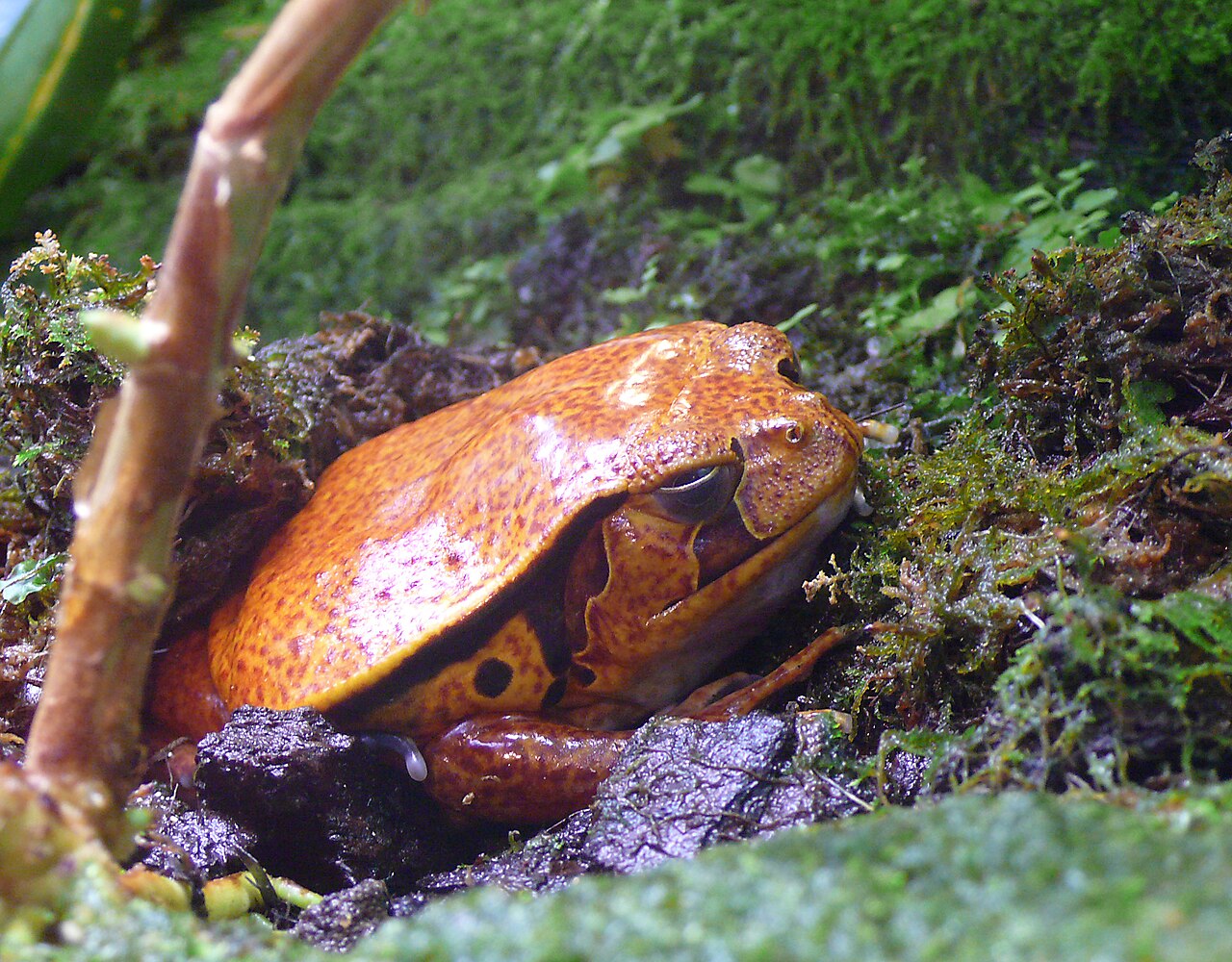
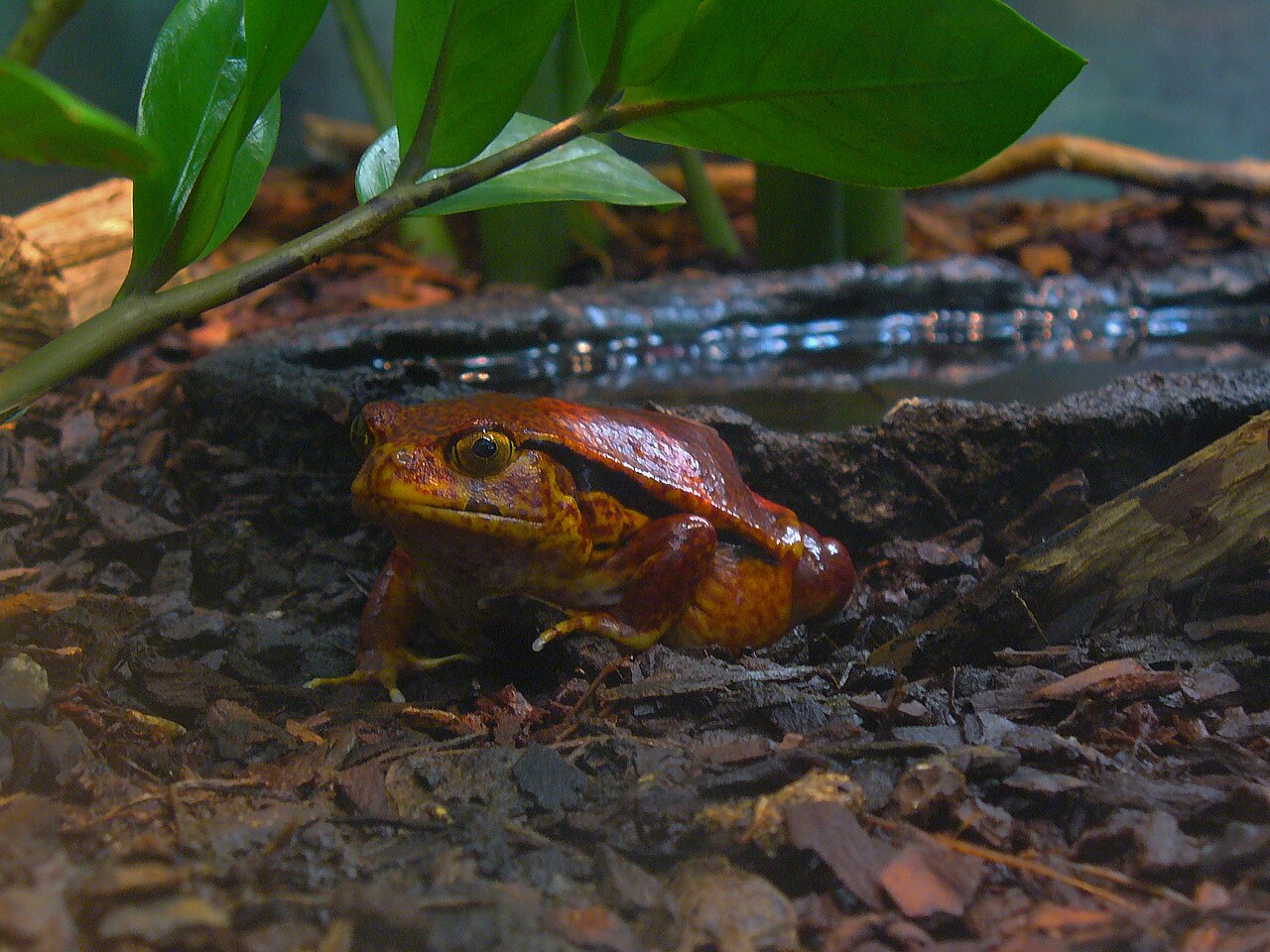
Tomato frogs (Dyscophus guineti and relatives) are the species most often misidentified as pink frogs, because flash photography lifts their deep orange red into a rose tone. They are stout, short-legged burrowers from Madagascar, 2.5 to 4 in (6 to 10 cm) long, with females noticeably larger than males.
When threatened a tomato frog puffs up and secretes a white, gummy substance that sticks to the roof of a predator’s mouth and can irritate human skin and eyes. It is not dangerous, but it is a reason to wash your hands. In the pet trade they are common, hardy and almost entirely terrestrial.
Mexican Burrowing Toad: A Purple Pink Oddity in South Texas
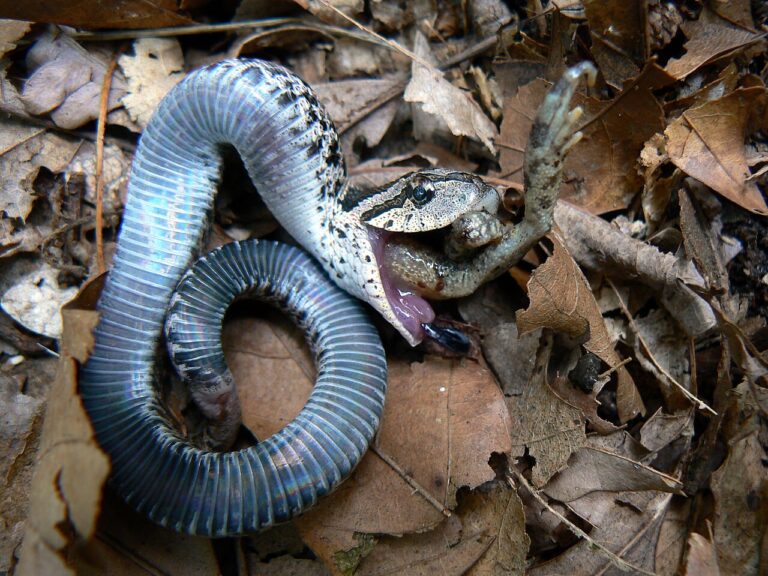
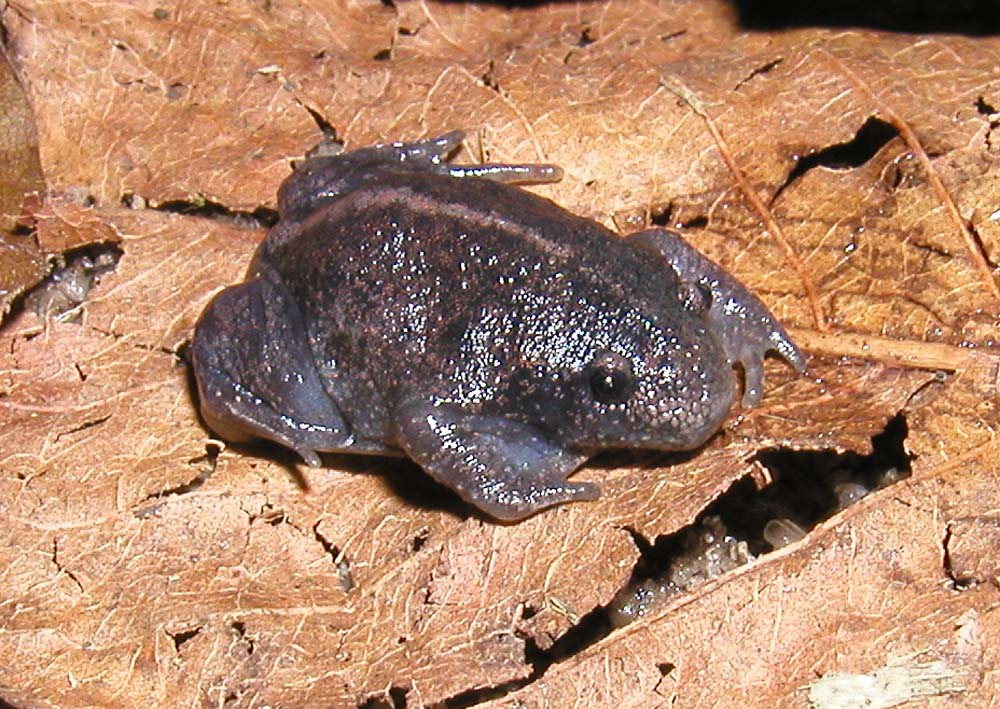
The Mexican burrowing toad (Rhinophrynus dorsalis) is the strangest amphibian on the US list and the closest a native species gets to pink territory. The body is slate to purple gray, loose and bloated, with a single stripe down the back that runs yellow to reddish orange. Against that purple skin the whole animal reads as dusty pink in many photos.
In the United States it occurs only in the Lower Rio Grande Valley of south Texas, and it spends almost the entire year underground. It surfaces to breed after heavy summer rain, and the call is a loud low whoop that carries across flooded fields. Seeing one is a genuine event for a Texas herper.
Northern Cricket Frog: The Pink Striped Native
If you want a wild pink frog in the United States, the northern cricket frog (Acris crepitans) is your realistic candidate. This tiny frog carries a broad dorsal stripe that varies by individual from green to brown to rust to clear rose pink, and the variation has nothing to do with age or sex. Adults are only 0.6 to 1.5 in (15 to 38 mm) long.
Cricket frogs live at the edges of ponds, ditches and slow streams across the eastern and central states, and they call with a sound like two pebbles clicking together. They are also fragile. A pink-striped cricket frog is worth a photo and nothing more, because the species has declined sharply in the northern part of its range.
Can Tree Frogs Be Pink? And Are Pink Red-Eyed Tree Frogs Real?
Tree frogs can be pink, but only as individual pigment anomalies or captive albino lines, never as a natural species color. Blue morphs of green tree frogs are well documented because losing the yellow filter is a common mutation. Losing melanin and blue reflection together is much rarer, so pink tree frogs stay anecdotal.
Pink red-eyed tree frogs are not real as a color form. Agalychnis callidryas has blue to violet flanks with cream bars and orange feet, and in some individuals those flanks run pink enough to fool a viewer. Almost every bright pink red-eyed tree frog image online is edited, and the same goes for most pink photos of the black-eyed tree frog.
The Purple Frog and Other Pink Toned Rarities
A few frogs are naturally close to pink without being pink. The Indian purple frog (Nasikabatrachus sahyadrensis) is a bloated, pig-nosed burrower whose skin ranges from dark purple to a mauve pink, and it spends all but a couple of weeks a year underground. It is the best natural example of a frog in the pink family of colors.
Others worth knowing are the Chile Darwin’s frog group and various Mantella species with salmon flanks, plus the pinkish throat of some spadefoot toads during breeding. In every case the pink is restricted to part of the body. Full-body pink remains a pigment accident.
Pink Frog Look-Alikes: Axolotls, Toys and Edited Photos
The most common “pink frog” in search results is not a frog at all. The leucistic axolotl (Ambystoma mexicanum) is a salamander that keeps its gills into adulthood, and its pale pink body with feathery head frills is what most people are actually picturing. Axolotls never leave the water and never metamorphose under normal conditions.
The rest of the field is merchandise and manipulation: plush toys, craft products, costumes and heavily saturated stock images. A quick reality check is the eye. Edited photos leave the iris untouched while the skin goes candy pink, which no real pigment condition does. The same test sorts out hoax images of a pink spider or a pink bird.
What Is the Rarest Frog Color?
Among wild frogs, true pink and true blue are the rarest colors, and both arise the same way, through the loss of one pigment layer rather than through adaptation. Blue is reported more often simply because the mutation behind it is more common. Pure white albinos are also rare in the wild for the obvious reason that they rarely survive to adulthood.
Green, brown and gray dominate because they work. A frog that cannot be seen against leaf litter or pond scum lives long enough to breed, and anything bright is either hiding a toxin or living somewhere a predator will not look. Aposematic red species like dart frogs are the exception that proves the rule. Research and survey records for US amphibians are collected by the US Geological Survey.
Frequently Asked Questions
What is the rarest frog on Earth?
Several species compete for the title. The Hula painted frog of Israel was considered extinct for 55 years before its rediscovery, and the Sehuencas water frog of Bolivia was down to a single known individual before more were found in 2019. Rarest in practice means last counted, so the list changes.
Are there any pink frogs in the wild in the United States?
Yes, but only as individuals. Pink-striped northern cricket frogs occur regularly, albino bullfrogs turn up occasionally, and the Mexican burrowing toad in south Texas has a purple pink cast. No US species is pink as its normal color.
What are some good names for pink frogs?
Owners usually pick names that lean on the color or on food: Rosie, Blossom, Peach, Guava, Strawberry, Bubblegum, Coral, Flamingo. For a Pacman frog, something blunt like Chomp or Tank fits the personality better than a soft color name.
What is a cute name for a girl frog?
Lily, Pippa, Marigold, Juniper, Bijou, Clover and Mossy all work well. Note that you cannot sex most young frogs reliably. In many species males are smaller and develop dark nuptial pads on the thumbs, so an unsexed juvenile may surprise you.
What frogs can switch genders?
Sex reversal is documented in several frogs. Green frogs (Lithobates clamitans) in suburban ponds show reversed sex ratios linked to estrogenic runoff, and common frogs and African clawed frogs reverse sex under hormone exposure in the lab. It is an environmental effect on development, not an adult choice.
Can I keep a pink frog as a pet?
Albino Pacman frogs and albino bullfrogs are widely available and straightforward to keep in a humid terrarium with a shallow water dish. Pink dart frog morphs need more care and higher humidity. Never take a wild pink frog home, because unusual wild animals matter more to researchers than to collections.