Leopard Frog Identification: Spots, Size, and Safe Handling
A leopard frog is a medium sized North American true frog with dark, light rimmed spots on a green or brown back, and yes, you can safely pick one up with clean, wet hands. The name covers several close relatives in the genus Lithobates, including the northern leopard frog (Lithobates pipiens) and the southern leopard frog (Lithobates sphenocephalus).
These are the frogs most Americans meet first, the ones that explode out of wet grass at a pond edge. Telling a leopard frog from its near twin, the pickerel frog, settles most of the questions people have about them.
Leopard frogs are 2 to 4.5 in (5 to 11 cm) spotted true frogs found across most of North America. They are not poisonous and are safe to handle briefly with wet hands, though their skin absorbs oils and soaps. They eat insects, live 2 to 5 years in the wild, and are hunted by herons, snakes, raccoons, and fish.
| Quick Facts | Leopard Frog |
|---|---|
| Scientific names | Lithobates pipiens, L. sphenocephalus, and relatives |
| Adult size | 2 to 4.5 in (5 to 11 cm) snout to vent |
| Markings | Round dark spots with pale halos, two raised back ridges |
| Range | Most of the US and southern Canada |
| Lifespan | 2 to 5 years wild, up to 9 in captivity |
| Toxicity | None dangerous to humans |
What Does a Leopard Frog Look Like?
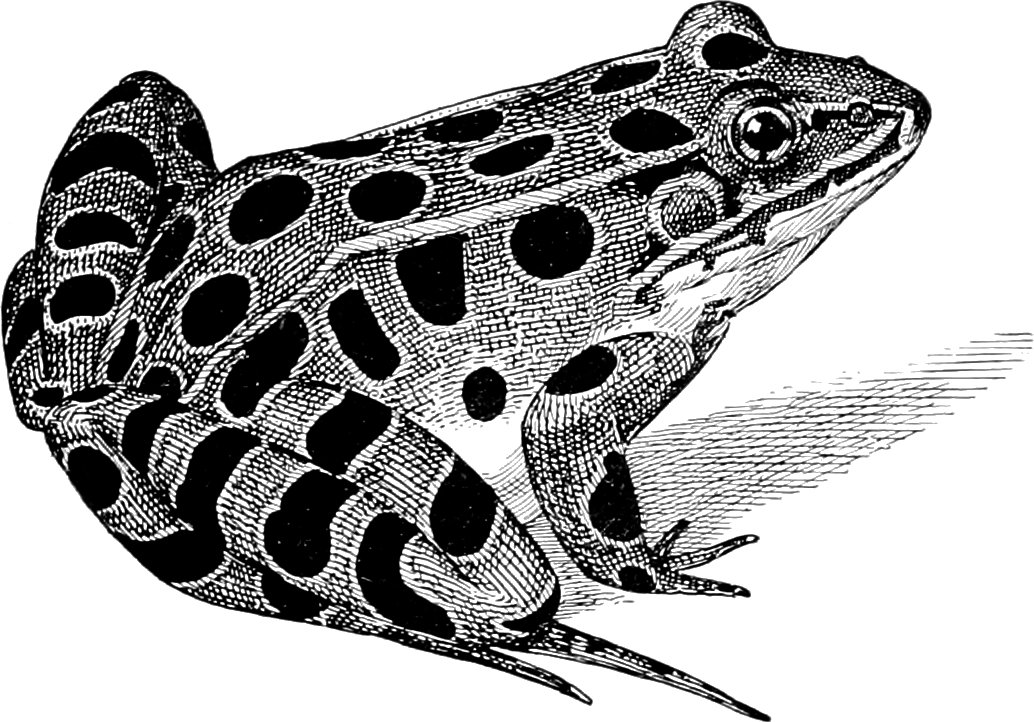
A leopard frog is slim and long legged, with a pointed snout and two pale ridges running from behind each eye to the hip. The ground color ranges from bright green to olive to brown, often mixed on the same animal, and scattered over it are the dark spots that give the frog its name, each ringed by a thin lighter border. Females run noticeably larger than males.
The escape jump is part of the identification. A startled leopard frog makes several long, erratic leaps toward water rather than one hop, and that zigzag is a reliable field mark in tall grass. Unlike a green tree frog or the invasive Cuban tree frog, it has no expanded toe pads and never climbs.
Can You Touch a Leopard Frog?

You can touch a leopard frog, and it will not hurt you. There is no toxin that harms human skin, no venom, and no bite worth worrying about. The risk runs the other way: frog skin is thin, permeable, and used for breathing, so lotion, sunscreen, repellent, and soap residue pass straight into the animal. Wet your hands in pond water first, hold it briefly, put it back, and wash afterward, because frogs and pond water can carry Salmonella.
People often ask whether a leopard toad is poisonous, mixing up the two groups. True toads have parotoid glands behind the eyes that ooze a bitter, irritating secretion, which is why a dog that mouths one drools and backs off. Leopard frogs have no such glands, so touching leopard toads or frogs is a hand washing issue, not a poisoning one.
Leopard Frog vs Pickerel Frog: How to Tell Them Apart
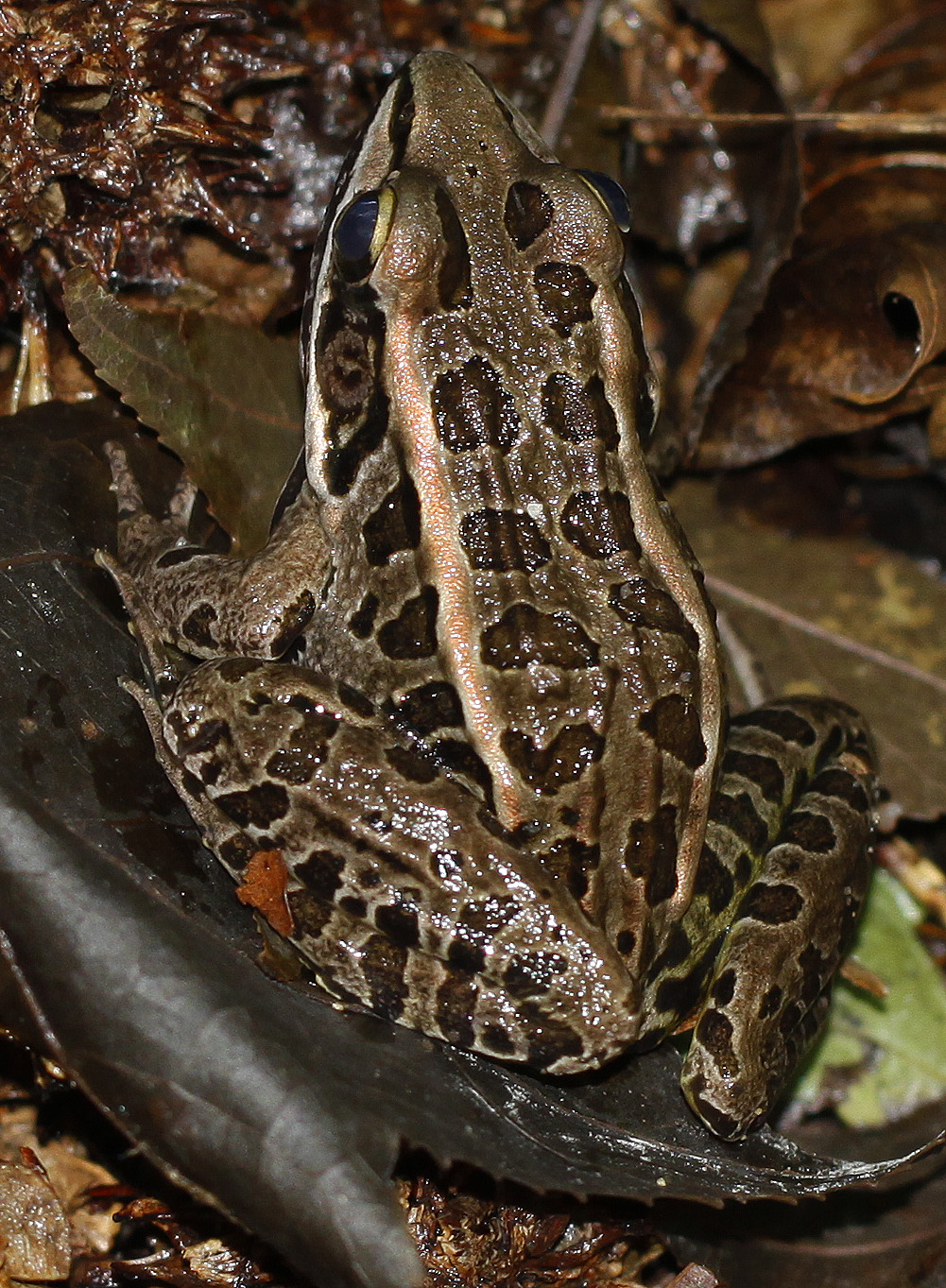
The pickerel frog (Lithobates palustris) is the look alike that trips up almost everyone, and it is the one frog in this group whose skin secretions genuinely matter. Its spots are squarish and set in two neat parallel rows down the back. Leopard frog spots look thrown on; pickerel frog spots look printed in columns.
The second check is the inner thigh. A pickerel frog flashes bright yellow to orange on the hidden surface of the hind legs, a warning color leopard frogs lack, and its secretions can kill other frogs kept in the same container. Habitat breaks the tie: pickerel frogs favor cool, clear streams, leopard frogs weedy pond margins and wet meadows.
Where Leopard Frogs Live and What Eats Them

Leopard frogs need three things across a year: a weedy pond for breeding, shallow water for tadpoles, and damp meadow for summer foraging. That third requirement is why they are also called meadow frogs, and why draining a wet field removes them even when the pond is untouched. In winter they settle on the oxygen rich bottom of a pond that does not freeze solid, the strategy covered in our guide to whether frogs hibernate.
What eats a leopard frog is a long list, which is the point of laying so many eggs: herons, bitterns, garter snakes, water snakes, raccoons, mink, bullfrogs, and largemouth bass. Adults hunt by sight and strike at motion, which is why they ignore a dead insect lying in front of them. The US Fish and Wildlife Service tracks western populations that have declined sharply; current listings are at fws.gov.
Is a Leopard Frog a Good Pet, and Is It Rare?

A leopard frog is a reasonable beginner amphibian but not a rewarding one. It needs a long tank rather than a tall one, a shallow dechlorinated water area, 65 to 75 F (18 to 24 C), and live crickets or worms two or three times a week. It will not tolerate handling, and a stressed leopard frog jumps hard enough to injure its snout against the glass.
Leopard frogs are not rare as a group, and captive bred animals are cheap and widely available. Individual populations are another matter: the northern leopard frog has vanished from much of the Rocky Mountain West. If you want a display animal you will enjoy watching, an arboreal species such as the American green tree frog, the blue tree frog, or the striking glass frog suits a planted vivarium far better.
Frequently Asked Questions
Is a leopard frog rare?
Not overall. Southern and northern leopard frogs remain common across the eastern and central United States. In the West the picture reverses: northern leopard frogs have disappeared from large parts of Colorado, Washington, and Arizona and carry state protection there. Status depends on which state you are standing in.
What is the lifespan of a leopard frog?
Two to five years in the wild, with most frogs never reaching a second breeding season because of predation. In captivity, with steady food and no herons, they commonly reach 6 to 9 years. Tadpoles take 70 to 110 days to finish metamorphosis, depending on water temperature.
Why can’t frogs drink water?
Frogs take in water, they just do not swallow it. They absorb it through a patch of thin, permeable skin on the belly and thighs called the drink patch. That same permeability is why a leopard frog dries out within hours away from moisture and why hand oils are a real risk to it.
What is a leopard frog’s worst enemy?
Wading birds take the most adults, with herons and bitterns working the shallow margins the frogs use for cover. Garter and water snakes account for many more. Habitat loss outranks both, since draining one wet meadow removes the summer range a whole local population depends on.