Lynx Symbolism: Spiritual Meaning, Omens and What It Means to See One
Seeing a lynx is traditionally read as a message about what you already know and are not admitting. Lynx symbolism centers on secrecy, silent observation and sight that goes through surfaces, and the animal behind it earned that reputation honestly: a lynx watches for hours, moves without sound and is seen only when it chooses to be seen.
Four species carry the name. The Canada lynx (Lynx canadensis) of the boreal forest and the bobcat (Lynx rufus) across most of the United States, the Eurasian lynx (Lynx lynx) from France to Siberia, and the endangered Iberian lynx (Lynx pardinus) in Spain and Portugal. Each region built its beliefs around the cat it actually had, which is why Siberian lore treats the lynx as a forest spirit while American folk reading treats it as a keeper of secrets.
Lynx symbolism stands for hidden knowledge, silence, solitude and the ability to see what others miss. Seeing a lynx is commonly read as a sign to watch and listen rather than speak, and to trust what you have quietly observed. A lynx crossing your path is read as a secret coming to light, either yours or someone else’s.
| Situation | Traditional reading |
|---|---|
| Lynx crossing your path | A secret surfaces, stay silent until you know more |
| Lynx watching you | You are being read more accurately than you think |
| Lynx at night | Trust instinct over argument, look past the obvious |
| Lynx near your home | Something inside the household is being concealed |
| White or pale lynx | Clarity after confusion, winter patience |
| Dead lynx found | A concealment ends, hidden matters become public |
| Lynx in a dream | Knowledge you hold but have not acted on |
What Does a Lynx Symbolize?
The dominant meaning is sight that penetrates. From classical antiquity onward the lynx was credited with eyes that could see through walls and through pretense, and that belief became the whole symbolic core: discernment, clairvoyance, awareness of what is being hidden. The English phrase lynx eyed preserves it.
Secrecy is the second strand, and it runs in both directions. The lynx is read as the animal that knows secrets and as the animal that keeps them, which is why the modern spiritual literature pairs it with silence, discretion and the advice to stop explaining yourself.
Solitude is the third. Lynxes hunt alone across large territories and avoid other lynxes outside the breeding season, so a sighting is read as a prompt toward independence and inner work rather than toward company. Compare this with bobcat symbolism, where the same family of cat is read as boundary setting and quick decision making rather than as hidden knowledge.
What Are the Qualities of a Lynx?

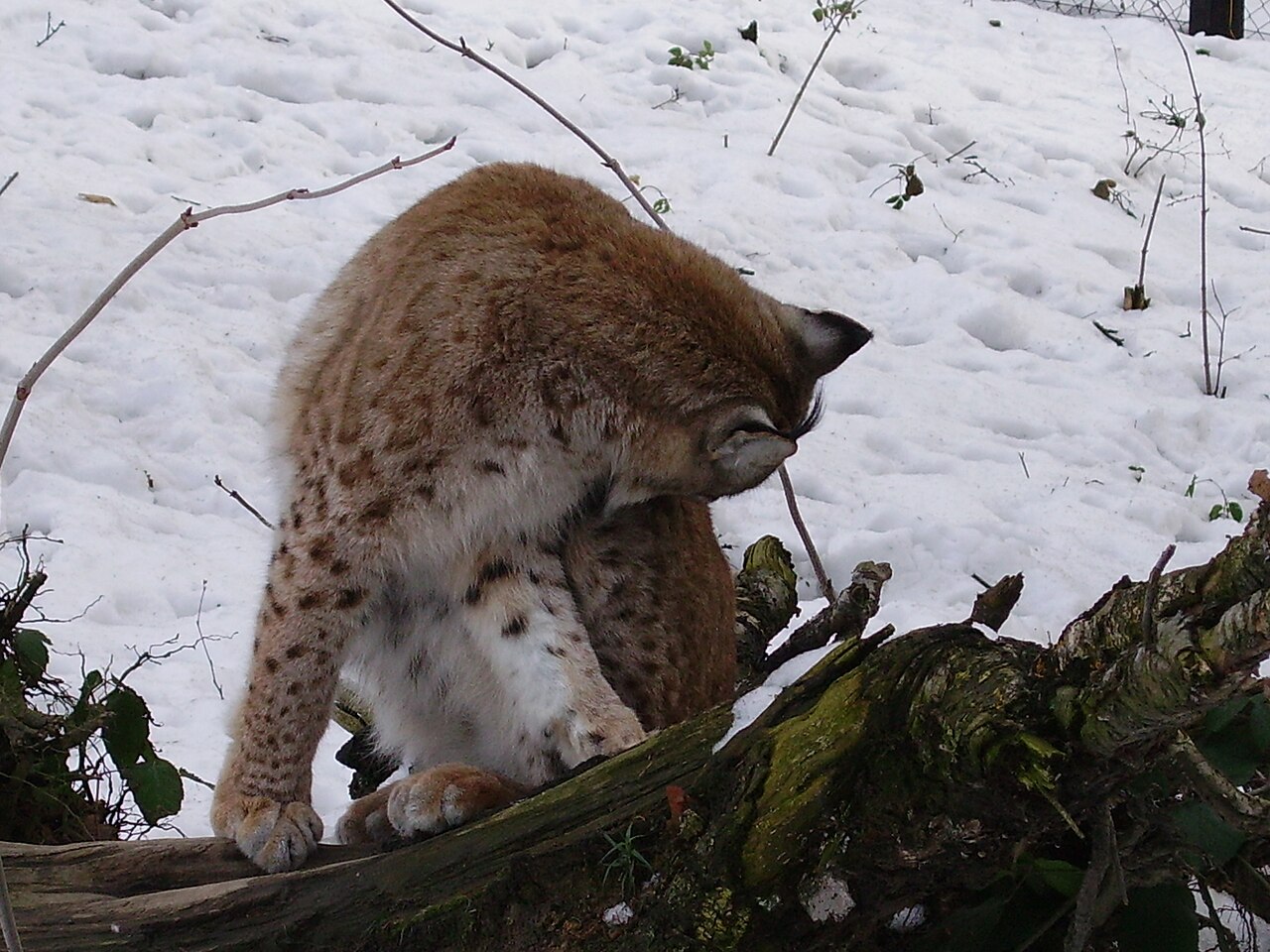
The symbolism tracks observable behavior, so the qualities worth naming are real ones. A Canada lynx weighs 18 to 24 lb (8 to 11 kg) and has paws that spread to roughly the size of a human hand, which lets it cross deep snow where its main prey, the snowshoe hare, sinks. Specialization, not brute force, is its defining trait.
It is extraordinarily patient. Lynxes hunt by waiting at hare runways and ambushing from a few feet away rather than by pursuit, and radio tracked animals spend most of the day resting and watching. The ear tufts and the ruff amplify sound, and the species can locate prey under snow by hearing alone.
It is also almost invisible. People who live inside Canada lynx range for decades may never see one. That rarity is why a sighting carries weight in folk reading at all, in the same way an unusual bear encounter is treated as significant rather than routine.
Lynx Symbolism in Native American Traditions
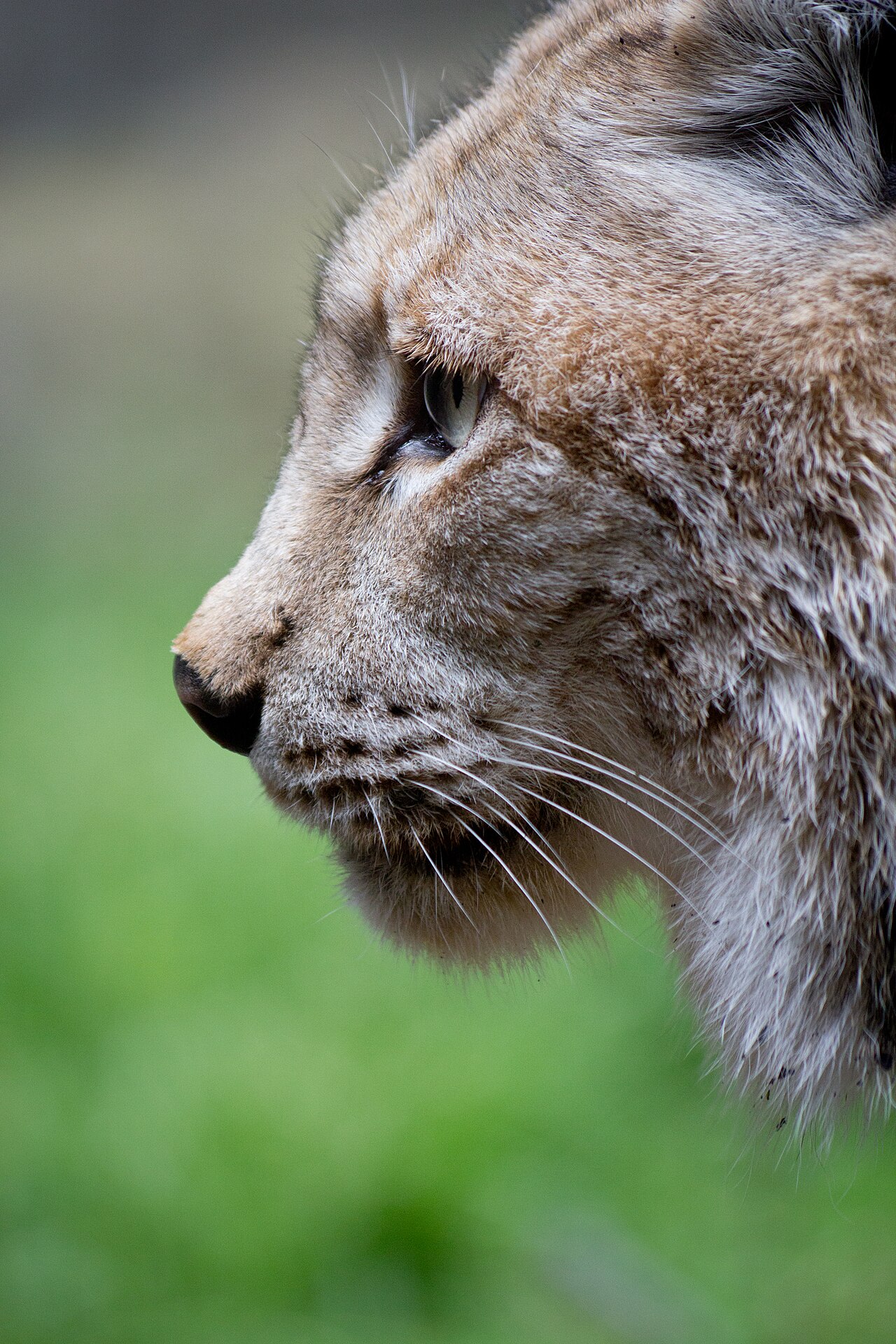
Lynx meanings differ by nation, and the honest way to state them is as the beliefs of specific peoples rather than as one shared doctrine. In Anishinaabe accounts from the Great Lakes, the great lynx figure Mishibizhiw, often translated as underwater panther, is a powerful being of the lakes and of copper, respected and feared, and associated with storms and with the danger of crossing deep water.
In northern and subarctic traditions where the Canada lynx and the snowshoe hare rise and fall together on a roughly ten year cycle, the lynx appears in oral accounts as an animal tied to scarcity and abundance, and its appearance was read in practical terms as news about the hare year.
Where a lynx clan exists, as among some Algonquian speaking peoples, membership carries social and ceremonial obligations rather than personality traits. That distinction matters: a clan emblem is inherited, while the keeper of secrets reading that dominates search results is a modern overlay.
The Lynx in Greek and Roman Myth
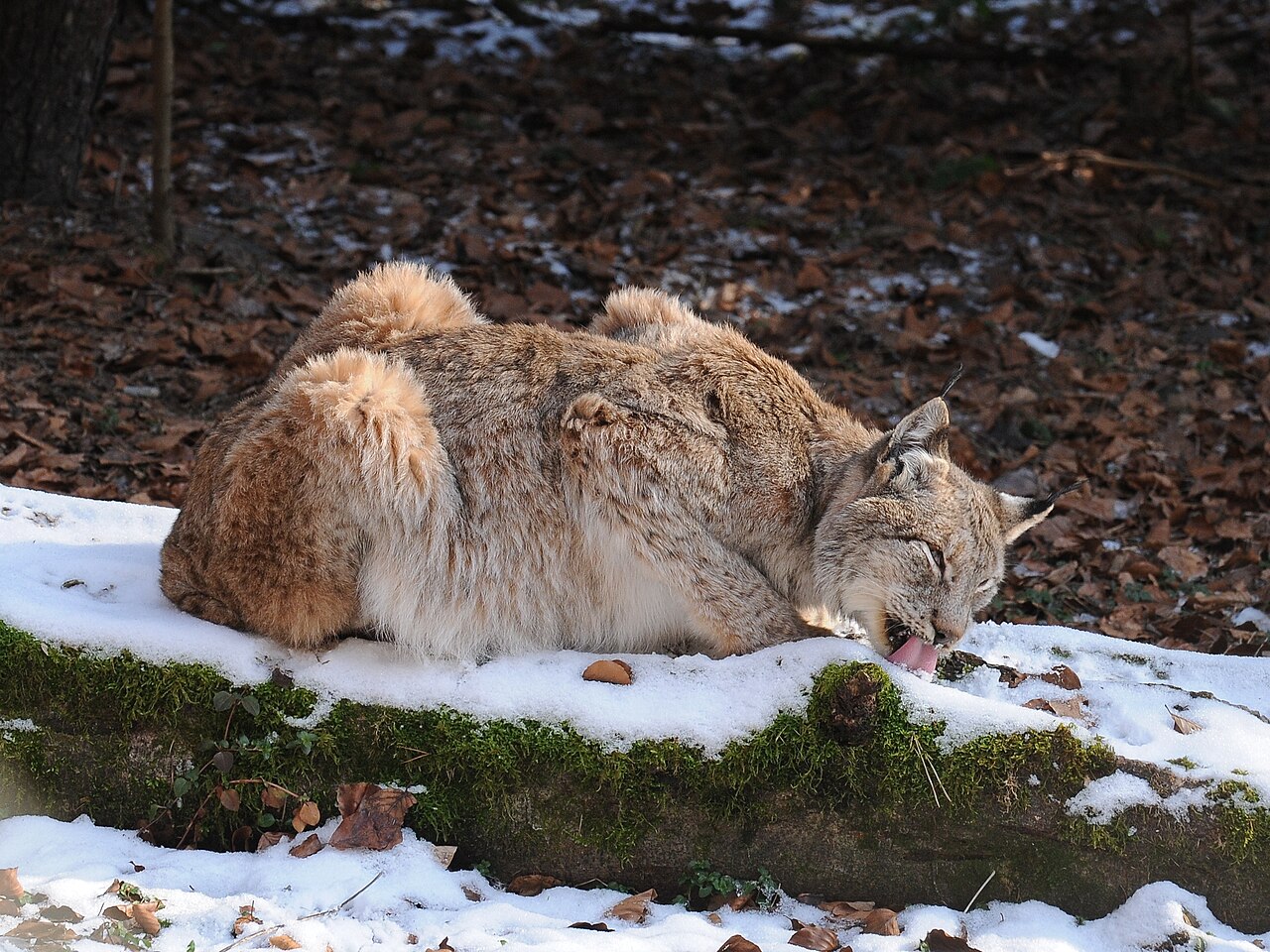
Classical writers gave the lynx its reputation for sight. Lynceus, one of the Argonauts, was said to see through the earth and across impossible distances, and ancient authors linked his name to the animal. Pliny the Elder recorded the belief that lynx urine hardened into a gemstone, lapis lyncurius, which the animal buried out of spite so that people could not have it.
The lynx also appears alongside Dionysus in Greek and Roman art, drawing his chariot in place of the more familiar panthers, which associates it with altered perception and with what is revealed when ordinary restraint drops.
Much later, the astronomer Johannes Hevelius named the faint northern constellation Lynx in the 1680s, reportedly because you would need the eyes of a lynx to make it out. The joke became permanent, and the constellation keeps the classical meaning in the sky.
Lynx Symbolism in Christianity

The lynx does not appear in the Bible, so Christian lynx symbolism comes entirely from the medieval bestiaries. There the animal’s piercing sight is read two ways. Favorably, it stands for divine omniscience and for the vigilance expected of a watchful soul, since nothing can be hidden from eyes that see through walls.
Unfavorably, the bestiaries use the spotted coat as a figure of duplicity, the same logic applied to the leopard, and the story of the buried gemstone as an image of covetousness and of hoarding what should be shared.
Both readings survive in church art and heraldry, where the lynx is rare and usually signals watchfulness. If you encounter a confident claim that the lynx carries a settled Christian meaning, treat it with caution: the bestiary tradition itself could not decide.
Lynx Symbolism in Celtic and Norse Tradition
The Celtic record on the lynx is thin, and it is better to say so than to invent it. Eurasian lynx lived in Britain until roughly 1,500 years ago, and bones have been recovered from Scottish and Welsh caves, but no clear lynx figure survives in Irish or Welsh myth. Where modern writing presents a Celtic lynx tradition, it is usually a recent construction built on the cat’s general association with the otherworld.
Norse material is similar. Freyja’s chariot is drawn by cats in the Prose Edda, and later artists and writers sometimes depicted those cats as lynxes, which is an interpretation rather than a source. The connection to Freyja nonetheless gave the lynx a modern association with intuition and feminine power.
Finnish and Baltic traditions, geographically within real lynx range, offer firmer ground. There the lynx belongs to the deep forest and to the spirits that govern hunting luck, and killing one without need was held to bring misfortune. The night hunting association it shares with bat symbolism runs through much of northern European folklore.
The Lynx in East Asian and Siberian Belief
Across Siberia the lynx is a forest spirit with an owner’s claim on the game, and hunting traditions among Evenki and other peoples required respectful treatment of a killed animal so the forest would continue to provide. The lynx in these accounts is not a symbol to be interpreted; it is a party with interests.
In Chinese and Japanese material the lynx is marginal, because the cats of those folklores are the leopard cat, the tiger and the supernatural bakeneko. Lynx pelts reached East Asian markets by trade, so the animal appears in texts as a luxury fur rather than as a spirit.
Where modern writing assigns the lynx an East Asian meaning, the source is usually a general cat symbolism imported by analogy. Stating that honestly is more useful than filling the section with borrowed material.
Lynx Spirit Animal, Totem and Omen: What the Terms Mean
These three words get used as if they were synonyms, and they are not. A lynx spirit animal in the contemporary sense is a self description: watchful, private, perceptive, uninterested in explaining. A totem is a clan or lineage emblem belonging to specific peoples, with duties attached. An omen is a single encounter read as a message, which is what most people mean when they look up a sighting.
Keeping them separate also keeps the reading honest. The first is modern practice, the second belongs to communities who define it themselves, and only the third has a long folk record behind it.
People who work with a lynx power animal usually name one trait first: knowing when to stay quiet. The opposite temperament sits in blue jay symbolism, where the bird’s noise and boldness carry the meaning, and the broader pattern for watchful species appears in bird symbolism.
Spiritual Meaning of a Lynx Crossing Your Path
A lynx crossing your path is read as concealment coming to an end. Because the animal is so rarely seen in the open, folk interpretation treats the crossing as something that was meant to stay out of sight stepping into view, and the usual advice attached to it is to watch and gather rather than to speak.
A second reading turns it on the observer: the crossing asks what you are hiding, and whether keeping it costs more than telling it. Both versions circulate, and which one applies is usually settled by whichever secret came to mind first.
In hunting cultures within lynx range the same encounter had a flatter meaning. A lynx on a trail in daylight signaled hunger, a bad hare year, or an animal that was sick, and it was read as a reason for caution around dogs and livestock rather than as a message.
Seeing a Lynx at Night or Near Your Home
Lynxes are most active at dawn, dusk and through the night, so a night sighting is biologically ordinary and symbolically weighted toward instinct. The common reading is that you already have the information you need and are arguing yourself out of it.
A lynx near the house is read more pointedly, usually as concealment inside the household: an unspoken decision, a withheld piece of news. The animal that keeps to deep cover appearing at the edge of human space is treated as a boundary being crossed from the other direction.
Practically, a lynx close to buildings is following prey, most often hares and rodents in brush piles and under outbuildings, or it is a young animal dispersing. Both Canada lynx and bobcat will take poultry and small pets given the chance, so the useful response is secure housing at night, not interpretation. Range maps and the threatened status of the Canada lynx in the lower 48 states are maintained by the U.S. Fish and Wildlife Service.
White Lynx Symbolism and Coat Color
White lynx symbolism is a frequent search, and it needs a factual note first. Canada and Eurasian lynx grow a pale, dense, silvery gray winter coat that photographs almost white against snow, and most images labeled white lynx show exactly that. A genuinely white animal would be leucistic or albino, and such cases are extremely rare in the wild.
Where the color is read symbolically, white intensifies the existing meaning toward clarity, purity of intent and the end of confusion, following the general pattern in which pale color variants are treated as a message about seeing clearly rather than as a different message entirely.
Black lynx reports exist too, with a melanistic Canada lynx documented in the Yukon in 2020, the first such record. Dark variants are read as the lynx meaning turned inward: knowledge held deliberately out of sight, which is also how badger symbolism treats its dark variants.
Dead Lynx Spiritual Meaning and Lynx Dreams
A dead lynx is read as the end of a concealment. Where the living animal says watch and wait, the dead one is taken to mean that the waiting is over and the matter will be public whether or not you choose the timing. Some accounts add a caution about secrecy kept so long that it stopped protecting anything.
Lynx dreams split along the same lines as the waking readings. A lynx watching you in a dream is interpreted as self knowledge you are avoiding, a lynx hunting as a plan you are working on quietly, and a lynx that attacks as the cost of a secret turning on the person keeping it.
A lynx in a dream that disappears into cover is the most commonly reported version, and the standard reading is a lost opportunity to speak. None of these interpretations has an evidence base; they are folk and contemporary readings, and they are worth exactly what the dreamer brings to them.
Frequently Asked Questions
What does it mean to dream with a lynx?
To dream with a lynx is usually interpreted as holding knowledge you have not acted on. A watching lynx points to self awareness being avoided, a hunting lynx to quiet work in progress, and a vanishing lynx to a chance to speak that passed. The reading is folk interpretation, not evidence.
Is a lynx the same as a bobcat?
No, though both sit in the genus Lynx. The bobcat (Lynx rufus) is smaller, more widespread across the United States, and has shorter ear tufts, smaller paws and a banded tail with a white underside. The Canada lynx (Lynx canadensis) has an all black tail tip, long tufts and huge snow adapted paws.
What does each animal on a totem pole represent?
There is no universal key. Totem poles are monuments of Northwest Coast nations such as the Haida, Tlingit, Nisga’a and Kwakwaka’wakw, and the figures on them record the crests, histories and rights of a specific family or clan. The meaning belongs to the pole’s owners, and the same animal differs from pole to pole.
Why can’t you say totem pole anymore?
The term itself is still used by the nations who carve them. What draws objection is the phrase low man on the totem pole, because it implies a ranking that the monuments do not have and treats sacred family records as a figure of speech. Using totem pole for an actual pole is accurate; using it as a metaphor for hierarchy is the problem.
What are the four spirit animals?
No single set of four exists. The idea comes from directional animal groupings in specific traditions, and they do not agree: Zuni accounts name different guardians for the directions than Lakota or Plains accounts do, and several use six directions rather than four. Lists of four presented as universal are modern inventions.
What does a white lynx symbolize?
Clarity and the end of confusion. White intensifies the lynx meaning of hidden sight toward openness and clean intent rather than replacing it. Most white lynx images show a normal pale winter coat rather than a genuinely white animal, since both Canada and Eurasian lynx turn silvery gray in snow.