Badger Symbolism: Spiritual Meaning, Omens and What It Means to See One
Seeing a badger is traditionally read as a call to hold your ground: across the folklore of North America, Britain and Ireland, badger symbolism centers on stubborn courage, self reliance, deep roots and the willingness to dig for what matters instead of chasing it above ground. The animal that stands behind these beliefs is a burrower that fights far above its weight class, and almost every meaning attached to it grows out of that one habit.
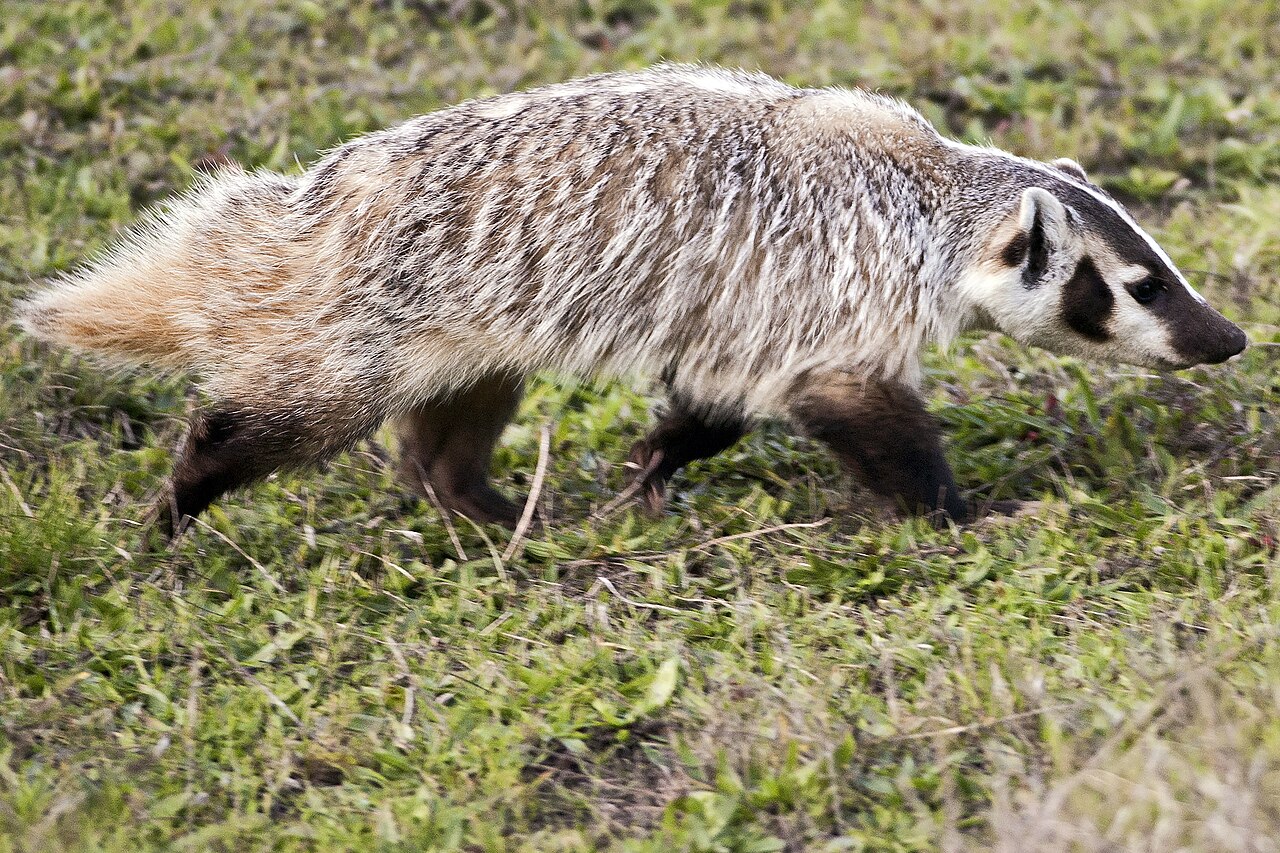
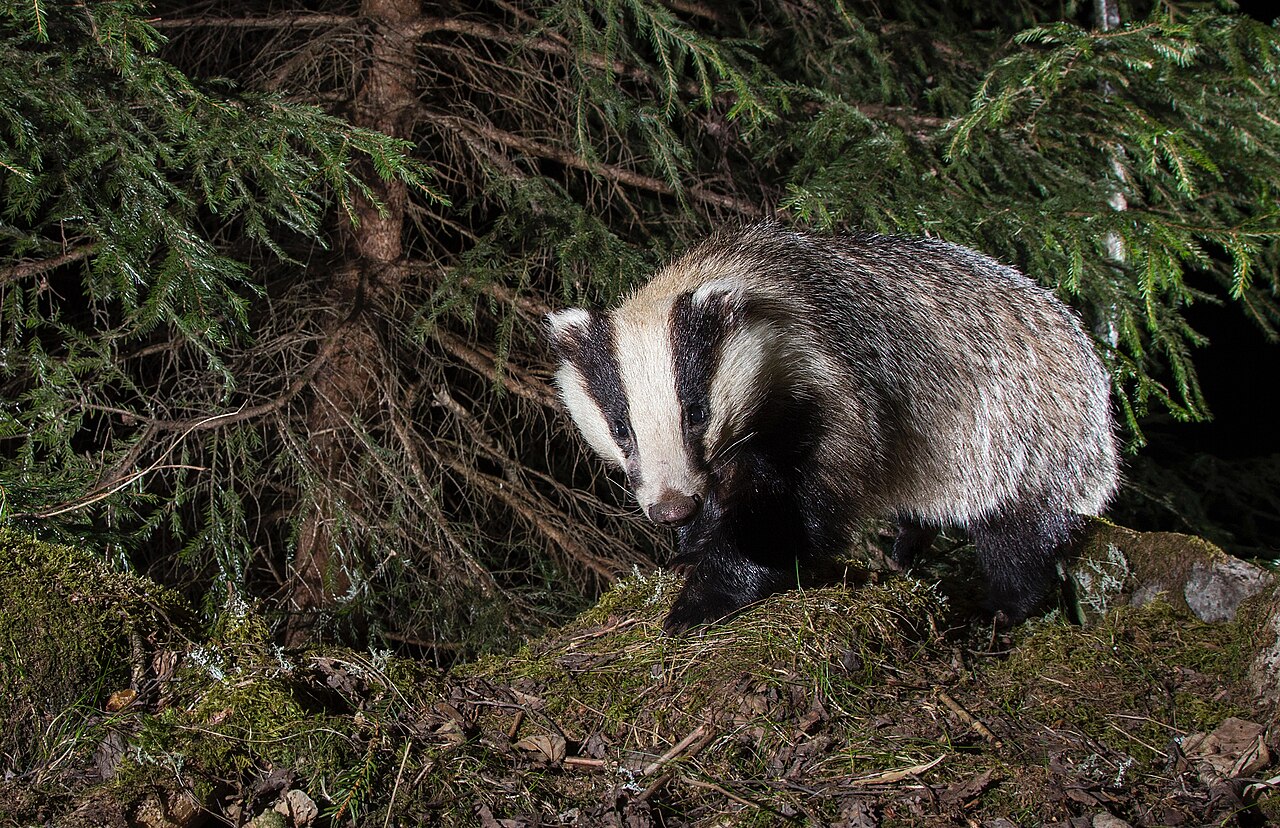
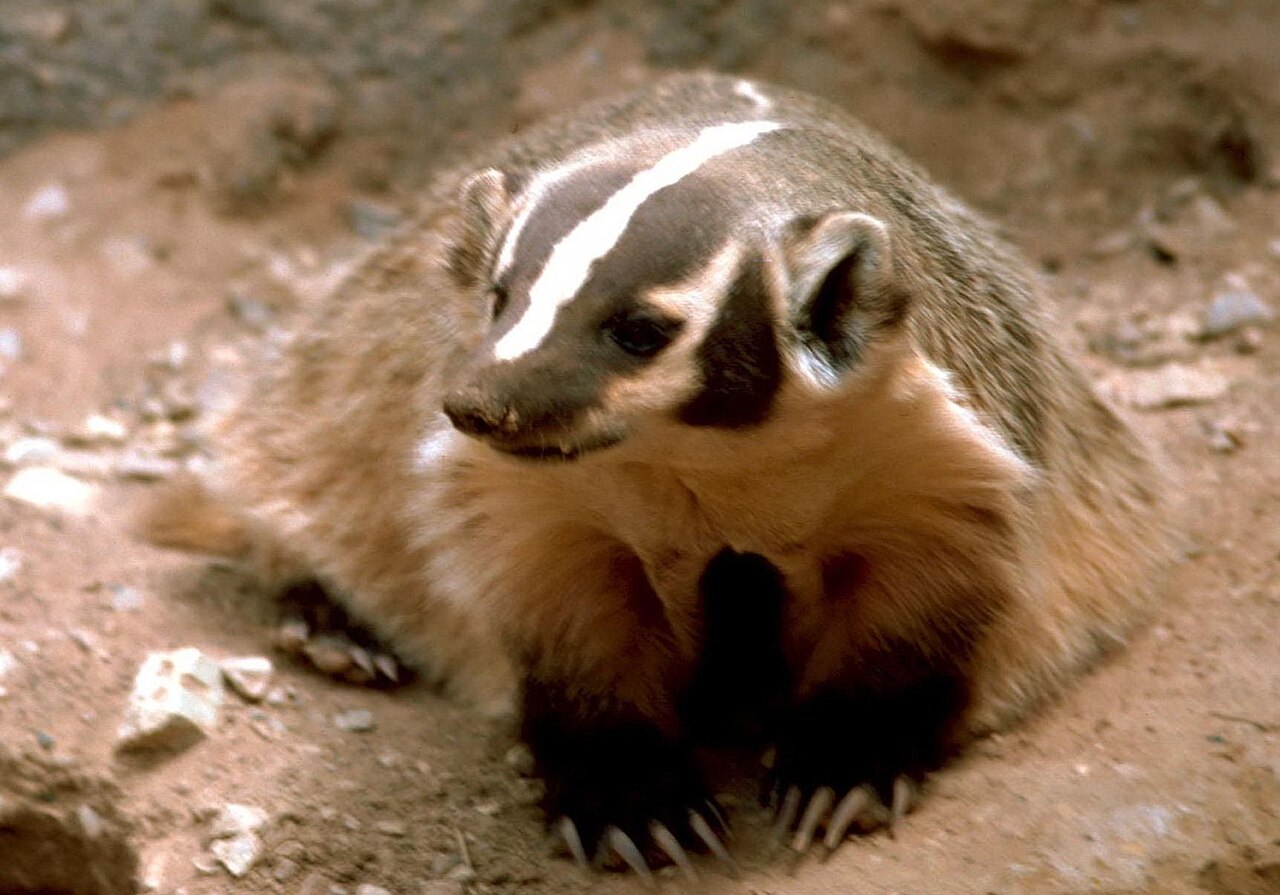
Two different animals carry the name. In the United States that is the American badger (Taxidea taxus), a solitary grassland digger of the plains and the West. In Britain and Ireland it is the European badger (Meles meles), a sociable animal that lives in family groups in setts handed down for generations. The folklore of each region grew around its own species, which is why British badger lore talks about clans and ancestry while American and Plains traditions talk about medicine, roots and defiance.
Badger symbolism stands for persistence, courage under pressure, self reliance and healing knowledge drawn from the earth. Seeing a badger is commonly taken as a sign to stop retreating and defend your position, your home or your work. At night it is read as a message about buried matters; a badger crossing your path is read as a warning not to yield.
| Situation | Traditional reading |
|---|---|
| Badger crossing your path | Stand firm, a conflict or boundary dispute is near |
| Badger at night | Something buried is working its way to the surface |
| Badger in your garden | Your home ground needs tending and protecting |
| Badger at the window | A message about family or ancestry, old business returning |
| Seen repeatedly | A long task needs finishing rather than abandoning |
| Dead badger found | The end of a stubborn fight, a cue to let a defense go |
| Badger in a dream | Buried feelings, hidden strength, or digging in too hard |
What Does a Badger Symbolize?
The core of badger symbolism is refusal to be moved. A badger weighs 10 to 25 lb (4.5 to 11 kg) yet will back into a burrow entrance and face down a coyote, and that image produced the symbolic vocabulary: tenacity, grit, fearlessness, defense of territory. Where a fox stands for cleverness and a bear for raw power, the badger stands for the kind of courage that does not look impressive from the outside.
A second strand is depth. Badgers live in the ground and bring up what is buried, so symbolic readings link them to hidden knowledge, roots, medicine and memory. In several North American traditions the badger is the animal that knows which roots heal, simply because it is the animal that reaches them.
A third strand is solitude. The American badger hunts alone, and folk readings treat its appearance as a prompt toward independence and self sufficiency. Compare that with beaver symbolism, where the same earth working instinct is read as cooperation and building rather than defense.
Badger Symbolism in Native American Traditions
Badger meanings differ sharply between nations, and the honest way to state them is as the beliefs of specific peoples rather than as one pan tribal doctrine. In Zuni accounts of the six directional animals, the badger is named as the guardian of the south, paired with warmth and with the power to dig out what is needed. In Hopi social structure the Badger clan, Honani, is associated with healing and with knowledge of medicinal roots.
In Lakota tradition the badger is spoken of as an animal of persistence and of the earth, and its fierceness in defending a burrow is used as a teaching image about defending one’s people. Plains accounts more broadly treat the badger as a healer and as a creature connected to the underworld in the literal sense: the world beneath the grass.
What recurs across these traditions is the pairing of medicine with aggression. The badger is not a gentle healer in this symbolism. It is a healer that bites.
What Is the Celtic Name for a Badger?
The Celtic name for a badger is broc in Irish and Scottish Gaelic and broch in Welsh, and the word survives in English as the old dialect name brock and in place names such as Brockenhurst and Brockley. That alone tells you the animal was familiar enough to leave its name across the landscape.
Welsh tradition gives the badger one of its strangest appearances. In the first branch of the Mabinogi, Pwyll traps Gwawl in a bag and his men beat it in a game called broch yng nghod, badger in the bag. The badger there is the trapped adversary, and the episode made the animal a symbol of a trap sprung on someone who overreached.
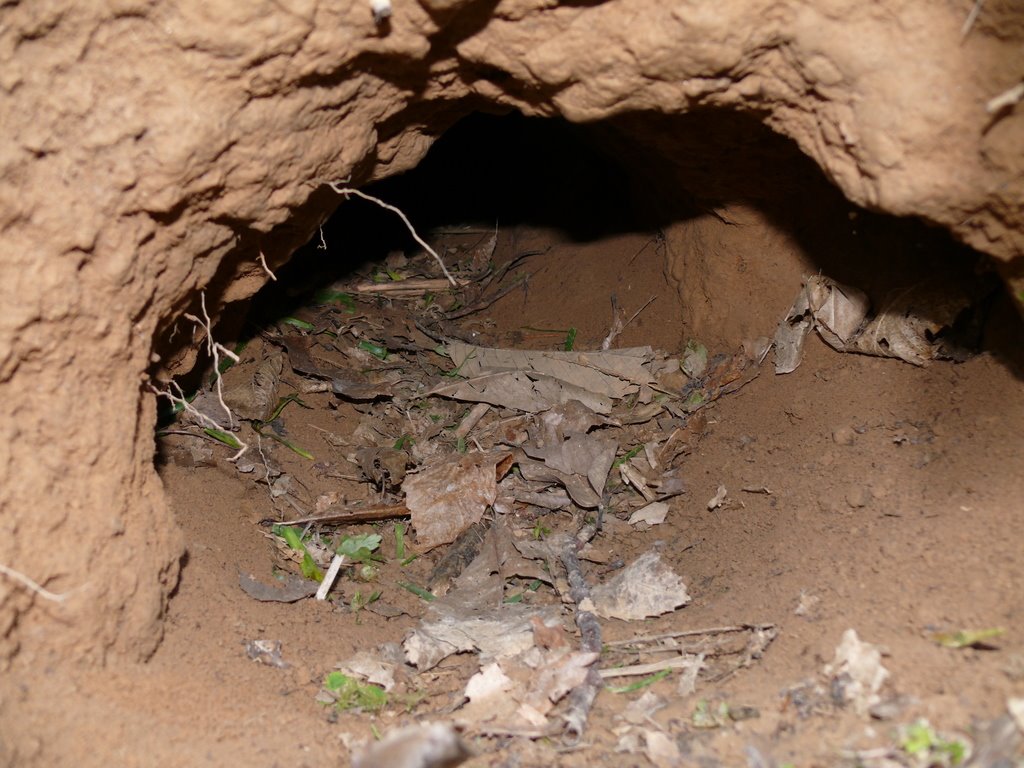
Irish and Scottish folk belief treated the badger as a boundary animal that belongs to the earth and to the ancestors who lie in it, since setts are inherited and can stay in use for decades. Where bat symbolism marks the boundary between day and night, the badger marked the boundary between the living surface and what is below it.
Badger Symbolism in Christian and Biblical Thought
The badger enters English language scripture by way of a translation problem. The King James Version renders the Hebrew tachash as “badgers’ skins” in the instructions for the tabernacle in Exodus 25 and 26, which is why generations of readers pictured badger hide over the holy tent. Modern translations disagree with each other and render the same word as fine leather, goat hide or dolphin skin, and no one can settle it.
Leviticus 11 adds the coney, translated in some versions as rock badger, to the list of unclean animals that chew but do not have a split hoof. The animal meant there is almost certainly the rock hyrax, not a badger at all.
The result is a symbolism built on the English text rather than the Hebrew one: humble, unglamorous material used for sacred purposes. Christian devotional writing that uses the badger at all tends to use it that way, as an image of plain strength in service of something higher.
Badger Symbolism in East Asian Folklore

In Japanese folklore the badger overlaps with the tanuki, the raccoon dog, because older English translations rendered both as badger. The animal that is genuinely a badger in these stories is the mujina, a shapeshifter said to take human form and mislead travelers, sometimes appearing as a faceless figure on a dark road.
That gives East Asian badger belief a different flavor from the Western one. Here the badger is a trickster and an illusionist rather than a stubborn defender, and encountering one in a story is a warning that what you are looking at is not what it claims to be.
Chinese folklore uses badger spirits in a comparable way, as beings that borrow human shape. If you are reading an older translation and the badger behaves like a comedian or a con artist, you are almost certainly looking at a tanuki wearing the wrong English name.
Badger Spirit Animal, Totem and Omen: What the Terms Mean
These three words get used interchangeably online, and they do not mean the same thing. A badger spirit animal, in the modern self help sense, is a personality pattern a person identifies with: direct, persistent, territorial, impatient with evasion. A totem, in the traditions the word was taken from, is a clan or lineage emblem with social and ceremonial obligations attached, not a personal preference. An omen is a single encounter read as a message.
Keeping them apart matters because the first is a contemporary practice, the second belongs to specific peoples, and only the third is what most people actually mean when they search for what a badger sighting means.
If you work with a badger spirit animal or power animal, the trait most often named is endurance in unglamorous work. The same reading appears in bison symbolism, where strength is tied to steadiness rather than speed.
Spiritual Meaning of a Badger Crossing Your Path
The spiritual meaning of a badger crossing your path is the most consistent reading in the folklore: do not give way. Because a badger on the move does not detour around obstacles, folk interpretation treats the crossing as a prompt to hold a position you have been thinking about surrendering, whether that is a boundary with family, a claim at work or a piece of ground.
British folk tradition adds a direction rule in some accounts: a badger crossing from left to right was taken as fortunate, the reverse as a sign of obstruction ahead. Sources are not consistent on which direction means what, and that disagreement is worth stating plainly rather than papering over.
A harsher version of the same reading says the badger crossing warns about your own stubbornness rather than someone else’s. Both versions are in circulation, which is why the usual advice is to ask which fight the sighting brought to mind first.
Spiritual Meaning of Seeing a Badger at Night
Badgers are mostly nocturnal, so seeing one at night is biologically unremarkable and symbolically loaded for a different reason: night is when the buried comes up. The spiritual meaning of seeing a badger at night is usually given as a matter you have covered over beginning to surface, with the implication that you will handle it better by digging it out than by waiting.
In sett watching country in Britain and Ireland the night badger was also simply a neighbor, and local belief treated a badger moving through a yard after dark as a sign that the ground was healthy and undisturbed. That is the older and more domestic reading.
Some accounts single out hearing a badger at night without seeing it, since the calls carry and can sound startlingly like a human argument. That was traditionally read as a warning about a quarrel in the household.
Seeing a Badger in Your Garden or at Your Window
A badger in the garden is read as a message about your own ground. The common interpretation is that something close to home needs attention and defense rather than expansion, which fits an animal that invests enormous effort in one burrow system instead of ranging widely.
A badger at the window is rarer and is read more sharply, usually as old family business returning. Because European setts pass down through generations, British folklore tied badgers to ancestry, and a badger pressing in at the edge of the house was taken as the past asking to be let in.
Practically, a garden badger is after earthworms, grubs and fallen fruit, and it will return while that food lasts. If you want the sighting without the lawn damage, the answer is removing the food source, not the animal; badgers and their setts are protected in the United Kingdom, and in much of the United States they are managed as furbearers under state law. The symbolism attached to bears near homes follows a similar logic, where proximity is read as a boundary question.
Dead Badger Spiritual Meaning
The dead badger spiritual meaning most often given is the end of a long defense. Where a living badger says hold the line, a dead one is read as permission to stop holding it, and sometimes as a warning that a fight has already cost more than the ground was worth.
Roadside sightings dominate this category, since most people who see a dead badger see one that was hit by a car. A few folk readings treat that specifically as a caution about charging ahead on a familiar route without looking, which is close to what actually happened to the animal.
Older British belief also used badger parts as charms for strength, with the hair used in brushes and the teeth carried for courage. Those customs treated the dead badger as a transfer of tenacity rather than as a bad sign, so the modern gloomy reading is not the only one on record.
Badger Dreams and Black Badger Symbolism
A badger in a dream is usually interpreted along two lines. If the badger is digging, the reading is that you are working on something buried and should keep going. If the badger is cornered or attacking, the reading flips to your own defensiveness, with the dream asking whether you are protecting something or just refusing to move.
Black badger symbolism comes up often in searches, and it needs a factual note first. Both American and European badgers already carry black facial masks and dark legs, and a genuinely all black badger is a rare melanistic individual. Where the color is read symbolically, black intensifies the existing meaning toward secrecy and the unseen rather than changing it.
The honey badger, or ratel (Mellivora capensis), is a separate African species and carries its own modern symbolism of pure defiance, which is why it dominates search results about badger courage. For a comparable predator reading in North America, see bobcat symbolism and lynx symbolism, and for a bird counterpart to the badger’s blunt persistence, blackbird symbolism.
Frequently Asked Questions
What is the Celtic name for a badger?
The Celtic name is broc in Irish and Scottish Gaelic and broch in Welsh, which entered English as brock. The word appears in British place names and in the Welsh Mabinogi phrase broch yng nghod, badger in the bag. Brock was still a common English name for the animal into the twentieth century.
What are the differences between an American badger and a British badger?
The American badger (Taxidea taxus) is solitary, lives in grassland and open country, and digs fast after ground squirrels and prairie dogs. The British or European badger (Meles meles) is larger, lives in family groups in inherited setts, and eats mostly earthworms. That social difference shaped the folklore of each region.
Can badgers climb?
Badgers can climb, though poorly and rarely. European badgers will scramble over low walls, fences and sloping tree trunks, and American badgers are even less inclined to leave the ground. Their bodies are built for digging, with long front claws and short powerful legs, so escape means going down rather than up.
What does it mean when you see a badger repeatedly?
Repeated sightings are read as emphasis rather than as a new message. Folk interpretation treats a badger seen again and again as a task that needs finishing, usually one you have been circling without committing to. The practical explanation is simpler: badgers use the same paths and foraging ground night after night.
Can I keep a badger as a pet?
No. Badgers are wild mustelids with powerful claws and a strong defensive bite, and keeping one is illegal across most of the United States under state wildlife law. In the United Kingdom badgers and their setts have statutory protection. Injured animals belong with a licensed wildlife rehabilitator, not in a house.
How do badgers show affection?
European badgers, which live in groups, groom each other, scent mark clan members by backing together, and sleep piled in the same chamber. American badgers are solitary and show this behavior only between a mother and her cubs. Neither species seeks contact with people, and relaxed behavior near humans is usually habituation rather than affection.
Badger natural history and current protections for North American wildlife are documented by the National Park Service, which is the better starting point for the animal itself once the symbolism has been read.