Mouse vs Rat Footprints: How to Tell Which Pest You Have
Mouse vs rat footprints share one shape and differ mostly in size, and size is the fastest first check. Both rodents press the same toe pattern into dust, mud and snow. Body, tail, ears and snout then confirm what the tracks suggest.
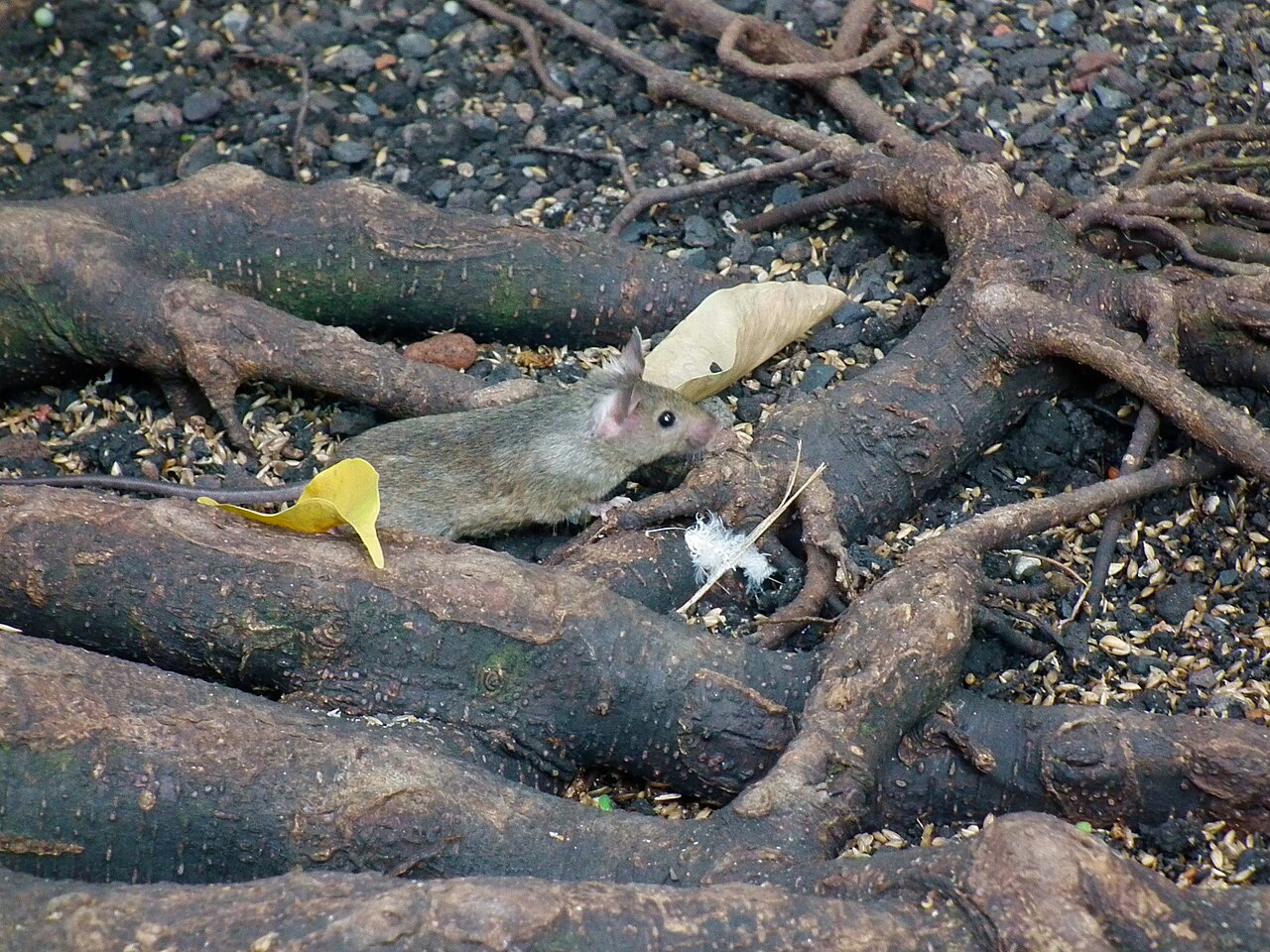
Adult rat footprints are about twice the size of mouse footprints, near 1 inch against 1/2 inch for the hind print, with the same toe pattern. Rats have a thick, scaly tail, and Norway rats add small ears and a blunt snout. A mouse has a thin tail, large ears and a small, pointed face.
Mouse vs Rat Footprints by Size
Both rodents show four toes on the front feet and five on the hind feet. A house mouse hind print is about 1/2 inch long. A Norway rat hind print is about 1 inch or more. Prints of young rats can come close to mouse size, so check the stride and the tail drag as well.
Press a fingertip next to the track. A mouse print hides under it. A rat print shows around the edges. Rat toes also look thicker and spread wider, while mouse toes are hair-thin.
Mouse tracks appear in tight groups of four, because a running mouse lands its hind feet just ahead of its front feet.
Rabbit tracks show the same hind-ahead pattern in yard snow, but each rabbit hind print runs 3 inches or more.
| Feature | Mouse track | Rat track |
|---|---|---|
| Hind print length | About 1/2 inch | About 1 inch or more |
| Print outline | Small and delicate, fits under a fingertip | Larger and bolder, wider than a fingertip |
| Toe spread | Hair-thin toes set close together | Thick toes spread wide |
| Stride | Short steps between prints | Longer steps between prints |
| Tail drag | Faint, fine line if present | Thicker, deeper line in soft dust |
| Typical surfaces | Cupboards, drawers, baseboards | Wall edges, pipes, burrow entrances, outdoor runways |
Rat or Mouse? Identify the Animal by Size and Appearance

A rat is a separate animal, not a grown-up mouse. Rats belong to the genus Rattus, with the Norway rat (Rattus norvegicus) and the roof rat (Rattus rattus) common in the United States. The house mouse (Mus musculus) belongs to the genus Mus.
Rats are far larger in body and feet. A young rat can pass for a mouse at a glance, but its hind feet look oversized for its body.
The tail, ears and snout settle it. A Norway rat has a thick, scaly tail, small ears and a blunt snout. A roof rat is slimmer, with large ears and a pointed snout. A mouse has a thin, finely haired tail, large ears and a pointed, triangular face. Rat tracks from the Norway rat and the roof rat look much alike, so where the trail runs, at ground level or along roof lines, points to the species.
Other Signs That Confirm a Rat or a Mouse
Rat poop and mouse poop differ in size and shape as clearly as the prints do.
Rats leave greasy, dark rub marks along walls and pipes where their fur brushes the same route. Mice rarely leave them. Rat gnaw holes are larger than mouse holes.
Listen at night. Rats make heavier thumps, while mice make light scratching and squeaks. Indoors, mice shred paper and fabric for nests. Norway rats burrow outside, under sheds, slabs and woodpiles.
How Rats and Mice Move, Hide and Who Hunts Them
Rats follow walls and fixed runways, so their prints repeat along the same edges night after night. Mice stay close to the nest.
Mice investigate new objects quickly. Rats avoid them at first, so a new box or trap may sit untouched.
A rat’s biggest enemy is people, through traps, poison and sealed buildings. In the wild, owls, hawks, foxes and snakes hunt rats, and a single barn owl can eat more than 1,000 rodents a year. Cats catch mice far more often than adult Norway rats.
Squirrel tracks are the better match for prints on fence tops and at tree bases, while roof rats leave their trails along roof lines, utility wires and attic beams.
Rat vs Mouse, Which Is the Bigger Problem?
A mouse problem carries the higher disease risk in the United States, and a rat problem does more damage through gnawing and burrowing. Deer mouse prints look like house mouse prints, so treat small prints in a cabin, shed or garage as a hantavirus risk. People get hantavirus from contact with rats and mice, especially their urine, droppings and saliva.
The deer mouse (Peromyscus maniculatus) spreads the most common hantavirus behind hantavirus pulmonary syndrome (HPS) in the US. The CDC reports that 38 percent of people who develop respiratory symptoms may die from the disease.
Mice also pass lymphocytic choriomeningitis (LCM), ringworm and salmonellosis to people, and pregnant women should avoid contact with mice and their nests, because LCM can harm an unborn baby. Rats spread leptospirosis through their urine, and the bacteria survive in water or soil for weeks to months.
Frequently Asked Questions
Do rats come out during the day?
No. Rats are most active from dusk to dawn. A rat seen in daylight can mean a large infestation, a disturbed nest or a search for food.
Does seeing one rat mean there are more?
Yes, in most cases. Rats live in groups, so one sighting means others are probably nearby. Repeated prints, rub marks and fresh droppings along walls show how far the activity spreads.
Can you tell how fresh rodent prints are?
Yes. Fresh prints have sharp edges and sit on top of the dust, while old ones look blurred under a new film. Wipe the spot and check again the next morning.
Are small prints in snow outside from a house mouse?
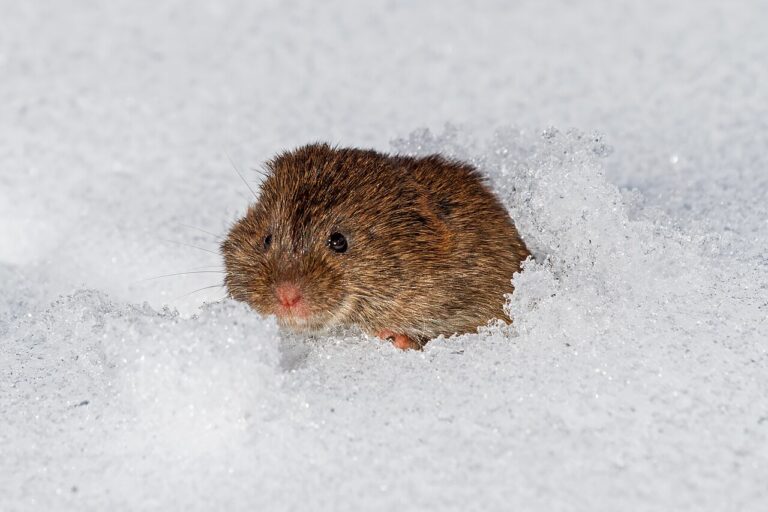
No, in most cases. House mice stay close to buildings, so small prints in open snow point to deer mice or voles. A rat leaves a wider, deeper trail that runs between burrows, sheds and garbage bins.
Sources
- CDC, About Hantavirus
- CDC, About Leptospirosis
- UC IPM, Pest Notes, Rats
- Cornell CALS, Mouse and Rat Biology and Behaviour
- CDC, Healthy Pets, Small Mammals
- Merck Veterinary Manual, Diseases That Can Be Spread from Mice to People