Parrot Symbolism: What Seeing One Means in 6 Traditions
Seeing a parrot is traditionally read as a sign to pay attention to your own words: across folk belief, a parrot that crosses your path marks a moment when speech, truth and social connection carry unusual weight. The parrot spiritual meaning most often cited in the United States combines communication, mimicry and joy, and it tends to arrive as a nudge about something you have been saying, repeating or avoiding.
Parrots occupy an unusual place in symbolism because they talk back. Cultures that lived alongside macaws, amazons and parakeets built their stories around that one trait, and cultures that met parrots only through trade treated them as exotic messengers. The sections below separate the traditions instead of blending them, then walk through the specific situations people ask about: a parrot in the garden, at the window, at night, appearing again and again, found dead, or showing up in a dream.
A parrot symbolizes communication, truth and the power of the spoken word. In most folk traditions, seeing one is read as a reminder to speak honestly or to listen to what is being repeated back to you. Parrots are also widely treated as signs of joy, social bonds and good luck rather than as warnings.
| Where you see the parrot | Common traditional reading |
|---|---|
| In your garden or yard | Good news arriving through other people; social invitation |
| At a window or on a screen | A message waiting that you have not opened yet |
| Inside the house | Something spoken in the home needs to be said plainly |
| Heard at night | Restlessness, an unfinished conversation |
| Seen repeatedly | A pattern you keep repeating; the lesson has not landed |
| Found dead | The end of a conversation or a relationship built on talk |
| In a dream | Your own voice, echoed back for inspection |
What Does a Parrot Symbolize?
A parrot symbolizes speech, mimicry and the responsibility that comes with both. Because a parrot reproduces human words without inventing them, it became a stock image for anyone who repeats rather than reasons, and that double edge sits in almost every tradition that mentions the bird.
The positive side is far more common in folk use. Parrots stand for color, celebration, loyalty in pairs and the kind of intelligence that shows up as problem solving. Many species pair for life and preen each other constantly, so writers reached for parrots when they wanted an image of a devoted couple.
The critical side survives in the English verb itself. To parrot something is to say it without understanding it, and spiritual readings keep that warning: the bird can mark an idea you adopted from someone else and never tested. Both readings can be true in the same sighting, which is why the situation matters more than the bird.
What Is the Spiritual Meaning of Seeing a Parrot?

The spiritual meaning of seeing a parrot is usually framed as a call to speak clearly and to notice what you are echoing. Practitioners who work with animal signs read the parrot as a communication omen rather than a fate omen, which means it points at behavior you can change rather than at an event you cannot.
In practice, people describe three common readings. The first is encouragement to say an uncomfortable truth. The second is a caution against gossip, since parrots carry words from one room to another. The third is simple reassurance that a social season is opening, especially when the bird appears in a flock.
None of this is measurable, and honest symbolism says so. What a parrot sighting reliably offers is a prompt, and the prompt is almost always about language. If you want the ornithology instead of the omen, the species accounts at Audubon cover the parrots that have established wild populations in the United States.
Is Seeing a Parrot Good Luck?
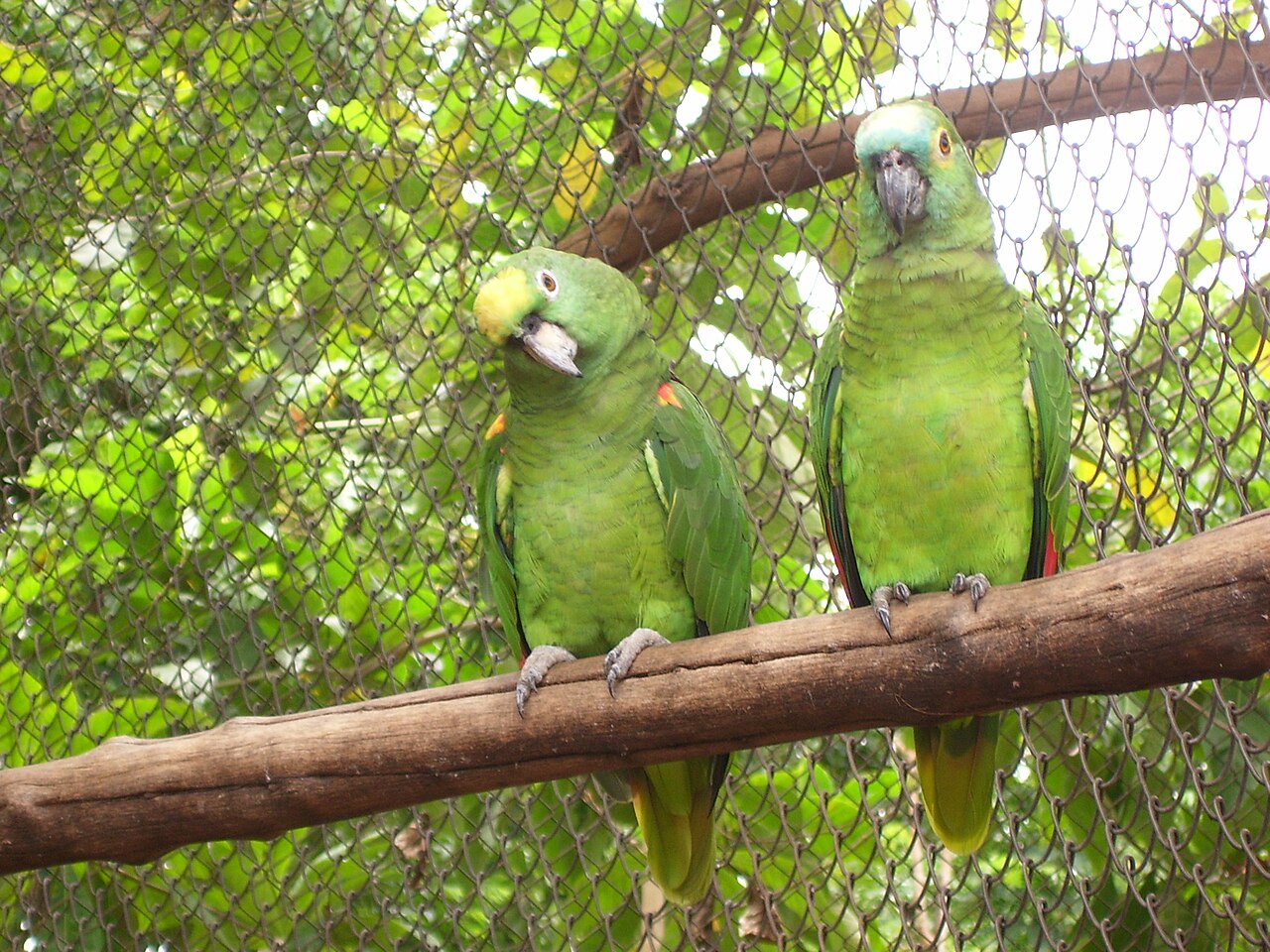
Seeing a parrot is treated as good luck in most traditions that mention it, and the reasoning is usually prosperity rather than protection. Parrots were valuable trade birds, kept by people who could afford them, so their image attached itself to abundance and festivity.
In the United States the sighting itself is becoming ordinary in some regions. Naturalized monk parakeets nest in Chicago, Texas and Florida, and red-crowned amazons move in noisy flocks over southern California. A bird that lives down the street is harder to read as a rare sign, and several practitioners now reserve the omen reading for parrots seen outside their normal range.
Where the bird is genuinely out of place, the traditional reading is unambiguous: an unexpected parrot is a favorable sign tied to news, money or company. Compare that with the mixed readings attached to blackbirds, which swing between warning and guidance depending on the tradition.
Parrot Symbolism in Native American Traditions
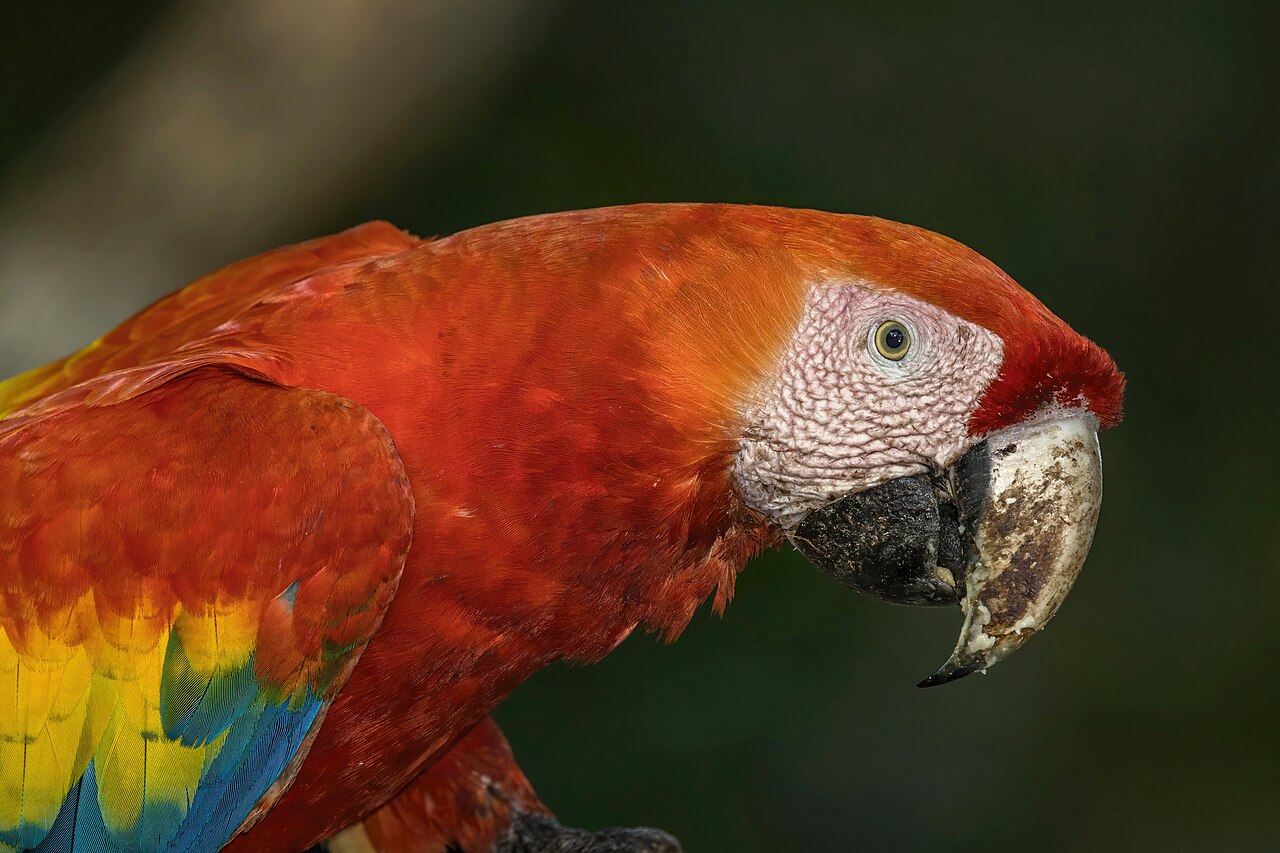
Among several Southwestern peoples, scarlet macaw feathers carried ceremonial weight long before Europeans arrived. Archaeologists have recovered macaw remains at Chaco Canyon and at Mimbres sites, hundreds of miles north of any wild macaw population, which shows the birds were traded north deliberately.
In Hopi and Zuni tradition, macaw feathers are associated with the south, with summer and with rain, and specific clans hold rights connected to the bird. These are living religious practices, not folklore, and they are not interchangeable with pan-tribal animal guide material sold online.
The respectful reading is narrow: in these traditions the macaw is a ceremonial bird tied to direction, season and clan identity, and the meaning belongs to the people who hold it. Broader bird symbolism in North America is easier to generalize, and the wider patterns across bird species give a better starting point for anyone outside those communities.
Parrot Meaning in Christian and Biblical Thought
Parrots do not appear in the Bible. The birds named in scripture are doves, ravens, eagles, quail, sparrows and ostriches, so any parrot reading inside a Christian frame is built by analogy rather than by citation.
Medieval Christian writers did use the parrot, mainly in bestiaries, where the bird that greets people by name became an image of praise and of the faithful repeating what they have been taught. Some devotional art places a parrot near the Virgin Mary, a convention that reads the bird as a symbol of purity and of the Word spoken aloud.
Modern Christian commentary on parrot sightings usually lands on the same point as the bestiaries: words carry weight, and empty repetition is not devotion. Readers who want a biblical bird with actual scriptural grounding will find more in eagle symbolism and its scriptural roots.
Parrot Symbolism in Celtic Belief
Celtic tradition has no native parrot symbolism, and claims otherwise should be treated skeptically. Parrots are not European birds, and the Irish and Welsh source material names ravens, cranes, swans, wrens and owls instead.
What modern Celtic-inspired practice does with parrots is borrow the structure. The Celtic treatment of birds as messengers between worlds gets applied to a bird the old sources never met, which produces readings like “the parrot carries words across the veil.” That is a contemporary construction, and it is more honest to label it as one.
If the Celtic frame is what you want, the birds that actually carry it are corvids and waterbirds. Anyone building a personal practice is better served by sticking to species the tradition names, then treating the parrot as a modern addition with no claim to antiquity.
Parrot Symbolism in Hinduism and East Asian Traditions
In Hindu iconography the parrot is the vahana, or mount, of Kamadeva, the god of desire, and it also appears with the goddess Meenakshi. That association makes the parrot a bird of love, attraction and sweet speech across much of South Asia, and green parrots in particular carry that reading.
Indian classical literature reinforces it. The Sanskrit collection known as the Shukasaptati, or Seventy Tales of the Parrot, frames an entire story cycle around a parrot that talks a woman out of infidelity night after night, which fixes the bird as a clever speaker and a keeper of household order.
In Chinese tradition the parrot is a more modest symbol, linked to fidelity and to the exotic south, and it appears in poetry as a caged beauty whose talk is admired and pitied at once. Japanese usage mostly follows the Chinese line. In all three settings the bird represents speech, but the moral attached to it shifts by culture.
Parrot as a Spirit Animal, Totem and Omen
People use spirit animal, totem and omen as if they were one idea, and they are not. A spirit animal, in contemporary usage, is a guide whose traits you are asked to learn from. A totem, in the original Ojibwe sense, is an inherited clan emblem, not a personality match. An omen is a one-time sign read from a single encounter.
As a spirit animal, the parrot is described as a teacher of voice: it asks whether you are saying what you mean, whether you are being heard, and whether you are repeating someone else’s opinion as your own. People who claim it usually report a pattern around communication work, teaching, performance or translation.
As an omen, the parrot is short-term and situational. The encounter is read against what you were thinking about when it happened, which is the same method applied to cardinal sightings and their meanings. The difference is tone: cardinals are read as visits from the dead, parrots as commentary on the living.
Seeing a Parrot in Your Garden, at Your Window or in the House
A parrot in the garden is the gentlest version of the sign. Traditionally it points outward, toward neighbors, invitations and news that reaches you through other people, and it is read as an opening rather than a warning.
A parrot at the window sits in the same family as any bird at a window: the glass marks a boundary, so the reading becomes a message that has not yet been delivered. Folk interpretation treats repeated tapping or perching as urgency, while a single landing is just contact. The physical explanation is usually territorial, since birds attack their own reflection in spring.
A parrot inside the house is the strongest version. Across several traditions, a bird in the home concentrates the meaning onto the household itself, and with a talking bird the focus narrows to what is being said at home. Practically, an indoor parrot is almost always an escaped pet, and the kind thing is to check local lost bird listings before anything else.
Green, Red, Blue and Grey Parrot Spiritual Meanings
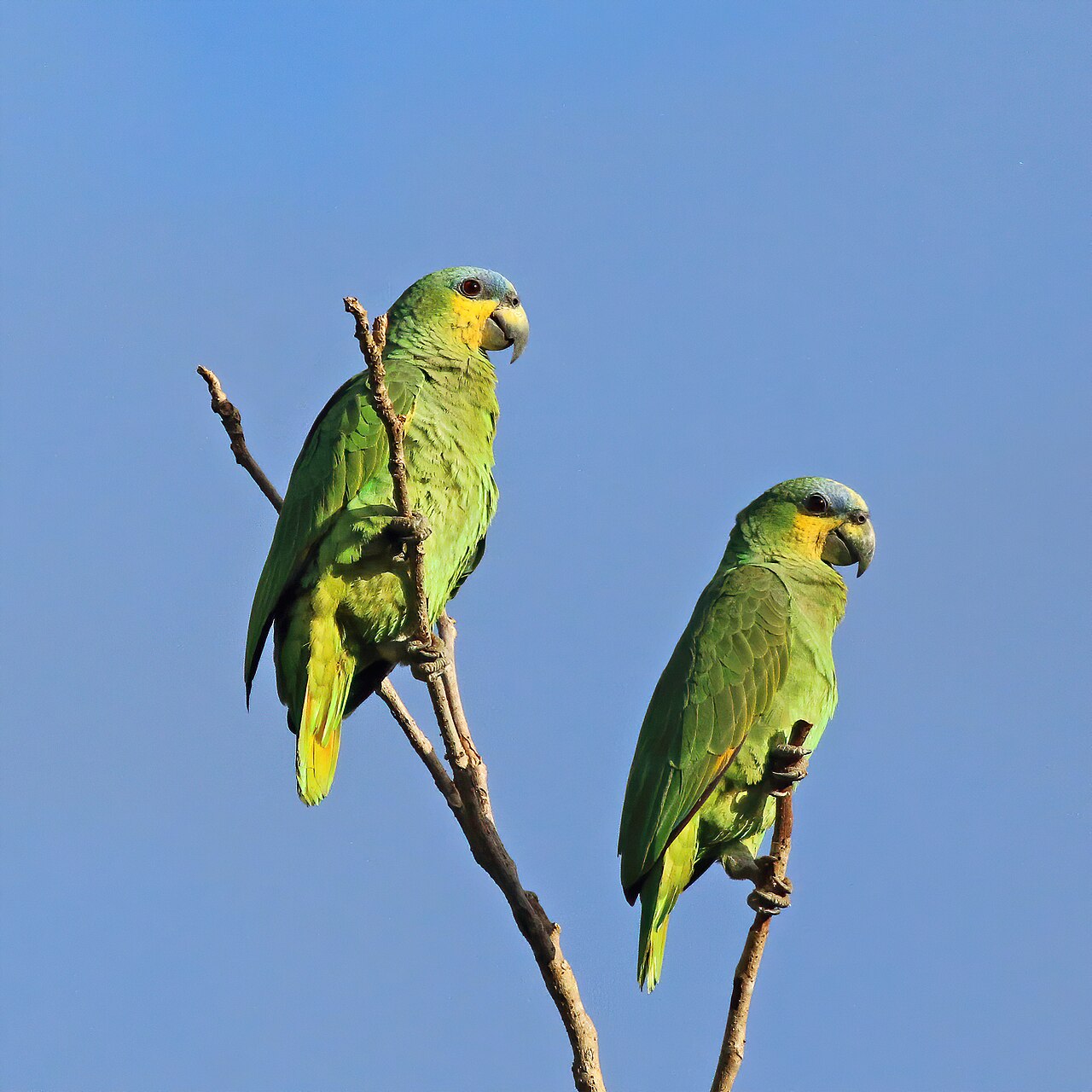
Color readings are the most popular parrot searches, and they follow general color symbolism rather than anything specific to parrots. A green parrot spiritual meaning is given as growth, healing, money and new starts, which matches the broad treatment of green across folk traditions and matches the green parrots of South Asia.
A red parrot is read as passion, vitality and urgency, the same register as other bold colored birds and their readings. A blue parrot is read as calm, truth and clear speech. A grey parrot, usually an African grey, is read as wisdom and discernment, helped along by the species being the best known talker in the world.
Two green parrots together is a frequent search, and the traditional answer is partnership: paired birds read as a couple, an alliance or a reconciliation. Those readings come from color convention and from the birds’ real pair bonding, not from any single documented tradition.
Parrots in Dreams, at Night and Found Dead
A parrot in a dream is almost always read as your own voice returned to you. Dream interpreters ask what the bird said, because a parrot repeating your words points at self-justification, while a parrot speaking in another voice points at an influence you have absorbed.
Hearing a parrot at night is unusual, since most parrots roost at dusk and go quiet. Folk reading treats the night call as restlessness or an unfinished conversation. The ordinary explanation is a roost disturbed by a predator, a car alarm or a streetlight, and naturalized flocks can be loud enough to wake a block.
Finding a dead parrot is read as closure rather than catastrophe, usually the end of a dialogue, a correspondence or a relationship that lived on talk. It is a reading shared with other small bird death omens, which tend to emphasize transition over doom. Window collisions and cold snaps kill naturalized parrots regularly, so the find is rarely as rare as it feels.
Frequently Asked Questions
Does God send birds as signs?
Scripture describes birds in specific moments, such as the dove returning to Noah and the raven feeding Elijah, so the idea has textual roots. It does not teach that every bird sighting is a personal message. Most pastors treat bird signs as a matter of personal comfort rather than doctrine, and they discourage reading them as instruction.
What are the signs of a bird trying to tell you?
Folk tradition looks for repetition, contact and unusual boldness: the same species appearing several days running, a bird that lands close and stays, tapping at a window, or a bird entering a building. Ornithologically, these behaviors usually mean territory, nesting, a reflection in glass or a food source nearby.
When a bird visits you, what does it mean?
The common reading is that a visiting bird marks a message, a visitor or a change in the household, with the exact meaning taken from the species and the setting. Parrots are read as news and conversation, cardinals as remembrance, crows as warning. The reading is interpretive, and the honest version says so.
What bird is the most spiritual?
No bird holds that title universally. The dove carries the widest religious weight in Western tradition, the eagle dominates North American ceremonial use, the crane leads in East Asian symbolism, and the raven anchors Norse and Northwest Coast traditions. Parrots rank high for speech symbolism but low for sacred status.
What is the most loyal bird to humans?
Parrots have the strongest claim among commonly kept birds. Macaws and cockatoos bond intensely with one person and can live 50 to 80 years, which means a single bird may outlast its owner. Pigeons are a close second for homing loyalty, returning to one loft across hundreds of miles.
What does it mean when a parrot talks to you?
Biologically it means the bird is contact calling, using sounds it learned from your household to keep social contact. Symbolically it is read as the clearest form of the parrot omen, a direct prompt to examine your own speech. The words chosen rarely carry meaning for the bird itself.