Can Chickens Eat Pineapple? Safe Amounts, Skin, and Core
Chickens can eat pineapple safely, and most flocks love it, but only the soft flesh in small amounts as an occasional treat. Pineapple delivers vitamin C, manganese, and the digestive enzyme bromelain, and it is not toxic to poultry in any part. The real risks are its high sugar content, its acidity, and the tough fibrous skin, core, and leaves, which can bunch up in the crop and cause an impaction if birds swallow large pieces.
The practical rule is the same one that governs every fruit treat in a backyard flock. Treats of all kinds should stay under about 10 percent of what your birds eat in a day, with the remaining 90 percent coming from a complete formulated feed that carries the protein, calcium, and micronutrients laying hens need. This guide covers which parts of the pineapple are safe, how much to give, what happens if you overdo it, and how to serve it so the flock gets the benefit without the digestive fallout.
| Quick Facts | Pineapple for Chickens |
|---|---|
| Safe to feed | Yes, flesh only, in moderation |
| Skin and rind | Not recommended, tough and fibrous |
| Core | Only if finely chopped, very hard |
| Leaves and crown | No, sharp edges and indigestible fiber |
| Serving size | 1 to 2 small cubes per bird, 1 to 2 times per week |
| Main risks | Sugar, acidity, crop impaction, loose droppings |
Can Chickens Eat Pineapple Safely?
Yes. Pineapple flesh contains nothing toxic to chickens, and there are no compounds in it comparable to the solanine in green potatoes or the persin in avocado skin that make some human foods genuinely dangerous to poultry. Birds will typically go straight for it, because chickens are opportunistic omnivores that readily take sweet fruit when it is available.
Safety in this context means safe in the right quantity, which is a different claim from safe in any quantity. Pineapple is roughly 10 percent sugar by weight and carries an acidity around pH 3.5, both of which push it into the treat category rather than the staple category. A hen that fills up on fruit eats less of her layer feed, and the consequences show up in shell quality and laying consistency within a couple of weeks.
Feed formulation exists precisely because chickens cannot balance their own diets by preference. A complete layer ration supplies roughly 16 to 18 percent protein plus the calcium a hen needs to build an eggshell every day, and extension poultry programs including Penn State Extension consistently advise keeping supplemental treats to a small fraction of intake so that ration stays effective. Pineapple fits comfortably inside that fraction. It just should not compete with it.
Nutritional Benefits of Pineapple for Chickens
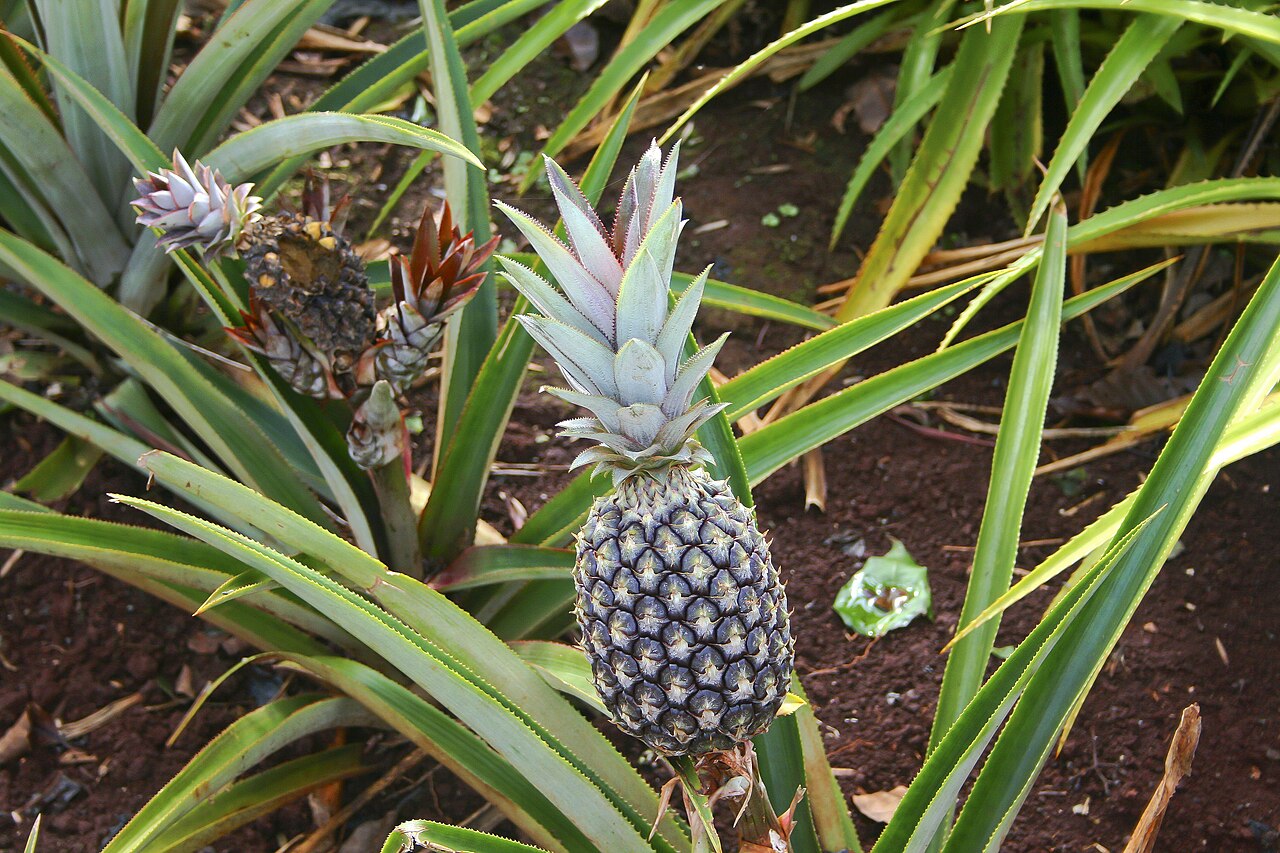
Pineapple is a strong source of vitamin C, delivering around 48 mg per 100 g of fresh fruit. Chickens synthesize their own vitamin C internally, so they do not depend on dietary sources the way humans do, but supplemental vitamin C does appear to help birds cope with heat stress, when their own production may not keep pace with demand. A cold slice of pineapple on a July afternoon is genuinely useful for that reason alone.
Manganese is the standout mineral, and pineapple is unusually rich in it. Manganese supports bone development and eggshell formation in poultry, and deficiency is a recognized cause of leg deformities in growing birds. The amount in a couple of cubes is small, but it contributes to overall intake alongside the trace minerals already in the feed.
Bromelain is the enzyme pineapple is best known for, a protease that breaks down proteins and is the reason fresh pineapple stings your tongue and refuses to set in gelatin. In poultry research bromelain has been examined as a digestive aid and for anti-inflammatory effects, with generally positive but modest findings. The fruit also brings water content above 85 percent, which makes it a functional hydration treat during hot weather much like the flock favorites covered in our guide to whether chickens can eat grapes.
Can Chickens Eat Pineapple Skin and Rind?
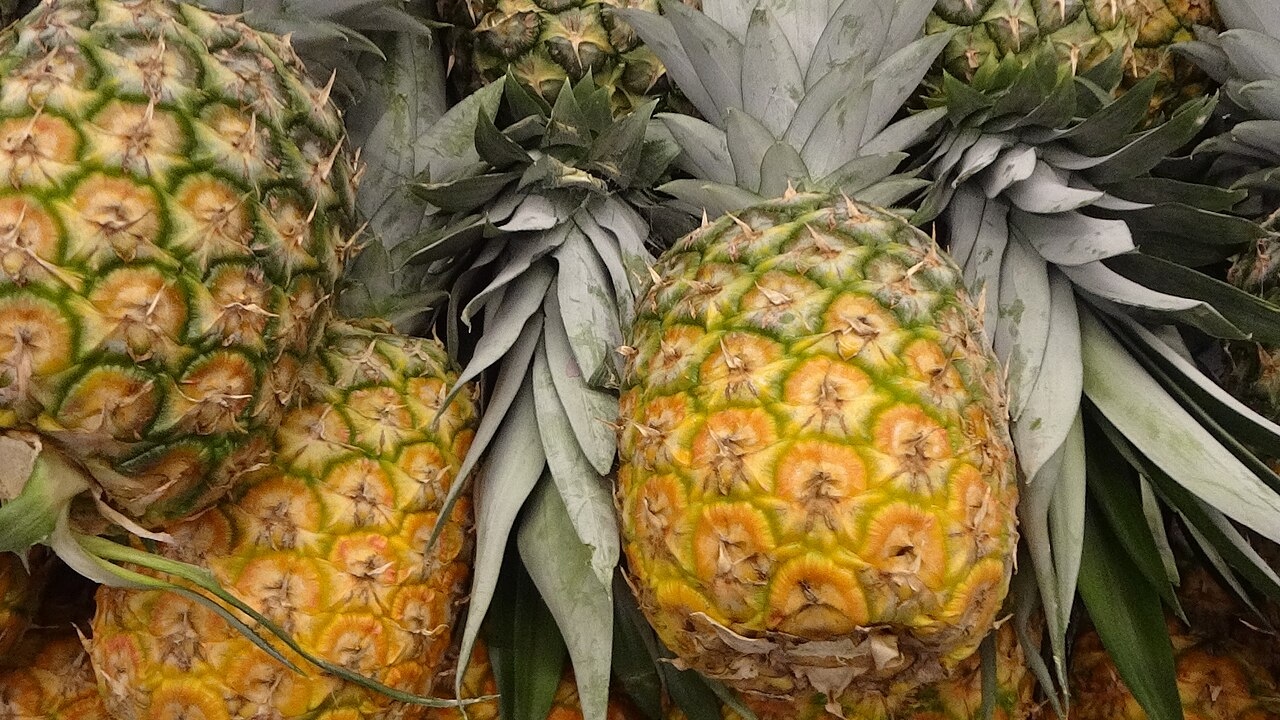
Pineapple skin is not poisonous, but it is a poor choice and most keepers should simply compost it. The rind is thick, heavily fibrous, and studded with hard spiny eyes that chickens cannot break down efficiently. Their digestive system handles fiber by grinding it in the gizzard with grit, and pineapple rind is stringy in exactly the way that resists grinding.
The concern is crop impaction. Long tough fibers can mat together into a dense ball in the crop, the storage pouch at the base of the neck, and block the passage of food into the rest of the digestive tract. An impacted crop feels firm or doughy first thing in the morning when it should be empty, and it is a veterinary problem rather than a wait-and-see problem. Fibrous kitchen scraps such as pineapple rind, corn husks, and long grass clippings are among the most common triggers.
If you want to use the rind anyway, the only reasonable approach is to cut away any residual flesh clinging to it, chop that flesh small, and discard the skin itself. Pesticide residue is a second reason for caution, since pineapple skin is not something anyone washes with the same care they would apply to fruit they intend to eat. The pulp is the part with the nutrition. The rind offers your birds almost nothing in exchange for a real risk.
Can Chickens Eat Pineapple Core?
The core sits in the middle ground. It is edible and contains a higher concentration of bromelain than the surrounding flesh, but it is dense and woody in a way that makes swallowing large chunks a genuine hazard for a bird with no teeth. A chicken that tears off a piece too big to grind will either struggle with it in the crop or refuse it entirely.
Chopped fine, the core is fine to offer. Cut it into pieces no larger than roughly 0.5 in, or run it through a food processor along with other scraps, and it becomes just another part of the treat mix. Younger birds and bantams need smaller pieces still, since crop capacity and gape size scale with the bird.
Make sure grit is always available whenever you feed anything fibrous. Chickens with access to pasture usually pick up enough small stones on their own, but confined birds depend entirely on what you supply. Without grit in the gizzard, the mechanical grinding that breaks down fiber simply does not happen, and tough foods pass through poorly digested or stall on the way. The same principle applies to smaller poultry, as our guide to raising coturnix quail explains for birds with much smaller crops.
Can Chickens Eat Pineapple Leaves and the Crown?
Skip the leaves entirely. The crown of a pineapple is made of long, stiff, waxy leaves with serrated edges that are indigestible and physically awkward for a bird to swallow. Chickens are enthusiastic and not especially discriminating when they see something new in the run, so a discarded crown can be pecked at and torn into strips before you notice.
The fiber content in the leaves is the same problem as the rind, only more so. Pineapple leaf fiber is strong enough that it is processed commercially into textile yarn, which tells you everything about how it behaves in a digestive tract designed for seeds, insects, and tender greens. It is a crop impaction risk with no nutritional upside whatsoever.
Compost the crown, or root it in water on a windowsill and grow a new plant from it. If you want to give your flock leafy greens, offer things built for the purpose such as chopped kale, chard, lettuce, or clover from an untreated part of the yard. Those deliver real vitamins and fiber your birds can actually process.
Canned, Dried, and Frozen Pineapple
Canned pineapple is the one form worth avoiding on principle. Most of it is packed in syrup, which multiplies an already substantial sugar load, and even varieties packed in juice are sweeter than fresh fruit. Some canned products also carry added preservatives and sodium, and chickens have a low tolerance for excess salt relative to their body size.
Dried pineapple has the same issue in concentrated form. Removing the water leaves a product that can run above 60 percent sugar by weight, and commercial dried pineapple is often sweetened further during processing. A small piece will not harm a hen, but it is closer to candy than to fruit, and it is easy to hand out far more sugar than you realize.
Frozen pineapple, on the other hand, is excellent. Freeze fresh chunks in an ice cube tray with water and set the block out on a hot afternoon, and you have a treat that provides hydration, cooling, and 20 minutes of pecking enrichment at once. Heat stress is a real killer in backyard flocks, and cold high-water-content treats are a legitimate tool for managing it alongside shade and cool drinking water.
How Much Pineapple and How Often
The working figure is one to two small cubes per bird, once or twice a week. In practical terms, a single ring of pineapple chopped into pieces distributes comfortably among a flock of five or six standard hens, and that is a full serving for the day. Bantams and young birds get proportionally less.
The 90/10 rule provides the framework. Ninety percent of daily intake should be complete feed, with all treats combined making up no more than the remaining tenth. That includes scratch grains, mealworms, kitchen scraps, and every fruit you offer, not pineapple alone. Keepers who hand out a different treat every day frequently exceed the limit without noticing, because each individual offering feels small.
Watch what happens to the feeders as your check. If the flock is eating its layer ration steadily and droppings look normal, the treat balance is right. If crumble is sitting untouched while the birds mob you for fruit, cut treats back for a week. Protein-heavy treats follow the same logic, whether you are feeding mealworms or the insects covered in our guide to what crickets eat.
Risks: Sugar, Acidity, and Sour Crop
Excess sugar is the primary risk, and it works through the gut. A sudden influx of simple sugars disrupts the balance of microorganisms in the digestive tract and can allow yeast to overgrow in the crop, producing the condition keepers call sour crop. Symptoms include a squishy fluid-filled crop, a foul sour smell from the beak, lethargy, and reduced appetite, and it requires veterinary attention rather than home remedies.
Loose droppings are the more common and milder consequence. Pineapple is over 85 percent water with meaningful acidity, and a bird that eats a lot of it will produce watery droppings for a day. That is uncomfortable rather than dangerous on its own, but wet droppings raise humidity in the coop, which encourages ammonia buildup, flies, and the moist conditions that attract nuisance insects. Fruit scraps left uneaten in the run are a classic culprit, and our guide to getting rid of gnats covers the same sanitation logic in a household setting.
There is also a calcium consideration for laying hens. Every eggshell a hen produces demands a substantial calcium draw, and hens that displace layer feed with fruit take in less calcium, which shows up as thin or soft-shelled eggs. Keep crushed oyster shell available free choice in a separate container so hens can self-regulate, and remove any uneaten fruit from the run within a few hours so it does not ferment or draw rodents.
How to Serve Pineapple to Your Flock
Start by trimming away the skin and crown, then cut the flesh into cubes of about 0.5 in. Small uniform pieces are safer than a large wedge, because they discourage the bolt-and-swallow behavior that leads to crop trouble and they make it easier for lower-ranking hens to get a share instead of watching the dominant bird claim the whole piece.
Distribution matters more than most keepers expect. Scatter the pieces across a wide area rather than dropping them in one pile, which spreads out the flock and reduces squabbling. Alternatively, hang a large chunk from a string at head height to make a treat dispenser the birds have to work at, which slows consumption and provides genuine enrichment on days when the flock is confined.
Introduce it gradually the first time, with one small piece per bird, and watch for loose droppings over the next day before offering more. Remove leftovers before nightfall so nothing ferments overnight or attracts rodents. The same measured approach applies across every species on a small holding, from the poultry covered in our guide to keeping button quail to larger livestock such as the baby alpaca, where feeding discipline is what keeps a formulated ration doing its job.
Related reading: can chickens eat tomatoes.
Related reading: can chickens eat apples.
Related reading: can bearded dragons eat grapes.
Related reading: can chickens eat bread.
Related reading: can chickens eat strawberries.
Related reading: can chickens eat oranges.
Related reading: can chickens eat mushrooms.
Related reading: can chickens eat cabbage.
Related reading: what can chickens eat.
Related reading: can chickens eat cantaloupe.
Related reading: can chickens eat bell peppers.
Related reading: can chickens eat avocado.
Related reading: can chickens eat rice.
Related reading: can chickens eat cilantro.
Related reading: can chickens eat green beans.
Related reading: can chickens eat cherries.
Related reading: can chickens eat pumpkin.
Frequently Asked Questions
Can chickens eat pineapple?
Yes. Pineapple flesh is safe for chickens and provides vitamin C, manganese, and hydration. Serve it as an occasional treat of one to two small cubes per bird, one or two times a week, and keep all treats combined under about 10 percent of daily intake.
Can chickens eat pineapple skin or rind?
It is not toxic, but it is not recommended. The rind is tough and fibrous enough to mat together in the crop and cause an impaction, and it may carry pesticide residue. Trim off any clinging flesh, chop it small, and compost the skin itself.
Can chickens eat pineapple core?
Yes, if you chop it finely. The core is dense and woody, so pieces should be no larger than about 0.5 in, and smaller for bantams and young birds. It contains more bromelain than the surrounding flesh. Always make sure grit is available so the gizzard can grind fibrous material.
Can chickens eat pineapple leaves?
No. The crown leaves are stiff, waxy, and serrated, with fiber strong enough to be processed into textile yarn commercially. They offer no nutritional value and present a real crop impaction risk. Compost the crown or root it to grow a new plant.
Is canned pineapple safe for chickens?
It is best avoided. Canned pineapple is usually packed in syrup or juice that raises the sugar load well above fresh fruit, and some products contain added sodium and preservatives. Fresh or plain frozen pineapple is a much better choice.
Can pineapple cause sour crop in chickens?
Sugary fruit fed in excess can contribute to sour crop by allowing yeast to overgrow in the crop. Signs include a squishy fluid-filled crop, a sour smell from the beak, and lethargy. Keeping pineapple to a small weekly treat makes this unlikely, and any suspected case needs veterinary attention.
Can baby chicks eat pineapple?
Chicks should stay on complete starter feed for their first several weeks, since their growth demands precise protein and nutrient levels. If you offer pineapple at all after a few weeks of age, give a tiny finely chopped amount alongside chick grit, and treat it as a rare extra rather than a routine item.