Types of Loons: A Complete Guide
North America is home to five types of loons: the common loon, red-throated loon, Pacific loon, Arctic loon, and yellow-billed loon. These sleek diving birds are famous for their haunting calls, their expert underwater fishing, and their association with wild northern lakes. This guide covers how many types of loons there are, the five species, how to tell them apart, where they live, and facts about loons.
| Loon | Key Features |
|---|---|
| Common Loon | Checkered back, black head |
| Red-throated Loon | Smallest, red throat patch |
| Pacific Loon | Gray head, western coast |
| Arctic Loon | Rare, white flank patch |
| Yellow-billed Loon | Largest, pale yellow bill |
How Many Types of Loons Are There?
North America is home to five species of loons: the common loon, the red-throated loon, the Pacific loon, the Arctic loon, and the yellow-billed loon. Loons are a small, distinctive group of diving waterbirds, superbly adapted for an aquatic life, with sleek bodies, dagger-like bills, and legs set far back on the body for powerful swimming. This rearward leg placement makes them awkward on land but expert in the water, where they dive to pursue fish. Loons are best known for their haunting, evocative calls, especially the common loon’s wailing and yodeling, which are iconic sounds of northern wilderness lakes. In breeding plumage, several loons are strikingly patterned, while in winter they become plainer gray and white. Loons breed on freshwater lakes in the north and many winter on coastal waters. Understanding these five species is the key to knowing North American loons, remarkable diving birds quite different from the birds in our guide to types of ducks.
The Five North American Loons
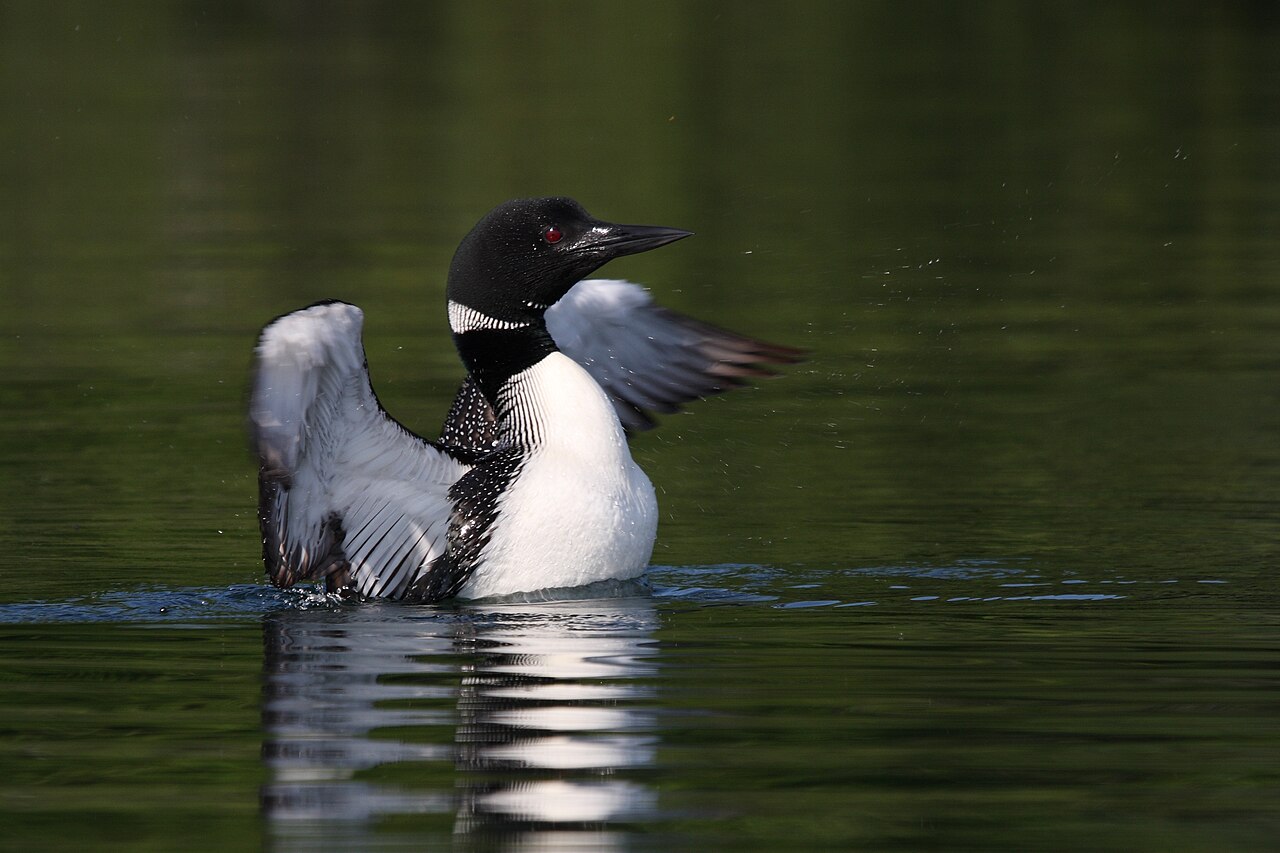
Each of the five North American loons has its own distinctive features. The common loon is the most familiar, a large bird with, in breeding plumage, a black head, a checkered black-and-white back, and a striking necklace pattern, along with the famous haunting calls. The red-throated loon is the smallest, with a thin, upturned bill and, in breeding plumage, a distinctive rusty-red throat patch. The Pacific loon is a medium loon with a smooth pale gray head, common along the western coast and northern lakes. The Arctic loon is a rare species in North America, similar to the Pacific loon but showing a white flank patch. The yellow-billed loon is the largest loon, resembling the common loon but with a pale, yellowish, upturned bill, and it breeds in the high arctic. In winter, all these loons become plainer gray above and white below, making them trickier to tell apart, but their breeding plumages are distinctive, as explored in our guide to types of white birds.
How to Tell Loons Apart
Telling loons apart is easiest in breeding plumage, using size, head and bill features, and pattern. The common loon is large with a black head, checkered back, and necklace, while the red-throated loon is the smallest with a thin, upturned bill and a red throat patch in breeding season. The Pacific loon has a smooth pale gray head, and the very similar Arctic loon, which is rare, shows a white flank patch. The yellow-billed loon is the largest and is told from the common loon by its pale, yellowish, upturned bill. Bill shape and color, head color, size, and back pattern are the key features. In winter plumage, all loons become plainer gray and white and are much harder to distinguish, so features like bill shape and size become especially important. Range also helps, since some loons are more coastal or northern. By focusing on size, bill, and head pattern, you can identify loons, a rewarding challenge, as explored in our guide to types of herons.
Where Loons Live
Loons live on water across northern North America, breeding on freshwater lakes and often wintering on the coast. The common loon breeds on clear, quiet lakes across the northern United States, Canada, and parts of the north, and it winters on coastal waters and large ice-free lakes farther south. The red-throated and Pacific loons breed on tundra ponds and lakes in the far north and winter along the coasts, with the Pacific loon common on the western seaboard. The Arctic loon has a limited range in North America, and the yellow-billed loon breeds in the high arctic and winters mainly along northern coasts. Loons require clean lakes with good fish populations and clear water for their underwater hunting, which makes them sensitive to water quality and disturbance. During migration and winter, loons gather on coastal waters and large lakes. Because loons depend on healthy northern lakes for breeding, protecting these waters is important for them, as detailed in our guide to bird symbolism.
Facts About Loons
Loons are fascinating birds with many remarkable adaptations for aquatic life. Their legs are set far back on the body, which makes them powerful swimmers and divers but so awkward on land that they can barely walk, and they nest right at the water’s edge. Loons are expert divers, plunging underwater to chase and catch fish with their sharp bills, and they can stay submerged for impressive periods, aided by dense bones that reduce their buoyancy, unusual among birds. The common loon’s haunting calls, including wails, yodels, and tremolos, are among the most iconic sounds of the northern wilderness and carry great distances across lakes. Loons need a long stretch of open water to take off, running across the surface to become airborne. They are strong fliers once aloft, migrating between breeding lakes and coastal wintering areas. Loons are also long-lived and form strong pair bonds. These qualities make loons extraordinary and beloved symbols of wild northern waters, as reflected in our guide to state birds, since the common loon is one.
The Common Loon and Its Haunting Call
The common loon deserves special attention as the loon that embodies the spirit of northern wilderness. According to the Cornell Lab of Ornithology, the common loon is known for its haunting calls and is an excellent diver, with legs positioned far back on the body for powerful swimming. The common loon’s repertoire of eerie, beautiful calls, including long wails, complex yodels, and laughing tremolos, echoing across a misty lake at dawn or dusk, is one of the most evocative sounds in all of nature and a defining feature of wild northern lakes. These calls serve to communicate between mates, defend territory, and signal alarm. Beyond its voice, the common loon is a superb diver, plunging beneath the surface to pursue fish, aided by its streamlined body, dagger-like bill, and dense bones that reduce buoyancy. Its rearward legs make it powerful in water but nearly helpless on land. The common loon’s haunting call and diving prowess make it a beloved symbol of northern wilderness, as explored in our guide to state birds, since it is one.
Loons as Symbols of Wild, Clean Waters
Loons have become powerful symbols of wilderness and clean water, and understanding why reveals their special place in nature and culture. Because loons depend on clear, clean lakes with healthy fish populations for their underwater hunting, their presence is often seen as an indicator of good water quality and a healthy northern ecosystem, making them symbols of pristine, unspoiled waters. The sight of a loon gliding across a quiet lake, and especially the sound of its haunting call carrying through the wilderness, evokes a deep sense of the wild north for many people, and loons feature prominently in the culture, art, and folklore of northern regions. Loons are also sensitive to disturbance, pollution, and threats like lead poisoning from fishing tackle, which has made them a focus of conservation and lake stewardship efforts. Their role as indicators of environmental health adds to their significance. This deep association with wild, clean waters makes loons cherished and meaningful birds, as reflected in our guide to bird symbolism.
Frequently Asked Questions
How many types of loons are there?
North America has five loon species: the common loon, red-throated loon, Pacific loon, Arctic loon, and yellow-billed loon, all diving waterbirds of northern waters.
What is the most common loon?
The common loon is the most familiar loon, a large bird with a checkered back and black head in breeding plumage, known for its haunting calls on northern lakes.
What is the largest loon?
The yellow-billed loon is the largest loon, resembling the common loon but with a pale, yellowish, upturned bill. It breeds in the high arctic.
Why are loons awkward on land?
Loons have legs set far back on the body, which makes them powerful swimmers and divers but so awkward on land that they can barely walk, so they nest at the water’s edge.
What makes the loon’s call?
The common loon produces haunting wails, yodels, and tremolos that carry across lakes. These iconic calls are among the most evocative sounds of the northern wilderness.
How do loons catch fish?
Loons are expert divers that plunge underwater to chase and catch fish with their sharp, dagger-like bills, aided by dense bones that reduce their buoyancy.
Where do loons live?
Loons breed on clear freshwater lakes across northern North America and many winter on coastal waters. They need clean lakes with good fish populations.