Types of Swans: A Complete Guide
North America has three types of swans: the native tundra swan and trumpeter swan, and the introduced mute swan. These large, graceful white waterbirds are among the biggest flying birds, famous for their long necks, elegant appearance, and lifelong pair bonds. This guide covers how many types of swans there are, the three species, how to tell them apart, where they live, and facts about swans.
| Swan | Key Features |
|---|---|
| Trumpeter Swan | Largest, black bill, native |
| Tundra Swan | Yellow spot on bill, native |
| Mute Swan | Orange bill, black knob, introduced |
How Many Types of Swans Are There?
North America is home to three species of swans: the trumpeter swan, the tundra swan, and the mute swan. The trumpeter swan and the tundra swan are native species, while the mute swan is an introduced species originally from Europe, brought to North America for parks and estates and now established in the wild in some areas. All three are large white birds with long necks, among the heaviest of all flying birds, and they are strong swimmers that feed largely on aquatic vegetation. The trumpeter swan is the largest native waterfowl in North America, the tundra swan is a smaller swan that breeds in the far north, and the mute swan is the familiar swan of parks, recognized by its orange bill. Swans are known for their graceful appearance, their strong and often lifelong pair bonds, and their devoted care of their young, called cygnets. Understanding these three species is the key to knowing North American swans, elegant relatives of the birds in our guide to types of geese.
The Three North American Swans
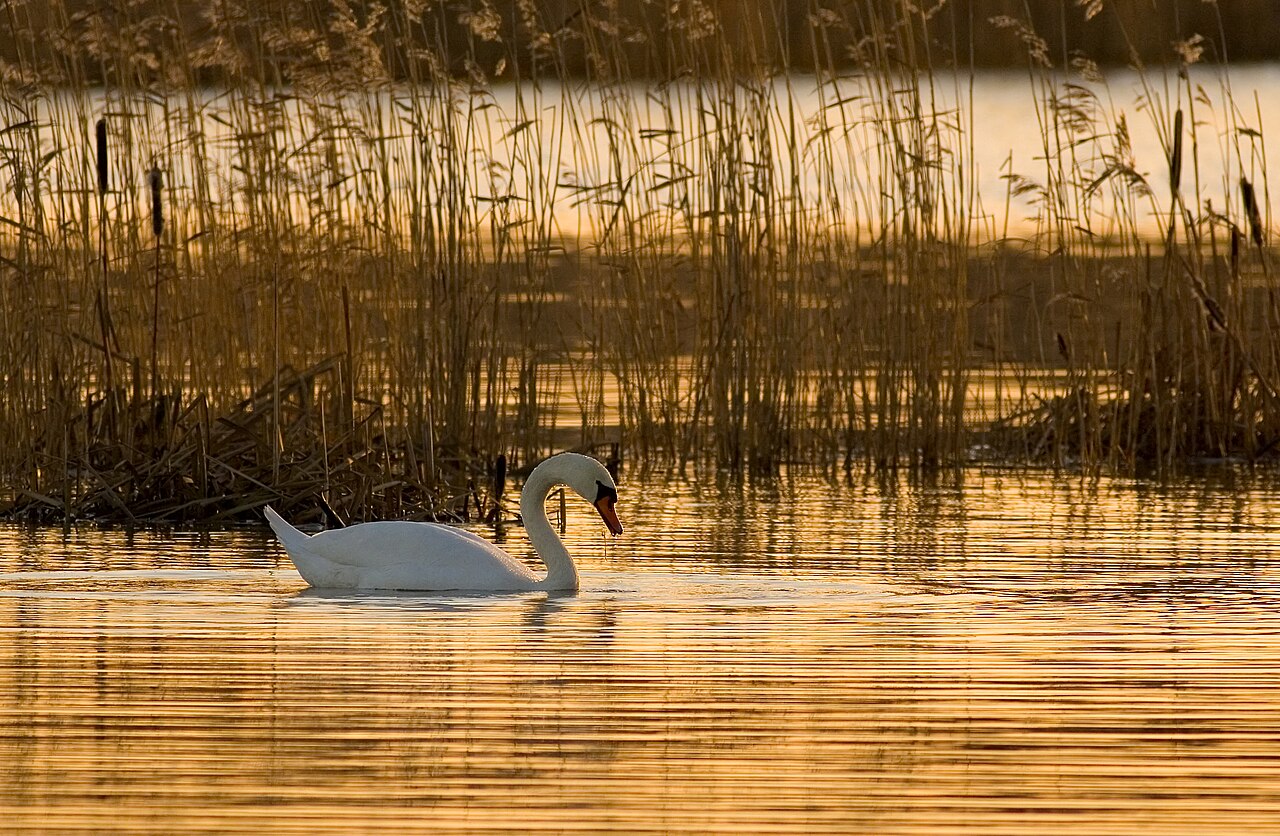
Each of the three North American swans has its own distinctive features. The trumpeter swan is the largest, a magnificent all-white bird with a black bill, and it is the heaviest native waterfowl on the continent, named for its deep, trumpeting call. Once nearly driven to extinction, it has recovered thanks to conservation efforts. The tundra swan is a smaller native swan, also white with a mostly black bill that usually shows a small yellow spot in front of the eye, and it breeds in the arctic tundra and migrates south in large flocks for winter. The mute swan is the classic swan of parks and ponds, distinguished by its orange bill with a black knob at the base and its habit of holding its neck in a graceful S-curve with wings often arched, and it is an introduced species that can be aggressive. Together these make up North America’s swans, and their lifelong bonds make them symbols of devotion, as explored in our guide to birds that mate for life.
How to Tell Swans Apart
Telling the swans apart is easier when you focus on the bill, since all three are large white birds. Start with bill color, as the mute swan has an orange bill with a black knob at the base, immediately setting it apart from the two native swans, which have black bills. To separate the native swans, look closely at the black bill: the tundra swan usually shows a small yellow spot in front of the eye, while the trumpeter swan typically lacks this yellow and has an all-black bill, often with a salmon-colored line on the bill. Size helps too, since the trumpeter is the largest and the tundra is noticeably smaller, though this can be hard to judge without direct comparison. Neck posture and behavior are also clues, as the mute swan often holds its neck in a curved S and arches its wings, while the native swans usually hold their necks straighter. By focusing on bill color and markings, along with size and posture, you can identify North American swans, as explored in our guide to types of ducks.
Where Swans Live
Swans live in wetlands and open water across parts of North America, with each species favoring different areas. The trumpeter swan breeds around lakes, ponds, and marshes in parts of the Northwest, the northern states, and Canada, and populations have been reintroduced in several areas, with birds wintering on open water. The tundra swan breeds in the arctic tundra of the far north and migrates long distances to spend the winter on lakes, bays, estuaries, and flooded fields in parts of the East and West, often gathering in large flocks. The mute swan, being introduced, is found mainly in parks, ponds, and coastal areas where it has become established, particularly in the Northeast and around the Great Lakes. Swans generally need open water with abundant aquatic vegetation for feeding, and they may gather in flocks outside the breeding season. Because swans are large and often frequent accessible ponds and lakes, they are among the most conspicuous and admired waterbirds, as detailed in our guide to types of white birds.
Facts About Swans
Swans are remarkable birds with several fascinating traits worth knowing. They are among the heaviest flying birds, with the trumpeter swan being especially massive, yet they are powerful fliers capable of long migrations. Swans are well known for forming strong, often lifelong pair bonds, and a devoted pair works together to raise their cygnets, fiercely defending them from threats. The young cygnets are often grayish rather than white and gradually gain their white adult plumage as they mature. Swans feed largely on aquatic plants, using their long necks to reach vegetation underwater, and they may also graze on land. Their graceful appearance and faithful pairings have made swans powerful symbols of love, beauty, and devotion in cultures around the world, and a pair of swans facing each other, their necks forming a heart shape, is an iconic romantic image. These qualities make swans truly special birds, as reflected in our guide to bird symbolism.
The Trumpeter Swan, North America’s Largest Waterfowl
The trumpeter swan holds a special distinction worth understanding. According to the Cornell Lab of Ornithology, the trumpeter swan is the largest native waterfowl in North America, and swans are known for forming strong, lifelong pair bonds. This magnificent all-white swan, with its black bill and deep, trumpeting call, is not only the biggest swan but among the heaviest of all flying birds, an impressive sight on the water or in flight. The trumpeter swan has a remarkable conservation history, having been reduced to very small numbers by the early twentieth century through hunting and habitat loss, before recovering thanks to protection and reintroduction efforts. Today, trumpeter swans can again be seen in parts of the Northwest, northern states, and Canada. Their great size, striking appearance, and devoted, lifelong pairings make trumpeter swans especially admired birds, symbols of both natural beauty and successful conservation, as explored in our guide to birds that mate for life.
Swans as Symbols of Devotion
Swans have long held a powerful place in human culture as symbols of love, grace, and devotion, and their real behavior helps explain why. Because swans form strong, often lifelong pair bonds and work together devotedly to raise their cygnets, they have become enduring emblems of faithful love and lasting partnership across many cultures. The image of two swans facing each other with their necks curving together to form the shape of a heart is one of the most iconic romantic symbols, appearing in art, weddings, and decorations. Swans also represent grace and beauty, thanks to their elegant form and serene movement across the water. This deep cultural symbolism arises directly from the swans’ genuine devotion and graceful appearance, showing how their natural qualities inspired lasting human meaning. The combination of real faithful behavior and powerful symbolism makes swans truly special, cherished both as wild birds and as emblems of love, as explored in our guide to bird symbolism.
Frequently Asked Questions
How many types of swans are there in North America?
North America has three swan species: the native trumpeter swan and tundra swan, and the introduced mute swan, which originally came from Europe.
What is the largest swan?
The trumpeter swan is the largest swan and the heaviest native waterfowl in North America, an all-white bird with a black bill, named for its deep, trumpeting call.
How do you tell swans apart?
Look at the bill. The mute swan has an orange bill with a black knob, while the native trumpeter and tundra swans have black bills, the tundra often with a small yellow spot.
What swan has an orange bill?
The mute swan has an orange bill with a black knob at the base. It is the familiar swan of parks and ponds and is an introduced species in North America.
Do swans mate for life?
Yes, swans are well known for forming strong, often lifelong pair bonds, with devoted pairs raising and fiercely defending their cygnets together each year.
What is a baby swan called?
A baby swan is called a cygnet. Cygnets are often grayish rather than white and gradually gain their white adult plumage as they grow and mature.
Where do swans live?
Swans live on lakes, ponds, marshes, bays, and flooded fields. Trumpeter and tundra swans are native, breeding in the north, while mute swans favor parks and coasts.