Fish Crow Sound: The Nasal Call That Gives It Away
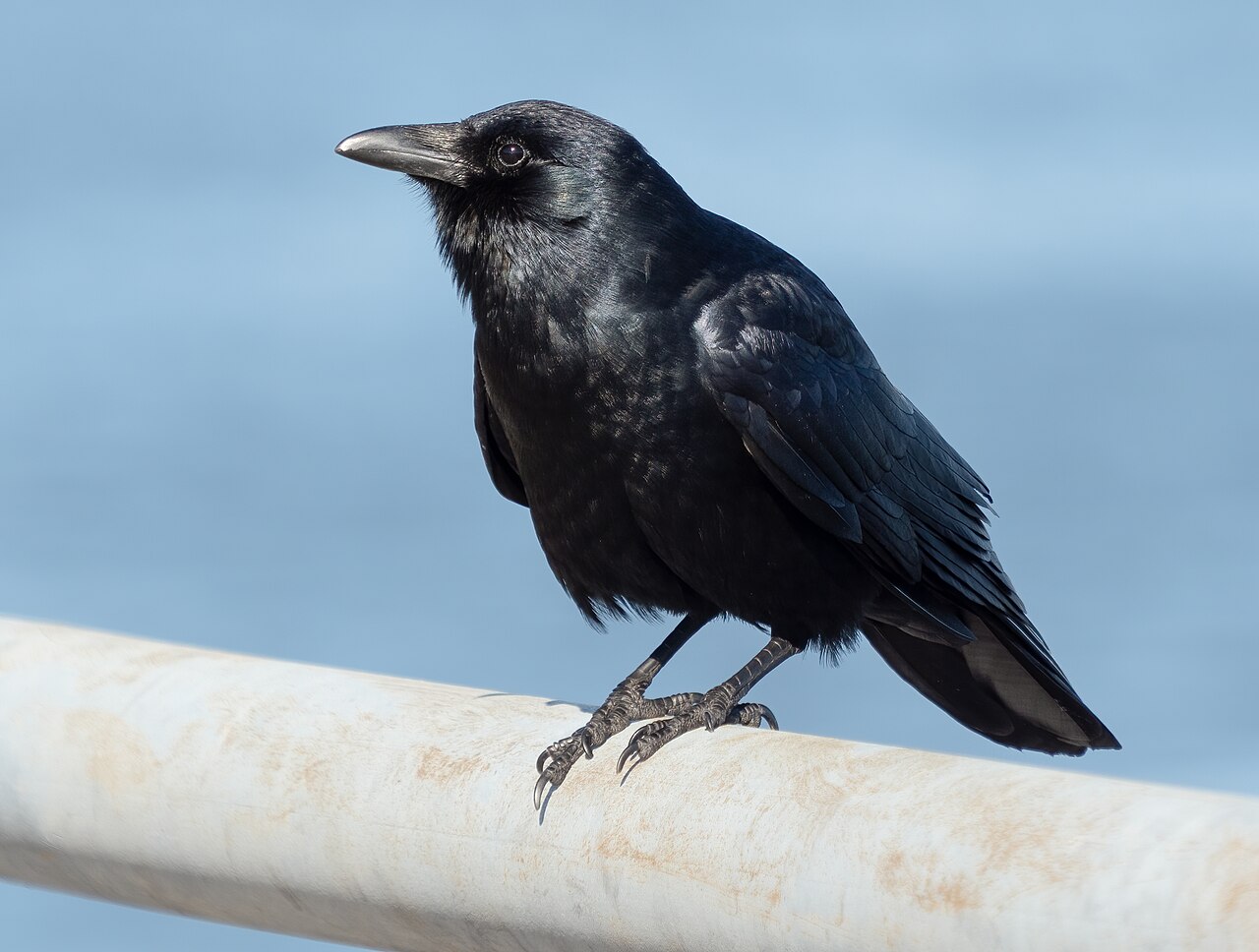
The fish crow sound is a short, nasal uh-uh that sounds like a crow with a head cold. Where an American Crow (Corvus brachyrhynchos) delivers a clean, ringing caw, a Fish Crow (Corvus ossifragus) pinches the same note through its nose and usually doubles it. Birders along the Atlantic and Gulf coasts rely on that difference every day, because the two species look nearly identical in the field.
Voice is the only reliable way to separate them at normal viewing distance. Size, gloss and bill shape all overlap enough to fool careful observers, so the call carries the identification. The catch is that young American Crows also sound nasal in late summer, which is where most misidentifications start.
A Fish Crow makes a short, nasal, two-note call that birders write as uh-uh or ca-hah, higher and flatter than the clear caw of an American Crow. The nasal quality comes from the voice itself, not from distance or weather, and it is the single most reliable field mark for the species.
| Feature | Fish Crow | American Crow |
|---|---|---|
| Typical call | Nasal uh-uh, often doubled | Clear, ringing caw caw |
| Pitch and tone | Higher, flat, pinched | Lower, full, resonant |
| Length | 14 to 16 in (36 to 41 cm) | 16 to 21 in (41 to 53 cm) |
| Core range | Coastal East, Gulf, major river valleys | Almost all of the Lower 48 |
| Preferred habitat | Tidewater, marsh, beaches, river towns | Fields, woodlots, suburbs, cities |
| Best ID method | Voice | Voice |
What a Fish Crow Sounds Like
The classic Fish Crow call is a nasal, slightly buzzy note that drops at the end, repeated twice in quick succession. Many listeners hear it as uh-uh and read it as a bird saying no. The second note is usually shorter and a touch lower than the first.
The tone is what matters, not the rhythm. American Crows also give doubled and tripled calls, so counting notes will not settle an identification. A Fish Crow sounds like the sound is coming through a closed nose, and that quality holds at any distance you can still hear the bird.
How to Tell a Crow From a Fish Crow
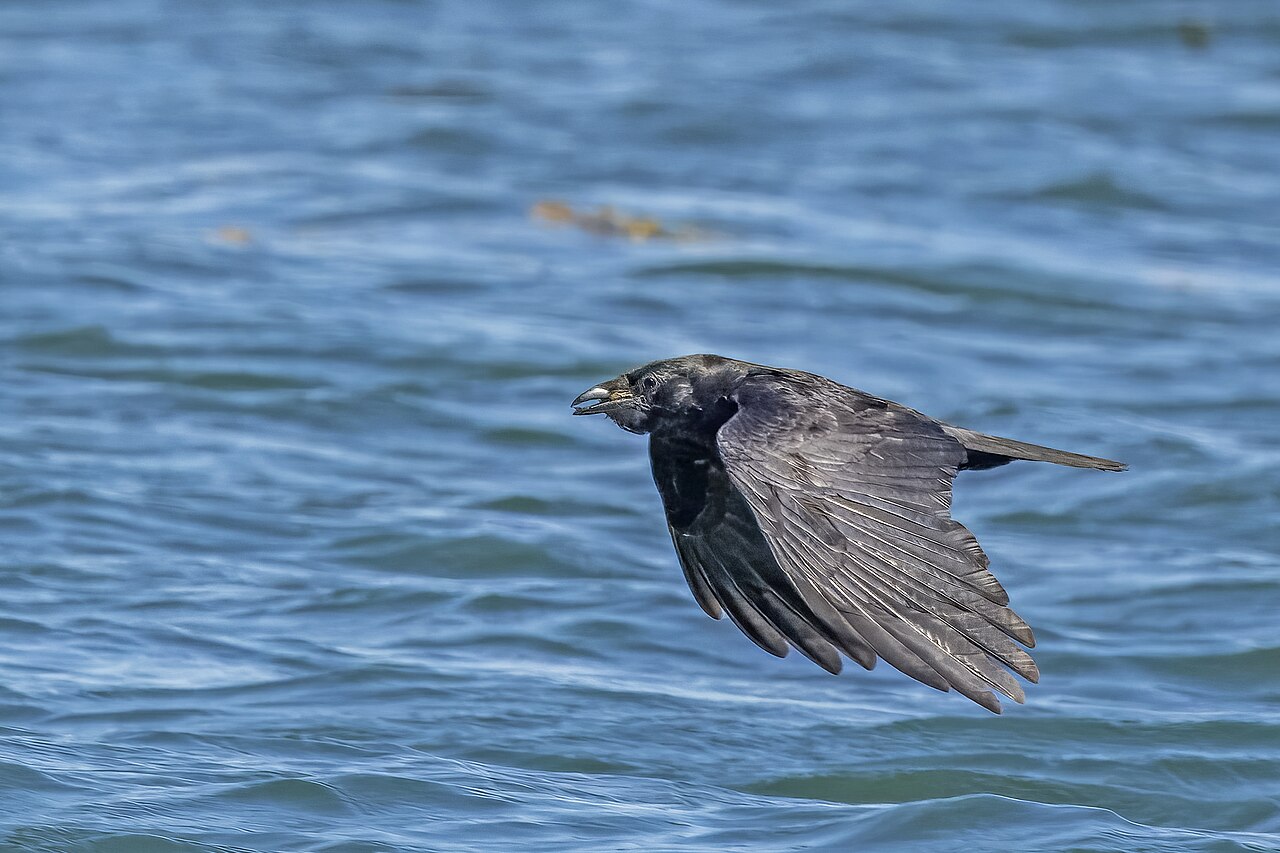
To tell a crow from a Fish Crow, wait for it to call and judge the tone rather than the shape. American Crow notes are open and carry across a field; Fish Crow notes are compressed and fade faster. If you can hear a nasal pinch, you have a Fish Crow.
Silent birds should stay unidentified. Bill size, wing gloss and neck feathers vary too much between individuals to carry a call alone, and both species mix freely in the same flock. Experienced observers in the overlap zone log silent birds as crow species and move on, exactly as they do with the full range of crow calls.
The Two Calls You Will Hear Most
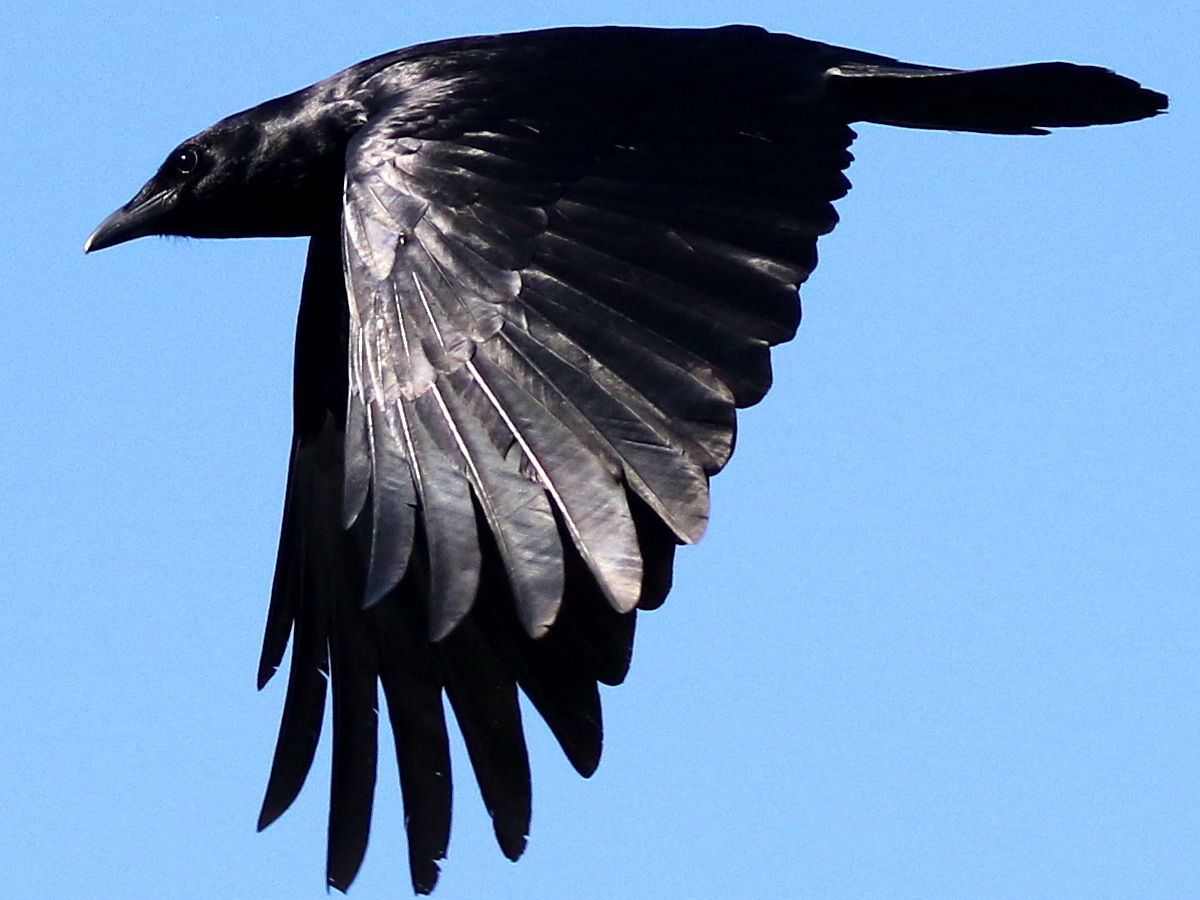
Beyond the short uh-uh, Fish Crows give a drawn out, nasal caaah that falls away at the end. This longer call often opens a bout of calling from a perched bird and carries further than the double note. Both calls share the same pinched quality.
Flocks add rattles, clicks and soft coos that rarely help with identification. These quieter sounds appear at close range near roosts and nests, and they overlap heavily with the vocabulary of other corvids. Stick to the two nasal calls when you need certainty.
Why Young American Crows Fool Almost Everyone
Juvenile American Crows beg with a nasal, whining call from roughly June through August, and it sounds convincingly like a Fish Crow. This is the most common source of out of range Fish Crow reports every summer. The begging call is usually higher, more drawn out and repeated insistently by a bird that follows an adult.
The safe rule in late summer is to wait for an adult to call. If the nasal bird is being fed, discount it. Outside the coastal plain, a single nasal call in July deserves a recording before it goes into a checklist.
Are Fish Crows Larger Than American Crows?
No, Fish Crows are smaller than American Crows, at roughly 14 to 16 in (36 to 41 cm) against 16 to 21 in (41 to 53 cm). The difference is real but useless on a lone bird with nothing to compare it to. Side by side on a parking lot or a roof line, the Fish Crow looks slighter and shorter legged.
Structure gives a few soft clues. Fish Crows often show a slimmer bill, a flatter forehead and, when calling, puffed throat feathers. Treat all of it as supporting evidence behind the voice.
Why Is a Fish Crow Called a Fish Crow?
Alexander Wilson named the species in 1812 after watching birds forage along tidal rivers and beaches, where they picked up stranded fish and scraps from fishermen. The name records a habitat association more than a diet. Coastal marshes, estuaries and river mouths remain the core of its range today.
That association is also why the species spread inland. Fish Crows have followed large river systems, reservoirs and landfills far from salt water, and they now nest well up the Mississippi, Ohio and Hudson valleys.
Do Fish Crows Eat Fish?
Fish Crows do eat fish, mostly dead or stranded ones, but fish is only part of a broad omnivorous diet. Crabs, crayfish, shrimp, carrion, grain, berries, garbage and the eggs and nestlings of other birds all show up in their feeding records. They are opportunists first.
Their nest raiding matters ecologically. Fish Crows regularly work heron, egret and tern colonies, and on some beaches they are a leading predator of shorebird eggs. That behavior draws sharp reactions from nesting birds, much as raptor presence does from jays that mob intruders.
Where and When You Hear Fish Crows
Fish Crows are most vocal from late winter through the breeding season, when pairs call persistently from bare treetops, bridges and cell towers. February through May is the easiest window to learn the sound. Birds stay in the area year round across most of the range.
In winter they gather in large roosts, often mixed with American Crows, and the nasal calls stand out in the general noise at dusk. Coastal towns, causeways, marinas and river bridges are the most productive places to listen, especially near water where eagles and other large birds draw crowds of corvids.
Do American Crows Get Along With Fish Crows?
The two species tolerate each other well and frequently share feeding areas, winter roosts and flight lines without conflict. Mixed flocks are normal along the coast, which is exactly why voice matters so much there. Neither species excludes the other from good food sources.
Friction shows up mainly near nests, where any crow will chase another crow of either species. These skirmishes are territorial rather than a contest between species, and they end quickly.
Are Fish Crows Aggressive?
Fish Crows are not aggressive toward people and rarely make contact even when a nest is close. Like all crows they will scold, dive and follow a person who has climbed near a nest tree, and the noise is the point. Attacks are far less common than with nesting gulls or terns.
Toward other birds the picture changes. As nest predators they are genuinely disruptive in colonies, and hawks and owls that perch in their territory get mobbed loudly, including barred owls calling in daylight.
How to Confirm a Fish Crow Sound
Confirm a Fish Crow by matching your recording against a reference library rather than against memory. The Macaulay Library collection at All About Birds holds clean examples of both the double note and the drawn call, and the Audubon field guide covers range and habitat.
Two practical checks settle most cases. Play an American Crow recording immediately after yours, since the contrast is far clearer than either sound alone, and note the date, because a nasal crow in July in the Midwest is a begging juvenile until proven otherwise. The same approach works for any confusing song, from wrens to cardinal calls.
Frequently Asked Questions
What is the lifespan of a Fish Crow?
Most Fish Crows live a few years, but banding records include a bird that reached at least 14 years and 6 months. Like other corvids they are long lived for their size once they survive the first year, which is when losses to predators, vehicles and weather are heaviest.
Are Fish Crows intelligent?
Fish Crows show the same problem solving and memory that made the crow family famous. They cache food, follow human activity for feeding opportunities, recognize individual people around regular foraging sites and learn quickly which places are safe. No species specific tool use has been documented in them.
How to befriend Fish Crows?
Offer unsalted peanuts in the shell at the same spot and time each day, then step back and stay predictable. Crows learn faces and routines fast, and a consistent, quiet person becomes part of the landscape within a few weeks. Check local feeding rules first, since some coastal towns restrict it.
Does the female Fish Crow sound different?
Male and female Fish Crows sound essentially alike, and no reliable way exists to sex a calling bird by ear. Any nasal call you hear could come from either. Behavior gives better clues, since females do the incubating and often call softly from near the nest.
What does a Fish Crow distress call sound like?
Alarm calling is a faster, harsher series of the same nasal notes, delivered while birds circle a predator. Several crows usually join within seconds, so volume rises sharply. Homeowners sometimes exploit this response with recorded distress calls, one of the approaches covered in our guide to sound based bird deterrents.
Where can I download a Fish Crow sound mp3?
Free recordings are available from xeno-canto and the Macaulay Library, both of which allow downloads under stated licenses for personal and educational use. Check each recording for its license before reusing it publicly. Those libraries are also the best reference for comparing regional variation.