Kookaburra: The Laughing Kingfisher That Eats Snakes, Not Fish
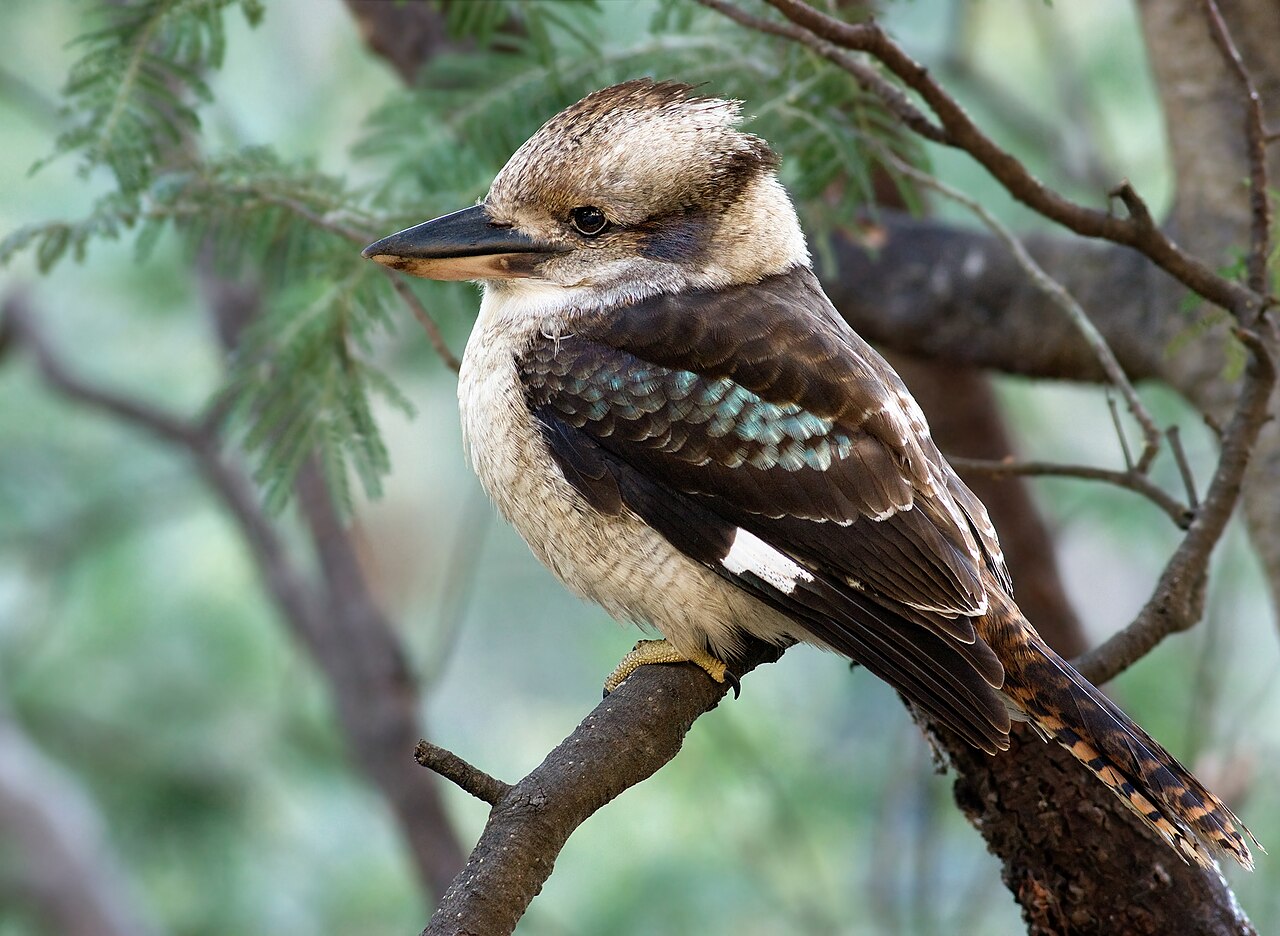
The kookaburra is a heavy-billed Australian kingfisher famous for a dawn call that sounds like human laughter. The laughing kookaburra (Dacelo novaeguineae) is the largest kingfisher in the world at 15 to 17 in (38 to 43 cm), and despite the family name it almost never fishes. It hunts lizards, snakes, insects, and mice from a perch.
Four species share the genus Dacelo, all confined to Australia and New Guinea. None of them live wild in the United States, which is the first thing most American readers want to settle.
Kookaburras are large Australian kingfishers in the genus Dacelo, best known for the laughing chorus that family groups use to hold territory. The laughing kookaburra reaches 17 in and hunts snakes, lizards, and rodents rather than fish. They do not live wild in the US and are kept only under permit.
| Quick Facts | Laughing Kookaburra |
|---|---|
| Scientific name | Dacelo novaeguineae |
| Length | 15 to 17 in (38 to 43 cm) |
| Weight | 11 to 16 oz (300 to 450 g) |
| Range | Eastern Australia, introduced to the southwest and Tasmania |
| Diet | Insects, lizards, snakes, mice, small birds |
| Lifespan | 15 to 20 years in the wild |
What Is Special About Kookaburras?
The laugh is what sets them apart. It starts as a low chuckle, climbs into a rolling cackle, and usually pulls in the whole family group, which is why a single bird rarely laughs alone for long. The chorus is territorial advertising, delivered most often at first light and again at dusk, and it carries for half a mile across open woodland.
Two other traits are unusual. Kookaburras are cooperative breeders, with grown offspring staying on for years to help feed the next brood. And they are kingfishers that gave up fishing, trading water for dry woodland and swapping fish for reptiles. Among loud birds they rank with the scream of a peacock for sheer carrying power.
The Four Kookaburra Species
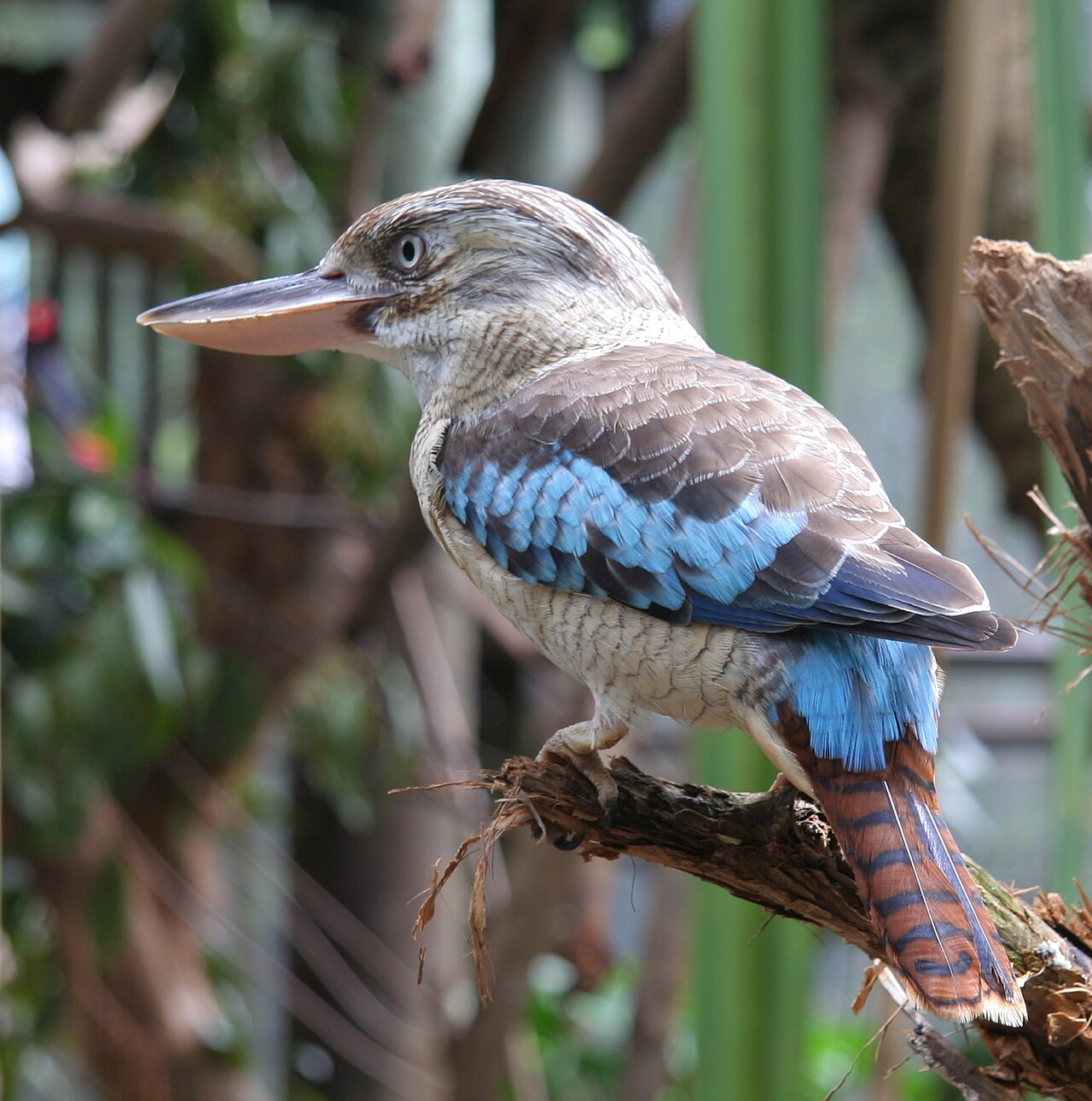
The laughing kookaburra is the one in every photograph: brown above, cream below, with a dark eye stripe and a rufous, barred tail. The blue-winged kookaburra (Dacelo leachii) lives across northern Australia and southern New Guinea, showing bright blue wing panels, a pale eye, and a barking call that never quite becomes a laugh.
Two more species are restricted to New Guinea and nearby islands: the spangled kookaburra (Dacelo tyro) and the rufous-bellied kookaburra (Dacelo gaudichaud). Both are smaller, more forest bound, and rarely seen. Every kookaburra is built on the same kingfisher plan as the belted kingfisher familiar to North American birders, scaled up and moved inland.
Do Kookaburras Live in the US?
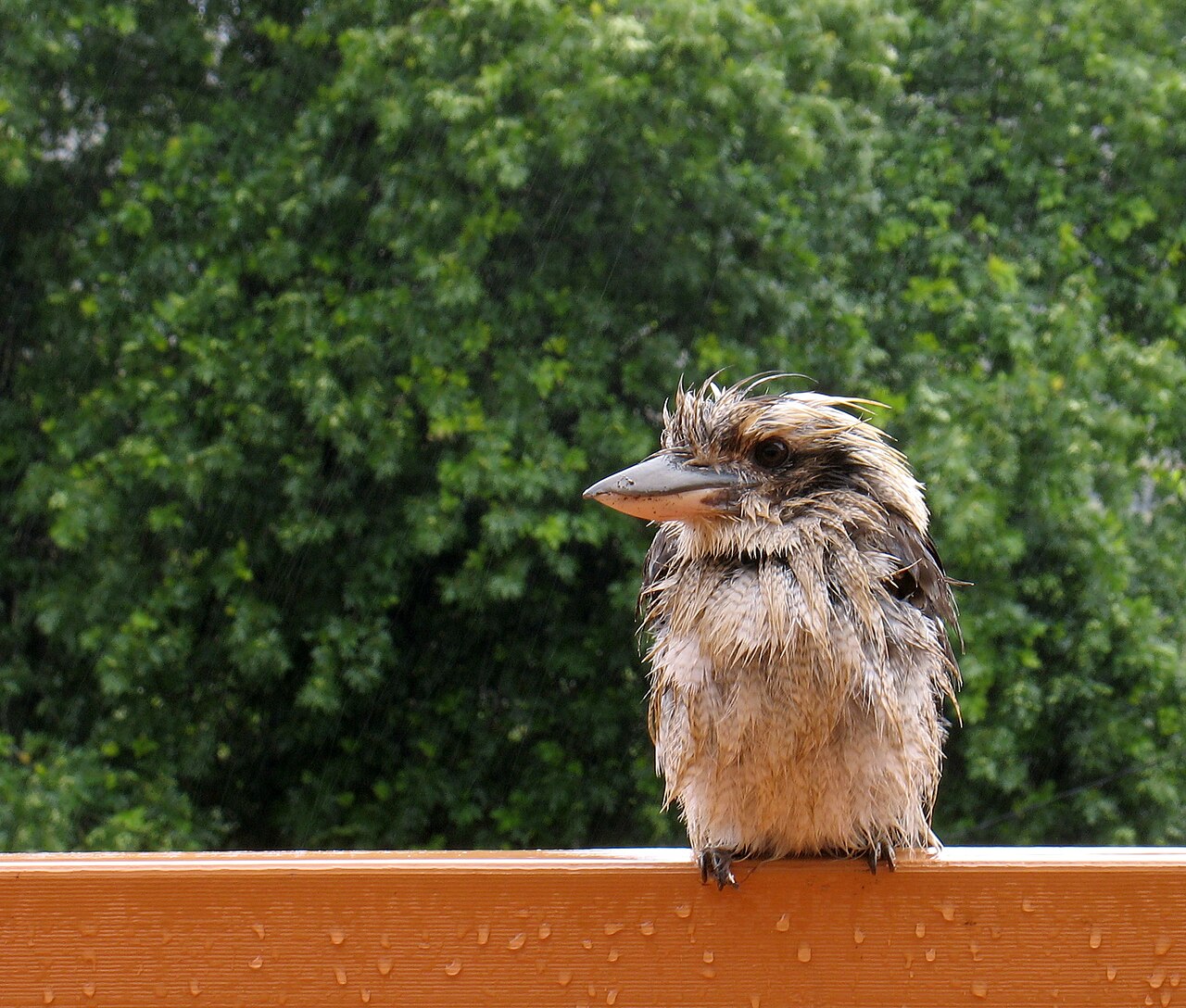
No. Kookaburras are native to Australia and New Guinea and have no wild population anywhere in the United States. Introductions succeeded in southwestern Australia, Tasmania, Kangaroo Island, and New Zealand, but nothing comparable happened in North America. Any kookaburra an American sees is in a zoo, a bird park, or a licensed exhibitor’s collection.
In their home range they are anything but rare. Laughing kookaburras are common in suburban Sydney, Melbourne, and Brisbane, where they perch on fences and clothes lines and raid barbecues. State wildlife agencies such as Wildlife Victoria treat them as one of the most frequently encountered backyard birds.
What Do Kookaburras Eat?
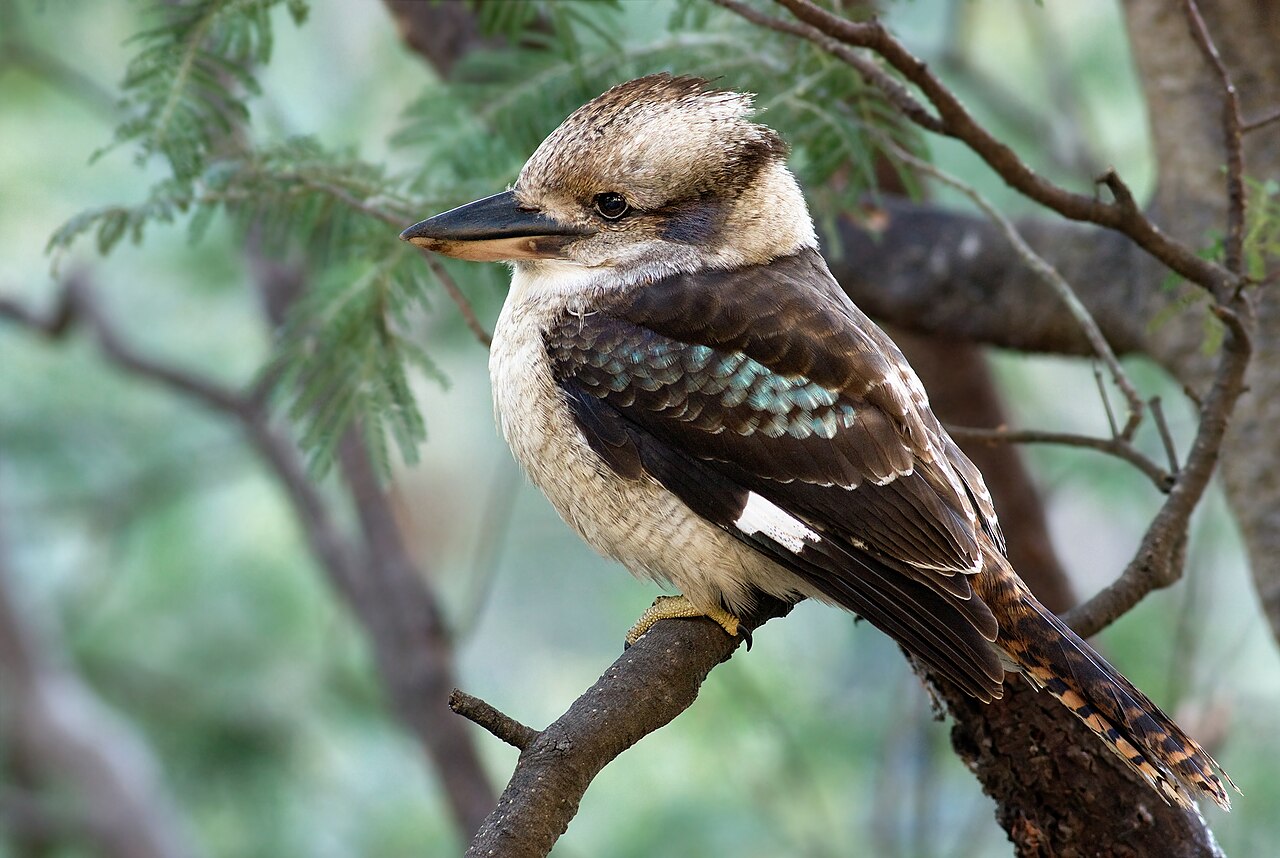
Kookaburras are sit-and-wait predators. They watch the ground from a low branch, drop onto prey, and carry it back to the perch. The menu runs to beetles, grasshoppers, worms, lizards, frogs, mice, and small birds, plus snakes up to about 3 ft long. Fish appear only occasionally, usually in birds living beside water.
Anything with bones or a struggle left in it gets bashed against the branch until it stops moving, which also breaks the prey down enough to swallow whole. Kookaburras will take food from backyard tables and will steal meat off a grill, a boldness closer to the behavior of crows than to the shyness of most kingfishers.
Can Kookaburras Be a Pet, and Are They Legal in the US?
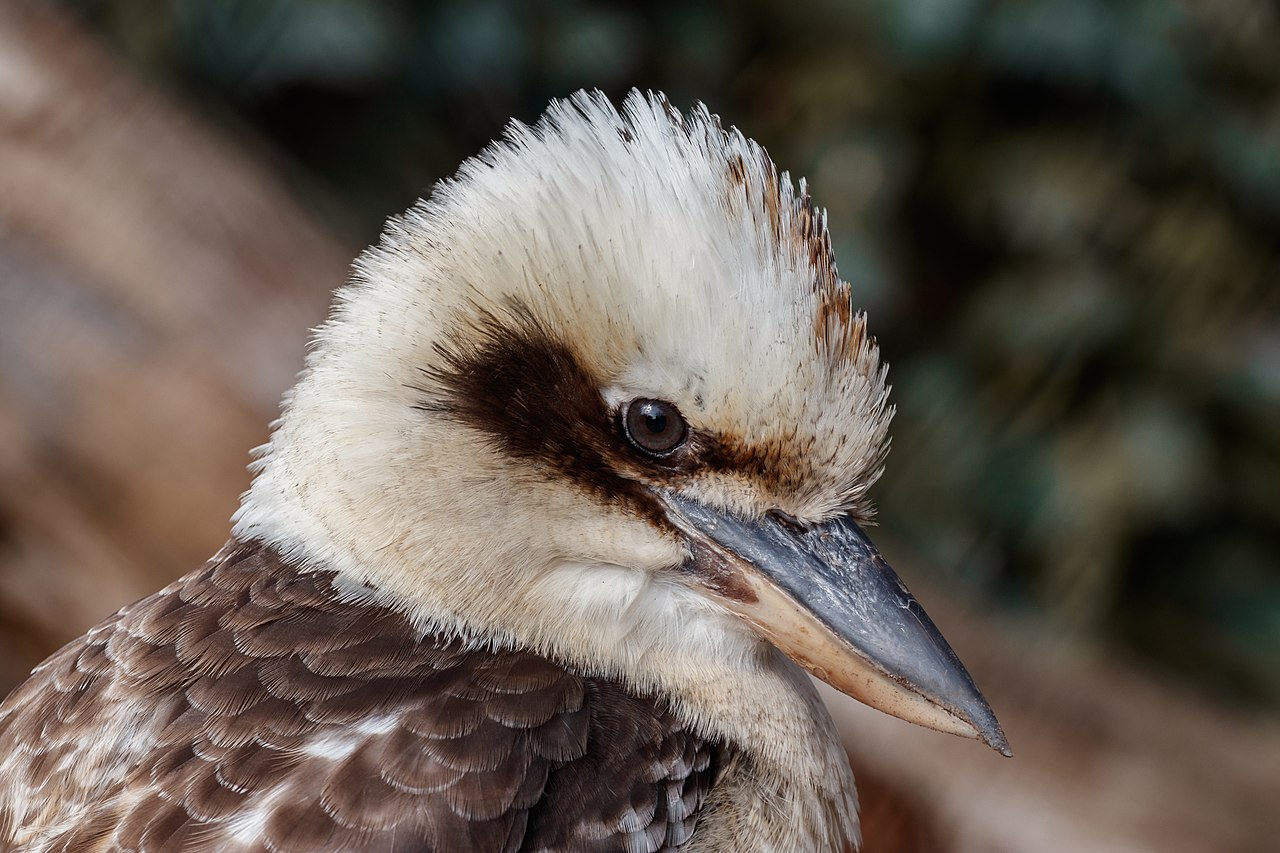
Kookaburras make poor pets and are difficult to own legally. In Australia it is illegal to keep a native kookaburra without a wildlife license, and permits go to rehabilitators rather than hobbyists. In the US the birds are not covered by the Migratory Bird Treaty Act because they are not native, so legality falls to state exotic animal rules, which vary widely and often require a permit or USDA exhibitor license.
Even where it is allowed, the practical case is weak. A kookaburra needs a large outdoor aviary, a diet of whole rodents and insects, and it calls at dawn at a volume that carries across a neighborhood. Captive-bred parrots such as a young cockatoo are demanding enough; a kookaburra is a carnivore with a siren attached.
Frequently Asked Questions
Are kookaburras friendly?
Kookaburras are bold around people rather than friendly. Suburban birds learn that patios mean food and will perch within a few feet of a table, but that is opportunism, not affection. They do not bond with humans the way parrots do, and a bird that seems tame will still defend its territory and its nest.
Is kookaburra aggressive?
They are aggressive toward other kookaburras and toward prey, not toward people. Territorial disputes between family groups involve chasing, grappling in midair, and long laughing contests. Around humans the main risk is a snatched sausage and an accidental scratch, since the bill is heavy and the strike is fast.
What do you call a flock of kookaburras?
A group of kookaburras is called a riot, and less commonly a flock or a family. Riot fits the reality, since kookaburras live in family parties of two to six birds that laugh in chorus. Collective nouns like this one are mostly Victorian invention, as with a murder of crows.
What is the old wives tale about kookaburras?
Australian children are told that mocking a kookaburra’s laugh will make an extra tooth grow in their mouth. Aboriginal stories give the bird a larger role: its dawn chorus is the signal for the sky people to light the fire that becomes the sun, so the laugh wakes the day itself.