Centipede Spiritual Meaning: 7 Omens, Luck and Warnings
Seeing a centipede is traditionally read as a sign of protection and sudden progress, not as a bad omen. The centipede spiritual meaning turns on its many legs: a creature that moves on dozens of coordinated limbs is interpreted as the ability to advance on several fronts at once, which is why East Asian traditions in particular tied it to wealth and to warriors.
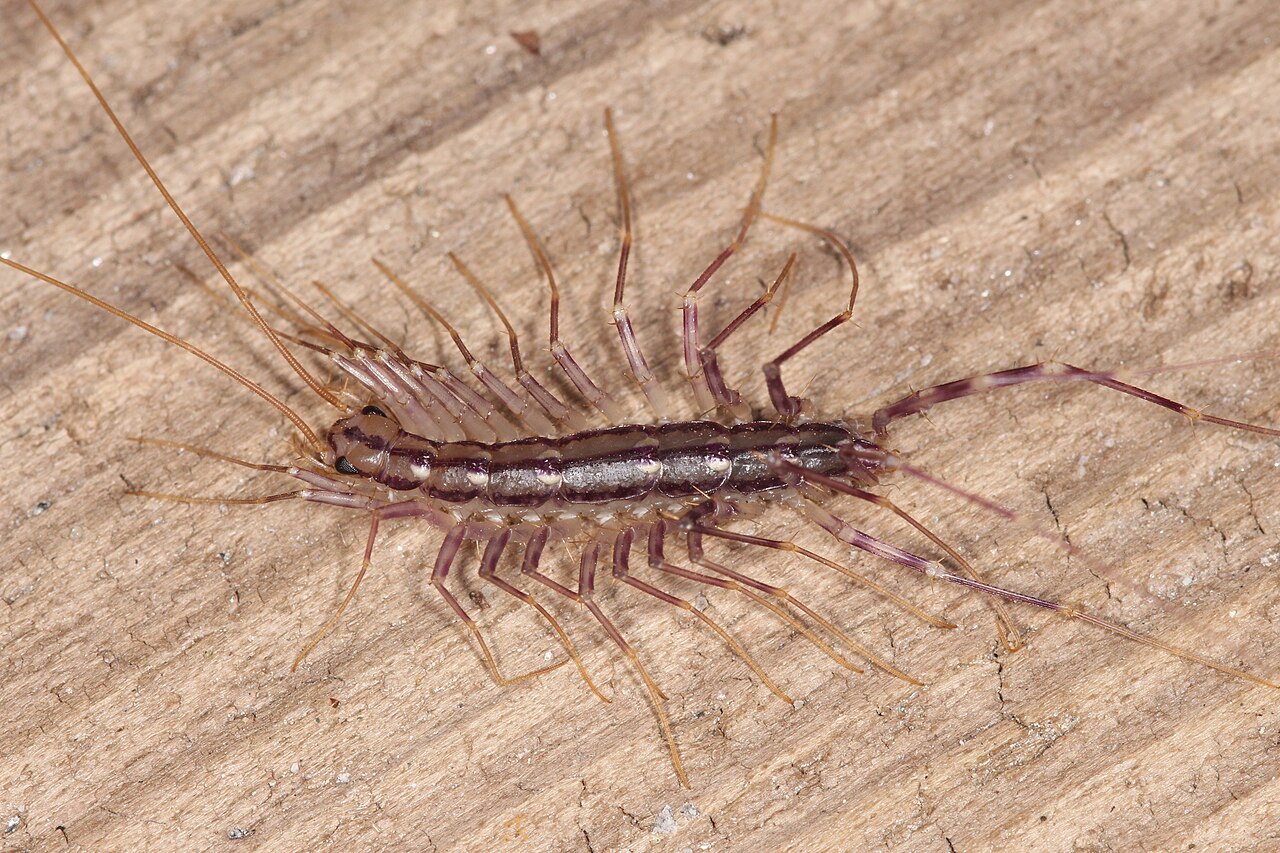
The animal behind the symbol is usually the house centipede (Scutigera coleoptrata), the fast, long legged species that appears in American bathrooms, or one of the larger Scolopendra species in the Southwest. Folk belief treats the house centipede as a guardian that eats other pests, and that practical fact shapes almost every spiritual reading attached to it.
A centipede sighting traditionally means protection, swift movement toward a goal, and the clearing out of something harmful. In Japanese and Chinese tradition it is an omen of wealth and courage. Only a centipede bite or a centipede killed indoors is read as a warning, usually about acting too fast.
| Situation | Traditional meaning |
|---|---|
| Centipede in the house | A guardian presence; hidden pests being cleared out |
| Centipede at night or in the bed | Something you avoid in daylight is asking for attention |
| Centipede crossing your path | Progress on many fronts; take the next step quickly |
| Dead centipede | A protection that has run out; replace what guarded you |
| Centipede bite | A sharp lesson; a boundary crossed too late |
| Centipede in a dream | Many small worries moving at once, or a hidden enemy |
| Red or giant centipede | Power and warning together; handle with respect |
What Does It Mean When You See a Centipede?
A centipede sighting is read as a message about speed and protection. Because the animal is a predator that hunts spiders, cockroaches, and silverfish, folk belief casts it as a cleaner of the household, and its arrival is interpreted as something harmful being removed rather than something harmful arriving. Modern spiritual writing usually adds a second layer: coordinated effort, since dozens of legs have to work in sequence for the animal to move at all.
The reading shifts with your reaction. Those who describe revulsion at the sight are generally told the message concerns avoidance, something in the house or the life that is not being looked at directly. Those who find the animal interesting get the straightforward omen of progress.
Is Seeing a Centipede Good Luck?

In the traditions that say the most about centipedes, yes. Chinese and Japanese folk belief treat the centipede as an emblem of fearlessness and, in some regional usage, of money, because the many legs suggest many sources of income. Vietnamese and Filipino folk accounts also connect large centipedes with resilience and with the protection of a dwelling.
European folklore is much thinner on the subject and tends to lump the centipede with insects and vermin, so the luck is neutral at best. Where a European reading exists, it usually hangs on the number of legs as a figure for busy, scattered work. Compared with clearly positive omens like the bee, the centipede is a sign of capability rather than sweetness.
Centipede Symbolism in Japanese and Chinese Tradition
Japanese tradition gives the centipede its most developed role. The mukade is the giant centipede of folklore, and the warlord Takeda Shingen is said to have named a unit of messengers the Mukade Shu, the centipede corps, because the animal was believed never to retreat. The creature also appears as the serpent god’s enemy in the legend of Tawara Toda, who kills a monstrous centipede at Mount Mikami with an arrow wetted with saliva.
In Chinese tradition the centipede is one of the five noxious creatures, the wu du, alongside the snake, scorpion, gecko, and toad. Those five are poisonous and therefore used as protective charms: the image of the thing that harms is worn to repel harm. That double role, dangerous and protective at once, is the core of Chinese centipede symbolism.
What Does the Bible Say About Centipedes?

Scripture does not name the centipede directly. The closest texts are the dietary and purity laws of Leviticus 11, which declare unclean every creature that swarms or goes on many feet, and Leviticus 11:42 singles out whatever goes on its belly or on all fours or has many feet. A centipede falls squarely in that category for readers who apply the verse literally.
Because of that, Christian interpretation of a centipede sighting usually runs through the general symbolism of crawling creatures: humility, lowliness, and sometimes an unclean influence in the home that should be addressed. Preachers who take a gentler line point to Proverbs 30 and its praise of small creatures that are nonetheless wise, and read the centipede as diligence rather than defilement.
Centipede in Hindu Mythology and What Deity Is Associated With Centipedes
Buddhist and Hindu sources mention the centipede mainly in lists of creatures that a practitioner should not harm, and the Pali canon includes it among the biting animals a monk guards against with a protective verse. In Japanese Buddhist practice the centipede became the attendant and messenger of Bishamonten, the guardian deity of warriors and one of the Seven Lucky Gods, which is the most direct answer to the question of an associated deity.
Indian folk belief treats a large centipede inside the house as an omen that requires care rather than fear, and in parts of South India the animal is connected to the goddesses who govern illness and protection. Belief traditions differ sharply here, and it is worth saying that these associations are regional rather than canonical.
Native American and Folk Beliefs About Centipedes
Centipede beliefs in Native American traditions are localized. Hopi and Zuni accounts record the centipede among the small powerful creatures of the desert, and in some Pueblo stories it is a messenger between the surface and the underworld because it lives in the ground. Navajo tradition includes the centipede among animals treated with caution, approached through ceremony rather than casually killed.
In the Southwest the animal is physically imposing: the giant desert centipede (Scolopendra heros) reaches 6 to 8 in (15 to 20 cm), which explains the respect. Where a symbolic reading is reported, it concerns endurance and the ability to survive in hard ground, the same quality assigned to the bear in colder regions.
Centipede Spiritual Meaning in the House
A centipede in the house is traditionally read as a guardian doing unpaid work. Folk belief in several cultures says the animal is there because there is something for it to eat, so its presence is a sign of other pests, and the spiritual version of that reading is that the house holds a problem which is now being handled. The message is attend to the cause, not the centipede.
The second common reading concerns damp. House centipedes concentrate in basements, bathrooms, and crawl spaces because they need humidity, which turns the sighting into a signal about the hidden, unlit parts of the home. Spiritual writers extend this to the parts of a life kept out of sight.
Seeing a Centipede at Night or in Your Bed
Night sightings carry more weight because the animal is nocturnal and the encounter is therefore unexceptional in biology but startling in experience. Folk reading treats a centipede found in the bed or on a wall after dark as a direct message: what you postpone during the day is reaching you anyway. In Japanese accounts a mukade in the sleeping area was an omen that demanded a protective verse rather than a shoe.
House centipedes do wander onto beds occasionally while hunting, and they can bite if pressed against skin, though the result for most people is a mild sting comparable to a bee. The omen reading and the practical reading point the same way: close the gaps and dry the room.
Black, Brown and Red Centipede Spiritual Meaning
Color readings are a modern layer, but they are consistent enough to report. A black centipede is interpreted as a protective presence working in the unseen, often described as shielding a household from something it has not noticed. A brown centipede, the commonest sighting in the United States, is read as ordinary groundwork and steady progress on practical matters.
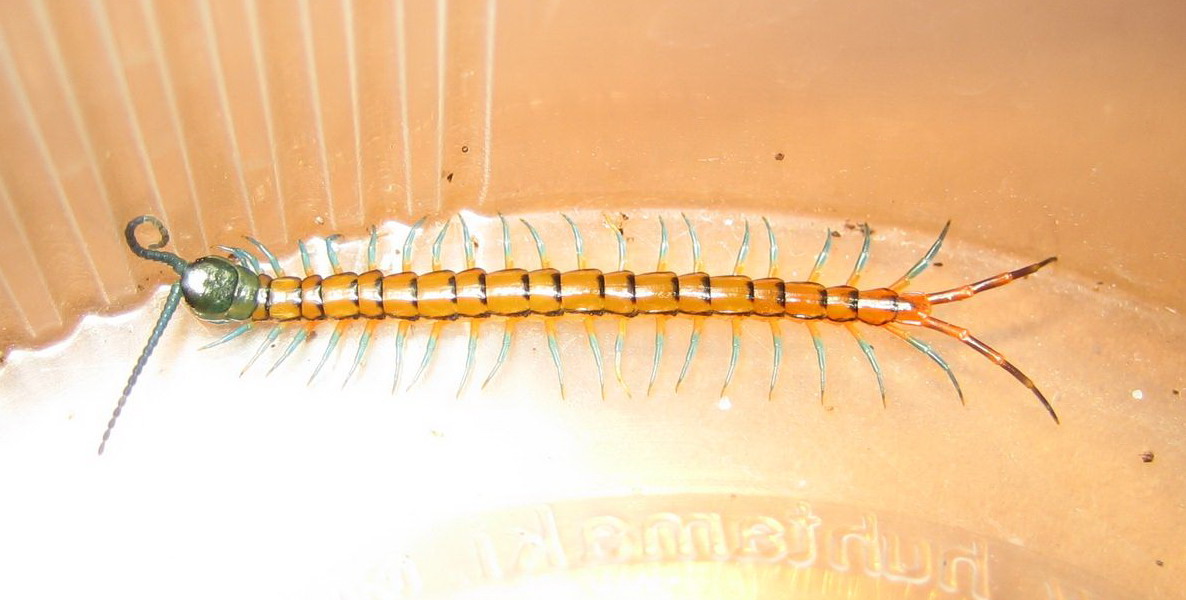
A red centipede gets the strongest reading: urgency, anger, or power that needs direction. The giant redheaded centipede (Scolopendra heros castaneiceps) of Texas and Oklahoma is the species usually behind those sightings, and its aposematic coloring is a real warning signal. Color coded omens follow the same logic as cardinal symbolism, where the red bird reads as intensity.
Dead Centipede and Why You Should Never Squish a Centipede
A dead centipede is read as a protection that has expired. Because the animal symbolizes a guardian, finding one dead is interpreted as the end of a defense you were relying on, with the usual advice being to rebuild a boundary yourself rather than wait for another one to appear.
The warning against squishing one has a practical core. Crushed centipedes release fluids and body fragments that attract ants and other scavengers, the mess draws exactly the pests the centipede was eating, and the broken legs of large species can still irritate skin. Folk belief turns that into a taboo: kill the guardian and you inherit its job.
Centipede Dream Meaning
In dream interpretation the centipede usually stands for many small problems moving in formation, the sense that everything is arriving at once. Dream dictionaries also report the hidden enemy reading, a person who works out of sight, which comes from the animal’s habit of living under stones and boards.
The more useful reading in practice is coordination. A centipede dream after a period of scattered effort is commonly interpreted as a prompt to put the many legs in sequence, since the animal is fast only because its movement is ordered. Dreams of crawling animals rarely signal danger on their own.
Centipede as Spirit Animal, Totem and Omen
As a spirit animal the centipede stands for forward motion without retreat, a trait drawn straight from the Japanese military use of the image. People who take the centipede as a totem are described as persistent, adaptable, and better at many parallel tasks than at one slow one, with the stated lesson being that speed needs a direction.
As an omen it is read by context rather than by itself: in the open, progress; in the bed, avoidance; dead, lost protection. Centipede biology, including the species found in US homes, is documented by the Smithsonian Institution, and knowing the animal makes the symbolism easier to apply. Contrast it with a sign of unwelcome intrusion like rat symbolism, which carries a very different tone.
Frequently Asked Questions
What does a centipede bite mean spiritually?
A centipede bite is read as a sharp correction: a boundary you let slide until it enforced itself. Because the animal otherwise symbolizes protection, being bitten is interpreted as the guardian turning on the household, usually after something was ignored. Medically, most house centipede bites cause brief local pain and swelling only.
What is the meaning of a centipede bite in folk belief?
Japanese and Chinese folk accounts treat the bite of a large centipede as a test of courage, and recovery from it as proof of resilience. Some Southeast Asian traditions read it as a debt being collected. The common thread is that the bite marks a turning point rather than bad luck in general.
What smell do centipedes hate?
Centipedes avoid strong essential oils, with peppermint, tea tree, and eucalyptus the ones most often reported to repel them, and cedar oil is used in commercial products. Scent alone is a weak control. Lowering humidity and sealing entry points works better, since the animal follows moisture and prey.
Do centipedes remember faces?
No. Centipedes have simple clustered eyes or none at all, and many species detect little more than light and shadow, navigating by touch and chemical cues through their antennae. They have no capacity for facial recognition. A centipede that reappears in the same spot is following the same moisture gradient, not you.
Will house centipedes crawl in your bed at night?
It happens, though it is uncommon. House centipedes hunt at night and follow walls and floors, so a bed against a wall in a humid room is reachable. They have no interest in people and leave once disturbed. Moving the bed off the wall and drying the room removes nearly all encounters.
Is a centipede a good omen or a warning?
Both, depending on the setting. Crossing your path or hunting in the house, it reads as protection and swift progress; in the bed, dead, or biting, it reads as a warning about avoidance and worn out boundaries. Among crawling omens it is closer to the black butterfly than to a simple curse.