Birds That Eat Mosquitoes: The 9 Species That Actually Help (And the Myths)
The internet is full of claims that a single Purple Martin eats 2,000 mosquitoes per day. That number is a myth, it’s been thoroughly debunked by ornithologists at the Purple Martin Conservation Association, who actually fed Purple Martins mosquitoes to study what they eat, and found that mosquitoes are a tiny portion of their diet. But that doesn’t mean birds don’t help with mosquito control, they do, just not in the way most marketing suggests. This guide covers the nine bird species that actually eat meaningful numbers of mosquitoes, why the popular myths persist, what realistic mosquito reduction you can expect, and how to attract these birds to your yard (without buying that expensive Purple Martin house).
Nine North American birds eat mosquitoes regularly, including swallows, swifts, nighthawks, flycatchers and warblers, but none of them control a mosquito population. Mosquitoes are a small share of any bird’s diet, and the claim that a Purple Martin eats 2,000 of them a day is a myth.
The Reality of Birds and Mosquito Control
Birds eat insects. Mosquitoes are insects. It’s mathematically true that birds eat mosquitoes, but the relationship is more complex than pest-control marketing suggests.
The biological reality:
- Most birds eat the insects they encounter at their typical feeding altitude. Ground-feeders eat ground insects. Tree-foragers eat tree insects. Aerial-foragers (like swallows) eat flying insects, which include mosquitoes.
- Mosquitoes are tiny. A 0.5-gram mosquito provides minimal nutrition compared to a 0.05-gram caterpillar. Most birds prefer larger prey.
- Mosquito-eating birds are mostly aerial-foragers that catch flying insects in mid-air. These species do eat mosquitoes, but their primary food is larger flying insects (flies, beetles, dragonflies, moths).
- Day-flying birds vs. mosquitoes. Most mosquitoes are most active at dusk and dawn. Birds that hunt at these times catch more mosquitoes than purely diurnal hunters.
What this means practically: birds can help reduce mosquito populations in your yard, but they’re not a magic bullet. A yard with strong populations of swallows, martins, and flycatchers will have noticeably fewer mosquitoes than a yard without, but mosquitoes won’t disappear entirely.
If you’re new to attracting birds in general, the complete attract birds to your yard guide covers the broader habitat framework. For the broader plants strategy that supports these birds, see the plants that attract birds guide. This guide focuses specifically on the species and tactics for mosquito control.
The 9 Species That Actually Help
These are the bird species that meaningfully reduce mosquito populations, ranked by their actual effectiveness based on stomach-content studies and ornithological observation.
1. Tree Swallow (Tachycineta bicolor)
A small dark-blue and white aerial-forager that hunts flying insects over open areas, especially near water. Tree Swallows eat enormous numbers of flying insects daily, including mosquitoes when available. They nest in cavities (natural or artificial) and prefer yards with open spaces near water.
To attract: provide nest boxes 5 to 6 feet high in open areas, ideally near a pond or wetland. Remove old grass/debris from nest boxes each spring.
2. Barn Swallow (Hirundo rustica)
Common, glossy blue-and-rust-colored swallow that nests on barns, sheds, and other structures. Major mosquito predator because they hunt aerial insects intensively during nesting season. A single Barn Swallow can catch 60 to 100 insects per hour during peak feeding.
To attract: tolerate them nesting in barns, sheds, or under eaves. Provide mud for nest building. Avoid pesticides, they need insect populations.
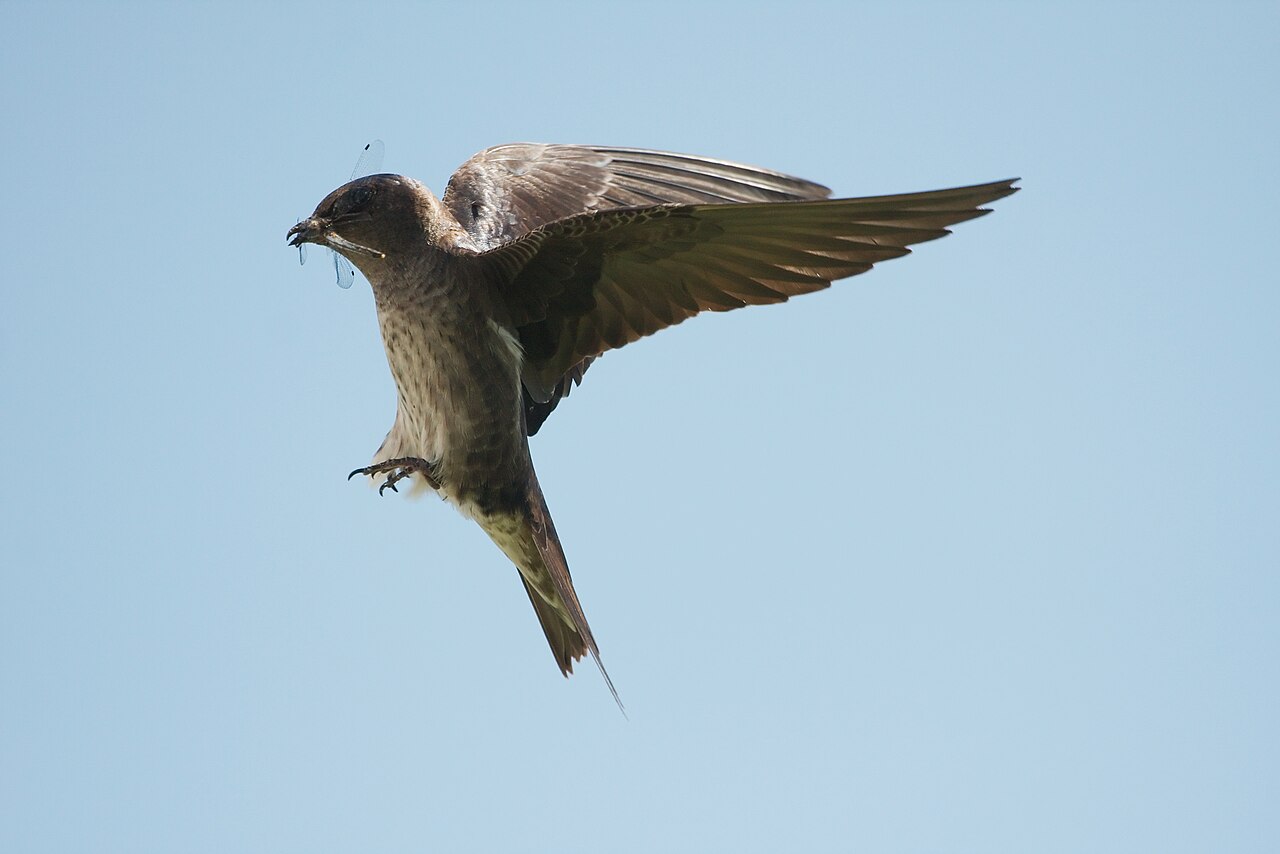
3. Purple Martin (Progne subis)
The “famous” mosquito-eater, but the reality is more nuanced. Studies show Purple Martins eat mosquitoes, but mosquitoes make up only 0 to 3% of their diet. Their main food is dragonflies, butterflies, beetles, and large flies, not mosquitoes specifically.
That said, Purple Martins are still beneficial: they’re aerial-foragers that eat enormous numbers of flying insects total, some of which are mosquitoes. The “2,000 mosquitoes a day” claim is folklore, but a colony of Purple Martins can have a real impact on flying insect populations.
To attract: purpose-built Purple Martin houses (multi-compartment, white, mounted 12 to 20 feet high in open areas at least 30 feet from trees). They’re one of the most habitat-specific birds, many yards simply don’t have the right setup to attract them.
4. Chimney Swift (Chaetura pelagica)
A small dark bird that’s almost always in flight, hunting flying insects above forests, towns, and cities. Their entire diet is aerial insects, including mosquitoes. They roost in chimneys and hollow trees.
To attract: leave unused chimneys uncapped if safe to do so. Consider building a chimney swift tower (purpose-built nest structure). They benefit from any insect-rich aerial environment.
5. Eastern and Western Phoebes (Sayornis phoebe, Sayornis nigricans)
Flycatchers that sally out from perches to catch flying insects. They eat mosquitoes and many other flying insects. They often nest near houses and tolerate human activity.
To attract: provide nest shelves under eaves or in outbuildings. They like open yards near water with perching opportunities. Don’t remove old nests, they reuse them.
6. Northern Rough-Winged Swallow (Stelgidopteryx serripennis)
A brown swallow common across much of the US, less colonial than other swallows. Aerial-forager that eats flying insects including mosquitoes. Often nests in bank holes or in artificial cavities near water.
To attract: similar habitat to Tree Swallows. Open spaces near water, nest boxes or artificial nest sites.
7. American Robin (Turdus migratorius)
Surprisingly, robins eat mosquitoes, not the adults, but the larvae found in standing water. Robins are major mosquito-larva eaters in spring when females need protein for egg-laying. They poke through wet grass and shallow puddles, eating mosquito larvae directly.
To attract: maintain healthy native lawn (with mowed grass and natural soil), provide bird baths (clean ones, see the bird baths guide), avoid pesticides.
8. Eastern Kingbird (Tyrannus tyrannus)
A black-and-white flycatcher that aggressively defends large territories. Active aerial hunter that catches flying insects including mosquitoes during summer. Particularly active at dusk.
To attract: open habitat with scattered trees, presence of water nearby. They tolerate human presence and often nest in yards.
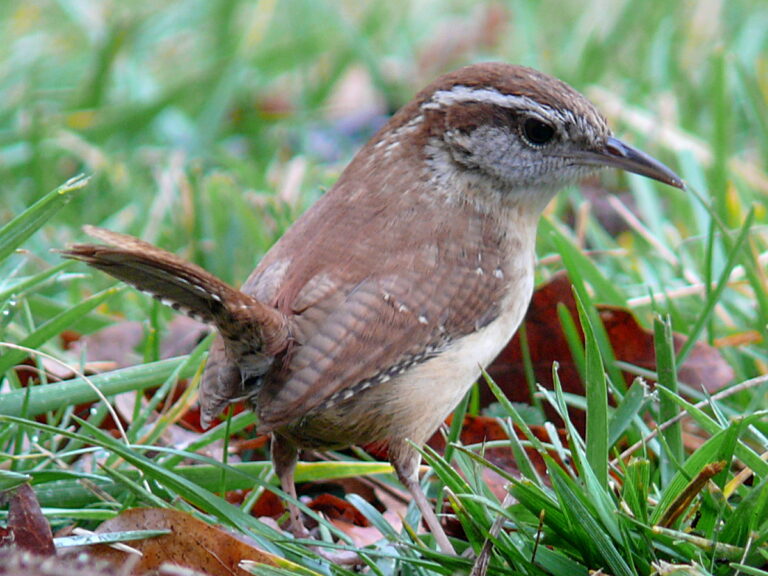
9. House Wren (Troglodytes aedon)
A small brown wren common in yards across the US. Eats huge numbers of insects, primarily caterpillars, but also adult mosquitoes when available. A nesting pair can feed up to 500 insects daily to their young.
To attract: provide nest boxes (1 1/8″ diameter entry), maintain bird-friendly habitat with shrubs and brush piles. They’re easy to attract, almost any yard with appropriate habitat gets house wrens.
The Bats Bonus
Not birds, but they belong in any mosquito-control discussion. A single bat can eat 600 to 1,000 mosquito-sized insects per hour, and some species eat thousands per night. Bats are far more effective mosquito-eaters than any bird, by a wide margin.
The major mosquito-eating bat species:
- Little Brown Bat (Myotis lucifugus): Once the most common North American bat, now declining due to white-nose syndrome
- Big Brown Bat (Eptesicus fuscus): Common, beneficial mosquito-eater
- Mexican Free-Tailed Bat (Tadarida brasiliensis): Migratory; massive populations in Texas eat millions of mosquitoes nightly
To attract bats:
- Install bat houses 12 to 20 feet high on poles or buildings (south-facing for warmth)
- Leave large old-growth trees with hollows where possible
- Avoid pesticides (bats need healthy insect populations)
- Maintain water features (bats need open water to drink)
A combined bird-and-bat strategy is significantly more effective at mosquito control than birds alone.
The Purple Martin Myth: A Closer Look
The Purple Martin story is worth examining because it illustrates how mosquito-control marketing has distorted public understanding. The claim that Purple Martins eat 2,000 mosquitoes per day comes from a 1968 promotional campaign by a manufacturer of Purple Martin houses. There was no scientific basis for the number.
The actual research:
- Stomach-content analysis by ornithologists has consistently found that mosquitoes make up 0 to 3% of Purple Martin diet
- Their primary prey is dragonflies, large flies, beetles, butterflies, and moths
- Purple Martins hunt at altitudes (often 100+ feet) where most mosquitoes don’t fly
- Daytime hunting when most mosquitoes are inactive
This doesn’t mean Purple Martins are useless for insect control, they still eat enormous numbers of flying insects, and they’re spectacular to watch. But the specific mosquito claim is folklore.
The Purple Martin Conservation Association explicitly states on their website that Purple Martins are not effective mosquito control birds. If you’re putting up a Purple Martin house specifically for mosquito control, you’re likely to be disappointed. If you put one up because Purple Martins are amazing, beautiful, and ecologically valuable birds, you’ll be rewarded.
What Birds Cannot Do
Several mosquito-control hopes don’t match reality:
Birds Cannot Eliminate Mosquitoes
Even with abundant bird populations, mosquitoes persist. Female mosquitoes only need a single blood meal to lay 100 to 300 eggs in any small water source. The math means mosquitoes outpace bird predation, especially during peak summer.
Birds Cannot Replace Other Mosquito-Control Measures
Standing water elimination (removing tire dumps, clogged gutters, bird bath stagnant water), Bti larvicide treatment in unavoidable standing water, mosquito-trap devices, and personal protection all contribute more directly than birds alone.
Birds Cannot Substitute for Habitat Management
A yard infested with stagnant water sources will have mosquitoes regardless of bird populations. Mosquito control starts with eliminating breeding sites.
The takeaway: birds are part of a comprehensive mosquito-management strategy, not the whole solution.
How to Attract These Birds to Your Yard
The general strategy is the same as attracting any insect-eating birds:
Provide Nesting Habitat
Swallows: nest boxes mounted 5 to 8 feet high in open areas, ideally near water.
Wrens: small nest boxes (1 1/8″ entry) in shrubby areas.
Phoebes: nest shelves under eaves or in protected structures.
Purple Martins: multi-compartment houses 12 to 20 feet high in open areas.
See the bird houses guide for specific dimensions and placement.
Provide Water
Bird baths (clean and refreshed regularly, see the bird baths guide) attract insect-eating birds. Open ponds support more swallow species. Even small water features help.
Maintain Insect-Friendly Habitat
This is the critical and often overlooked element. Birds that eat insects need yards with healthy insect populations. This means:
- Stop using pesticides (including most lawn and garden chemicals)
- Plant native plants (see the plants that attract birds guide)
- Leave some “messy” areas (brush piles, fallen leaves, native grass patches)
- Avoid mosquito sprays (the most effective for human comfort, but they kill the broader insect population that birds eat)
This is the great irony: yards that aggressively eliminate insects also drive away the birds that would have eaten the mosquitoes naturally.
Provide Open Habitat for Aerial Foragers
Swallows, martins, and chimney swifts hunt aerial insects over open areas. They prefer yards with at least some open space, not entirely wooded yards. A combination of open lawn or meadow plus tree cover is ideal.
Time of Day Considerations
Mosquitoes are most active at dusk and dawn. Birds that hunt at these times catch more mosquitoes than purely diurnal hunters. Swallows, swifts, and phoebes are most active at these crucial mosquito periods.
Realistic Mosquito Reduction You Can Expect
Honest expectations for what attracting these birds will accomplish:
Realistic gain: 20 to 40% fewer mosquitoes in your yard than without them, especially during peak swallow activity (May, July in most regions).
Unrealistic gain: Mosquito elimination. Birds don’t eliminate mosquitoes from any yard regardless of population.
Combined effect of birds + habitat management + Bti + standing water elimination: 70 to 90% mosquito reduction is achievable, but birds are one component of this combined strategy, not the whole answer.
Combining Birds with Other Mosquito Control
For practical mosquito control, layer multiple strategies:
1. Eliminate Standing Water
The single most effective step. Mosquitoes need water to breed. Remove or refresh:
- Bird baths (refresh every 2 to 3 days)
- Clogged gutters
- Plant saucers
- Old tires, buckets, kiddie pools
- Any water-holding container
2. Treat Unavoidable Standing Water with Bti
Bacillus thuringiensis israelensis (Bti) is a natural larvicide that’s safe for birds, fish, and humans. Available as “Mosquito Dunks” or “Mosquito Bits” at garden centers. Add to any standing water you can’t eliminate (rain barrels, fountains, garden ponds) every 30 days during mosquito season.
3. Attract Mosquito-Eating Birds
The strategies above. Adds 20 to 40% mosquito reduction to whatever else you’re doing.
4. Personal Protection
DEET, picaridin, or oil of lemon eucalyptus for outdoor activities. Long sleeves and pants at dusk and dawn. Window screens.
5. Avoid Mosquito Sprays
Most consumer “mosquito control” sprays (the kind you spray around your yard) kill all insects, including the ones that feed birds. They also harm pollinators and beneficial insects. Use only as a last resort, and only on adult mosquitoes (not larvae). Targeted Bti for water sources is far better.
Mosquito-Predator Birds by Region
Some regional notes:
Northeast and Midwest
Tree Swallows, Barn Swallows, Eastern Phoebes, House Wrens, American Robins are common. Purple Martins where habitat suits them. Chimney Swifts in urban and suburban areas.
Southeast
Barn Swallows, Eastern Phoebes, Eastern Kingbirds, House Wrens. Chimney Swifts. Various warbler species pass through during migration.
Southwest and West
Western Phoebes and other western flycatchers. Tree Swallows in mountains and near water. Cliff Swallows around bridges and structures. Various western swallow species in agricultural areas.
Pacific Northwest
Tree Swallows, Violet-Green Swallows, Pacific-slope Flycatchers, Bewick’s Wrens. House Wrens in some areas.
Regional species lists from the Cornell Lab of Ornithology (allaboutbirds.org) help identify what’s likely in your specific area.
What Bird Eats the Most Mosquitoes?
By share of diet rather than headline numbers, the birds that take the most mosquitoes are the aerial insectivores that feed low over water at dusk: swallows, particularly Barn and Tree Swallows, along with Common Nighthawks and Eastern Wood-Pewees. They hunt in the same air layer and at the same hour that mosquitoes are active, which is what actually determines how many they encounter.
Purple Martins are the species most often named and the one the evidence supports least. Martins feed high, often several hundred feet up, while mosquitoes stay low in sheltered air, so the overlap is small. Stomach content studies found dragonflies, beetles, flies and moths dominating, with mosquitoes a negligible fraction. The famous figure of 2,000 mosquitoes a day traces back to marketing for martin housing rather than to any study.
None of this makes these birds useless, it just moves the benefit from pest control to everything else they do. Audubon’s Purple Martin account describes the foraging height and diet behind the correction.
Frequently Asked Questions
Do Purple Martins really eat 2,000 mosquitoes a day?
No. This number originated in 1968 marketing for Purple Martin houses and has no scientific basis. Studies show mosquitoes make up only 0 to 3% of Purple Martin diet, their primary prey is dragonflies, large flies, beetles, butterflies, and moths.
What is the best bird for mosquito control?
Tree Swallows are arguably the most effective single species, they’re aerial-foragers that eat enormous numbers of flying insects, including mosquitoes, during the breeding season. Barn Swallows and Phoebes are also major mosquito-eaters.
Are bats better than birds at eating mosquitoes?
Yes, significantly. A single bat can eat 600 to 1,000 mosquito-sized insects per hour, while most birds eat far fewer. Bats hunt at dusk and dawn when mosquitoes are most active. A combined bird + bat strategy is most effective.
Will attracting birds eliminate mosquitoes in my yard?
No. Even with abundant bird populations, mosquitoes persist. Realistic expectation is 20 to 40% reduction. For meaningful mosquito control, combine birds with standing water elimination, Bti larvicide, and other measures.
How do I attract mosquito-eating birds to my yard?
Provide appropriate nesting habitat (boxes for swallows and wrens, shelves for phoebes), open habitat for aerial foragers, water features, and most importantly, stop using pesticides. Insect-eating birds need healthy insect populations to thrive.
Do birds eat mosquito larvae too?
Yes. American Robins, ducks, and some other birds eat mosquito larvae found in standing water. Robins are particularly effective at this in spring when females need protein for egg-laying. Maintaining clean bird baths and small water features supports this larvae-eating function.
Should I get a Purple Martin house for mosquito control?
If your goal is mosquito control, no, the science doesn’t support the marketing claims. However, if your goal is attracting Purple Martins (which are spectacular birds and ecologically valuable), a properly-placed house is rewarding. Just don’t expect dramatic mosquito reduction from it.
What about ducks and chickens for mosquito control?
Both ducks (in ponds) and free-range chickens eat mosquito larvae. They can be meaningful additions to mosquito control in yards that support them. Bats and aerial-foraging birds are more efficient on a per-individual basis, but ducks and chickens contribute.
Will mosquito sprays kill the birds that eat mosquitoes?
Most consumer mosquito sprays kill many insects, eliminating the food sources that mosquito-eating birds need. They can also be directly toxic to birds. For birds-friendly mosquito control, use Bti larvicide in water sources and physical methods, not broad-spectrum sprays.
How long until birds reduce mosquitoes after I create habitat?
Initial bird arrivals begin within weeks. Established populations supporting full mosquito control build over 1 to 3 years as birds find your yard, nest, and return year after year. Don’t expect first-year miracles, but multi-year habitat development produces lasting results.
Why does my mosquito problem seem worse near a wetland or pond?
Mosquito populations are higher near water sources. However, those same wetlands and ponds also support more mosquito-eating birds. The net effect varies, well-managed water sources (with bird-friendly habitat, Bti treatment, fish populations eating larvae) actually reduce overall mosquito populations.
Can mosquitoes pass diseases through birds to humans?
Some mosquito-borne diseases (West Nile virus, Eastern Equine Encephalitis) cycle between mosquitoes and birds. Birds aren’t responsible for the diseases, mosquitoes are the vector. Healthy bird populations actually help reduce disease transmission by reducing mosquito populations.
Related reading: Birds That Eat Wasps.
Related reading: what do birds eat.
Related reading: what do ladybugs eat.
Do robins eat mosquitoes?
Yes, but only occasionally. American Robins are primarily ground foragers that eat earthworms, beetles, caterpillars, and fruit, so mosquitoes make up a tiny share of their diet. They will snap up mosquitoes they encounter, but robins are not an effective mosquito control strategy compared with swallows, swifts, and flycatchers.
Related reading: what do ladybugs eat.
Related reading: what do lizards eat.
Related reading: what do peacocks eat.
Related reading: Birds That Eat Ticks.
Related reading: Birds That Eat Snakes.