Icelandic Sheep: What to Know Before You Buy Your First Flock
Icelandic sheep are a triple purpose breed that produces meat, dual coated wool, and milk from the same animal, and they do it on grass alone. That combination is rare in modern sheep, because most breeds were selected hard for one product and lost the other two along the way. The Icelandic was never put through that process.
The breed arrived in Iceland with Norse settlers roughly 1,100 years ago and has stayed genetically isolated ever since, which makes it one of the purest of the North European short tailed sheep. For a US homesteader, the practical draw is simple: lambs that finish on pasture in a single season, ewes that routinely raise twins without help, and a fleece that hand spinners actively look for.
Icelandic sheep are a primitive North European short tailed breed kept for meat, wool, and milk. Ewes weigh 130 to 160 lbs (59 to 73 kg), lambs finish on grass in 4 to 5 months, and the dual coated fleece yields long tog and soft thel. They are hardy, prolific, and independent minded.
| Trait | Icelandic sheep |
|---|---|
| Ewe weight | 130 to 160 lbs (59 to 73 kg) |
| Ram weight | 180 to 220 lbs (82 to 100 kg) |
| Lambing rate | 1.8 to 2.2 lambs per ewe |
| Fleece weight | 4 to 7 lbs (1.8 to 3.2 kg) per year |
| Horn status | Horned and polled lines, both sexes can carry horns |
| Lamb finishing | 70 to 110 lbs (32 to 50 kg) on grass at 4 to 5 months |
| Typical US price | $300 to $600 per registered ewe |
What’s Special About Icelandic Sheep?
The short answer is that they were never improved into a specialist. A single ewe can raise twins on pasture, give a fleece worth selling, and still be milked if the shepherd wants to, which is a workload no commercial breed carries anymore. Lambs grow fast enough to reach 70 to 110 lbs (32 to 50 kg) by autumn without grain, and that grass only finish is what keeps feed costs low on a small farm. The breed also carries the Thoka gene in some bloodlines, a single gene that pushes ewes toward triplets and quadruplets. Add extreme cold tolerance and a strong mothering instinct, and you have a sheep that needs less intervention at lambing than almost anything else in North America.
Icelandic Sheep Size, Appearance, and Colors
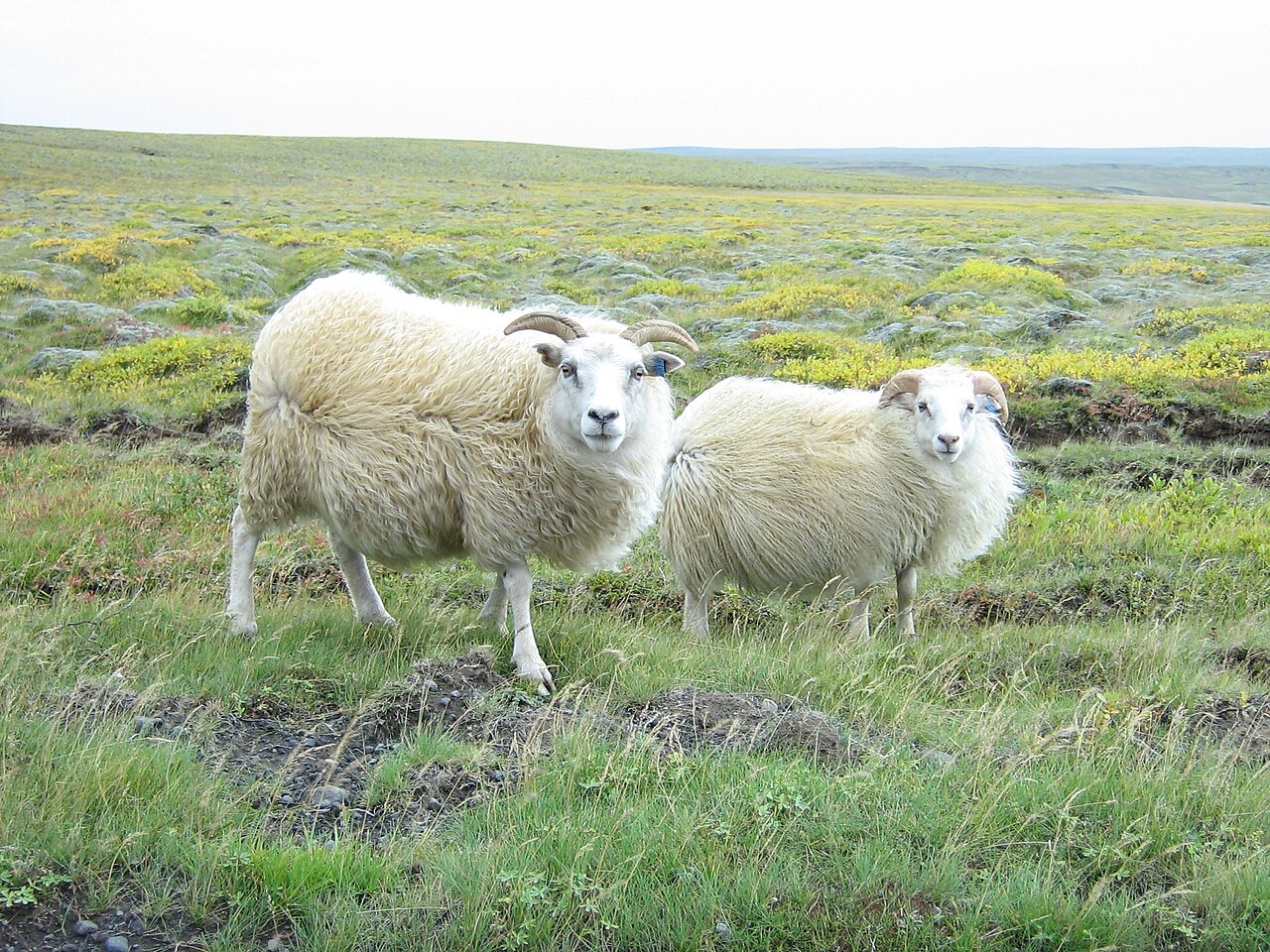
Icelandics are mid sized, short legged, and short tailed, with a tail that is naturally stubby and never docked. Ewes run 130 to 160 lbs (59 to 73 kg) and rams 180 to 220 lbs (82 to 100 kg), so they are considerably lighter than a Suffolk but heavier than most primitive breeds. Both horned and polled animals exist within the same breed, and horned ewes are entirely normal rather than a fault. Color genetics are where the breed gets interesting: white, black, moorit brown, and grey all occur, layered with spotting and badgerface patterns that make a mixed flock look nothing like the uniform white flocks most Americans picture when they count sheep.
The Fleece: Tog, Thel, and Lopi Wool
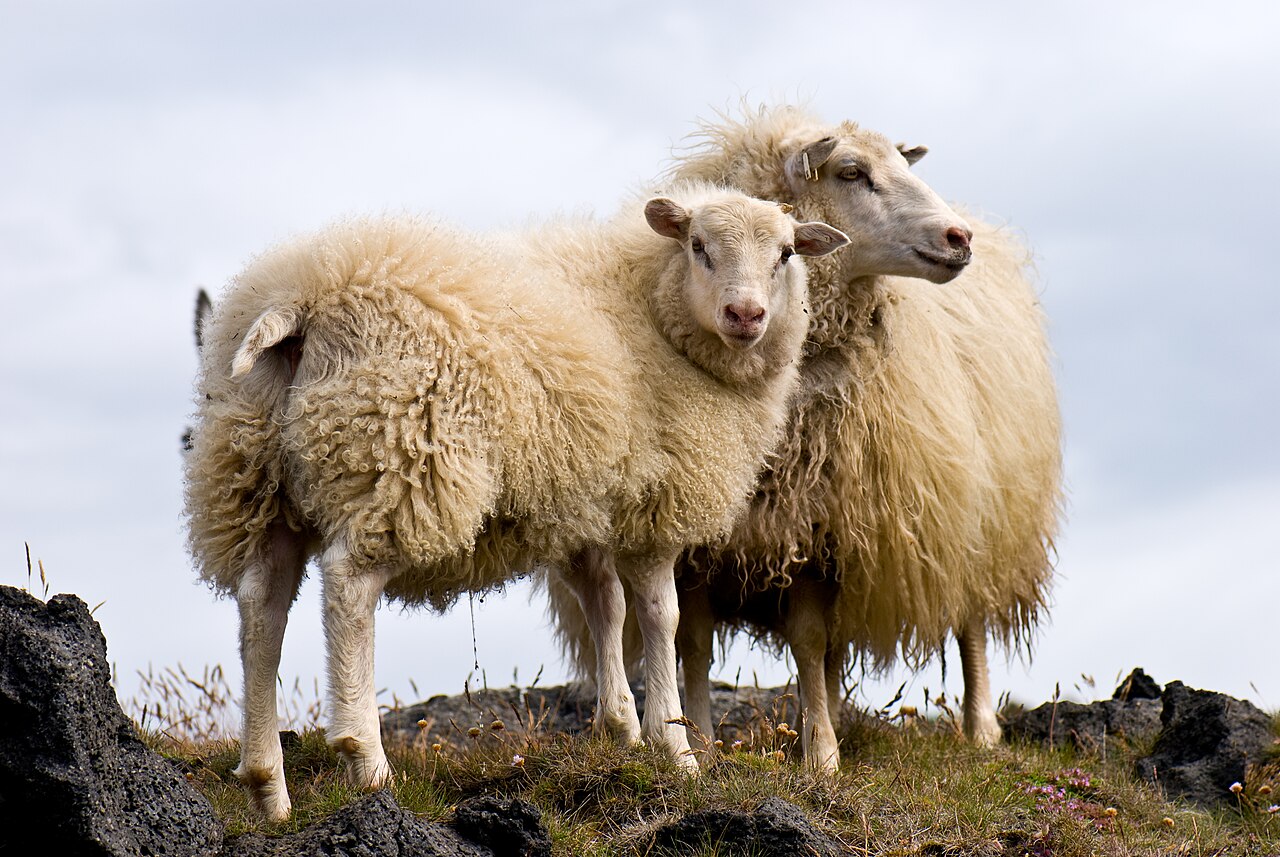
The fleece is dual coated, which is the single most important thing to understand before buying. The outer coat, tog, is long, glossy, and coarse at roughly 27 to 30 microns, while the undercoat, thel, is short, crimpy, and fine at 19 to 22 microns. Spun together they make lopi, the lofty unplied yarn behind traditional Icelandic sweaters. Separated by hand, tog becomes strong warp and rug yarn and thel becomes next to skin soft. That optionality is why hand spinners pay a premium for raw Icelandic fleece while commercial wool buyers, who want one consistent micron count, often do not.
How Much Land Do You Need for Icelandic Sheep?
On decent managed pasture in the eastern US, plan on 3 to 5 sheep per acre, which means a starter flock of five ewes plus lambs fits comfortably on 2 acres. In dry western country that number can drop below one sheep per acre, so the local forage figure matters far more than any breed average. Rotational grazing lifts the stocking rate and cuts the parasite load at the same time, the same principle behind moving a herd of cattle through paddocks. Winter needs roughly 4 to 5 lbs of hay per ewe per day, and shelter can be a three sided run in shed rather than a heated barn.
Why Is Icelandic Lamb So Good?
Because it is young, grass fed, and killed at the right age. Icelandic lambs finish at 4 to 5 months on milk and pasture, so the meat never develops the strong mutton flavor that turns many Americans off lamb entirely. The carcass is lean with fine grained muscle, and the wild herbs in Icelandic highland grazing are frequently credited for the flavor, though pasture composition in Vermont or Minnesota produces a very similar result. Meat yield sits around 40 to 45 percent of live weight, modest in absolute terms but excellent for an unimproved breed on no grain.
What Are the Disadvantages of Keeping Icelandic Sheep?
They are smart, alert, and independent, which reads as charming in a video and as escape artist in real life. Fencing has to be genuinely stock proof, and a flighty ewe will test it. Horns need management around feeders and fence panels, and a horned ram deserves the same respect you would give a bull. The dual coat also means shearing twice a year on many farms and careful skirting if you want to sell the fleece. Finally, first time shepherds who expect the docile behavior of a Dorset are usually surprised; a guardian animal such as a llama or a livestock dog is close to mandatory in coyote country.
Are Icelandic Sheep Available in the USA?
Yes. The North American population traces to Canadian imports beginning in 1985, and flocks are now spread across the US, with the registry maintained by the Icelandic Sheep Breeders of North America. Registered ewes typically run $300 to $600, with proven rams and Thoka carriers higher. Buy from a farm that health tests for OPP and Johne’s disease, and ask to see the flock’s lambing records rather than the photos. Regional extension services such as the University of Minnesota Extension publish the stocking and parasite guidance that actually applies to your state.
Frequently Asked Questions
Can you milk Icelandic sheep?
Yes, and Icelanders did it for centuries. A ewe gives roughly 1 to 2 quarts a day at peak after the lambs are weaned, with high butterfat that suits cheese and yogurt better than drinking. Udder conformation varies widely across bloodlines, so ask a breeder specifically about milking lines if dairy is the goal.
Are Icelandic sheep good for beginners?
They are a good first sheep for someone who likes attentive, self reliant animals and a fair first fence. They are a poor first sheep for anyone expecting placid, hand fed pets. Many new keepers start with dairy goats such as a Saanen or a LaMancha and find the sheep noticeably less destructive by comparison.
Do Icelandic sheep need shearing?
Yes, twice a year on most farms, usually in early spring before lambing and again in autumn. The autumn fleece is the cleaner and more valuable one. Skipping a shearing leads to felted wool near the skin, which is uncomfortable for the sheep and worthless to a spinner.
How cold can Icelandic sheep tolerate?
Extremely cold. The dual coat sheds water and traps air, and healthy adults handle subzero Fahrenheit temperatures with only wind shelter and dry bedding. Wet and windy conditions are harder on them than dry cold, which is the same trade off that shapes how alpacas are housed in northern states.
What is a group of Icelandic sheep called?
A flock, the same term used for sheep everywhere and for a group of chickens. Iceland also has a rare strain within the breed known as leadersheep, or forystufe, animals bred for an unusual instinct to lead a flock home through bad weather. They are counted in the low thousands worldwide.