Nightingale Symbolism: What It Means to See or Hear One
Seeing a nightingale is traditionally read as a sign that something hidden is about to be voiced: grief that finally gets spoken, love that gets declared, or a truth you have been carrying in silence. Nightingale symbolism runs through Greek myth, Christian devotion, Persian poetry and English verse, and in nearly all of it the bird stands for a voice that sings in the dark rather than for luck or warning.
The bird behind the symbol is the common nightingale (Luscinia megarhynchos), a plain brown songbird of Europe, North Africa and western Asia with one of the loudest and most complex songs of any small bird. It sings at night in spring, unseen in thick cover, which is exactly why it collected so much meaning. The sections below separate the traditions and then take the situations people actually ask about.
Nightingale symbolism centers on song born from sorrow, hidden truth and devoted love. In Greek myth the bird is Philomela, grief given a voice. Christian writers made it a symbol of the soul longing for God. Hearing one at night is widely read as a message that something unspoken needs expressing.
| Situation | Traditional meaning |
|---|---|
| Hearing one sing at night | A truth or grief asking to be spoken aloud |
| Seeing one in the open | A rare gift, since the bird usually stays hidden |
| One singing at your window | In European folk belief, a message about love |
| Hearing one repeatedly | Persistence, a call you keep refusing to answer |
| Finding one dead | In folk reading, a voice silenced or a song ended |
| A nightingale in a dream | Creative expression, often tied to mourning |
What Do Nightingales Symbolize?
Nightingales symbolize the song that comes out of pain. That single idea carries across cultures that never borrowed from each other: the bird sings at night, alone and invisible, and listeners heard something confessional in it. From there the symbol branches into devoted love, poetic inspiration, longing and the soul’s private voice.
The second cluster of meaning is secrecy. Because the singer is heard and almost never seen, nightingales became emblems of what is felt but not shown. Compare that with birds whose symbolism rests on being seen, like the cardinal and its visitation meanings, and the difference is the whole point: this is a bird of the ear, not the eye.
What Are Nightingales Good Omens?

In most European folk traditions the nightingale is a good omen, though a bittersweet one. Hearing the first nightingale of spring was taken as a promise that the season had truly turned, and in parts of England and France an unmarried person who heard one before the cuckoo was said to be lucky in love that year. These are beliefs rather than predictions, and they were recorded as rural sayings, not doctrine.
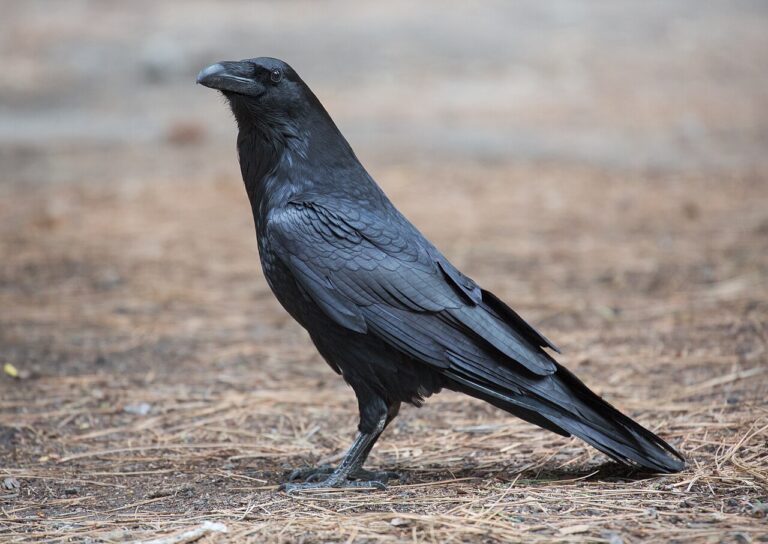
The bird almost never appears as a bad omen, which sets it apart from the corvids. Where a crow carried warning in the same village folklore, as described in our piece on crow symbolism, the nightingale carried consolation. The darker readings attached to it come from poetry about loss, not from omen lore.
Nightingale Symbolism in Christianity and the Bible

The nightingale is not named in standard English translations of the Bible, so its Christian symbolism comes from medieval devotional writing rather than scripture. In that tradition the bird became an image of the soul singing toward God through the night of earthly life, and several hymns and allegorical poems cast its song as a figure for Christ’s passion, sung at the cost of the singer.
Baha’i writings use the nightingale in a related way, as the lover of the rose and the voice of divine longing, an image inherited from Persian poetry. In both cases the point is the same: beauty produced under pressure. Readers who want the broader frame will find it in our overview of bird symbolism across traditions.
Greek, Celtic, Persian and East Asian Meanings
Greek myth gives the nightingale its oldest identity. In the story of Philomela, a woman whose tongue is cut out to keep her silent is transformed into a nightingale and sings what she could not say. That makes the bird a symbol of testimony surviving violence, and it is the source of the sorrowful reading that later poets took up.
In Persian poetry the nightingale, the bulbul, sings to an unreachable rose, standing for the lover and the mystic alike. Celtic folklore gave the bird less attention, since nightingales barely reach Ireland and Scotland, so its Welsh and Breton appearances are mostly borrowed from French verse. In East Asian art the Japanese bush warbler, often translated as nightingale, marks the arrival of spring and refined taste rather than grief, a seasonal role closer to the one blue jay symbolism plays in North American folk reading.
What Does It Mean to Hear a Nightingale?
Hearing a nightingale is traditionally read as a prompt to speak. Folk interpretations across Europe treat the night song as a message arriving for the listener: in the garden it is taken as reassurance, at the window as news about love, and repeatedly over several nights as something you keep putting off. The bird sings at night because the males are advertising to females migrating overhead, which is a mating signal, and the folklore followed that biology closely.
The same logic shaped how people read silence. A nightingale that stopped singing mid season was said to mean a courtship had ended, when in fact males fall quiet once paired. Where a night call was read as outright warning, as in the owl traditions behind blackbird symbolism, the nightingale stayed on the hopeful side.
Nightingale Spirit Animal, Totem and Dream Meanings
In modern spirit animal writing, which draws on nineteenth century symbolism rather than any indigenous tradition, the nightingale totem is given to people who process difficulty by making something out of it: writers, musicians, anyone whose work comes from private material. As an omen it is read as permission to be heard.
Dream readings follow the same thread. A singing nightingale in a dream is usually interpreted as creative expression pressing to get out, a caged one as a voice being suppressed, and a silent one as something you have decided not to say. Called a nightingale by someone else, the word is a compliment about your voice, in the sense made famous by Florence Nightingale’s reputation for comfort in the dark. North American equivalents in this literature tend to use the goldfinch as the joy symbol instead.
Frequently Asked Questions
Do we have nightingales in the United States?
No. The common nightingale does not occur in the United States outside of rare captive birds, and there is no established population. Night singing in American yards almost always comes from northern mockingbirds, brown thrashers or, in the Southwest, from a few other mimics. The Audubon bird guide is a quick way to confirm which species are in range.
Is it rare to see a nightingale?
Within its European and Asian range the bird is locally common but genuinely hard to see, because it sings from dense scrub and stays low in cover. Most people who know the song well have never had a clear look at one. That gap between hearing and seeing is where much of the symbolism comes from.
What does it mean when someone is a nightingale?
Called a nightingale, a person is being praised for a beautiful voice, usually in singing, or for bringing comfort during a hard time. The second sense traces to Florence Nightingale and the nursing tradition named after her. In older literary usage it could also mean someone who speaks a painful truth.
What is the lifespan of a nightingale?
Most common nightingales live one to three years in the wild, with ringing records reaching about eight years. High first year mortality and a long migration to sub Saharan Africa keep the average low. A short life producing an outsized song is part of why the bird reads as it does in poetry.