Female Scarlet Tanager: Identification Guide
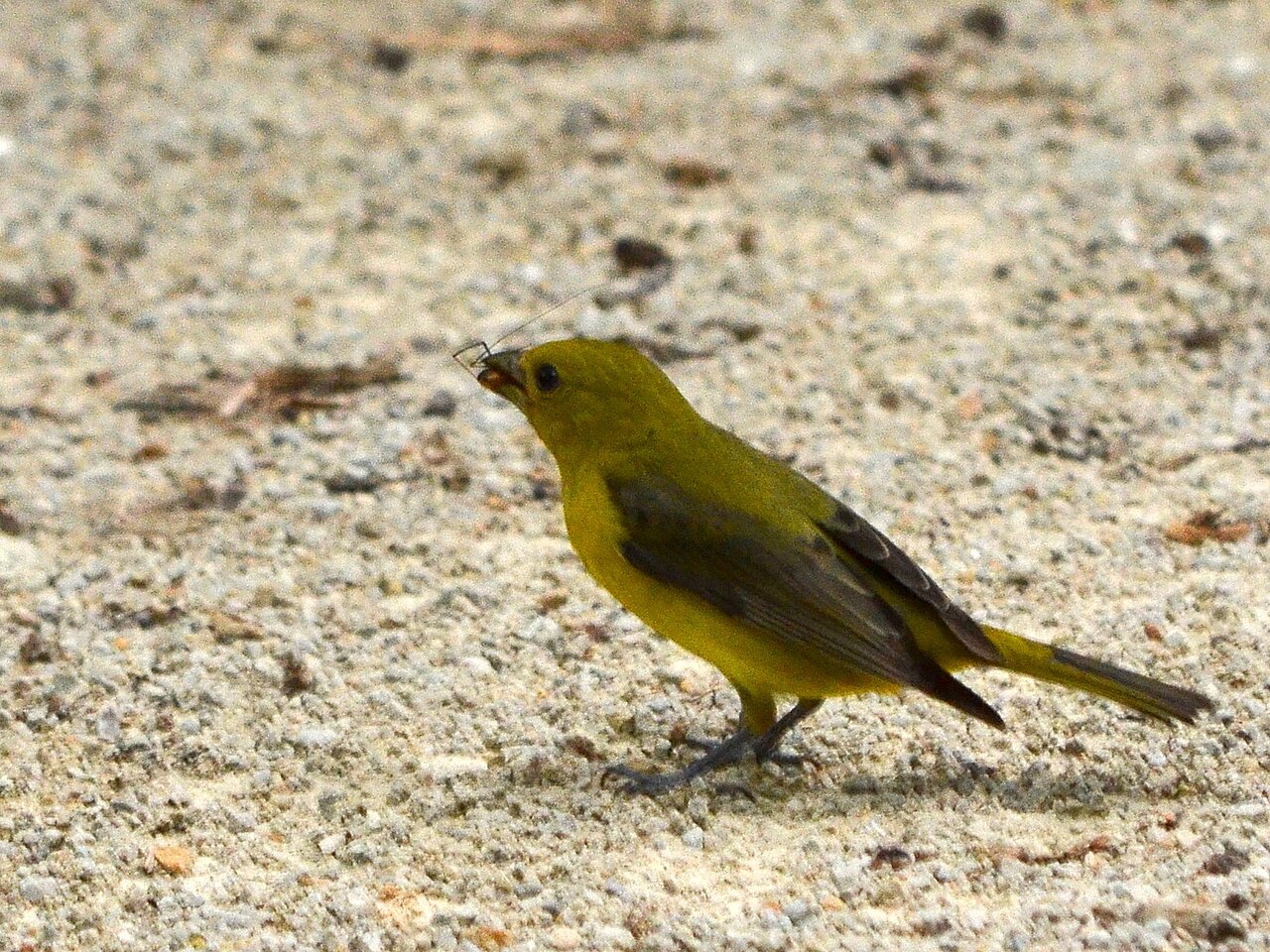
The female scarlet tanager is an olive-green bird with yellowish underparts and darker olive wings, strikingly different from the brilliant red, black-winged breeding male. Her subdued colors keep her well hidden in the forest canopy, but a few clues make identification possible. This guide covers what a female scarlet tanager looks like, how she differs from the male, how to identify her, her behavior and habitat, and where and when to see her.
| Feature | Female Scarlet Tanager |
|---|---|
| Color | Olive-green above, yellow below |
| Wings | Darker olive to grayish |
| Bill | Medium, pale |
| Pattern | Plain, no wingbars |
| Habitat | Forest canopy |
What Does a Female Scarlet Tanager Look Like?
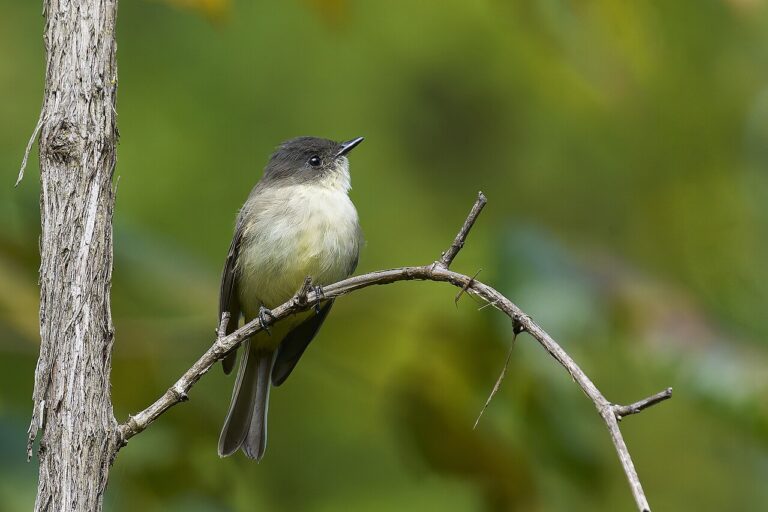
A female scarlet tanager is a softly colored olive-green bird, a striking contrast to the vivid red male. She is olive-green above and paler yellowish-green below, giving her an overall subdued, leafy appearance that blends well with foliage. Her wings and tail are somewhat darker, ranging from olive to grayish, though she lacks bold wingbars. She has a medium-sized, pale bill typical of tanagers. Overall she looks like a plain greenish-yellow songbird, well camouflaged for life among the leaves. The non-breeding male actually resembles the female in greenish plumage but keeps his black wings, which is a useful distinction. This combination of olive-green upperparts, yellowish underparts, and darker plain wings is the key to recognizing the female scarlet tanager, and it helps separate her from other greenish-yellow birds, as covered in our guide to birds that look like cardinals.
Female vs Male Scarlet Tanager
The difference between female and male scarlet tanagers is dramatic in the breeding season. The breeding male scarlet tanager is unforgettable, a brilliant, glowing red bird with jet black wings and tail, one of the most striking birds of eastern forests. The female, by contrast, is olive-green above and yellowish below with darker olive wings, showing none of the male’s red or black. This makes them very easy to tell apart in spring and summer. In fall, however, the male molts into a female-like greenish plumage, though he retains his black wings, so a greenish bird with black wings is a non-breeding male, while one with darker olive wings is a female. Young birds also resemble the female. The male’s brilliant breeding color is used to attract mates and defend territory, while the female’s green plumage provides essential camouflage as she nests in the treetops.
How to Identify a Female Scarlet Tanager
Identifying a female scarlet tanager involves recognizing her olive-green coloring and ruling out similar birds. Look for the olive-green upperparts, yellowish underparts, darker plain wings without bold wingbars, and the medium pale bill. Her overall plain, greenish-yellow look points to a female tanager. Be aware of a few possible mix-ups: the female summer tanager is warmer mustard yellow with a larger bill and plainer, paler wings, the female western tanager shows distinct wingbars, and orioles have slender pointed bills and often wingbars. Warblers are much smaller with thin, pointed bills. The presence of somewhat darker wings and the medium pale bill, along with the olive-and-yellow coloring, helps confirm a female scarlet tanager. Focusing on these features separates her from the lookalikes, a rewarding skill for birders watching eastern forests, as explored in our guide to the female summer tanager.
Female Scarlet Tanager Behavior and Habitat
The female scarlet tanager is a bird of the forest canopy with fairly secretive habits. Scarlet tanagers favor mature deciduous forests, especially those with large oaks, and they spend much of their time high in the treetops, where they forage deliberately for insects among the leaves and branches, also eating some fruit. This canopy lifestyle, combined with the female’s camouflaged green plumage, can make her surprisingly hard to spot despite the species’ fame for the male’s color. When nesting, the female builds a shallow cup nest on a horizontal branch, often well up in a tall tree, where she lays and incubates her eggs, relying on her greenish coloring and the dense foliage for concealment. Scarlet tanagers are sensitive to forest fragmentation and do best in large, unbroken tracts of woodland. This preference for mature forest canopy makes the female scarlet tanager a special sight, and protecting woodlands helps them, as reflected in our guide to plants that attract birds.
Where and When to See Female Scarlet Tanagers
Female scarlet tanagers are found across the eastern United States during the breeding season, alongside the males. Look for them in mature deciduous and mixed forests, particularly large tracts with tall oaks and other hardwoods, where they stay high in the canopy. Because they favor forest interiors and treetops, seeing them often requires patient looking upward and listening for their song and distinctive call. Scarlet tanagers are present in the warmer months, arriving in spring to breed and departing by fall to migrate to South America for the winter, an impressive long-distance journey. During migration, they may appear more widely, including in parks and smaller woodlots. Spring is an especially good time to look, when the birds are singing on territory, though the green female remains well camouflaged. Their reliance on mature eastern forests makes the female scarlet tanager a rewarding find for patient birders, as detailed in our guide to attracting birds.
Female Scarlet Tanager Plumage Explained
The olive-green coloring of a female scarlet tanager is well documented by ornithologists. According to the Cornell Lab of Ornithology, female scarlet tanagers are olive-green above and yellowish below, quite different from the brilliant red, black-winged breeding male, and scarlet tanagers depend on large tracts of mature forest. Her greenish plumage provides excellent camouflage in the leafy canopy where she forages and nests high in the trees, while the male’s vivid red is used for display. The species’ need for extensive, unbroken forest makes it sensitive to habitat fragmentation, so scarlet tanagers do best in large woodlands. This reliance on mature forest, combined with the female’s camouflaged coloring and canopy lifestyle, can make her hard to spot despite the fame of the male. Understanding her plumage and habitat needs makes the female scarlet tanager easier to identify and appreciate, a greener relative of the warm-yellow bird in our guide to bird symbolism.
Scarlet Tanagers and Forest Conservation
The scarlet tanager’s dependence on mature forest makes it an important species for conservation, and understanding this adds meaning to every sighting of the green female. These tanagers thrive in large, unbroken tracts of mature deciduous forest, particularly those with big oaks, and they are considered sensitive to forest fragmentation, since smaller, broken-up woodlots can expose their nests to more predators and to brood parasites. This means that protecting large forests is important for maintaining healthy scarlet tanager populations. The birds also undertake a remarkable long-distance migration to South America and back each year, adding to the challenges they face. When you spot a female scarlet tanager high in the canopy of a mature forest, you are seeing a bird that depends on the health of that woodland. Appreciating this connection encourages support for forest conservation, which benefits many woodland birds, as reflected in our guide to attracting birds.
Female Scarlet Tanager Song and Calls
Because the female scarlet tanager is so well camouflaged in the canopy, sound can help you detect the species. Scarlet tanagers are known for a distinctive song, a series of burry, robin-like phrases often described as sounding like a robin with a sore throat, delivered mainly by the male from high in the trees. Both sexes give a very characteristic call note, a sharp, distinctive chip-burr, which is one of the best ways to detect scarlet tanagers even when the birds stay hidden in the foliage. Learning this chip-burr call can alert you to the presence of tanagers overhead, prompting a careful search for the birds, including the greenish female. Since the female is quiet and camouflaged, using your ears to locate the species first often leads to spotting her. Recognizing scarlet tanager sounds adds a valuable dimension to finding these canopy birds, complementing the visual clues covered throughout our guide to bird symbolism.
Frequently Asked Questions
What does a female scarlet tanager look like?
A female scarlet tanager is olive-green above and yellowish below with darker plain wings and a medium pale bill, quite different from the red, black-winged male.
How can you tell a female scarlet tanager from a male?
The breeding male is brilliant red with black wings, while the female is olive-green with yellowish underparts and darker olive wings, showing no red or black.
Are female scarlet tanagers green?
Yes, female scarlet tanagers are olive-green above and yellowish-green below, which camouflages them in the forest canopy, unlike the vivid red breeding male.
How do you tell a female scarlet tanager from a non-breeding male?
Look at the wings. The female has darker olive wings, while the non-breeding male keeps distinctly black wings against his greenish body, a reliable clue in fall.
How do you tell a female scarlet tanager from a female summer tanager?
The female scarlet tanager is more olive-green with darker wings and a smaller bill, while the female summer tanager is warmer mustard yellow with a larger pale bill.
Where do scarlet tanagers go in winter?
Scarlet tanagers migrate to South America for the winter, an impressive long-distance journey, returning to eastern North American forests to breed in the warmer months.
Where do female scarlet tanagers live?
Female scarlet tanagers live in mature deciduous and mixed forests across the eastern United States in the warmer months, staying high in the forest canopy.