Female Indigo Bunting: Identification Guide
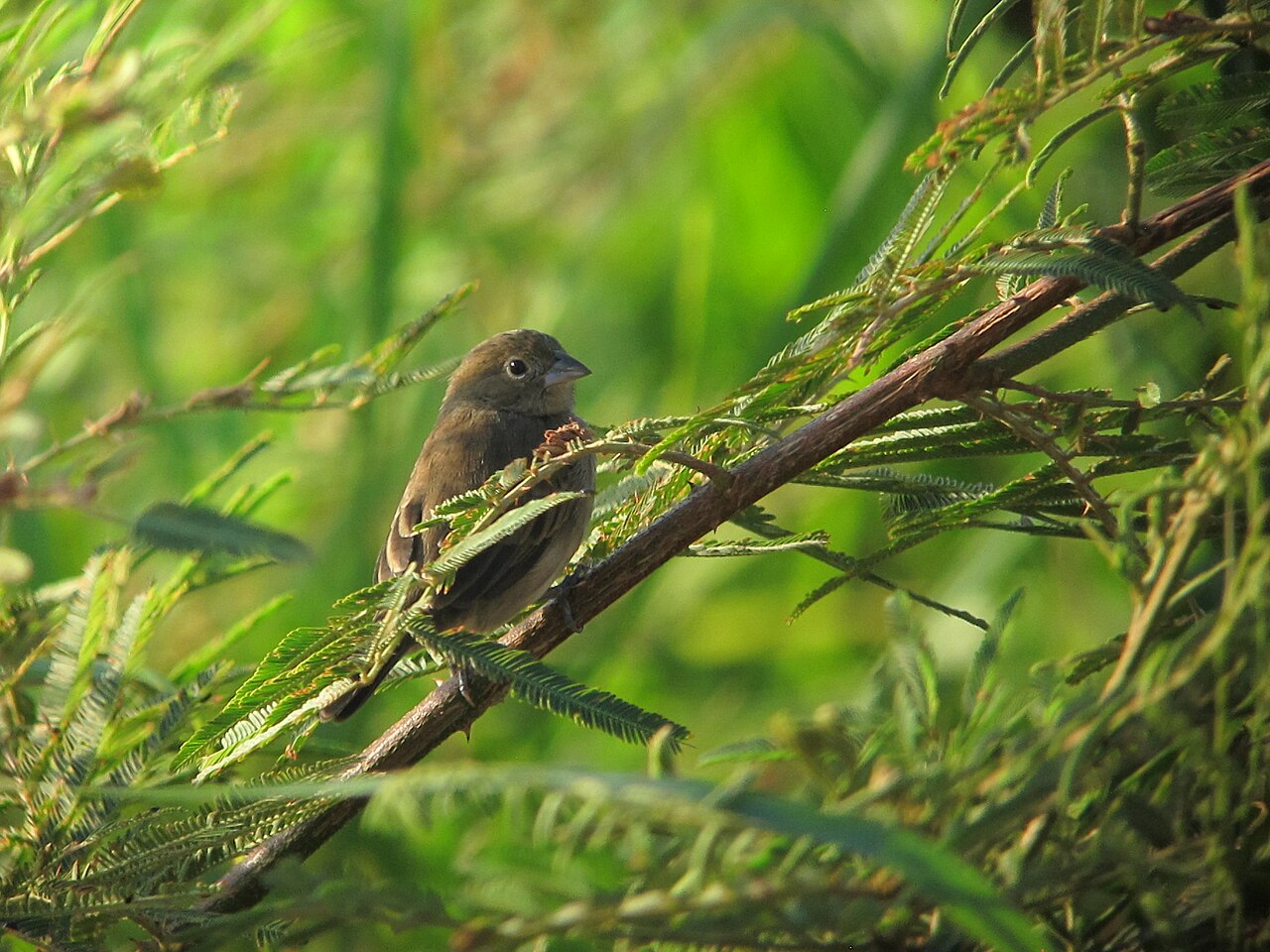
The female indigo bunting is a plain warm brown bird with faint streaking on the breast and a hint of blue in the wings or tail, completely unlike the brilliant all-blue male. Her drab coloring can make her easy to overlook or confuse with sparrows and finches, but a few clues help. This guide covers what a female indigo bunting looks like, how she differs from the male, how to identify her, her behavior and nesting, and where and when to see her.
| Feature | Female Indigo Bunting |
|---|---|
| Color | Plain warm brown |
| Breast | Faint blurry streaks |
| Throat | Whitish |
| Bill | Small, conical |
| Hint | Faint blue in wings or tail |
What Does a Female Indigo Bunting Look Like?
A female indigo bunting is a plain, warm brown bird, a striking contrast to the vivid blue male. She is soft brown overall, usually warmer or richer brown above and paler below, with faint, blurry streaking on the breast and a whitish throat. She has a small, conical, seed-eating bill and often a plain face without bold markings. Some females show a subtle hint of blue in the wings, tail, or rump, which can be a helpful clue that she is a bunting rather than a sparrow or finch. Immature birds and males in fall can also look brownish. Overall she appears as an unassuming brown songbird, easy to overlook. This combination of plain warm brown plumage, faint breast streaking, a whitish throat, and a small conical bill, sometimes with a touch of blue, is the key to recognizing her, as covered in our guide to the female house finch.
Female vs Male Indigo Bunting
The difference between female and male indigo buntings is dramatic, at least in the breeding season. The breeding male indigo bunting is a dazzling, entirely deep blue bird, seeming to glow in good light, one of the most beautiful backyard birds. The female, by contrast, is plain warm brown with faint streaking and no blue to speak of, aside from a possible subtle tinge. This makes the sexes look completely different in spring and summer. In fall and winter, the male molts into a brown, female-like plumage, often showing patches of blue, so a brown bird with blotchy blue is likely a molting male. It is worth noting that the male’s blue is not from pigment but from the way light scatters off his feathers, which is why he can look dull in poor light. The female’s brown plumage provides camouflage, especially important while she nests, while the male’s blue is used in display.
How to Identify a Female Indigo Bunting
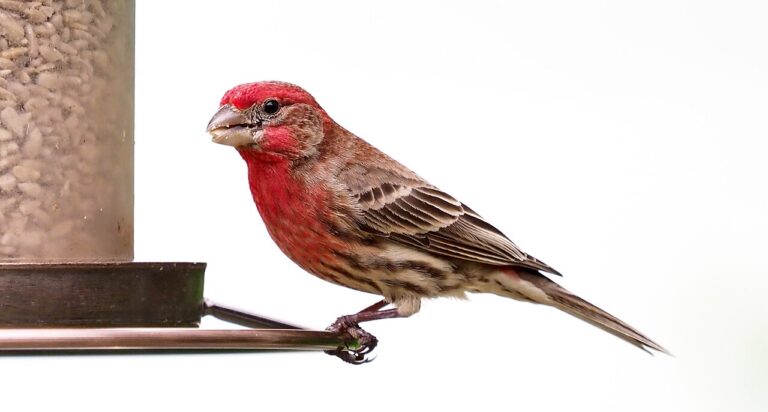
Identifying a female indigo bunting means recognizing her plain brown look and small bunting features while ruling out similar birds. Look for the warm brown plumage, the faint blurry streaking on the breast, the whitish throat, the plain face, and the small conical bill, along with any subtle hint of blue. Be aware of possible mix-ups: female house finches are grayer-brown with blurrier, heavier streaking, sparrows have more patterned faces and different bill shapes, and the female lazuli bunting of the West is similar but shows wingbars and a warmer breast. Female and immature buntings can genuinely be tricky. The overall plainness, the faint streaks, the conical bill, and especially any trace of blue help confirm a female indigo bunting. Focusing on these features separates her from the lookalikes, a rewarding skill for birders watching brushy areas, as explored in our guide to bird symbolism.
Female Indigo Bunting Behavior and Nesting
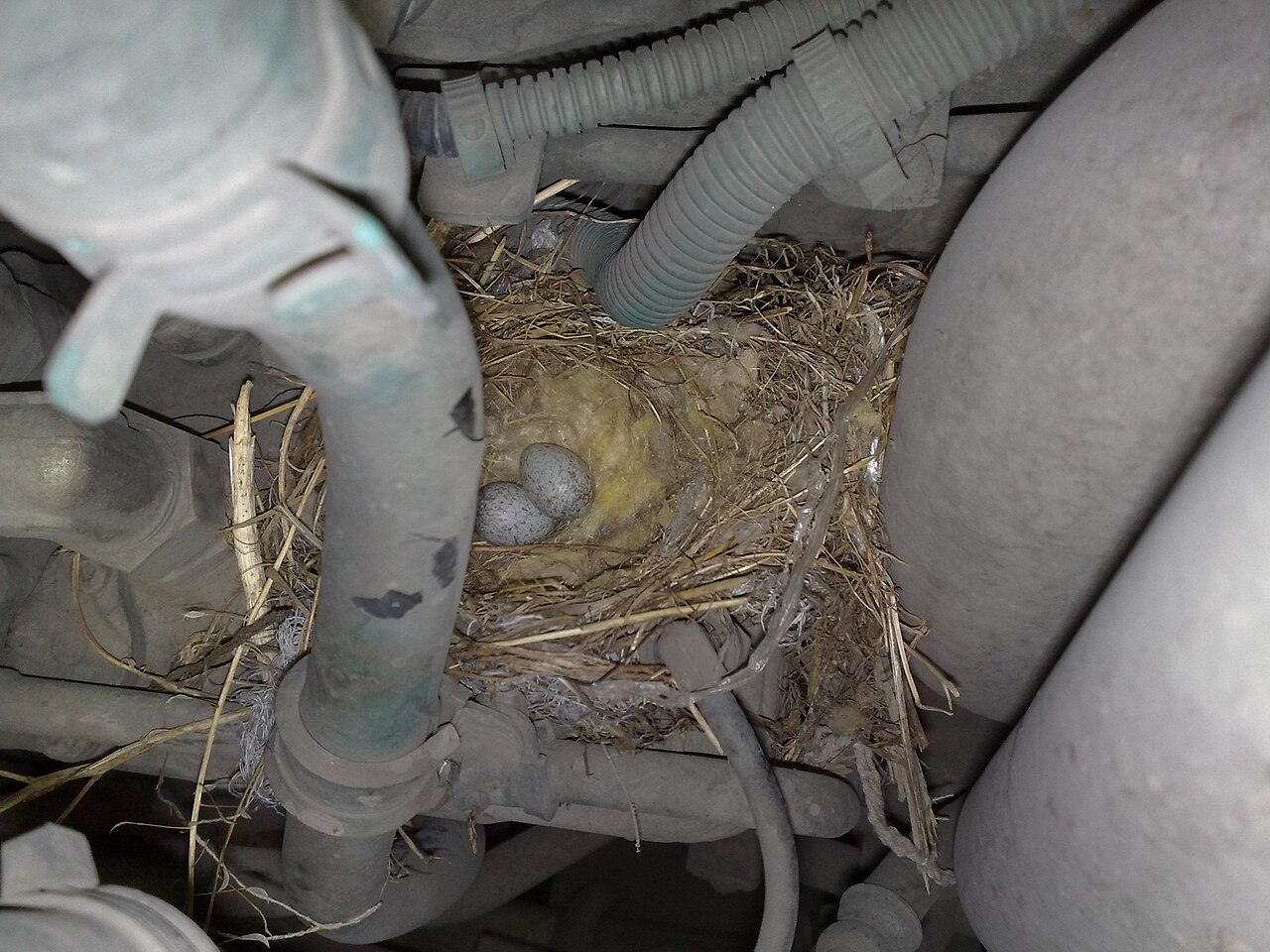
The female indigo bunting is a bird of brushy, open areas with typical bunting habits. Indigo buntings favor overgrown fields, woodland edges, brushy roadsides, and shrubby areas, where they forage for seeds and insects, feeding low in vegetation and on the ground, and they readily eat small seeds. While the male often sings conspicuously from a high, exposed perch, the female tends to be less obvious, keeping lower in the cover. When nesting, the female builds a cup nest low in dense shrubs, tangles, or tall weeds, where she lays and incubates her eggs, and her brown plumage helps conceal her among the vegetation. The dense, brushy habitat provides food and protection for the nest and young. Indigo buntings are also known for their remarkable migration, navigating by the stars. This combination of brushy habitat, low-level foraging, and well-hidden nesting is characteristic, and a brushy yard can attract them, as reflected in our guide to plants that attract birds.
Where and When to See Female Indigo Buntings
Female indigo buntings are found across the eastern and central United States during the breeding season, alongside the males. Look for them in brushy and semi-open habitats, such as overgrown fields, forest edges, hedgerows, roadsides, and shrubby areas, often where there is a mix of open ground and dense cover. They are present in the warmer months, arriving in spring to breed and departing by fall to spend the winter in Mexico, Central America, and the Caribbean. During migration and on the wintering grounds, they may occur more widely. Because the female is plain and tends to stay in cover while the male sings from exposed perches, spotting her often takes a careful look into the brush, though feeders offering small seeds can bring buntings into view. Spring and summer within their range are the best times to look, making the modest female indigo bunting a rewarding find, as detailed in our guide to attracting birds.
Female Indigo Bunting Plumage Explained
The plain brown coloring of a female indigo bunting is well documented by ornithologists. According to the Cornell Lab of Ornithology, female indigo buntings are plain brown, in sharp contrast to the vivid blue male, and the male’s blue color comes not from pigment but from the structure of his feathers scattering light. Her brown plumage provides camouflage, which is especially important while she nests low in dense vegetation, whereas the male’s structural blue serves for display. Because the blue is caused by light scattering rather than pigment, the male can appear dark or dull in poor light and brilliantly blue in good light, and the female shows only a possible faint hint of blue. Understanding that the female is plain brown by design, and that the male’s blue is a trick of light, makes her easier to identify and reveals the fascinating biology behind indigo bunting color, a plain-brown pattern also seen in our guide to the female house finch.
The Indigo Bunting’s Starlight Migration
One of the most remarkable things about indigo buntings, shared by both the plain female and the blue male, is how they navigate during migration. Indigo buntings are night migrants, and research has shown that they use the stars to find their way, orienting themselves by the patterns of the night sky and the way the stars appear to rotate around the North Star. This ability to navigate by starlight is a stunning feat for such a small bird, guiding indigo buntings between their breeding grounds in North America and their wintering areas in Mexico, Central America, and the Caribbean. The female makes this same impressive journey twice a year. Knowing that the modest brown female is capable of navigating thousands of miles by the stars adds a sense of wonder to seeing her in a brushy field, connecting her to the broader marvels of bird migration, as explored across our guides including feeding backyard birds.
Frequently Asked Questions
What does a female indigo bunting look like?
A female indigo bunting is a plain warm brown bird with faint breast streaking, a whitish throat, and a small conical bill, sometimes with a subtle hint of blue, unlike the blue male.
How can you tell a female indigo bunting from a male?
The breeding male is entirely deep blue, while the female is plain warm brown with faint streaks and little or no blue. In fall, the male molts to a brown, blotchy-blue plumage.
Are female indigo buntings blue?
No, female indigo buntings are plain warm brown, though some show a subtle hint of blue in the wings, tail, or rump. Only the breeding male is brilliant blue.
How do you tell a female indigo bunting from a sparrow?
A female indigo bunting is plainer with faint blurry streaks, a small conical bill, and sometimes a hint of blue, while sparrows have more patterned faces and different bills.
How do you tell a female indigo bunting from a female house finch?
The female indigo bunting is warmer brown with fainter streaks and may show a hint of blue, while the female house finch is grayer with blurrier, heavier streaking.
Why is the male indigo bunting so blue?
The male’s blue is not from pigment but from the way light scatters off his feathers, which is why he can look dull or dark in poor light and brilliant blue in good light.
Where do female indigo buntings live?
Female indigo buntings live in brushy fields, forest edges, and shrubby areas across the eastern and central United States in the warmer months, then migrate south.