Types of Blue Birds in Florida: A Complete Guide
Blue birds in Florida include the eastern bluebird, blue jay, the endemic Florida scrub-jay, the indigo bunting, and the blue grosbeak. Blue is a striking but relatively uncommon color among birds, which makes these blue species especially eye-catching in the Sunshine State. This guide covers the types of blue birds in Florida, common species, how to tell them apart, where to see them, and why some birds are blue.
| Blue Bird | Key Features in Florida |
|---|---|
| Eastern Bluebird | Blue above, orange breast |
| Blue Jay | Blue, crested, bold |
| Florida Scrub-Jay | Blue, crestless, Florida endemic |
| Indigo Bunting | All deep blue male |
| Blue Grosbeak | Deep blue, large bill |
| Tree Swallow | Blue-green above, white below |
| Purple Martin | Large swallow, dark blue |
| Little Blue Heron | Slate blue wading bird |
The Main Types of Blue Birds in Florida
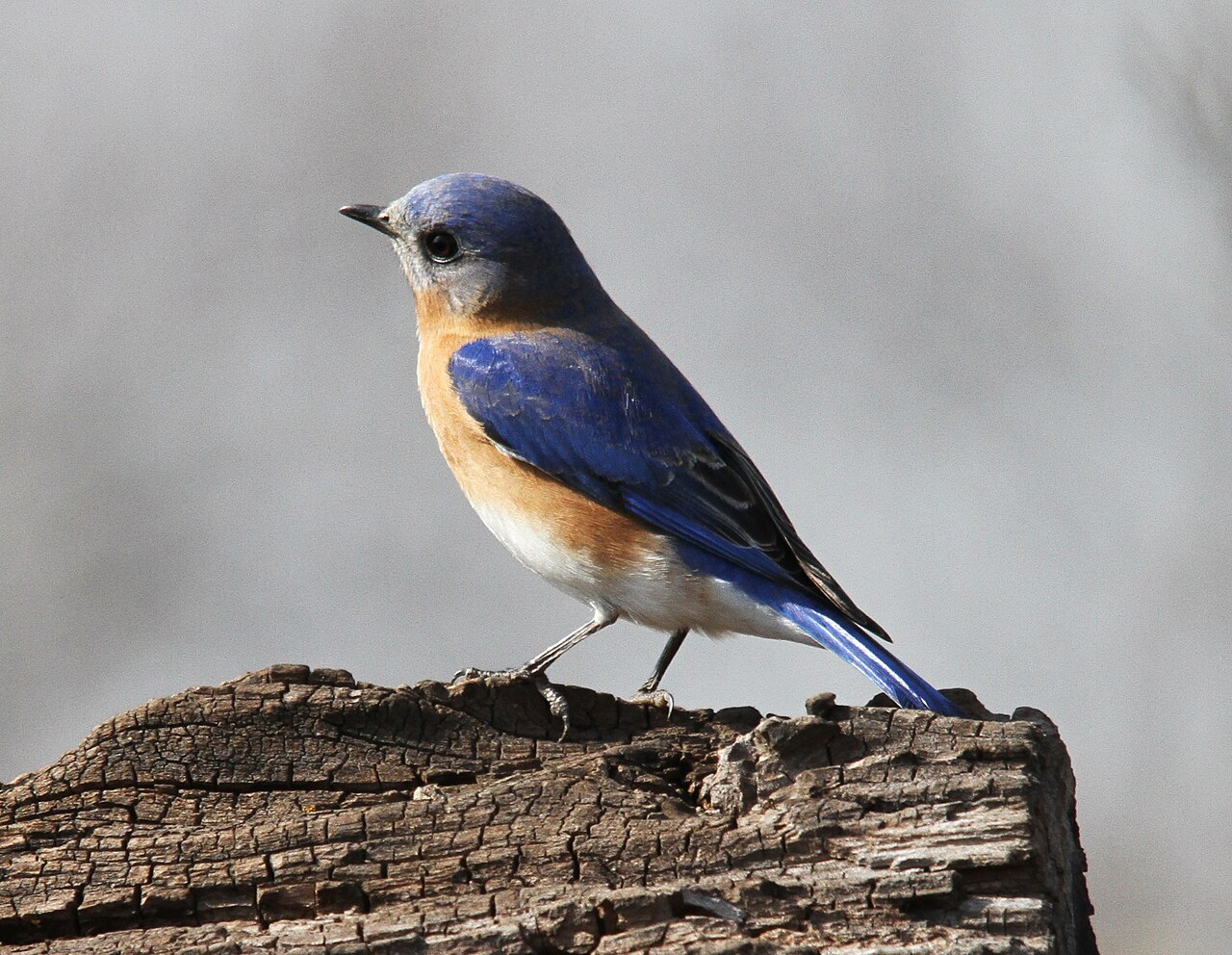
There are several blue or bluish birds in Florida, spanning different families. The most beloved is the eastern bluebird, a small thrush with a blue back and a warm orange breast, found in open areas. The blue jay is a bold, crested blue-and-white bird common in yards and woods, and Florida is also home to the Florida scrub-jay, a blue, crestless jay found nowhere else in the world, making it a special endemic species. Among the buntings and grosbeaks, the indigo bunting male is entirely deep blue and the blue grosbeak is a rich blue bird with a large bill. The swallows include the blue-green tree swallow and the large, dark purple martin, and the little blue heron is a slate-blue wading bird. Even the painted bunting shows a blue head. Together these make up the birds people think of as blue birds in Florida, ranging widely in family and habitat, starting with the beloved bird in our guide to the eastern bluebird.
Common Blue Birds in Florida
Several types of blue birds are especially notable in Florida. The eastern bluebird is a favorite, the male with a brilliant blue back and head and a warm orange breast, often seen in open areas and using nest boxes. The blue jay is a bold, crested blue-and-white bird common throughout the state, as covered in our guide to the blue jay. The Florida scrub-jay is a special endemic, a blue jay without a crest that lives only in Florida’s scrub habitat and is found nowhere else on Earth, making it a sought-after bird. The indigo bunting male is a stunning, entirely deep blue bird seen in brushy areas and edges, mainly in the warmer months, and the blue grosbeak is a rich blue bird with a large bill and chestnut wingbars. The tree swallow and purple martin are blue-toned swallows, and the little blue heron is a slate-blue wading bird of wetlands. Each brings its own blue beauty, as explored in our guide to types of jays.
How to Tell Florida Blue Birds Apart
Telling Florida’s blue birds apart is easier when you use size, shape, and the extent of blue. Start with the eastern bluebird’s orange breast, which sets it apart from the fully blue buntings, and the blue jay’s crest, which the crestless Florida scrub-jay lacks. Note the amount of blue, since the indigo bunting male is entirely blue, the blue grosbeak is deep blue with a large bill and wingbars, and the eastern bluebird is blue only above with an orange breast. Look at shape and size, as jays are larger with strong bills, buntings and grosbeaks are finch-like, and swallows are slender with pointed wings for aerial feeding. Habitat helps too, since the scrub-jay is restricted to scrub, the bluebird likes open areas, swallows feed over water and fields, and the little blue heron wades in wetlands. Behavior and range are useful, especially for the endemic scrub-jay. By combining size, shape, blue pattern, and habitat, you can identify Florida’s blue birds, as explored in our guide to birds that look like blue jays.
Where to See Blue Birds in Florida
Blue birds can be found across Florida in a variety of habitats, depending on the species. The eastern bluebird favors open areas such as pastures, parks, golf courses, and open pine woods, readily using nest boxes, and it is present year-round. The blue jay is common in woodlands, hammocks, parks, and yards throughout the state, while the Florida scrub-jay is restricted to specific scrub habitat, particularly in central Florida, where it can be found at certain preserves and natural areas. The indigo bunting and blue grosbeak favor brushy fields, edges, and open woodlands, mainly during the warmer months, and the tree swallow and purple martin are seen over open areas and water, with purple martins nesting in colonies in special houses. The little blue heron wades in marshes, ponds, and coastal wetlands. Florida’s mix of open country, scrub, woodlands, and wetlands supports this variety of blue birds. Because several blue birds, like the bluebird and blue jay, visit yards and nest boxes, they can often be seen near homes, as detailed in our guide to backyard birds of Florida.
Why Are Some Birds Blue?
The blue color in birds is especially fascinating because, unlike red and yellow, it usually does not come from pigment. Instead, blue in birds is a structural color, produced by the microscopic structure of the feathers, which scatters light in a way that makes them appear blue, much as the sky appears blue. This means that a blue feather does not actually contain blue pigment, and if you were to grind it up, the blue would disappear, because the color depends entirely on the feather’s structure and how it interacts with light. This is why blue birds can look more or less vivid depending on the angle and lighting. Because true blue pigment is essentially absent in birds, blue plumage is relatively uncommon and often striking, which adds to the appeal of blue birds. Bright blue coloring is used in display, helping birds attract mates and signal their quality. This structural origin of blue is a remarkable aspect of blue birds, adding to the wonder of species like those in our guide to types of jays.
The Florida Scrub-Jay, Florida’s Only Endemic Bird
The Florida scrub-jay deserves special attention as a truly unique blue bird. According to the Cornell Lab of Ornithology, the Florida scrub-jay is the only bird species found exclusively in Florida, living in patches of scrub habitat and known for its bold, curious behavior. This blue jay, which lacks the crest of the familiar blue jay, is found nowhere else in the world, making it Florida’s only endemic bird species and a special target for birders. Florida scrub-jays live in family groups in low, open scrub, particularly oak scrub on sandy soils, and they are famously tame and inquisitive, sometimes approaching people closely. They practice cooperative breeding, in which young from previous years help their parents raise the next brood, a fascinating social behavior. Unfortunately, the loss of Florida’s scrub habitat has made the scrub-jay a threatened species, dependent on protected natural areas. The Florida scrub-jay’s uniqueness, boldness, and social life make it a remarkable blue bird, as explored in our guide to types of jays.
The Special Appeal of Blue Birds
Blue birds hold a special place in the human imagination, and it is worth reflecting on why they captivate us. Because true blue is a relatively uncommon color in the bird world, produced by feather structure rather than pigment, blue birds stand out vividly against green foliage and open sky, making them especially eye-catching and memorable. The eastern bluebird in particular is a beloved symbol of happiness and renewal in many traditions, and spotting a flash of brilliant blue can bring a moment of delight. In Florida, the presence of the unique Florida scrub-jay adds special appeal, since it can be found nowhere else. Blue birds are often associated with joy, peace, and good fortune, and their beauty makes them favorites at feeders and nest boxes. This strong appeal is part of why people are so eager to identify and attract blue birds, adding to the pleasure of birding in Florida and beyond.
Frequently Asked Questions
What are the different types of blue birds in Florida?
Common blue birds in Florida include the eastern bluebird, blue jay, Florida scrub-jay, indigo bunting, blue grosbeak, tree swallow, purple martin, and little blue heron.
What blue bird is unique to Florida?
The Florida scrub-jay is a blue, crestless jay found only in Florida and nowhere else on Earth. It lives in scrub habitat and is famously bold and curious.
What is the difference between a bluebird and a blue jay?
The eastern bluebird is a small thrush, blue above with an orange breast, while the blue jay is a larger, crested blue-and-white bird with a strong bill and bold behavior.
What small bird is entirely blue in Florida?
The male indigo bunting is a small bird that is entirely deep blue, seen in brushy areas and edges mainly in the warmer months. The blue grosbeak is also deep blue.
Why are some birds blue?
Blue in birds is usually a structural color, produced by the microscopic structure of the feathers scattering light, rather than by blue pigment, which birds essentially lack.
How do you tell Florida blue birds apart?
Use size, shape, and blue pattern. The bluebird has an orange breast, the blue jay has a crest, the scrub-jay is crestless, and the indigo bunting is entirely blue.
Where can you see blue birds in Florida?
Blue birds live in open areas, scrub, woodlands, and wetlands across Florida. The Florida scrub-jay is restricted to scrub habitat, especially in central Florida.