Peregrine Falcon: World’s Fastest Animal
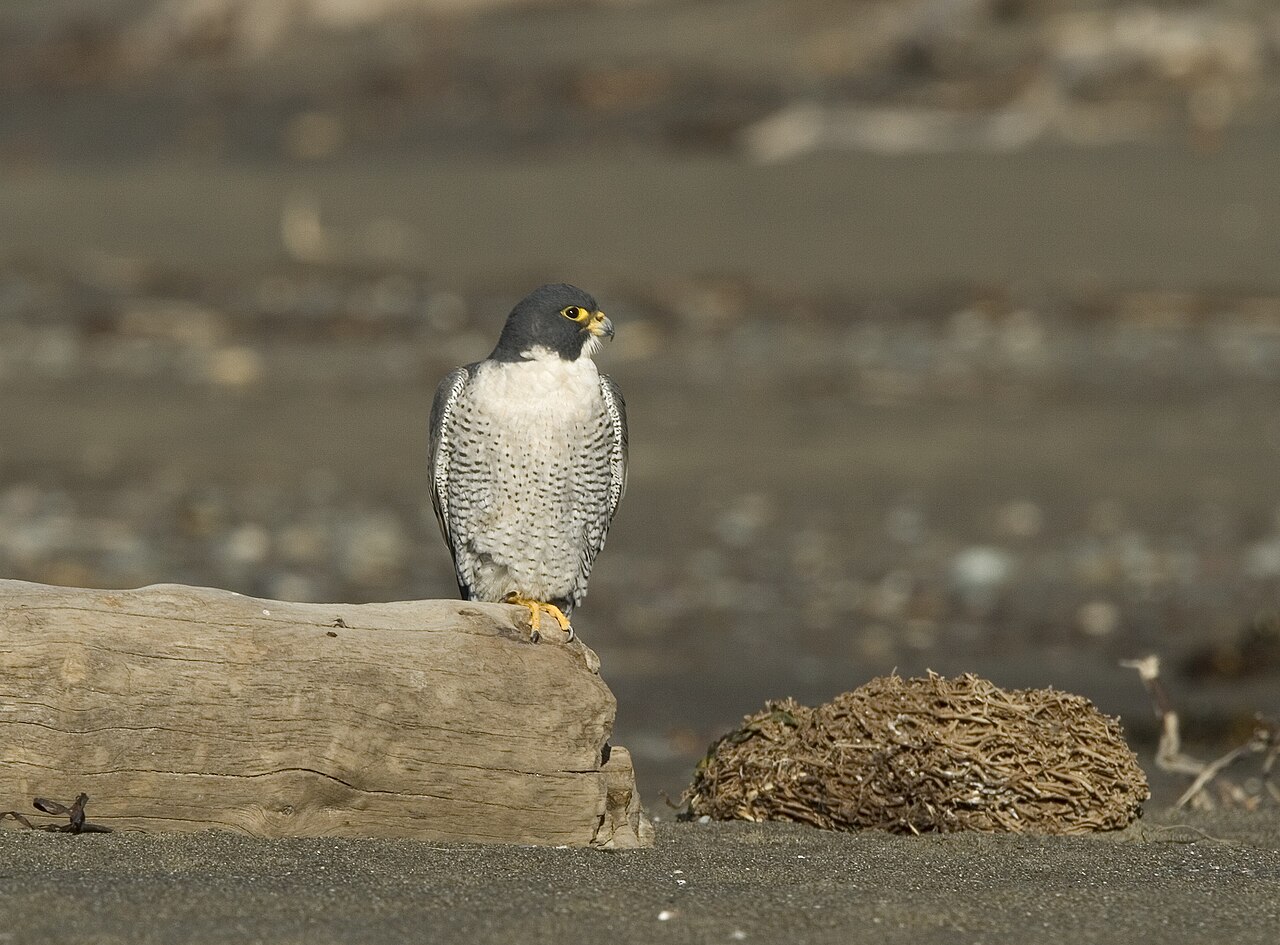
The peregrine falcon is a powerful, crow-sized raptor famous for its hunting dive, called a stoop, in which it can exceed 240 miles per hour, making it the fastest animal on Earth in any form of locomotion. With a slate-gray back, barred white underside, and a distinctive black “mustache” mark below the eye, the peregrine falcon hunts other birds in mid-air, striking prey with a closed foot at speeds no other predator on the planet can match.
| Fact | Detail |
|---|---|
| Wingspan | 3.3 to 3.6 ft |
| Weight | 1 to 3.5 lbs (females larger) |
| Top diving speed | 240+ mph (fastest animal on Earth) |
| Diet | Almost entirely other birds, caught in flight |
| Habitat | Cliffs historically, now common on city skyscrapers and bridges |
| Conservation history | Nearly extinct from DDT, fully recovered since 1999 |
Size and Appearance
A peregrine falcon is roughly crow-sized, with a wingspan of about three and a half feet, noticeably smaller and more compact than a red-tailed hawk despite its outsized reputation. The back and wings are slate blue-gray, the underside is white to buff with fine dark barring, and the head shows a black cap that extends into a bold, sideburn-like mark below the eye, often described as a mustache or helmet pattern. Females are notably larger than males, sometimes by close to a third, a size difference more pronounced in peregrines than in most other falcons. In flight, the wings are long, pointed, and swept back, giving the bird an anchor-shaped silhouette that is one of the fastest ways to identify a falcon at a distance, well before any plumage detail is visible. For the full lineup of falcon species found in North America, see our falcon species guide.
How Fast Is a Peregrine Falcon?
A peregrine falcon’s hunting dive, known as a stoop, has been measured at over 240 miles per hour, making it not just the fastest bird but the fastest animal of any kind on Earth in level or diving flight. The falcon achieves this speed by climbing high above its target, then folding its wings partially and dropping in a near-vertical dive, using gravity rather than wingbeats to build velocity before striking prey with a closed foot, often killing or stunning it instantly on impact. Specialized nostril structures called baffles allow the bird to breathe normally against the force of air at these speeds, an adaptation that inspired similar intake designs used in early jet engines. In level flapping flight, away from a hunting stoop, a peregrine falcon flies at a far more modest 40 to 60 miles per hour, still fast but nothing like its record-setting dive speed, a distinction covered further in our guide to the fastest birds.
Diet and Hunting Technique
Peregrine falcons hunt almost exclusively other birds, taken in flight, with pigeons, doves, shorebirds, and waterfowl among the most common prey across their range. Rather than chasing prey in level flight, a peregrine typically gains altitude above its target and stoops from above, using the tremendous speed of the dive itself as the primary weapon; a strike at that velocity can kill instantly or leave prey too stunned to escape before the falcon circles back to retrieve it. Peregrines are also known to hunt cooperatively in pairs during the breeding season, with one bird flushing prey into the open for the other to strike. Their reliance on aerial ambush rather than raw strength or size is part of why the species, despite weighing only a few pounds, is able to take down birds nearly its own size.
Range and Habitat
Peregrine falcons have one of the widest natural distributions of any bird of prey, breeding on every continent except Antarctica and historically nesting on cliff ledges near open country or coastlines where prey birds were abundant. In recent decades, peregrines have adapted successfully to urban environments, nesting on skyscrapers, bridges, and other tall structures that mimic natural cliff faces, often with a reliable food source in city pigeon populations. Many US cities now host resident breeding pairs, sometimes monitored by webcam, a conservation-driven shift that has made peregrines one of the more visible large raptors in dense urban areas rather than remote wilderness. For related raptors that share overlapping range and hunting style, see our guides to the American kestrel and the merlin.
Conservation: A Near Extinction and Full Recovery
Peregrine falcon populations collapsed across the eastern United States by the 1960s, driven almost entirely by the pesticide DDT, which accumulated in the falcons through the birds they ate and thinned their eggshells so severely that most nests failed before hatching. The species was listed as endangered in 1970, and following the US ban on DDT in 1972, an intensive captive breeding and release program helped reestablish breeding populations across much of its former range, including many of the urban sites peregrines now occupy. The peregrine falcon was removed from the US endangered species list in 1999, a recovery the Cornell Lab of Ornithology cites as one of the most successful bird conservation efforts in American history, alongside the similar comeback of the bald eagle.
Can a Peregrine Falcon Harm a Human?
Peregrine falcons pose essentially no danger to people under normal circumstances; they hunt exclusively other birds and have no natural inclination to target humans as prey. The one exception is nest defense, where a falcon, like many raptors, may dive at a person who ventures too close to an active nest site, delivering a startling but rarely serious strike intended to drive off the perceived threat rather than cause real harm. Reports of peregrines injuring people are exceptionally rare and almost always tied to this kind of defensive behavior near a nest rather than any predatory intent.
Nesting and Life Cycle
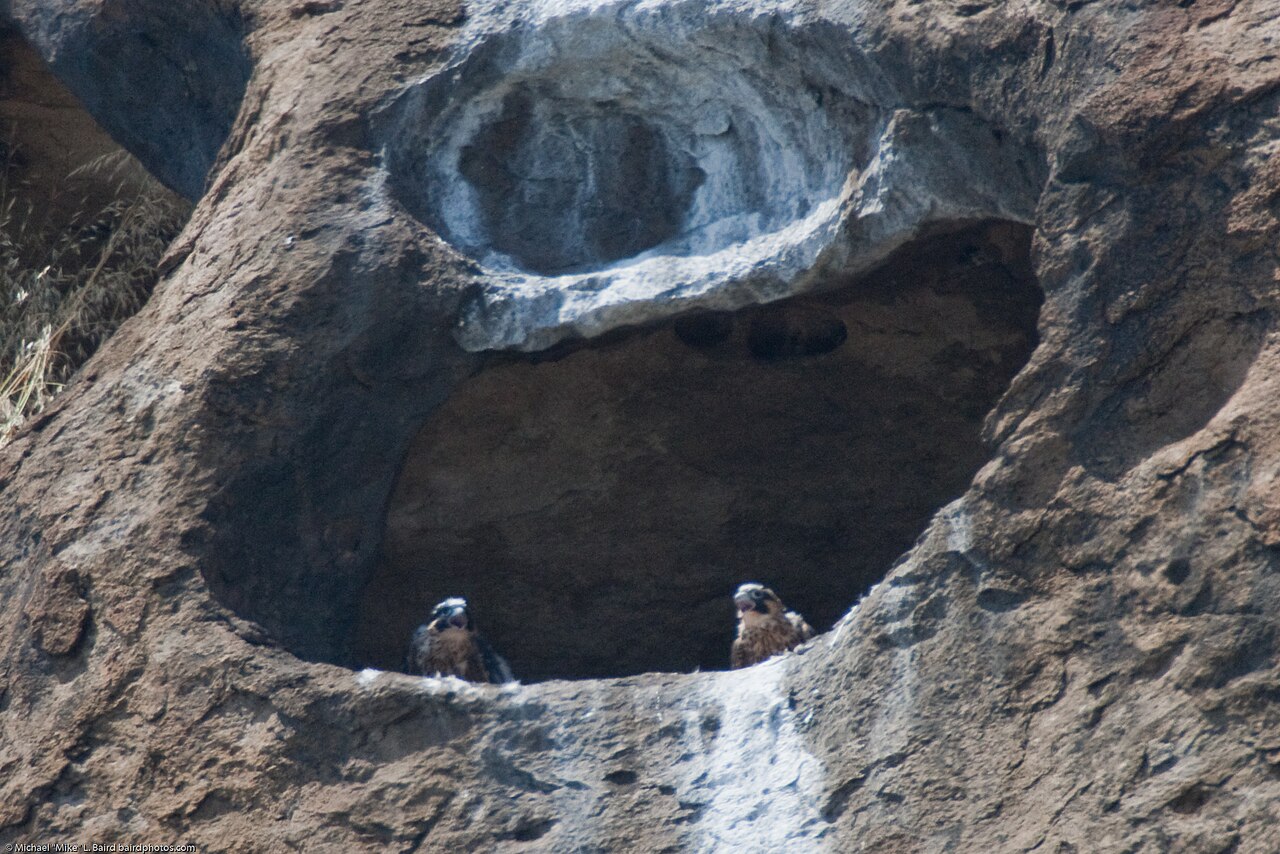
Peregrine falcons typically nest on a bare ledge or scrape, historically on a cliff face and increasingly on a building ledge or specially installed nest box in cities, since they build no real nest structure of their own. A breeding pair usually lays three to four eggs, and both parents share incubation duties over roughly a month, with the female typically taking the larger share while the male handles most of the early hunting for the pair. Young falcons fledge at around six weeks old but remain dependent on their parents for several additional weeks while learning to hunt, often practicing aerial maneuvers and mock chases with siblings near the nest site before attempting a real kill. Peregrine falcons can live 15 to 20 years in the wild, and established breeding pairs frequently reuse the same nest site, whether a natural cliff ledge or an urban building, for many consecutive years.
Why Nothing Else Comes Close
The peregrine falcon’s title as the fastest animal on Earth depends specifically on its diving stoop, since in level, powered flight the bird is fast but not exceptional, and several other animals can outrun it on the ground or in water over short bursts. What sets the peregrine apart is that its top speed comes from converting altitude into velocity under gravity, a method available to almost nothing else in the animal kingdom in a controlled, repeatable way. Cheetahs, often cited as the fastest land animal, top out around 60 to 70 miles per hour, less than a third of a peregrine’s diving speed, and no other bird, including other falcons, has been reliably measured approaching the peregrine’s stoop in controlled studies. This is part of why the peregrine falcon remains a frequent subject of aerodynamic research, with its wing shape and dive posture studied by engineers looking to improve the efficiency of aircraft and even parachute design.
Frequently Asked Questions
How fast can a peregrine falcon fly?
A peregrine falcon can exceed 240 miles per hour in a hunting stoop, the fastest recorded speed of any animal on Earth, though its level flapping flight is a much more modest 40 to 60 miles per hour.
What does a peregrine falcon eat?
Peregrine falcons eat almost exclusively other birds, caught in flight, with pigeons, doves, and shorebirds among their most common prey.
Where does the peregrine falcon live?
Peregrine falcons live on every continent except Antarctica, historically nesting on cliffs and now increasingly common on skyscrapers and bridges in cities.
Is the peregrine falcon endangered?
No, the peregrine falcon was removed from the US endangered species list in 1999 after a dramatic recovery following the ban on the pesticide DDT.
Can a peregrine falcon kill a human?
No, peregrine falcons pose no real danger to people and hunt exclusively other birds; the only exception is a defensive dive near an active nest, which startles but rarely injures.
How big is a peregrine falcon?
A peregrine falcon is roughly crow-sized, with a wingspan of about 3.3 to 3.6 feet and a weight between 1 and 3.5 pounds, with females noticeably larger than males.
What does a peregrine falcon sound like?
Peregrine falcons make a harsh, repeated “kek kek kek” call, most often heard near the nest when defending territory or communicating with a mate.