Falcon Sounds: What Each Call Means and the Movie Myth
Falcon sounds are short, hard and repeated, nothing like the drawn out scream Hollywood puts over every soaring bird. A Peregrine Falcon (Falco peregrinus) defending a nest ledge delivers a harsh “kak-kak-kak” that can run for 20 seconds. An American Kestrel (Falco sparverius) gives a fast “killy-killy-killy” from a wire. A Merlin (Falco columbarius) chatters higher and faster still. Away from the nest, falcons are mostly silent, which is why hearing one at all is worth noticing.
That silence is the first clue in any identification. Most falcon calls belong to the breeding season, to a nest site, or to a confrontation, and each call type has its own rhythm, pitch and season. The sections below take them one at a time, say what each one sounds like and when you hear it, and then deal with the sounds people most often mistake for a falcon, including the famous movie cry that belongs to a different bird entirely.
Falcons give rapid, harsh, repeated calls rather than long screams. The most common are the peregrine’s “kak-kak-kak” alarm near a nest, the kestrel’s “killy-killy-killy”, and a drawn out wail used between pairs. Falcons call mainly from March to July and are usually silent while hunting or migrating.
| Species or call | Sounds like | What it means | When you hear it |
|---|---|---|---|
| Peregrine alarm | Harsh “kak-kak-kak”, about 3 notes per second | Intruder near the nest ledge | March to July, any daylight hour |
| Peregrine courtship | Creaky two note “ee-chip” | Pair bonding, food exchange | February to April, early morning |
| Kestrel chatter | Shrill “killy-killy-killy”, 3 to 6 notes | Alarm or contact between a pair | All year, often from wires and poles |
| Merlin chatter | Faster, higher “ki-ki-ki-ki” | Agitation, often while chasing | Breeding season in the northern states |
| Prairie Falcon call | Dry “kik-kik-kik”, slightly higher than a peregrine | Nest defense on cliffs | April to June, Western canyons |
| Nestling begging | Wheezy rasping “chup” or raspy whistle | Young demanding food | May to July, loudest at feeding times |
The Peregrine’s “Kak-Kak-Kak” Alarm Call
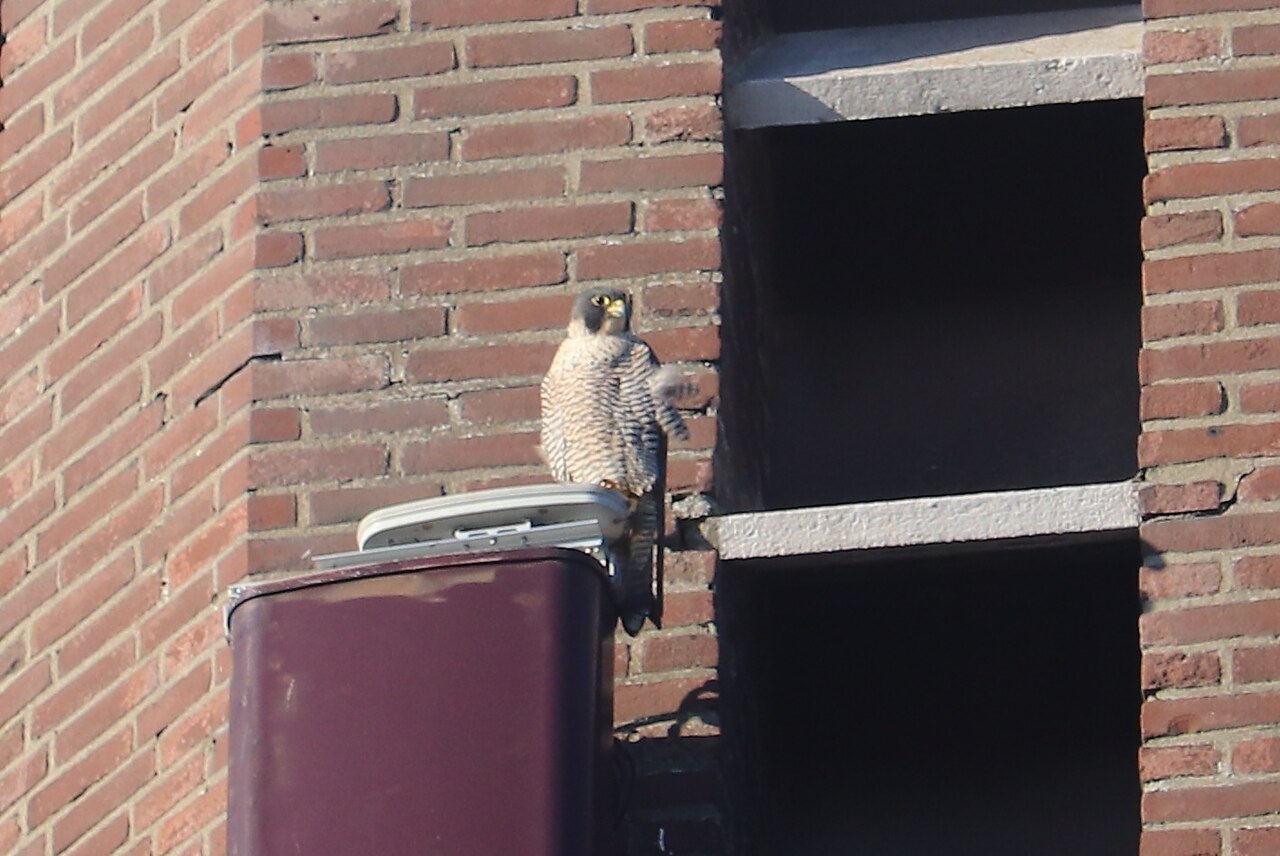
This is the falcon sound most people eventually hear, because peregrines now nest on bridges, cathedrals and office towers in dozens of American cities. The call is a flat, scraping “kak” repeated at roughly three notes a second, and it gets faster and higher as the threat closes in. A bird will keep it up for 20 seconds or more while stooping at a gull, a raven or a window cleaner. Both sexes give it, with the female’s version noticeably deeper. If you hear it downtown in May, look up at the nearest ledge rather than at the sky.
The Kestrel’s “Killy-Killy” Chatter

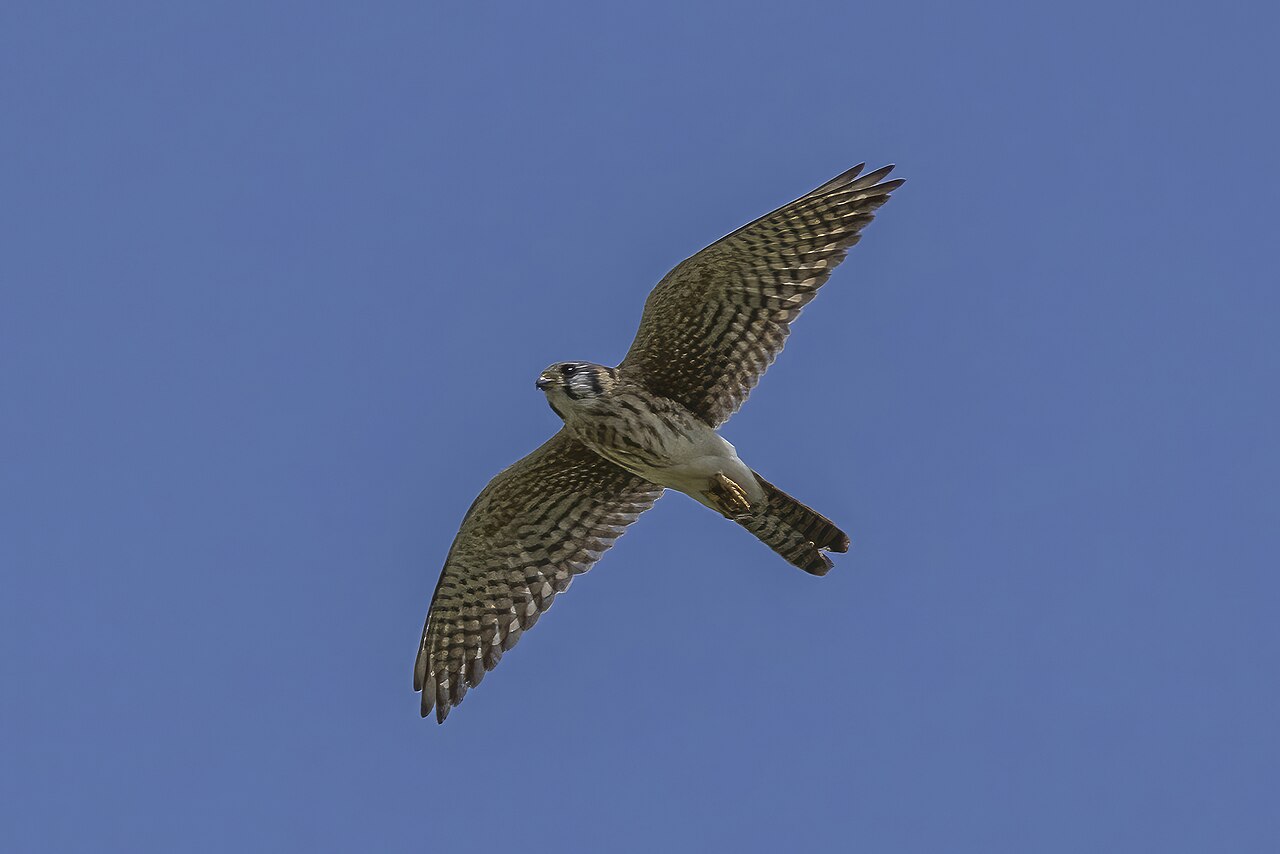
The American Kestrel is the falcon in the open country, and its call is the one most often heard away from a nest. It is a shrill, clipped series usually written “killy-killy-killy”, three to six notes delivered in about a second, thinner and higher than a peregrine’s kak. Kestrels use it as an alarm, as a contact call between a pair, and when one is displaced from a hunting perch. Because the bird is only robin sized, the sound is far louder than the silhouette suggests, and people regularly report it as a hawk screaming.
Courtship Calls: The Eechip and the Creaky Wail
Courtship sounds are quieter and stranger than alarm calls. Peregrines use a two part “ee-chip” during ledge displays and food transfers, a creaking note followed by a sharper one, repeated softly while the pair faces each other. There is also a long, wavering wail, used between mates across a distance and sometimes by a female soliciting food. Both belong mostly to February through April, before eggs are laid, and both are easy to miss from street level. A nest camera microphone picks up more of this repertoire than any amount of time on the ground.
What Young Falcons Sound Like
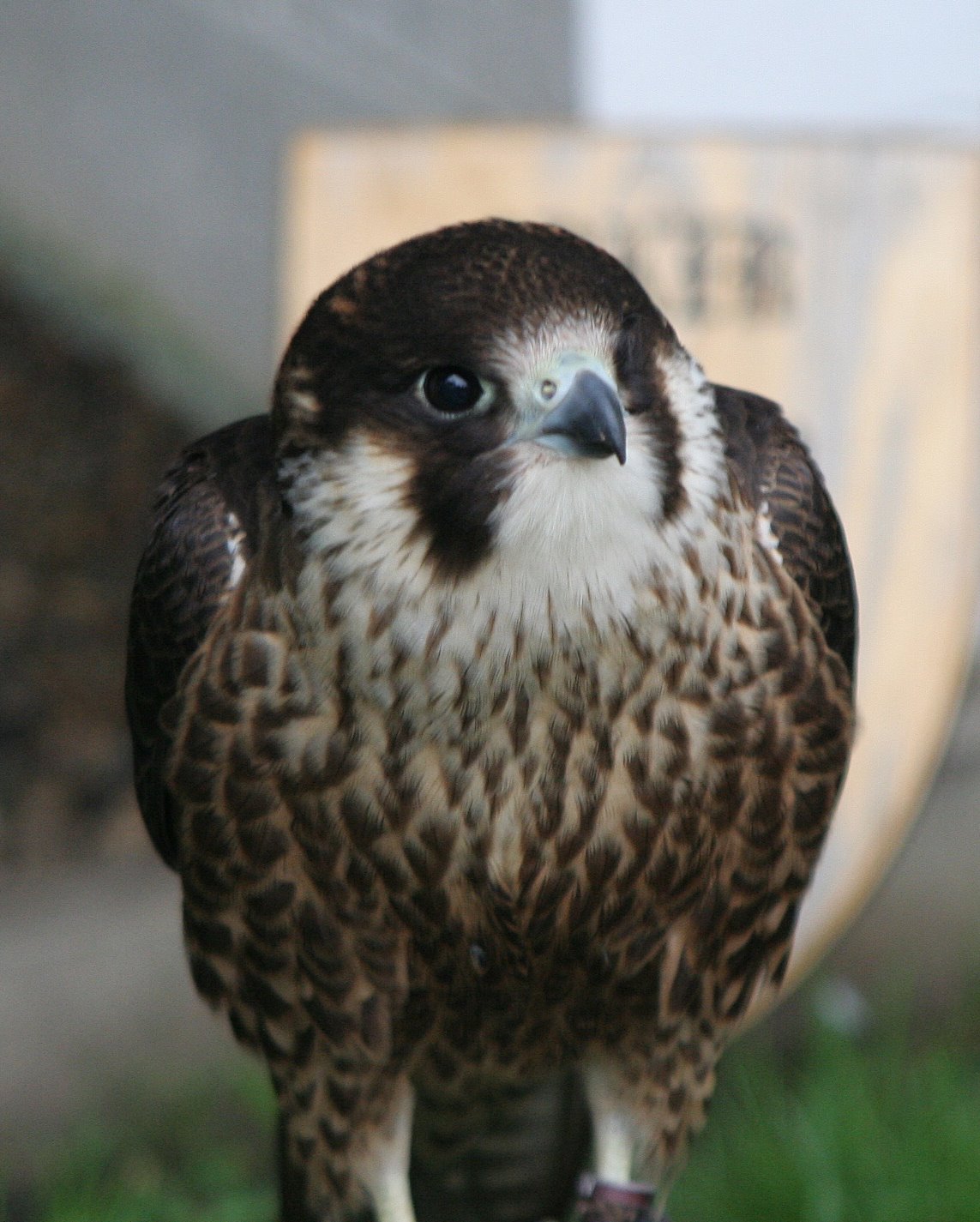
Nestling falcons are loud and unmusical. Small downy young give a thin wheezy peep, and by three weeks it coarsens into a rasping “chup” delivered in bursts whenever an adult arrives with prey. Fledglings are louder still: a newly flying peregrine will beg almost continuously for days, a harsh grating call that carries several blocks and often gets reported as an injured bird. It is normal, and it tapers off as the young start catching their own food. The begging peaks in late June and early July across most of the United States.
The Wail: A Long Falcon Cry
Falcons do have one extended call, and it is nothing like the eagle scream of the movies. The wail is a hoarse, rising and falling cry lasting about a second, repeated every few seconds, and it reads as plaintive rather than fierce. Peregrines and Prairie Falcons (Falco mexicanus) use it between widely separated mates and around a nest when a partner is late returning. Because it is slower than the kak series, people often assume it comes from a larger bird, and reports of “an eagle calling” in falcon country usually turn out to be this sound.
How Can You Tell a Falcon From a Hawk by Sound?
Rhythm separates them faster than pitch does. Falcons deal in fast staccato series, several notes per second, each note short. Buteo hawks like the Red-tailed Hawk give a single drawn out raspy scream lasting two to three seconds, with long gaps. Accipiters are the confusing middle ground: a Cooper’s Hawk’s “cak-cak-cak” is genuinely close to a peregrine’s, though a little slower and more nasal. If the sound is one long note, it is almost certainly not a falcon. If it is a rapid burst of identical short notes, falcon or accipiter are both live possibilities.
When You Hear Each Call Through the Day and the Year
Falcon vocal activity is tightly seasonal. February to April carries the courtship notes, May to July the alarm calls and begging, and from August onward most birds fall almost completely silent through migration and winter. Kestrels are the exception and call all year. Within a day, the first two hours of light are the most vocal, with a second smaller peak before dusk. A falcon hunting in open air rarely makes a sound, since noise would cost it the element of surprise, so repeated calling nearly always means a nest, a rival or a fledgling nearby.
What It Means When a Falcon Hangs Around Your Yard
A falcon spending days near a house is almost always there for the food, and in suburbs that means your bird feeder or a pigeon flock on a roof. Kestrels also sit on wires to hunt grasshoppers and voles over mown grass. The visitor itself is harmless to people and pets of any normal size, though songbirds will desert the feeders for a week or two. If you would rather it moved on, take the feeders down for ten days; the prey disperses and the falcon follows. Ground nesting birds such as quail coveys react to the same pressure by going silent.
Sounds People Mistake for a Falcon
The movie “eagle cry” is a Red-tailed Hawk, dubbed over footage of eagles and falcons for decades, and it is the single biggest source of confusion. Bald Eagles themselves make a weak chattering whistle, covered in our guide to bald eagle sounds. Blue Jays imitate hawk calls well enough to clear a feeder. Gulls on a city roof produce rapid repeated notes that read as falcon from three blocks away. Nocturnal screeches are owls rather than falcons, since falcons do not hunt in the dark; birds that sound like owls covers those.
Can Falcon Sounds Be Used to Scare Birds Away?
Recorded falcon calls work for a few days and then stop working. Pigeons, starlings and gulls habituate quickly once no attack follows the sound, and the cycle is usually measured in under a week at a fixed speaker. Commercial bird control gets around this by rotating several distress and predator sounds, moving the speaker, and in serious cases flying live falcons, which is why airports and landfills hire falconers rather than buying a sound system. Our overview of bird deterrent sounds sets out what holds up over a full season.
Where to Hear Verified Falcon Recordings
Identification by ear needs reference clips tied to a place and a date, not a video captioned “falcon scream”. The Cornell Lab of Ornithology publishes verified recordings for each North American falcon at All About Birds, with separate tracks for alarm, courtship and begging calls. Archives maintained by universities and state wildlife agencies carry the same material. Compare your own phone recording against two or three reference tracks of the same call type before you commit to a species, because the difference between a Merlin and a kestrel is tempo rather than tone.
Related reading: Peregrine Falcon Sounds.
Frequently Asked Questions
What is the falcon cry used in movies?
It is the scream of a Red-tailed Hawk, a two to three second rasping “kee-eeee-arr” that sound libraries have used for eagles, falcons and hawks for generations. No falcon makes that sound. If you grew up with it, the real peregrine call sounds disappointingly small, more like a scolding than a battle cry.
Do falcons scream like eagles?
Neither bird screams in the way films suggest. Bald Eagles give a thin stuttering whistle that most people find anticlimactic, and falcons give rapid harsh series or a hoarse wail. The closest thing to a scream in a falcon’s repertoire is the long wail, and it is quieter and more mournful than any movie cry.
Can a hawk pick up a 20 lb dog?
No. A Red-tailed Hawk weighs about 2 to 4 lb and can carry only a fraction of its own weight in flight, so a few pounds at most. Even the largest North American raptors cannot lift a 20 lb animal. Raptors have injured very small pets on the ground, but carrying one off is not physically possible.
Can I shoot a hawk or falcon if it threatens my pet?
No. Every native falcon and hawk in the United States is protected under the Migratory Bird Treaty Act, and shooting, trapping or harassing one is a federal offense with substantial penalties. Report persistent conflicts to the US Fish and Wildlife Service or your state wildlife agency, which can issue permits or advise on deterrents.
What does the Bible say about falcons?
Falcons appear in the dietary lists of Leviticus 11 and Deuteronomy 14, among the birds of prey the text sets aside as not to be eaten. The exact bird behind the Hebrew word is uncertain and translations vary between falcon, kite and buzzard. Elsewhere scripture uses birds of prey mainly as images of sharp sight and swift descent.
How can you tell a falcon call from a machine gun like rattle?
Falcon series are made of distinct separable notes you can count, usually three to six per second. A true mechanical rattle blurs into one continuous sound, and in North American woodland that is normally a woodpecker drumming on metal. Our guide to the bird that sounds like a machine gun covers that case in detail.