Types of Owls in Virginia: A Complete Guide
Virginia is home to several types of owls, including the great horned owl, barred owl, eastern screech-owl, barn owl, and the tiny northern saw-whet owl. These fascinating nocturnal birds of prey can be found in the state’s mountains, forests, swamps, and wooded suburbs. This guide covers how many owls live in Virginia, the common species, how to tell them apart, where to see them, and how to find owls in the state.
| Owl | Key Features in Virginia |
|---|---|
| Great Horned Owl | Large, ear tufts, deep hoots |
| Barred Owl | Common, dark eyes, who-cooks call |
| Eastern Screech-Owl | Small, ear tufts, trilling call |
| Barn Owl | Pale, heart-shaped face |
| Northern Saw-whet Owl | Tiny, mountains, tooting call |
| Short-eared Owl | Open country, flies by day |
| Long-eared Owl | Slim, long ear tufts, rare |
How Many Types of Owls Live in Virginia?
Virginia hosts several species of owls, most as year-round residents, ranging from large, powerful hunters to tiny forest owls. The most familiar are the great horned owl, a large owl with prominent ear tufts, and the barred owl, an abundant owl of forests and wooded swamps known for its distinctive call. The small eastern screech-owl is common in wooded neighborhoods, and the pale barn owl haunts open country and structures. In the mountains of western Virginia, the tiny northern saw-whet owl can be found, and the short-eared owl visits open country and coastal areas in winter, while the long-eared owl is a rare visitor. Owls are birds of prey, mostly active at night, with excellent hearing and vision, silent flight, and sharp talons. Virginia’s diverse landscape, from the Appalachian Mountains to the piedmont and coastal plain, supports this diversity. Understanding the owls of Virginia begins with these species, part of the wider group covered in our guide to types of owls.
Common Owls in Virginia
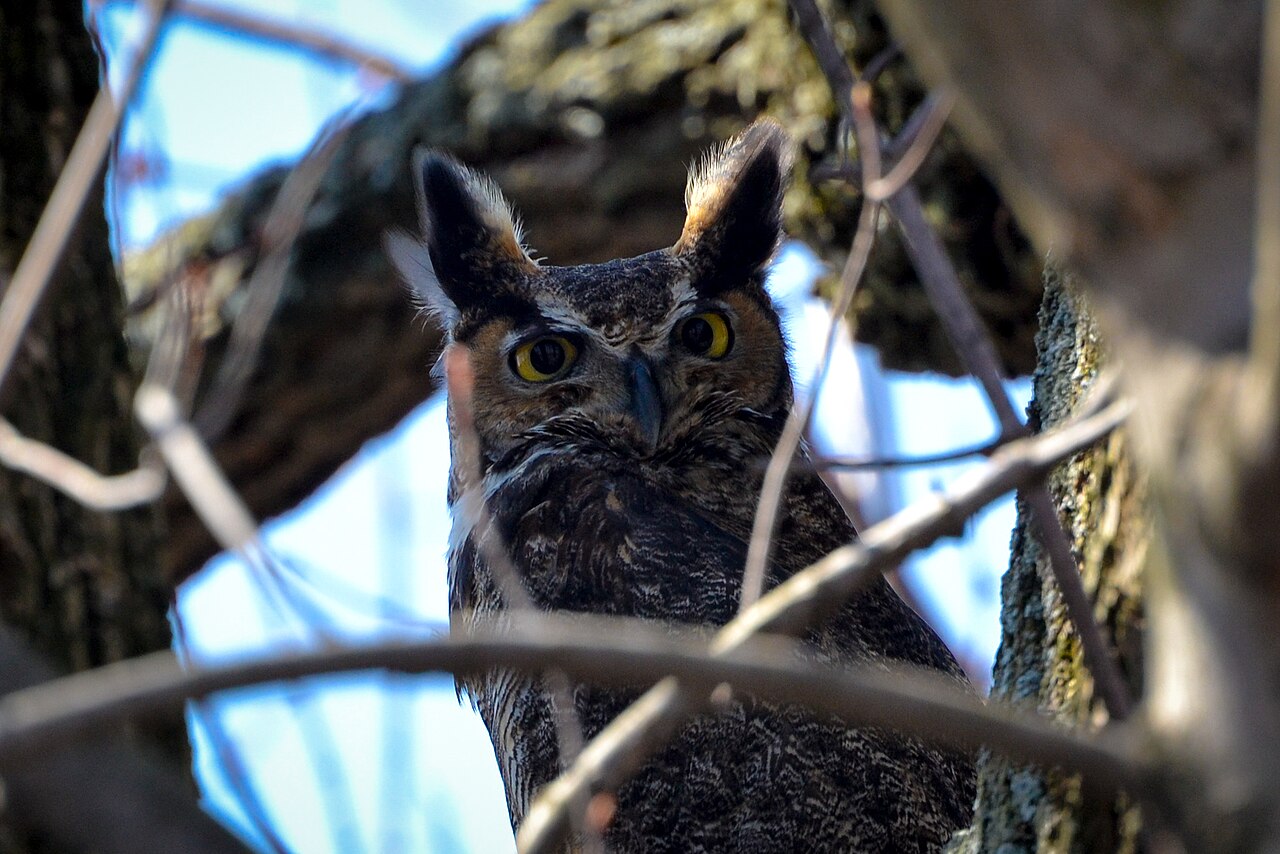
Several owls are especially notable in Virginia. The great horned owl is a large, powerful owl with prominent ear tufts, yellow eyes, and deep hooting calls, found in many habitats and capable of taking sizable prey. The barred owl is perhaps the most commonly encountered owl in Virginia, a round-headed, dark-eyed owl of bottomland forests, wooded swamps, and river bottoms, famous for its rhythmic call often described as “who cooks for you.” The eastern screech-owl is a small owl with ear tufts, occurring in gray and reddish color forms, that lives in wooded areas and neighborhoods and gives a trilling or whinnying call. The barn owl is a pale, ghostly owl with a distinctive heart-shaped face, nesting in barns, silos, and nest boxes. The northern saw-whet owl is a tiny, secretive owl found in the western Virginia mountains, and the short-eared and long-eared owls round out the group, the short-eared owl hunting over open ground and coastal marshes in winter. Each owl has its own look and voice, as explored in our guide to owl symbolism.
How to Tell Virginia Owls Apart
Telling Virginia’s owls apart is easier when you use size, head shape, eye color, and voice. Start with size, since the great horned owl is large, the barred and barn owls are medium-sized, the screech-owl and long-eared owl are small, and the saw-whet owl is tiny. Look for ear tufts, which the great horned owl, screech-owl, and long-eared owl have but the barred, barn, short-eared, and saw-whet owls largely lack. Note eye color, since the barred owl has dark brown eyes while most other Virginia owls have yellow eyes, and the barn owl’s heart-shaped white face is unmistakable. Voice is very helpful, from the great horned owl’s deep hoots to the barred owl’s “who cooks for you,” the screech-owl’s trill, and the saw-whet owl’s tooting. Habitat and behavior help too, since the short-eared owl hunts over open ground, sometimes by day, and the saw-whet is a mountain bird. By combining size, ear tufts, eye color, face shape, and voice, you can identify Virginia’s owls, as explored in our guide to types of hawks in Virginia.
Where to See Owls in Virginia
Owls can be found throughout Virginia in a range of habitats, depending on the species. The great horned owl occurs in forests, wooded edges, and open areas across the state, and the barred owl inhabits bottomland forests, wooded swamps, river bottoms, and even wooded suburbs, where it is often heard. The eastern screech-owl lives in wooded neighborhoods, parks, and forests, readily using nest boxes, while the barn owl favors open country, farmland, and marshes, nesting in structures. The northern saw-whet owl is found in the higher-elevation forests of the western Virginia mountains, especially in winter, and the short-eared owl hunts over open fields, marshes, and coastal areas in winter. Virginia’s mix of mountains, piedmont, and coastal plain, with abundant forests, swamps, and farmland, provides excellent owl habitat. Because owls are mostly nocturnal, patience and listening at dusk and night are key, though the short-eared owl can be seen hunting in daylight. The state’s varied habitats make it a rewarding place for owls, as detailed in our guide to types of woodpeckers in Virginia.
How to Find Owls in Virginia
Finding owls in Virginia is rewarding with the right approach, since most are active at night. Listening is one of the best strategies, since owls are often heard before they are seen, so going out at dusk and after dark to listen for their calls can reveal their presence, from the great horned owl’s deep hoots to the barred owl’s “who cooks for you” and the screech-owl’s trill. Owls often call more in late winter and early spring during the breeding season. Looking for owls at dusk and dawn, when some are active, and scanning likely perches such as tree branches, snags, and posts can produce sightings. During the day, you can sometimes find roosting owls by watching for mobbing songbirds that gather to scold a hidden owl, or by checking known roost sites, and the short-eared owl can be seen hunting over open ground on winter afternoons. Respecting owls by keeping your distance and avoiding disturbance is important. With patient listening and looking, you can enjoy Virginia’s owls, as reflected in our guide to bird symbolism.
The Great Horned Owl, Virginia’s Powerful Predator

The great horned owl deserves special attention as one of Virginia’s most formidable birds. According to the Cornell Lab of Ornithology, the great horned owl is a large, powerful owl with prominent ear tufts, and it is one of the earliest nesting birds, often laying eggs in late winter. In Virginia, this impressive owl is found in forests, woodlots, and edges across the state, where its deep, soft hooting carries through the winter woods, often beginning in the cold months when the owls are already establishing nests and courting. The great horned owl is a fierce and adaptable hunter, taking a wide range of prey from mice and rabbits to skunks and other birds, thanks to its powerful talons and silent flight. Its early nesting means that by late winter, pairs are often already incubating eggs while cold weather still grips the landscape. The great horned owl’s power, wide diet, and haunting hoots make it a remarkable Virginia owl, as explored in our guide to owl symbolism.
The Ecological Role of Virginia’s Owls
Virginia’s owls play a valuable role in the environment, and appreciating it adds to their appeal. As nocturnal predators, owls help control populations of rodents, insects, and other small animals, providing natural pest control that benefits both wild habitats and areas near people. The great horned owl takes a wide range of prey, while smaller owls like the eastern screech-owl focus on insects and small creatures. Owls occupy an important place in the food web, and their presence is a sign of a functioning ecosystem with enough prey to support these predators. Because some owls, like the barn owl, depend on open habitats and nest sites, protecting their homes matters for keeping owls part of Virginia’s landscape. Valuing owls for their ecological role, as well as their beauty and haunting calls, deepens the enjoyment of encountering these fascinating birds across the state.
Frequently Asked Questions
How many types of owls are in Virginia?
Virginia hosts several owl species, including the great horned owl, barred owl, eastern screech-owl, barn owl, northern saw-whet owl, short-eared owl, and long-eared owl.
What is the most common owl in Virginia?
The barred owl is one of the most commonly encountered owls in Virginia, found in forests, swamps, and river bottoms, and known for its “who cooks for you” call.
What is the smallest owl in Virginia?
The northern saw-whet owl is the smallest owl in Virginia, a tiny, secretive owl found in the high-elevation forests of the western mountains, known for its tooting call.
What is the largest owl in Virginia?
The great horned owl is the largest common owl in Virginia, a powerful bird with prominent ear tufts, yellow eyes, and deep hooting calls, found in many habitats.
How do you tell Virginia owls apart?
Use size, ear tufts, eye color, and voice. The barred owl has dark eyes and no ear tufts, the great horned owl has ear tufts, and the barn owl has a heart-shaped face.
How do you find owls in Virginia?
Listen at dusk and night for their calls, especially in late winter, watch likely perches at dawn and dusk, and look for songbirds mobbing a hidden owl by day.
Where can you see owls in Virginia?
Owls live in forests, swamps, river bottoms, farmland, mountains, and coastal areas across Virginia. The saw-whet owl favors the western mountains in winter.