Heron Symbolism: What It Means to See One, Tradition by Tradition
Seeing a heron is traditionally read as a sign to stand still and wait, because the bird’s whole method is patience held long enough to pay off. Heron symbolism across cultures circles the same three ideas: stillness that is active rather than passive, self-reliance at the water’s edge, and the ability to move between worlds, since a heron belongs to air, land and water at once.
That makes the heron an unusual omen bird. It is not read as luck arriving or luck leaving, but as a comment on timing: you are either waiting well or waiting badly. This guide separates the traditions that use the heron, takes the common sighting situations one by one, and keeps belief labeled as belief.
A heron symbolizes patience, self-reliance and the crossing of boundaries between water, land and air. Seeing one is traditionally read as a sign that stillness is working in your favor and that acting too early would cost you. In Celtic and East Asian traditions it also carries messages about thresholds and purity.
| Situation | Traditional reading |
|---|---|
| Standing still at water | Keep waiting, the timing is not yet yours |
| Flying overhead | A change of position or place is near |
| In your yard or on a pond | Self-reliance at home, resources are enough |
| At night (night heron) | Something hidden is being worked out quietly |
| Seen repeatedly | A decision is waiting on your patience, not on luck |
| Found dead | The end of a long period of waiting |
| In a dream | Solitude read as strength rather than loneliness |
What Does Seeing a Heron Signify?
A heron sighting is read as confirmation that your current patience is deliberate rather than avoidance. The bird hunts by standing in shallow water for long stretches and striking once, so folk readings treat it as the opposite of hustle: the result comes from position and timing, not from effort visible to onlookers.
The second common reading is independence. Herons hunt alone even when they nest in colonies, and that mix of solitary work and communal roosting is often applied to people who need both. A third layer comes from the habitat itself, since the shoreline is a boundary, and boundary animals are read as messengers in most traditions.
None of this is a prediction. The honest version is that the heron is a frame for a question you already have: are you waiting for a reason, or waiting because deciding is uncomfortable? Other birds answer differently, which the louder reading of blue jay symbolism makes clear.
Heron Symbolism in Native American Traditions

Among several Northeastern and Great Lakes peoples the heron is reported as a good sign for fishers and hunters, on the straightforward logic that a heron stands where the fish are. In those readings the bird marks competence and local knowledge rather than fortune, and killing one needlessly is treated as poor practice.
In Pacific Northwest coastal traditions the great blue heron appears in stories about patience and in crest and carving imagery tied to water, and in some Plains traditions long-legged water birds carry messages between the surface world and what lies beneath it. These are distinct tribal beliefs, each belonging to a specific nation, and not a single shared doctrine.
What travels across them is the same emphasis: the heron is respected for method, not feared as an omen. That separates it from predator symbols, where the sighting itself is the message, as with rattlesnake symbolism.
Heron Symbolism in Christianity and the Bible
The heron appears in the Bible, and not flatteringly. In Leviticus 11:19 and Deuteronomy 14:18 the heron is listed among the birds the law treats as unclean and not to be eaten, grouped with the stork and the hoopoe. That is a dietary ruling rather than a moral verdict, and the texts give the heron no symbolic role beyond it.
Later Christian tradition was friendlier. Medieval bestiaries read water birds that fly high above storms as figures of the soul that keeps its mind on heaven, and the heron’s solitary habits were sometimes used in sermons as an image of the hermit’s life. These are commentary traditions, not scripture.
In Christianity the bird most associated with Jesus is the dove, which descends at his baptism as the Holy Spirit. The pelican is the classic medieval emblem of his sacrifice, and the robin carries the folk legend of the crucifixion. The heron belongs to none of those, which is why Christian heron symbolism stays thin compared with cardinal symbolism.
The Heron in Celtic and Irish Folklore

Irish folklore gives the heron a sharper character than most traditions do. The grey heron, corr éisc in Irish, appears as a solitary, slightly uncanny bird of the water’s edge, and folk accounts link it to the Cailleach, the old woman of winter, who was said to take the shape of a long-legged water bird. Seeing one at dusk was read in some districts as a bad sign and in others simply as a sign of hard weather.
Older Irish and Welsh material also treats the bird as a threshold creature, suitable for oaths and warnings because it belongs to no single element. Several tales involve a woman transformed into a heron, which places the bird among the shape-change stories rather than among the luck birds.
One caution for anyone researching this: medieval sources use heron and crane almost interchangeably, and the famous Irish legends about Saint Columba and about the crane bag belong to the crane. If a Celtic heron story mentions a saint or a bag of treasures, check it against crane symbolism first.
Heron Symbolism in East Asian Traditions
In Japan the white heron or egret, shirasagi, is a symbol of purity and grace, and the image is strong enough that Himeji Castle is known as the White Egret Castle for its resemblance to the bird in flight. Herons appear throughout Japanese painting and poetry as figures of elegant restraint, and in some folk tales as a shape-shifting woman who repays a kindness.
Chinese symbolism gives the heron and egret associations with purity, longevity and advancement, and pairs them with lotus imagery in art. Here too the crane carries most of the weight: it is the bird of immortality and of the Daoist immortals, so a “heron” in a translated Chinese poem is often a crane in the original.
The practical takeaway is that East Asian traditions read the heron as beautiful and auspicious rather than ominous, which is close to the opposite of the Irish reading of the same bird.
Blue Heron, Grey Heron and Night Heron Meanings
Great blue heron symbolism, the most searched version in North America, follows the general heron meaning with an added emphasis on self-determination, because the bird is large, solitary and hard to displace. Blue is also read as a calming color, so blue heron sightings get framed as reassurance rather than warning.
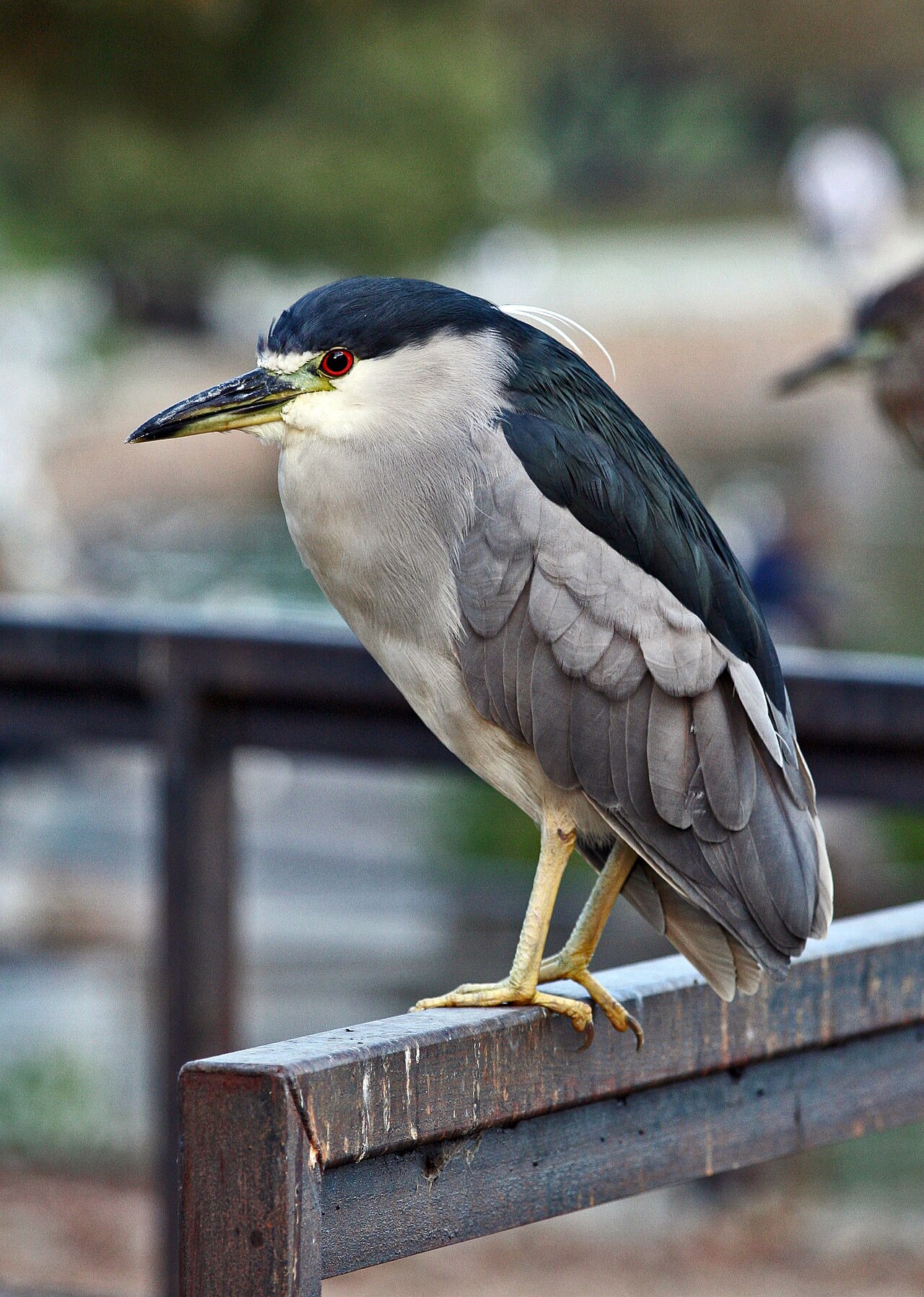
The grey heron carries the European and Irish load described above, more weather and threshold than comfort. The black-crowned night heron is the interesting case: it hunts at night, sits hunched and still by day, and gives a short barking call in the dark. Folk readings tie it to work done out of sight, to intuition and to secrets, and its Latin name Nycticorax means night raven, which pulls in some of the imagery of blackbird symbolism.
What It Means to See a Heron in Different Situations
Standing still in shallow water is the classic reading: wait, your timing has not arrived. A heron flying overhead, neck tucked and wingbeats slow, is read as movement coming, often a change of place or position rather than a change of fortune. A heron in your yard or on your pond is taken as a note about self-reliance, that the resources you have are enough for now.
A heron seen at night, almost always a night heron, is read as something being resolved quietly and out of view. Repeated sightings in the same week are treated as emphasis, not as escalation. A dead heron is read as the end of a long wait rather than as a threat, and a heron in a dream is usually interpreted as solitude reframed as capability.
Heron as Spirit Animal, Totem and Power Animal
As a spirit animal the heron is associated with people who work alone, move slowly and are underestimated for both. As a totem it is tied to boundaries: knowing where your water ends, and standing in it without apology. As a power animal it is called on for patience under pressure and for the single decisive move after a long wait.
Oracle decks and modern spirit animal writing often add balance and emotional depth, drawing on the bird’s life between elements. That material is contemporary rather than traditional, and it is worth knowing which is which. The broader framework sits in our overview of bird symbolism.
Are Herons Good Omens, and How Rare Is a Sighting?
Most traditions read the heron as neutral to positive, so calling it a good omen is defensible in East Asian and many Native American contexts and harder to defend in Irish folklore, where it leans uncanny. The honest answer is that the heron is a mirror bird: the reading depends on whether your current waiting is deliberate.
Statistically, a heron sighting is not rare at all. The great blue heron is found across almost all of the United States and southern Canada year-round or seasonally, and the grey heron is one of the most widespread large birds in Europe. Both thrive near ponds, ditches, rivers and golf courses. Range and behavior details for North American species are published by the Cornell Lab at All About Birds. If a sighting feels meaningful, that is about attention rather than scarcity.
Related reading: Great Blue Heron Symbolism.
Frequently Asked Questions
What does seeing a heron signify?
It is traditionally read as a sign that patience is working in your favor and that acting too early would cost you. Secondary readings cover self-reliance and the crossing of boundaries. The sighting is treated as a comment on timing rather than a prediction of an event.
Are herons good omens?
In Japanese, Chinese and several Native American traditions, yes. In Irish folklore the grey heron is more ambiguous and sometimes read as a sign of hard weather or of an uncanny presence. There is no single tradition that settles it, so the context you are using matters.
What does the Bible say about herons?
Leviticus 11:19 and Deuteronomy 14:18 list the heron among birds the law classifies as unclean and forbidden as food, alongside the stork and the hoopoe. Scripture assigns the heron no further symbolic role. Positive Christian heron imagery comes from later bestiaries and sermons.
What is the spiritual meaning of the black-crowned night heron?
Because it hunts after dark and stays motionless by day, the night heron is read as a symbol of work done out of sight, of intuition and of secrets kept well. Its genus name Nycticorax means night raven, which attaches some raven and shadow imagery to it.
How rare is it to see a heron?
Not rare. Great blue herons occur across nearly all of the lower 48 states, and grey herons are common across Europe and much of Asia. Any pond, slow river, marsh or drainage ditch with fish can hold one, so a sighting is a matter of looking rather than luck.
What do grey herons eat?
Mainly fish, taken by standing still and striking. They also take frogs, newts, crayfish, insects, small snakes, voles, rats and the occasional duckling or small bird. A heron swallows prey whole, head first, which is why large fish are sometimes dropped after a struggle.