Flamingo Symbolism: Meaning, Omens and What It Means to See One
Seeing a flamingo is traditionally read as a sign to stand out rather than blend in, and in most symbolic systems it points to balance, open display of emotion and the confidence to be seen. The bird’s one legged stance, its flock loyalty and its pink color carry that meaning across folklore, Christian allegory and modern spiritual practice.
Flamingo symbolism is unusual because it runs on two tracks at once. There is the older layer of myth and religious imagery, and there is a thoroughly modern American layer built on lawn ornaments, where a plastic pink flamingo can mean a birthday prank, a swinger household or nothing at all. Both layers are covered below, separated so you can tell which one you are actually looking at.
The flamingo symbolizes balance, emotional openness, community and self confidence. Seeing one is commonly read as an omen to stop hiding, trust your footing in an unstable situation and show your true colors. In Christian readings it carries resurrection and divine love, while in modern American culture the pink lawn flamingo has its own separate meanings.
What Does the Flamingo Symbolize?
Across traditions the flamingo carries four consistent meanings: balance, visibility, community and emotional honesty. The balance comes from the one legged resting posture, which many cultures read as the ability to stay steady while standing on very little. The visibility comes from a color no other large bird in the wild shares.
Community matters just as much. Flamingos cannot breed successfully in small groups and need the stimulus of a large flock to come into condition, a fact modern readings use to argue that the bird represents belonging rather than isolation. People drawn to flamingo symbolism are often told they are being asked to find their flock rather than to go it alone, a reading that parallels the social meanings attached to crane symbolism.
Flamingo Symbolism in Native American Traditions
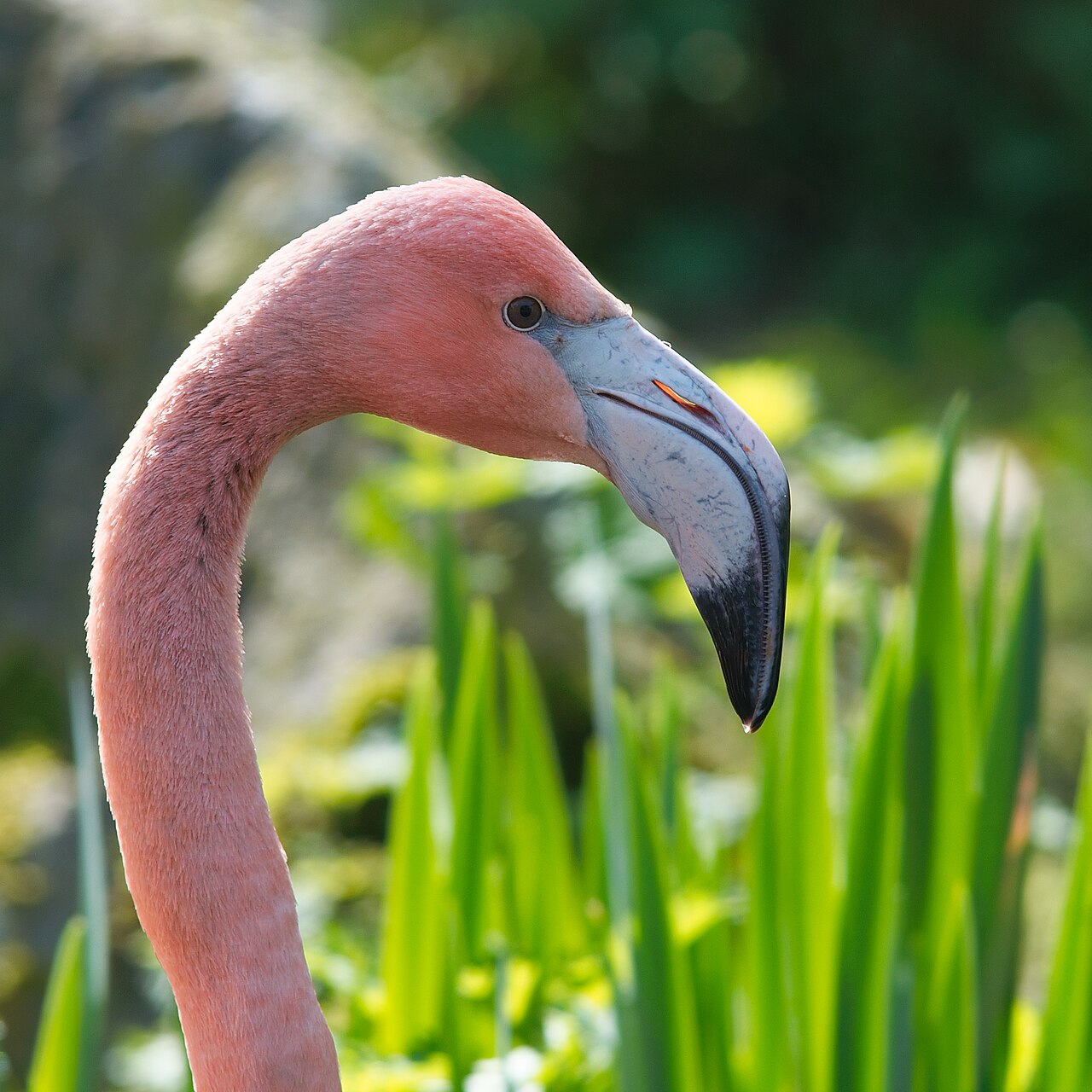
Flamingos are not native to most of North America, so they are largely absent from the folklore of tribes north of Florida and the Caribbean. Claims that Lakota or Cherokee tradition assigns a specific meaning to the flamingo should be treated with caution, because the bird was not part of the landscape those traditions describe.
Where flamingos do appear is in Caribbean and Central American indigenous imagery, and in the art of the Moche and other Andean peoples who lived alongside the Chilean and Andean flamingo. In Andean contexts the bird is associated in some accounts with high altitude salt lakes, endurance in harsh ground and the sun, since the flocks arrive and depart with seasonal water. These are regional beliefs rather than a pan indigenous meaning.
Christian and Biblical Meaning of the Flamingo
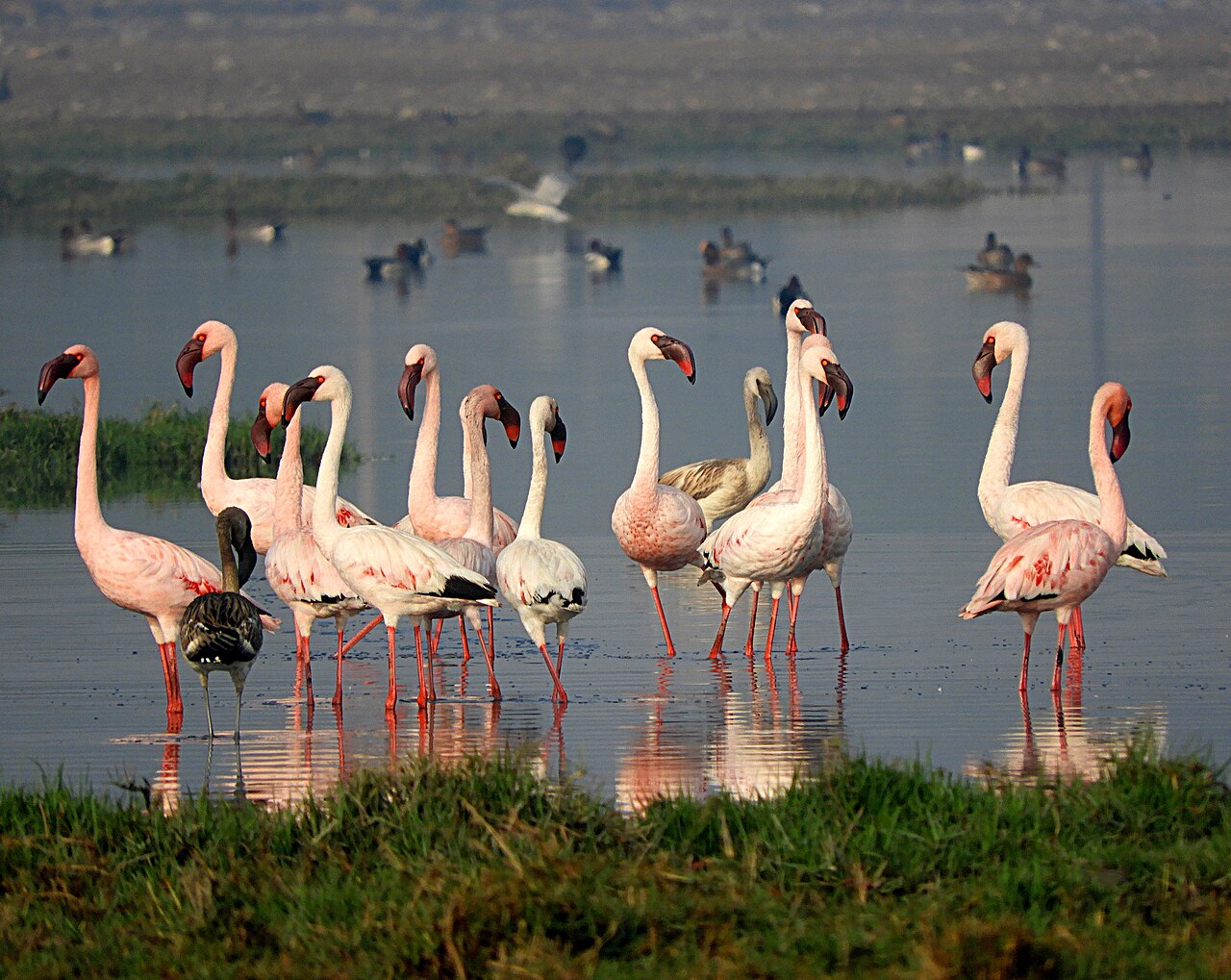
The flamingo is not mentioned by name in the Bible, though it falls under the general category of wading birds listed as unclean in Leviticus 11 alongside the heron and the stork. That absence has not stopped a rich Christian symbolic tradition.
In medieval bestiaries and later devotional art the flamingo stood in for the phoenix on occasion, borrowing resurrection imagery from the bird’s fiery color. Some Christian writers also read the pink plumage as a symbol of divine love and of Christ’s blood, and the bird’s habit of feeding its chick with a red crop secretion was interpreted much like the pelican legend, as self sacrifice for the young. These readings are allegorical traditions, not statements of doctrine.
Celtic and European Folklore
Celtic tradition has no flamingo lore for the same reason as most of North America: the greater flamingo (Phoenicopterus roseus) ranges into southern Europe but never reached Ireland or Britain in numbers. Anyone presenting a Celtic flamingo totem is inventing it.
Mediterranean Europe is different. Roman writers including Pliny the Elder recorded flamingo tongues as a luxury dish, and the bird became an emblem of extravagance and excess in Roman culture, a sense that survives faintly in the modern association of flamingos with kitsch and display. In Spanish and Camargue folk traditions the arrival of flamingo flocks has been read as a marker of seasonal change and of water returning to the marshes.
East Asian and Hindu Symbolism
In Hindu tradition the sacred bird of the lakes is the hamsa, usually translated as swan or goose, and the greater flamingo of Gujarat and Rajasthan is sometimes folded into that imagery. Where that association is made, the bird carries meanings of discernment and spiritual purity, and the vast flamingo colony of the Rann of Kutch has long held local significance.
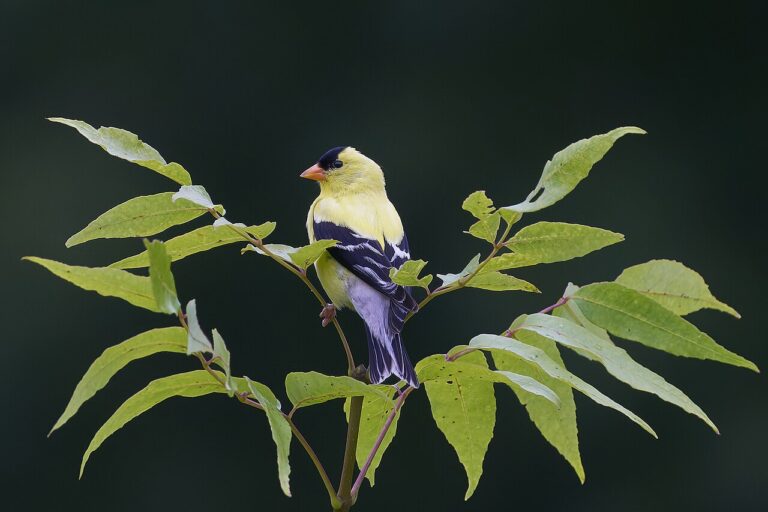
East Asian traditions generally assign the crane rather than the flamingo the role of longevity and good fortune, since flamingos do not occur naturally in China or Japan. Modern Chinese and Japanese flamingo imagery comes from zoos and from Western design, and tends to carry the contemporary meanings of glamour and celebration rather than inherited ones. Similar imported symbolism shapes how the American goldfinch is read outside its own range.
Flamingo Spirit Animal, Totem and Omen
As a spirit animal, the flamingo is described in contemporary practice as the teacher of emotional display, the opposite of the stoic animal guides. People who identify with it are told they process feeling publicly and heal by expressing rather than containing. The flamingo totem belongs to those who hold a group together socially, and the flamingo omen is usually read as a prompt about balance: something in your life is resting on one leg and needs attention before the footing shifts.
Those three terms are often used interchangeably online, but in most modern animal spirituality a spirit animal arrives temporarily with a message, a totem is a lifelong affiliation, and an omen is a single event read as a sign. The flamingo appears in all three roles, and in each case the core message is about showing yourself honestly rather than hiding, the same thread that runs through bird symbolism generally.
What It Means to See a Flamingo in Different Situations
Context changes the reading more than the bird does. The table below collects the interpretations most often given in contemporary practice, which should be understood as traditions of belief rather than established fact.
| Situation | Common interpretation |
|---|---|
| Flamingo in your yard or garden | A call to be more open with neighbors and community |
| Flamingo at the window | A message about a feeling you are keeping inside |
| Seeing one at night or in a dream | Emotional processing you are not doing while awake |
| Seeing flamingos repeatedly | A standing prompt to rebalance work, rest and relationships |
| Finding a dead flamingo | The end of a performance or role you no longer need |
| A single flamingo apart from the flock | Isolation that is chosen rather than imposed |
| A flock arriving together | Support coming from a group rather than one person |
Dream readings deserve a note of their own. Because flamingos stand in water, dream interpreters usually connect them to the emotional body, and the water’s state in the dream, calm or churning, is treated as more meaningful than the bird itself. The pattern mirrors how alligator symbolism is read when water appears in the same dream.
Pink Flamingos in the Yard: The Modern American Meanings
Do flamingos have a secret meaning on American lawns? Sometimes, and it is rarely spiritual. The plastic pink flamingo, designed by Don Featherstone in 1957, became a symbol of suburban kitsch, then of camp and irony, and finally of celebration. Flocking, where a group secretly fills someone’s yard with plastic flamingos overnight, is a common fundraiser and birthday prank, which is why someone may have put pink flamingos in your yard with no hidden message at all.
The pink flamingo theory is the internet claim that a flamingo ornament or a flamingo on a door signals a swinger household, and in some communities, particularly among RV and campground travelers, that code genuinely circulates. It is a local convention rather than a universal one, and the great majority of lawn flamingos in the United States are decoration. In LGBT slang the flamingo has at times been used for someone flamboyantly and unapologetically visible, which sits neatly beside the bird’s older symbolic meaning. For the family side of the bird’s imagery, see baby flamingos, and for a contrasting American yard omen, cardinal symbolism and blue jay symbolism are the two most asked about. Field data on wild American flamingos is collected by the National Audubon Society.
Frequently Asked Questions
Do flamingos have a secret meaning?
In symbolic traditions the flamingo openly means balance, visibility and community rather than anything hidden. The secret meaning people usually have in mind is the modern lawn ornament code, where a plastic flamingo can signal a party, a fundraiser prank or, in some circles, a swinger household.
What is the pink flamingo theory?
The pink flamingo theory is the claim that a pink flamingo ornament displayed outside a home or RV marks the residents as swingers. It circulates mainly in campground and RV communities and is not a widespread convention. Most lawn flamingos in the United States are simply decoration or a birthday prank.
What does a flamingo mean in swinging?
Within some swinger communities, especially among RV travelers, a pink flamingo displayed outside is used as a discreet signal that the household is open to meeting other couples. The code is informal and regional, so a flamingo is never reliable evidence on its own.
What does flamingo mean in slang LGBT?
Flamingo is occasionally used as affectionate slang for someone flamboyant, pink loving and unmistakably visible, usually gay men who make no effort to blend in. It is not widely established slang, and its tone depends entirely on who is using it and about whom.
What do flamingos in someone’s front yard mean?
Most often a celebration. Flocking a yard with plastic flamingos is a standard birthday prank and a common school or charity fundraiser, where the recipient pays to have them removed or passed on. Occasionally a permanently displayed flamingo is decoration, kitsch nostalgia or a local code.