Northern Flicker Symbolism: 6 Signs and Feather Meanings
Seeing a northern flicker is traditionally read as a signal to communicate what you have been holding back, because the bird’s loudest habit is drumming its message onto whatever surface carries farthest. Across folk and modern spiritual traditions the northern flicker spiritual meaning centers on expression, healing and the willingness to be heard.
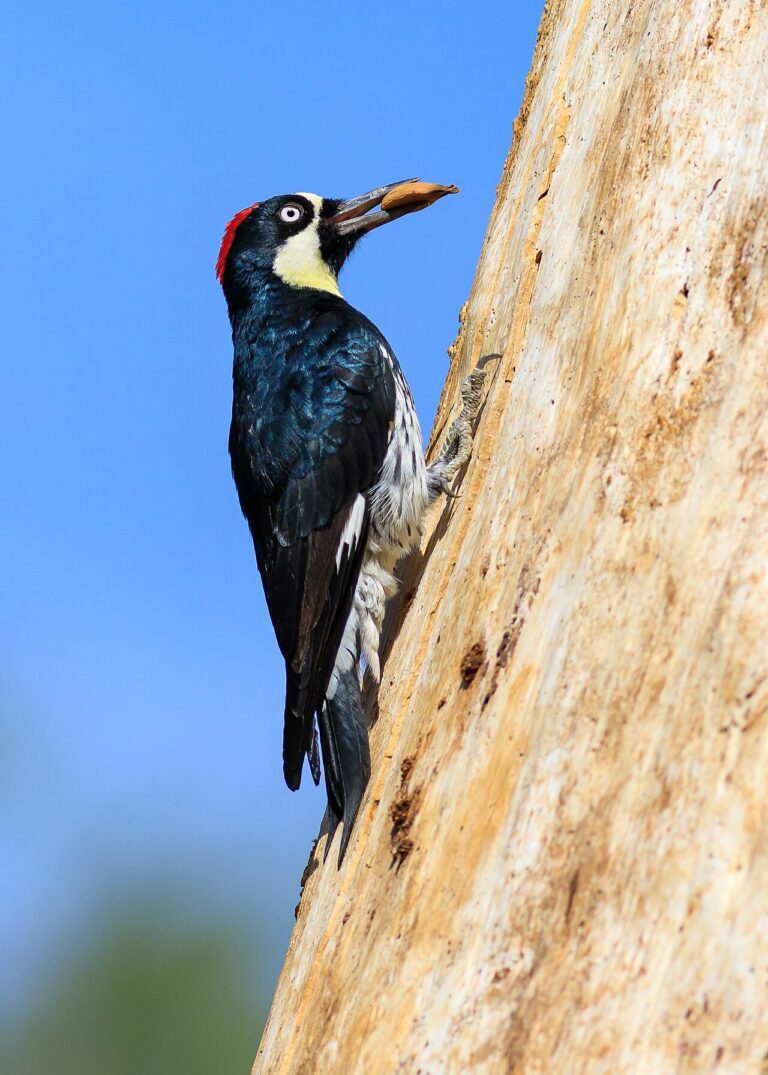
The bird itself helps the symbolism along. A northern flicker (Colaptes auratus) is a woodpecker that feeds on the ground, flashes a bright yellow or red underwing in flight, and hammers on metal gutters in spring loudly enough to wake a street. A creature that lives between categories tends to collect meanings about change.
The northern flicker symbolizes communication, healing, rhythm and new beginnings. Seeing one is widely read as a prompt to speak honestly or to start something you have delayed. Its feathers are associated with protection and good fortune, and its drumming is interpreted as a message arriving rather than a warning.
| Situation | Traditional meaning | Omen reading |
|---|---|---|
| Flicker in your yard | A message is on its way to you | Positive |
| Drumming on your house | Speak up, something needs saying | Urgent, not negative |
| Finding a flicker feather | Protection, good luck, guidance | Strongly positive |
| Flicker calling repeatedly | You are avoiding a conversation | A prompt |
| Flicker on the ground | Stay grounded while you change | Steadying |
| Flicker in a dream | Creative work wants attention | Encouraging |
What Is the Spiritual Meaning of the Northern Flicker Bird?
The spiritual meaning of the northern flicker bird is communication that cannot be ignored. Where other birds are read as messengers, the flicker is read as the message being delivered loudly, which is why most interpretations tie it to honesty, overdue conversations and creative expression that has been kept private.
A second theme is healing through rhythm. The flicker’s drumming is steady and repetitive, and practitioners connect it to drum practice, heartbeat and the idea that recovery happens through repetition rather than a single breakthrough. The bird is often invoked for people working slowly through something.
The third theme is adaptability. Flickers are woodpeckers that forage on the ground for ants, which makes them an odd fit in their own family, and readers take that as a sign that doing things differently from your peers is not a flaw. The same adaptability theme runs through bird symbolism generally.
Northern Flicker Feather Symbolism
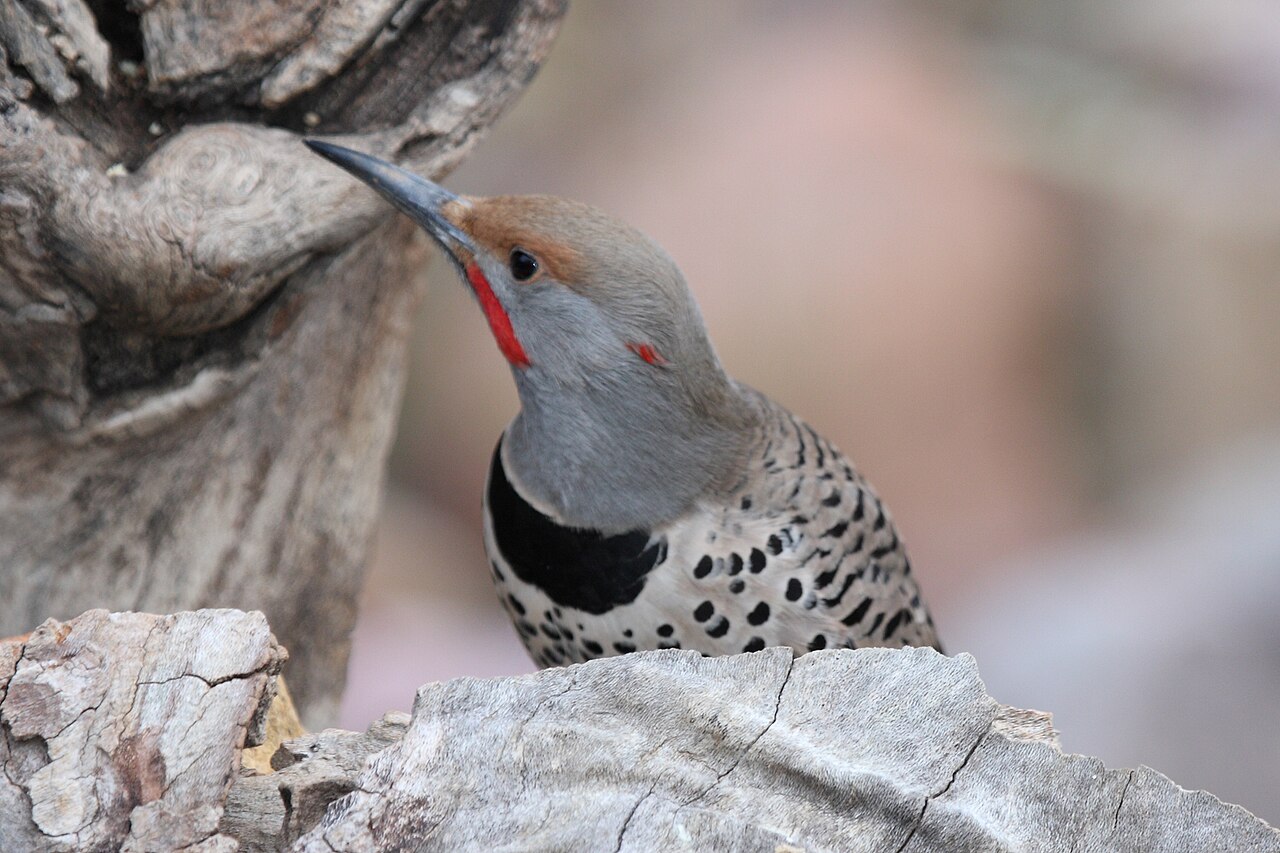
Flicker feathers are the most symbolically loaded part of the bird, read almost everywhere as protection and good luck. The shafts are vividly colored, and the color carries the specific meaning: red shafted flickers of the West and yellow shafted flickers of the East are the same species in two forms.
A red northern flicker feather is generally linked to vitality, courage and protective energy, while a yellow one is linked to clarity, optimism and communication. Brown feathers, the barred body plumage, are read as grounding and home. A white northern flicker feather is extremely rare, since it would come from a leucistic bird, and interpreters treat it as peace or a message from someone who has died. Black northern flicker feather searches usually describe the dark barring or the black crescent on the chest rather than a separate bird.
In love readings the flicker feather is taken as a sign to say the thing directly instead of hinting. For an identification check on which bird dropped the feather you found, compare the plumage on female northern flickers, which lack the male’s mustache stripe.
Drumming on Your House: Message or Nuisance?
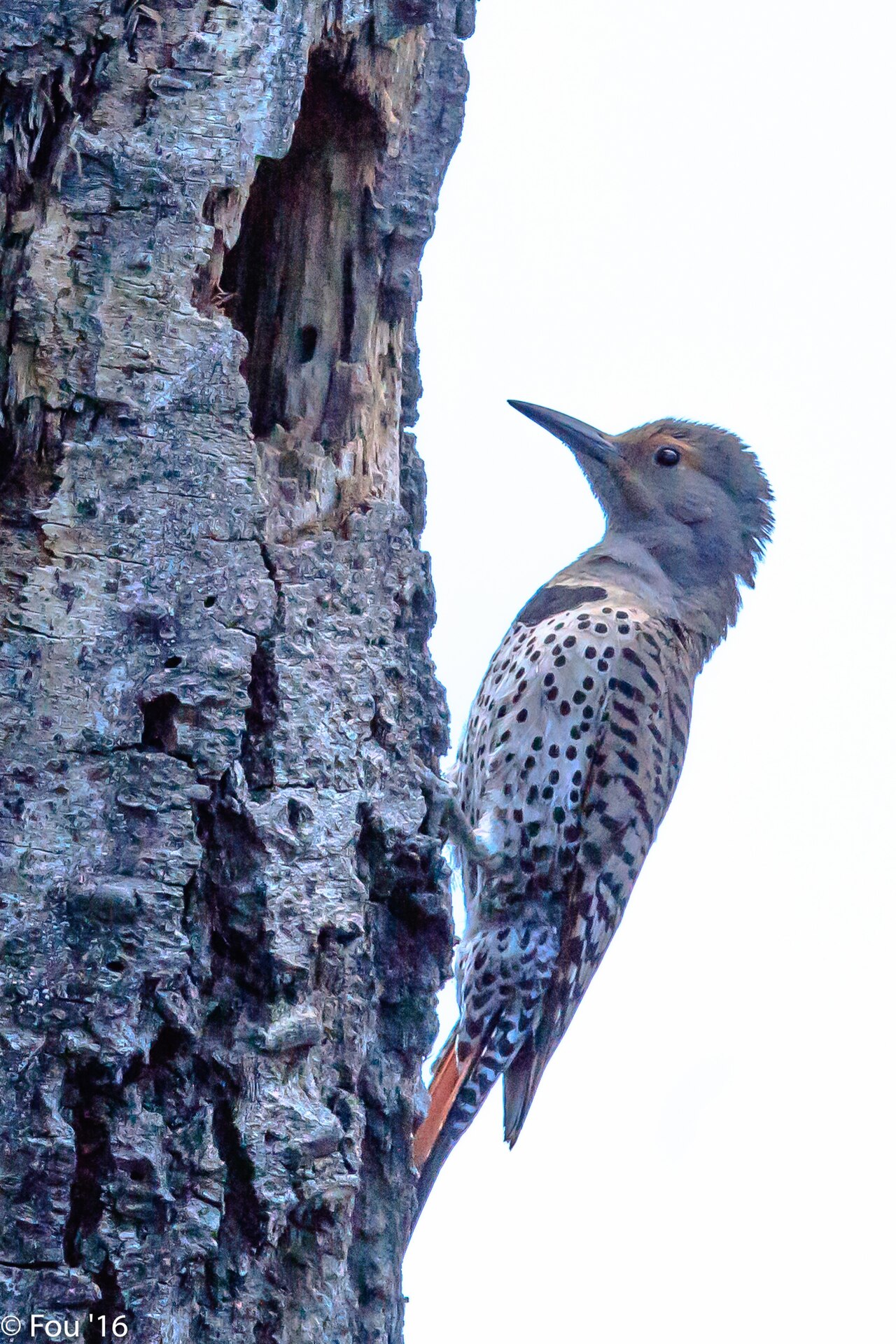
Flicker drumming on a house is read spiritually as an urgent prompt to speak, and practically as a male advertising for a mate on the loudest surface he can find. Both explanations are true at once, and the second one explains why it happens in March through June and then stops.
Flickers choose metal flashing, gutters and chimney caps precisely because the resonance carries, and they are not trying to make a hole when they drum. Excavation is a separate behavior with a different, slower sound, and that one does damage.
Traditions that read animal behavior as communication tend to ask what you are avoiding when a bird insists on being heard at your house specifically. The Cornell Lab’s species account at allaboutbirds.org covers the behavior in detail.
Northern Flicker in Native American Traditions
Several Indigenous traditions of North America hold the flicker in high regard, and the red shafted form in particular appears in ceremonial use. In Hupa and Karuk practice of northwestern California, flicker feathers with their red orange shafts were used in regalia and headbands, and their value was considerable.
Among Plains and Great Basin peoples the flicker is associated in various accounts with fire, with the sun’s color, and with healing. The frequently repeated claim that the bird’s red shafts came from fire or from blood appears in more than one tradition, though the versions differ and should not be collapsed into a single story.
These beliefs belong to specific nations and should be named that way rather than blended into a generic teaching. For how the same care applies to a bird with heavy ceremonial significance, see bald eagle spiritual meaning.
Biblical and Christian Readings
The northern flicker does not appear in the Bible, since it is a North American species unknown to the writers of scripture, so any northern flicker spiritual meaning in a biblical frame is interpretation rather than text. Readers who work within that frame usually attach it to general biblical bird symbolism: messengers, provision and the call to proclaim.
The drumming is sometimes read as a call to testify, drawing on passages about proclamation rather than on anything specific to woodpeckers. Christian writers who use flicker imagery tend to be describing personal experience of a sign, which is a different kind of claim from doctrine.
Said plainly: there is no biblical flicker. What exists is a modern devotional reading applied to a familiar backyard bird, and the honest sources acknowledge it. The parallel situation for a widely spiritualized insect appears in black butterfly spiritual meaning.
Northern Flicker Dreams and Repeated Visits
A northern flicker in a dream is usually read as creative work asking for attention, especially work you have started and set aside. The drumming carries into the dream reading as well: a flicker heard but not seen is interpreted as a message you already know and have not acknowledged.
Repeated visits are taken more seriously than a single sighting. Where one flicker is a prompt, a bird that returns to the same yard or the same window for days is read as an unfinished conversation, and interpreters usually ask who the person on the other side of it is.
The ordinary explanation holds here too. Flickers are territorial through spring, feed on ant colonies that do not move, and will work the same lawn for weeks. A bird with a reliable food source looks a great deal like a bird with a message.
The Flicker as Spirit Animal, Totem and Omen
As a spirit animal the flicker belongs to people who communicate for a living or who need to start, and it is called on for courage in speaking. Practitioners describe flicker people as rhythmic workers, steady rather than explosive, often drawn to music, writing or teaching.
As a totem the bird is associated with home and with the ground, since flickers nest in cavities but feed in open soil. The shadow side named most often is noise without content, talking as a way to avoid saying the actual thing.
As an omen the flicker is overwhelmingly positive, read as luck, protection and the arrival of news. Bright colored birds collect this kind of optimistic reading consistently, as American goldfinch symbolism shows.
Frequently Asked Questions
Is a northern flicker rare?
No. The northern flicker is common and widespread across North America, found in all 48 contiguous states and much of Canada. Numbers have declined noticeably over recent decades, which makes sightings less frequent than they once were, but a flicker in your yard is an ordinary event, not a rare one.
Should you keep feathers you find spiritually?
Spiritually most traditions say yes, treating a found feather as given rather than taken. Legally the answer in the United States is no: the Migratory Bird Treaty Act makes it illegal to possess feathers of native migratory birds, including flickers, without a permit. Photograph it and leave it where it lies.
Why do birds chirp at 3am spiritually?
Night calling is commonly read as a message arriving when the mind is quiet, or in some traditions as a spirit presence. Northern flickers are not the usual culprits, since they are day active. Streetlights, warm nights and territorial pressure explain most 3am singing from robins and mockingbirds.
What does it mean when lights flicker spiritually, and is it connected to the bird?
The two are unrelated beyond the word. Flickering lights are interpreted in some traditions as a presence or an attempt at contact, and usually turn out to be a loose connection. The bird is named for its call and its flashing underwing, not for anything to do with light.
What does a northern flicker mean in love readings?
In love contexts the flicker is read as a push toward direct speech: say it rather than signal it. A pair of flickers is taken as a sign of partnership built on communication, and a feather found during a difficult period is read as encouragement to keep the conversation open.