Types of Owls in Texas: A Complete Guide
Texas is home to more types of owls than almost any other state, including the great horned owl, barred owl, eastern and western screech-owls, barn owl, burrowing owl, and the tiny elf owl. The state’s vast size and varied habitats support an exceptional diversity of these nocturnal birds of prey. This guide covers how many owls live in Texas, the common species, how to tell them apart, where to see them, and how to find owls in the state.
| Owl | Key Features in Texas |
|---|---|
| Great Horned Owl | Large, ear tufts, deep hoots |
| Barred Owl | Eastern woods, who-cooks call |
| Eastern Screech-Owl | Small, ear tufts, trilling |
| Western Screech-Owl | West Texas, bouncing call |
| Barn Owl | Pale, heart-shaped face |
| Burrowing Owl | Long legs, open ground |
| Elf Owl | Smallest owl, deserts |
| Ferruginous Pygmy-Owl | Tiny, South Texas |
How Many Types of Owls Live in Texas?
Texas hosts an exceptional number of owl species, more than most states, thanks to its enormous size and its mix of eastern forests, western deserts, hill country, coastal areas, and South Texas brushland. The most widespread and familiar is the great horned owl, a large owl with ear tufts found throughout the state. The barred owl inhabits eastern forests and swamps, while the eastern and western screech-owls occupy their respective halves of the state. The pale barn owl haunts open country, the long-legged burrowing owl lives in open ground, and Texas is also home to some tiny specialties, including the elf owl, the smallest owl in the world, and the ferruginous pygmy-owl of South Texas. Owls are birds of prey, mostly active at night, with excellent hearing and vision, silent flight, and sharp talons. Texas’s remarkable habitat diversity makes it one of the best states for owls. Understanding the owls of Texas begins with these species, part of the wider group covered in our guide to types of owls.
Common Owls in Texas
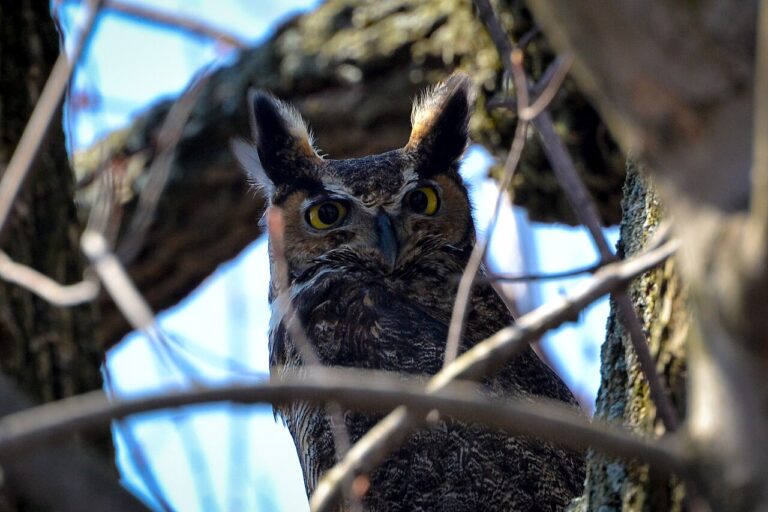
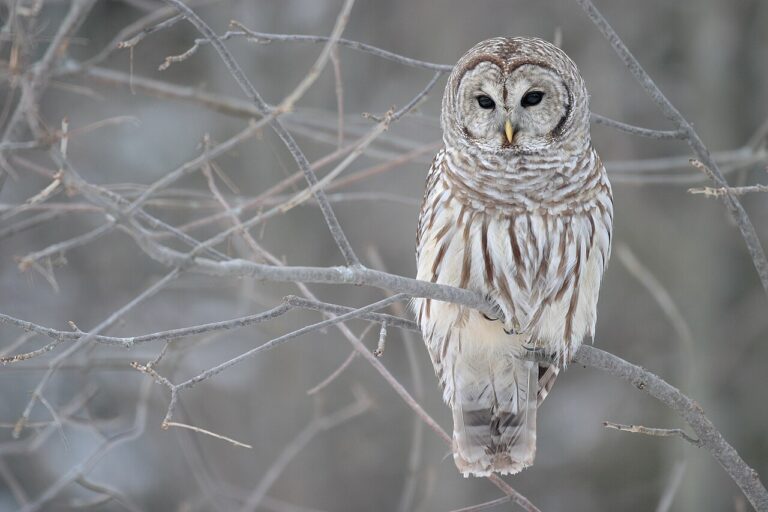
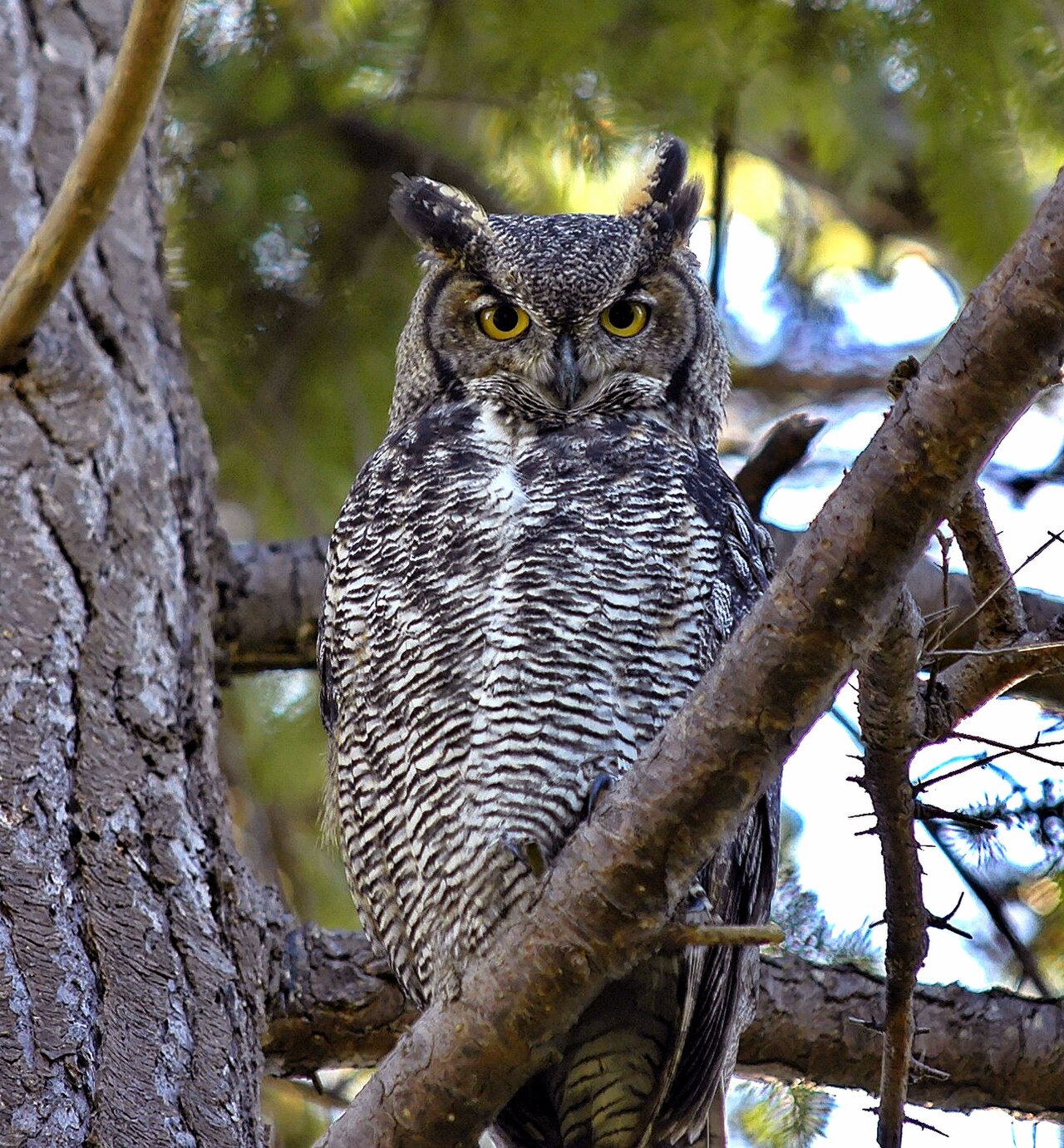
Several owls are especially notable in Texas. The great horned owl is a large, powerful owl with prominent ear tufts, yellow eyes, and deep hooting calls, found in nearly every habitat. The barred owl is a round-headed, dark-eyed owl of eastern Texas woodlands and swamps, famous for its “who cooks for you” call. The eastern screech-owl and western screech-owl are small, ear-tufted owls that occur in the eastern and western parts of the state, respectively, each with its own call. The barn owl is a pale, ghostly owl with a heart-shaped face, found in open country and often nesting in structures. The burrowing owl is a small, long-legged owl of open ground, active by day as well as night. Texas specialties include the elf owl, the tiniest owl in the world, found in desert and canyon country, and the ferruginous pygmy-owl, a small owl of South Texas brushland. Each owl has its own look and voice, as explored in our guide to owl symbolism.
How to Tell Texas Owls Apart
Telling Texas’s many owls apart is easier when you use size, head shape, eye color, region, and voice. Start with size, since the great horned owl is large, the barred and barn owls are medium, the screech-owls and burrowing owl are small, and the elf owl and pygmy-owl are tiny. Look for ear tufts, which the great horned owl and screech-owls have but the barred, barn, burrowing, elf, and pygmy-owls lack. Note eye color, since the barred owl has dark eyes while most others have yellow eyes, and the barn owl’s heart-shaped white face is unmistakable. Region is very helpful in Texas, since the eastern and western screech-owls, the desert elf owl, and the South Texas pygmy-owl each have their own ranges. Voice is a key clue, from the great horned owl’s hoots to the barred owl’s rhythmic call and the elf owl’s yipping. By combining size, ear tufts, eye color, region, and voice, you can identify Texas’s owls, as explored in our guide to types of hawks.
Where to See Owls in Texas
Owls can be found across Texas in a wide range of habitats, with the state’s regions offering different species. The great horned owl occurs statewide in forests, woodlands, deserts, and open areas, and the barred owl inhabits the wet forests and swamps of East Texas. The eastern screech-owl lives in the eastern woodlands and suburbs, while the western screech-owl occupies western woodlands and deserts. The barn owl favors open country, farmland, and marshes across much of the state, and the burrowing owl is found in open grasslands, prairies, and the Panhandle. For the special small owls, the elf owl inhabits desert canyons and areas with cactus and trees in West Texas, and the ferruginous pygmy-owl is a sought-after bird of South Texas brushland. Texas’s many parks, wildlife refuges, and natural areas, especially in the Rio Grande Valley and West Texas, are excellent for owls. Because owls are mostly nocturnal, listening at dusk and night is key, though burrowing owls are active by day, as detailed in our guide to attracting birds.
How to Find Owls in Texas
Finding owls in Texas is rewarding with the right approach, since most are active at night and the state offers so many species. Listening is one of the best strategies, since owls are often heard before they are seen, so going out at dusk and after dark to listen for their calls can reveal their presence, from the great horned owl’s deep hoots to the barred owl’s “who cooks for you” and the yipping of the elf owl. Owls often call more during the breeding season. Looking at dusk and dawn, when some owls are active, and scanning perches such as branches, snags, poles, and cactus can produce sightings. During the day, watching for songbirds mobbing a hidden owl can reveal a roost, and burrowing owls can be seen by day near their burrows. Visiting the right region for a target species, such as South Texas for the pygmy-owl or West Texas for the elf owl, greatly improves your chances. Respecting owls by keeping your distance is important. With patient listening and looking, you can enjoy Texas’s remarkable owls, as reflected in our guide to bird symbolism.
The Elf Owl, the World’s Smallest Owl
Among Texas’s many owls, the elf owl deserves special attention as a remarkable specialty. According to the Cornell Lab of Ornithology, the elf owl is the smallest owl in the world, and it often nests in old woodpecker holes in trees and cactus. In Texas, this tiny owl, barely larger than a sparrow, is found in the desert and canyon country of West Texas, where it hunts insects and other small prey under cover of darkness. The elf owl is a cavity nester, frequently using holes excavated by woodpeckers in trees, and in some regions in giant cactus, making it dependent on these ready-made shelters. Its small size and nocturnal habits make it easy to overlook, but its yipping, chattering calls reveal its presence on spring and summer nights. Seeking out the elf owl is a highlight for birders visiting West Texas, showcasing the extraordinary diversity of owls the state offers, as explored in our guide to types of owls.
Frequently Asked Questions
How many types of owls are in Texas?
Texas hosts many owl species, more than most states, including the great horned owl, barred owl, eastern and western screech-owls, barn owl, burrowing owl, elf owl, and pygmy-owl.
What is the smallest owl in Texas?
The elf owl is the smallest owl in Texas and in the world, a tiny owl found in desert and canyon country of West Texas, often nesting in old woodpecker holes.
What is the most common owl in Texas?
The great horned owl is one of the most widespread owls in Texas, found statewide in forests, deserts, and open areas, recognized by its ear tufts and deep hoots.
What owl says “who cooks for you” in Texas?
The barred owl gives the rhythmic “who cooks for you” call in the wet forests and swamps of East Texas. It is a round-headed owl with dark eyes.
How do you tell Texas owls apart?
Use size, ear tufts, eye color, region, and voice. The great horned owl has ear tufts, the barred owl has dark eyes, and region helps separate the screech-owls and small owls.
Where can you see owls in Texas?
Owls live in forests, deserts, brushland, and open country across Texas. The Rio Grande Valley and West Texas are especially good for specialties like the pygmy-owl and elf owl.
How do you find owls in Texas?
Listen at dusk and night for their calls, watch perches at dawn and dusk, and look for mobbing songbirds by day. Visit the right region for target species like the elf owl.