Hawk Symbolism and Spiritual Meaning Explained
Hawk symbolism centers on vision, focus, and messages, drawing on the bird’s extraordinary eyesight and its habit of circling high above the landscape before striking with precision. Across many cultures and spiritual traditions, seeing a hawk is interpreted as a call to pay closer attention to your surroundings, trust your instincts, or take decisive action on something you’ve been hesitating over. While the specific meaning shifts between traditions, the throughline is almost always clarity, higher perspective, and purposeful action, themes that recur across cultures separated by thousands of miles and centuries of independent development.
| Quick Reference | Symbolic Meaning |
|---|---|
| Core theme | Vision, focus, higher perspective |
| Common interpretation | A message to pay attention or act decisively |
| Native American symbolism | Messenger between the earthly and spirit worlds |
| Seeing a hawk circling | Often read as gaining perspective on a situation |
| Hawk feather | Traditionally seen as a sign of protection or guidance |
| Red-tailed hawk specifically | Associated with leadership and solar energy in some traditions |
Hawk symbolism centers on vision, focus and clear perspective. A hawk circling overhead is traditionally read as a call to step back and see the bigger picture, a hawk in your backyard as a message to stay alert to what is coming, and a found hawk feather as a sign of protection and clarity.
What Does It Mean When You See a Hawk?
Seeing a hawk, especially one that appears unexpectedly or lingers nearby, is widely interpreted as a sign to pay closer attention to a situation you may be overlooking. Because hawks rely on exceptionally sharp eyesight, up to eight times more acute than a human’s, to spot prey from hundreds of feet in the air, the bird has become a symbol for seeing clearly through confusion or distraction. Many people report noticing a hawk during moments of indecision, and interpret the sighting as encouragement to trust their own judgment rather than second-guess themselves.
Hawk Symbolism in Native American Traditions
In many Native American traditions, hawks are considered messengers that travel between the physical world and the spirit world, carrying guidance or warnings to those who notice them. The red-tailed hawk in particular holds significance in numerous tribal traditions as a symbol of strength, vision, and connection to the divine, and hawk feathers are traditionally treated with great respect, sometimes used in ceremonies or regalia as a mark of honor, much as feathers and imagery from the golden eagle carry similar ceremonial weight in other traditions. Interpretations vary considerably between individual nations and communities, so no single meaning applies universally across all Native American cultures.
Hawk as a Symbol of Focus and Perspective
A hawk’s hunting strategy, soaring at height to scan a wide area before diving with total commitment toward a single target, has made it a popular symbol for focused ambition and clear-eyed decision-making in modern spiritual and self-help contexts. People drawn to hawk symbolism in this sense often use the bird as a personal reminder to gain distance from a problem, assess it from a broader perspective, and then commit fully once a decision is made, mirroring the bird’s own behavior in the wild.
Spiritual Meaning of a Hawk Circling Overhead
A hawk circling directly overhead is one of the most commonly asked-about sightings in spiritual symbolism, often interpreted as a sign that you are being watched over, protected, or given an opportunity to see a current situation from a higher vantage point. In practical terms, hawks circle to ride thermal air currents while scanning the ground for prey, a behavior called kettling, so the spiritual reading is a human interpretation layered onto ordinary hunting behavior rather than anything unique to that particular moment. This same thermal-riding behavior is shared by other large soaring birds, including the corvids that sometimes mob hawks mid-flight, though corvid symbolism in most traditions centers on entirely different themes than the hawk’s association with vision and focus.
Hawk Feathers and Their Traditional Significance
Finding a hawk feather is often treated as a sign of protection, guidance, or an affirmation that you are on the right path. It’s worth noting that under the US Migratory Bird Treaty Act, it is illegal to possess hawk feathers without a specific permit, even if found naturally, so anyone drawn to the symbolism should appreciate and photograph a feather rather than take it home. This legal protection exists to prevent poaching of birds of prey, whose feathers have historically been targeted for decoration and ceremonial use, the same protection that applies to the red-tailed hawk specifically and to owls and falcons more broadly.
Different Hawk Species and Their Unique Symbolism
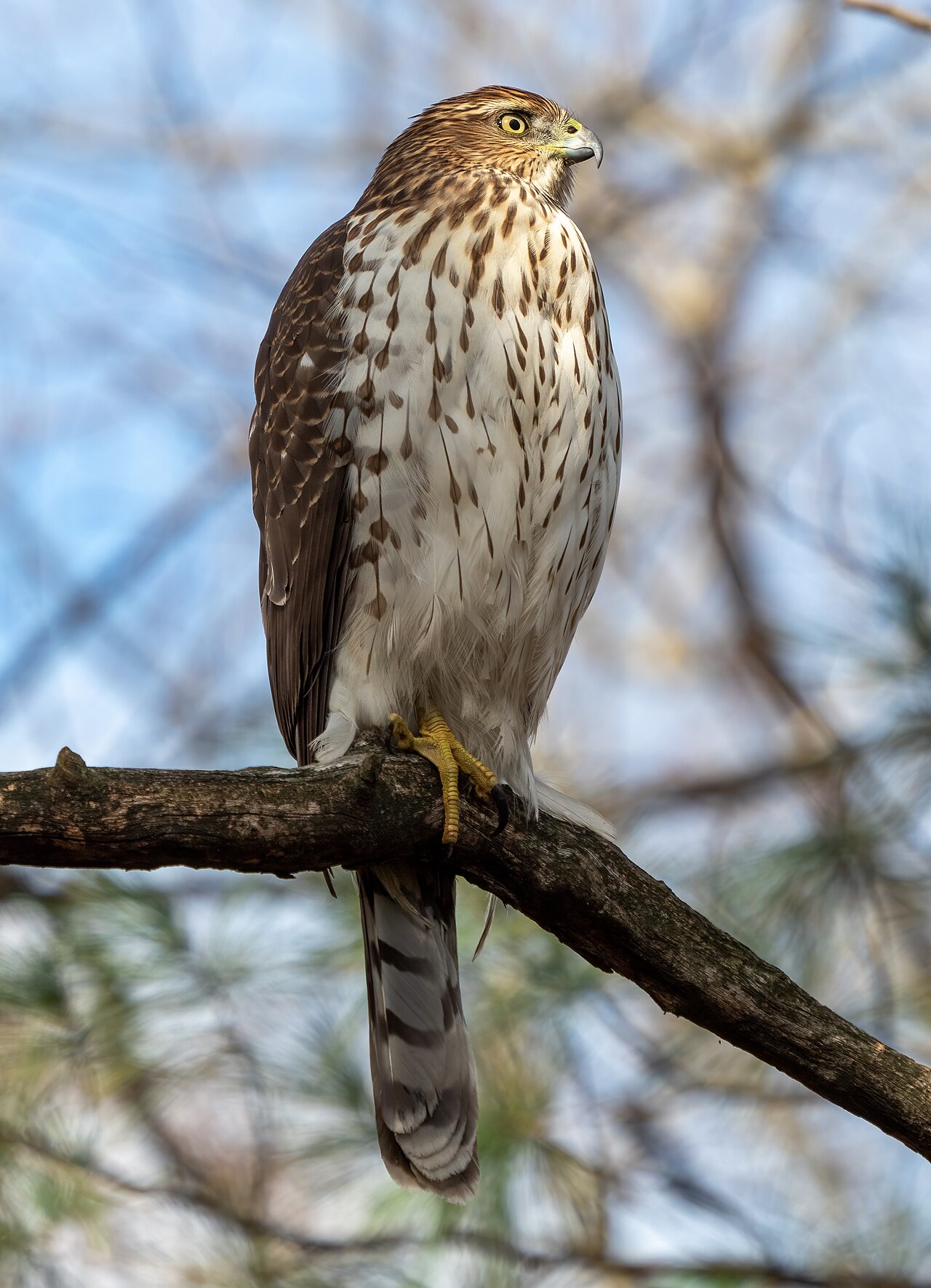
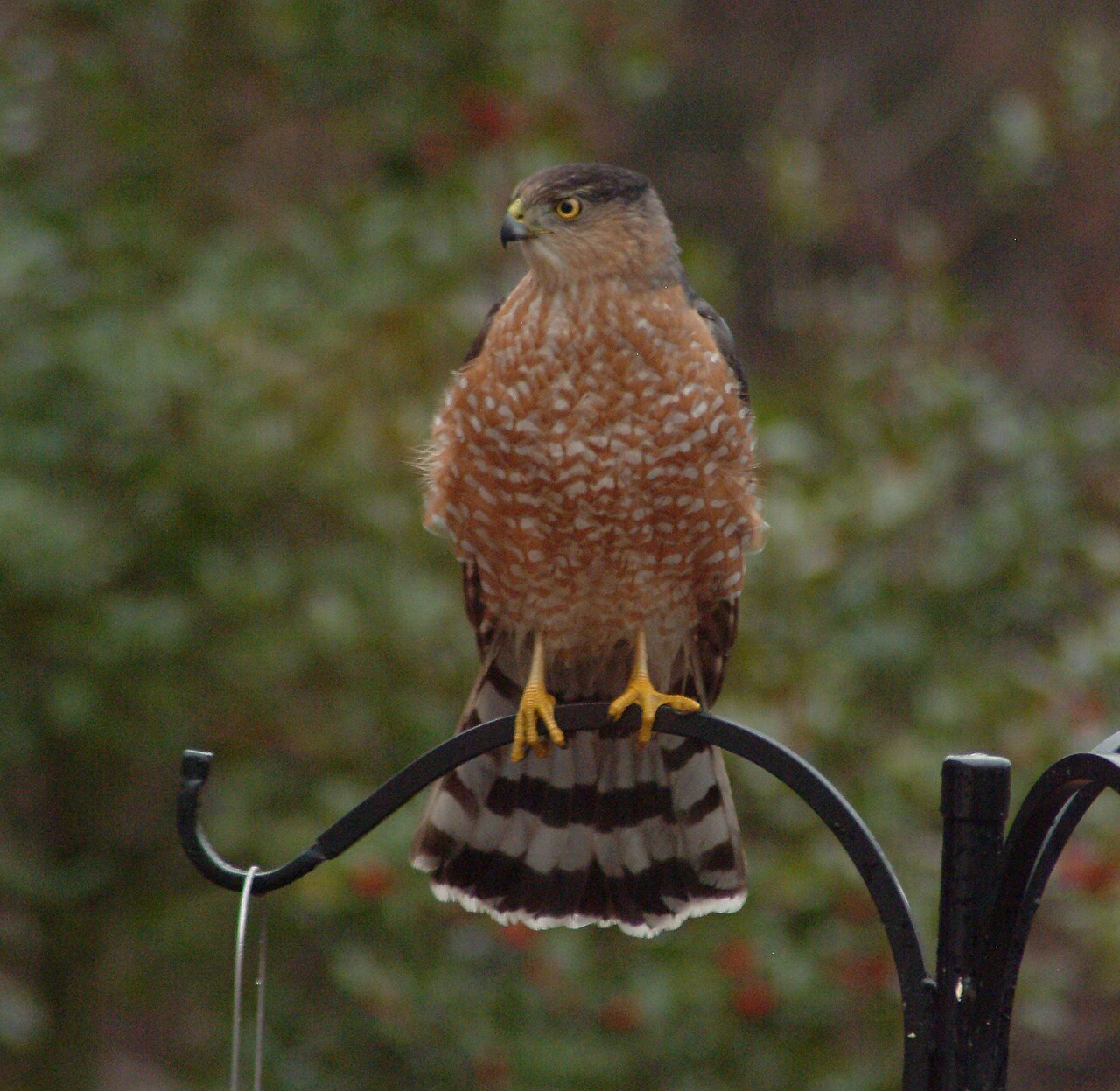
While general hawk symbolism applies broadly, some traditions and modern interpretations assign more specific meanings to individual species. The red-tailed hawk, the most commonly seen hawk across North America, is often linked to leadership, courage, and solar or fire energy due to its rust-colored tail. Cooper’s hawks, known for agile hunting through dense woods, are sometimes associated with quick thinking and adaptability, reflecting their preference for pursuing prey through complex terrain rather than open sky. For identification help distinguishing these species in the field, see our guide to common hawk species in North America.
How Hawk Symbolism Compares to Other Bird of Prey Symbolism
Hawk symbolism sits alongside a broader tradition of interpreting large birds of prey as spiritually significant, though each species tends to carry a slightly different emphasis. The eagle is more commonly associated with raw power, national identity, and connection to the divine in a grander, more ceremonial sense, while owls, in contrast, are frequently linked to wisdom, but also caution or omens tied to death in some traditions, quite different from the hawk’s forward-looking focus on clarity and action. Recognizing these distinctions matters if you’re researching symbolism seriously, since lumping all raptors together under one generic “bird of prey meaning” flattens genuinely different cultural traditions built around specific species over centuries.
Practical Ways People Apply Hawk Symbolism Today
Beyond formal spiritual traditions, many people today use hawk symbolism informally as a personal framework for reflection: pausing after a sighting to ask what they might be overlooking, or treating the encounter as encouragement to commit to a decision they’ve been putting off. According to Audubon, hawk sightings have become considerably more common in suburban and even urban areas over recent decades as species like the red-tailed hawk and Cooper’s hawk have adapted successfully to city parks and green spaces, meaning more people are noticing these birds and, in turn, engaging with the symbolism attached to them than in past generations. Whether or not you personally hold a spiritual view of the sighting, the increased visibility of hawks is a genuine and well-documented ecological trend, not just a cultural shift in attention.
Hawk Symbolism vs Practical Bird Behavior
It’s worth separating the spiritual interpretation from the bird’s actual biology: a hawk circling, calling, or perching nearby is, from a purely scientific standpoint, engaged in hunting, territory defense, or thermal soaring rather than delivering a message. That said, many people find genuine meaning and comfort in noticing these moments and assigning personal significance to them, and that practice of mindful observation, regardless of the spiritual framework, is a real and valuable habit in its own right. Understanding both sides, the biological explanation and the symbolic tradition, allows for a richer appreciation of the sighting without requiring either framework to fully replace the other.
Related reading: get rid of hawks feeders.
Frequently Asked Questions
What does it mean spiritually when you see a hawk?
Seeing a hawk is commonly interpreted as encouragement to pay closer attention to your surroundings, trust your instincts, or take clear, decisive action on something in your life.
What does a hawk circling above you mean?
A hawk circling overhead is often read as a sign of protection or a nudge to view a current situation from a higher, broader perspective, though in practical terms the bird is scanning for prey.
What does finding a hawk feather symbolize?
Finding a hawk feather is traditionally seen as a sign of protection or guidance, though it is illegal in the US to keep hawk feathers without a specific federal permit.
What do hawks symbolize in Native American culture?
In many Native American traditions, hawks are seen as messengers between the physical and spirit worlds, though specific meanings vary widely between individual tribal nations.
Does a red-tailed hawk have a specific symbolic meaning?
Yes, the red-tailed hawk is often associated with leadership, courage, and solar energy in various traditions, partly due to its distinctive rust-colored tail and its status as the most frequently observed hawk species across the continent.
Why is the hawk a symbol of vision and focus?
Hawks have eyesight up to eight times sharper than a human’s, allowing them to spot prey from great heights, which has made the bird a widespread symbol of clarity and focused attention across many unrelated cultures.
Is it legal to keep a hawk feather you find?
No, under the US Migratory Bird Treaty Act it is illegal to possess hawk feathers without a specific permit, even if the feather was found naturally on the ground.