Ferruginous Hawk: Largest Hawk Guide
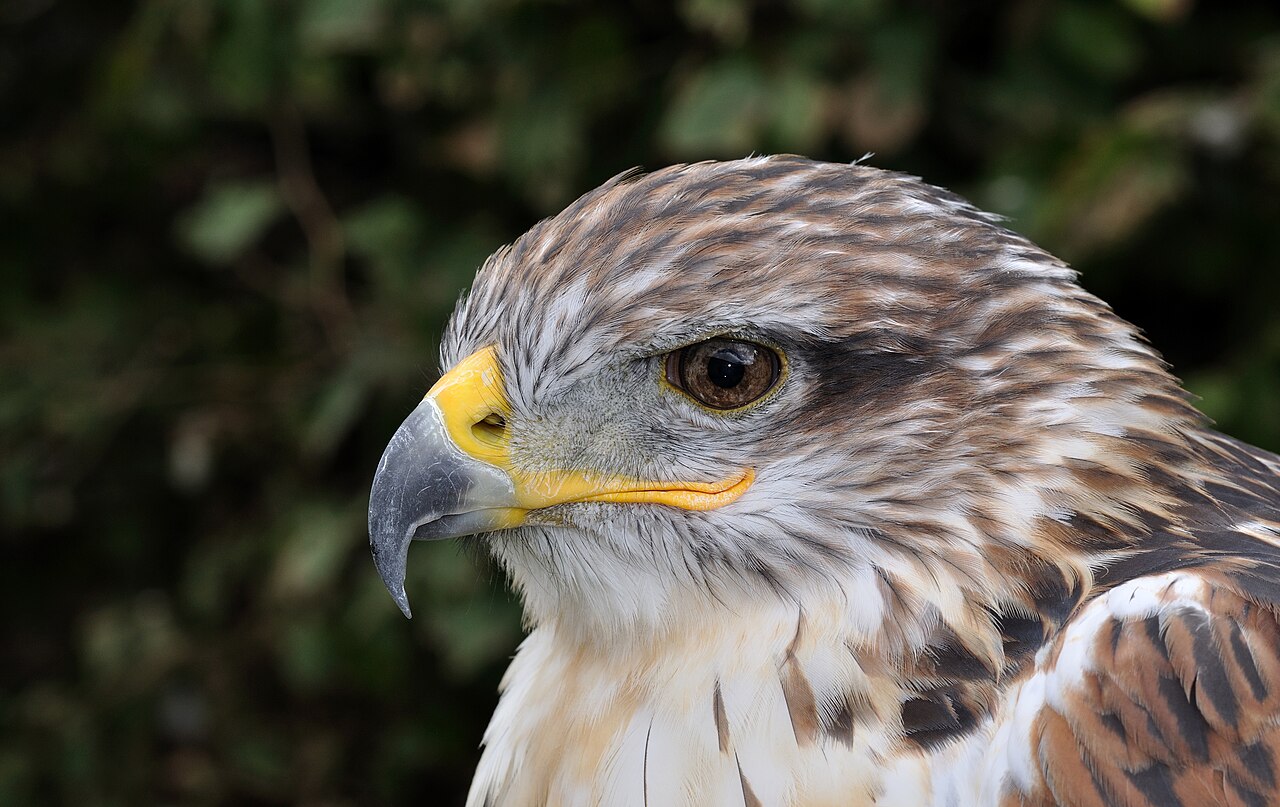
A Ferruginous Hawk is the largest hawk species in North America, identified by its rust-colored (“ferruginous”) back and legs, a mostly white chest and head, long pointed wings, and a pale, unbanded tail, all combining to give the bird a notably pale, eagle-like appearance in flight. It is a bird of open western grassland and shrub-steppe, closely tied to prairie dog and ground squirrel colonies that make up the core of its diet.
| Fact | Detail |
| Length | 22.1 to 27.2 inches |
| Wingspan | 52.4 to 55.9 inches |
| Weight | 2.3 to 4.4 pounds |
| Key field mark | Rust back and legs, pale unbanded tail |
| Habitat | Open grassland, shrub-steppe, prairie |
| Diet | Prairie dogs, ground squirrels, jackrabbits |
| Status | Species of conservation concern in parts of its range |
How to Identify a Ferruginous Hawk
Adults show a rust-red back and legs against an almost entirely white chest and head, with rust-colored “leggings” on the feathered legs visible when the bird is perched, a feature unique among North American hawks. The tail is pale gray to whitish and lacks the strong banding seen in most other buteos, and the wings are notably long and pointed for a hawk this size, giving a silhouette in flight that some birders initially mistake for an eagle before noting the smaller overall size. A darker morph exists but is much less common than the classic pale, rust-and-white pattern.
The Largest Hawk in North America
By both length and wingspan, the Ferruginous Hawk exceeds every other hawk species on the continent, including the Red-Tailed Hawk and the Rough-Legged Hawk, though its lighter overall build means it is not necessarily the heaviest bird pound for pound. This large size, combined with its pale coloring and long, pointed wings, is part of why the species is sometimes confused with an eagle at a distance, especially when soaring high over open range country.
A Specialist on Prairie Dogs and Ground Squirrels
Ferruginous Hawks depend heavily on prairie dog and ground squirrel colonies across their range, and their populations track the health and extent of these colonies closely, since a single hawk can rely on a nearby colony for a large share of its yearly food supply. Prairie dog towns also happen to be prime habitat for the ground-nesting Burrowing Owl, so a healthy prairie dog colony often supports both species at once. This close relationship means widespread prairie dog control and habitat conversion to cropland across parts of the Great Plains and Intermountain West has had a direct, measurable effect on Ferruginous Hawk numbers in affected regions, making the species something of an indicator for the health of native prairie ecosystems.
Nesting on Open Ground
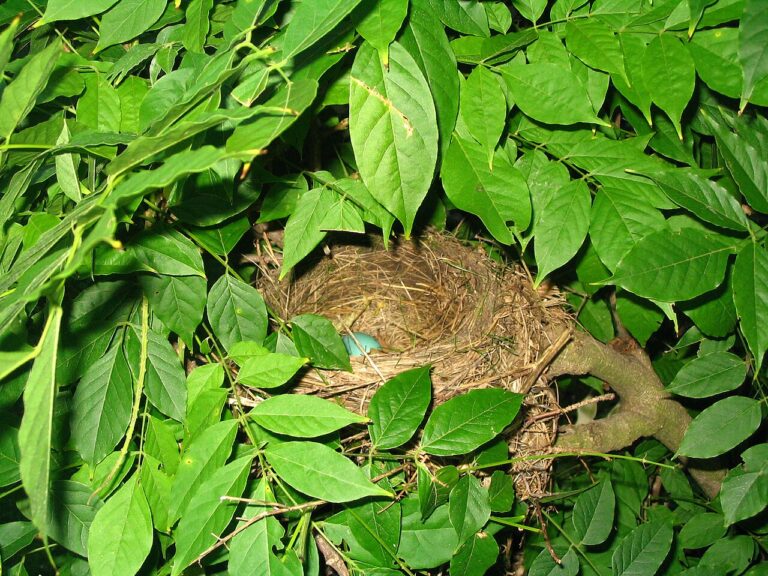
Unlike forest hawks that rely on tall trees, Ferruginous Hawks often nest on the ground, on low cliffs, rock outcrops, or isolated trees and utility structures in open, largely treeless country, building a large stick nest that may be reused and added to over multiple years. According to the Cornell Lab of Ornithology, nest placement in such exposed, open habitat makes the species particularly sensitive to human disturbance near active nests during the breeding season, and many wildlife agencies recommend maintaining a wide buffer around known nest sites.
Range and Habitat
Ferruginous Hawks breed across the open grasslands and shrub-steppe of the western and central United States and southern Canada, largely absent from forested or densely developed landscapes. Northern populations migrate south for winter into the southwestern United States and Mexico, while some populations in milder parts of the range remain resident, similar in pattern to the seasonal movements of the Swainson’s Hawk sharing much of the same prairie habitat.
Conservation Status
The Ferruginous Hawk is considered a species of conservation concern in several states and provinces due to its dependence on native prairie and the prairie dog colonies that have themselves been heavily reduced across much of their historic range. Protecting large blocks of intact grassland habitat, along with the ground squirrel and prairie dog populations within them, remains the most direct way to support long-term Ferruginous Hawk numbers, a strategy shared with broader grassland bird conservation efforts that also benefit species like the Northern Harrier.
Light and Dark Morphs
Most Ferruginous Hawks show the classic pale, rust-and-white pattern described above, but a smaller number of individuals are dark morphs, appearing almost entirely rich chocolate-brown across the body with only the flight feathers showing a paler contrast from below. Both morphs retain the same long, pointed wing shape and pale, unbanded tail, and both hunt the same open grassland habitat in essentially the same way, so overall size and structure remain more useful for identification than color alone when a dark-morph bird is encountered.
Ferruginous Hawk vs Swainson’s Hawk
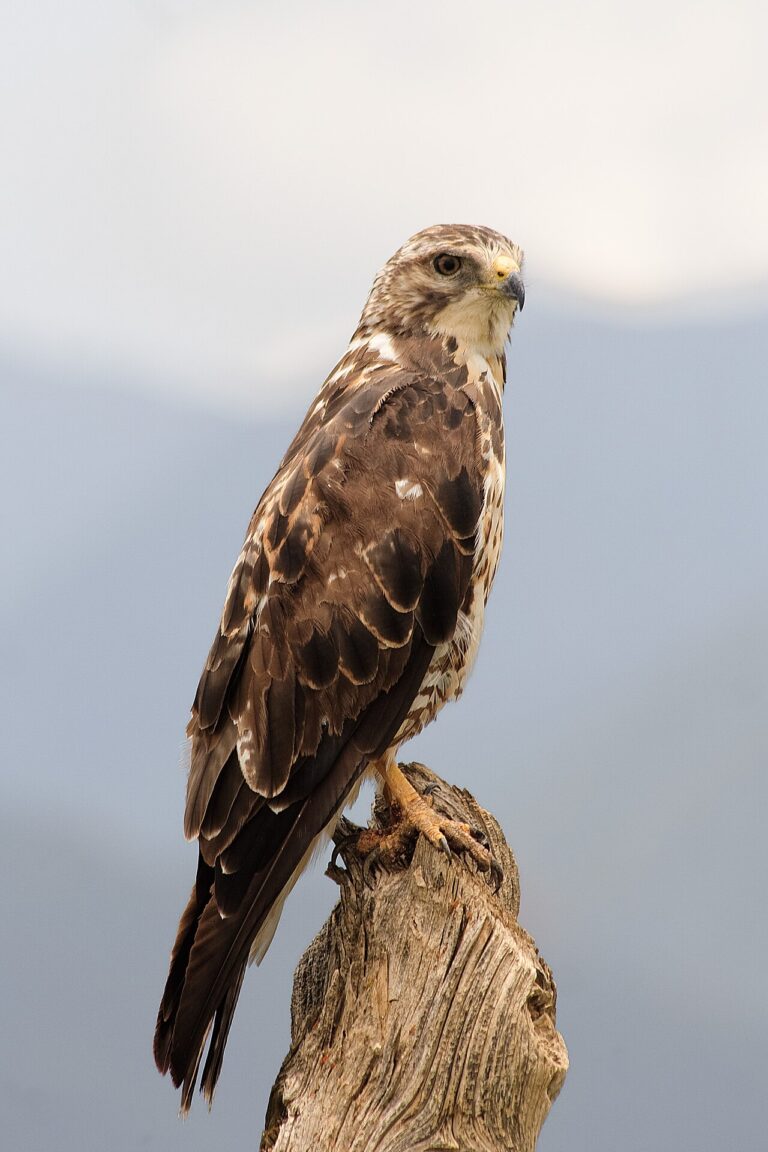
Both species share open prairie habitat across much of the western United States, but a Swainson’s Hawk is smaller, narrower-winged, and shows a dark chest band against a pale belly rather than the rust back and white chest of a Ferruginous Hawk. Swainson’s Hawks also migrate far more completely each year, largely leaving North America entirely for South America, while many Ferruginous Hawks shift only short distances south within the continent or remain resident where winter conditions allow.
An Eagle-Sized Hawk of the Open Range
Ranchers and other longtime residents of the western prairie sometimes mistake a distant Ferruginous Hawk for an eagle simply because of its unusually large size for a hawk, an understandable mix-up given how few other buteos approach anything close to its wingspan. A careful look almost always resolves the confusion, since even the largest Ferruginous Hawk falls noticeably short of a Golden Eagle’s true bulk and shows a proportionally smaller head and bill, but the initial double-take is common enough that local birders often mention it as one of the first things newcomers to prairie hawk watching learn to work through.
Historical Decline and Recovery on the Plains
Ferruginous Hawk numbers fell substantially across parts of the Great Plains during the height of twentieth-century prairie dog eradication programs, which removed both a primary food source and, indirectly, some of the open habitat structure the species favors for hunting and nesting. Recognition of the hawk’s dependence on these colonies has since led to more targeted conservation approaches in some regions, pairing prairie dog habitat protection with efforts to maintain nesting structures on an otherwise increasingly developed and fragmented landscape, an approach that has helped stabilize numbers in several of the areas where it has been consistently applied.
A Species Tied to Wide Open Views
Birders searching for a Ferruginous Hawk quickly learn that the species rewards patience over a wide field of view rather than a close look at any single perch, since it favors the most open, expansive grassland available and often perches at a considerable distance from roads. Scanning fence lines, isolated trees, and utility poles across a broad stretch of prairie with binoculars or a spotting scope, rather than expecting a close roadside encounter, is usually the more productive approach for anyone hoping to find this pale giant of the open range on a dedicated prairie birding trip, especially early or late in the day when hunting activity typically peaks. A scope mounted on a tripod at a pull-off overlooking a large stretch of grassland often outperforms slow driving in terms of birds actually located per hour spent searching.
Frequently Asked Questions
How do you identify a Ferruginous Hawk?
Look for North America’s largest hawk, with a rust-red back and feathered legs, an almost entirely white chest and head, and a pale, unbanded tail, typically seen soaring over open western grassland.
How big is a Ferruginous Hawk?
Ferruginous Hawks measure 22 to 27 inches long with a wingspan of roughly 52 to 56 inches, making them the largest hawk species found in North America.
What does a Ferruginous Hawk eat?
Its diet centers on prairie dogs, ground squirrels, and jackrabbits, with the species closely tied to healthy colonies of these prey animals across open grassland habitat.
Why is the Ferruginous Hawk considered a conservation concern?
Widespread loss of native prairie and reduction of prairie dog colonies across parts of its range have reduced its food supply and nesting habitat, making it a species of concern in several states and provinces.
Where does the Ferruginous Hawk live?
It breeds across open grassland and shrub-steppe in the western and central United States and southern Canada, wintering farther south into the southwestern United States and Mexico.
Is a Ferruginous Hawk bigger than a Red-Tailed Hawk?
Yes. The Ferruginous Hawk is larger in both length and wingspan than the Red-Tailed Hawk, making it the biggest hawk species in North America, though it is more lightly built than its size might suggest.
Where do Ferruginous Hawks nest?
Unlike forest hawks, they often nest on the ground, on low cliffs, rock outcrops, or isolated trees and structures in open, largely treeless country.