Allen’s Hummingbird: Identification, Range, and Behavior Guide
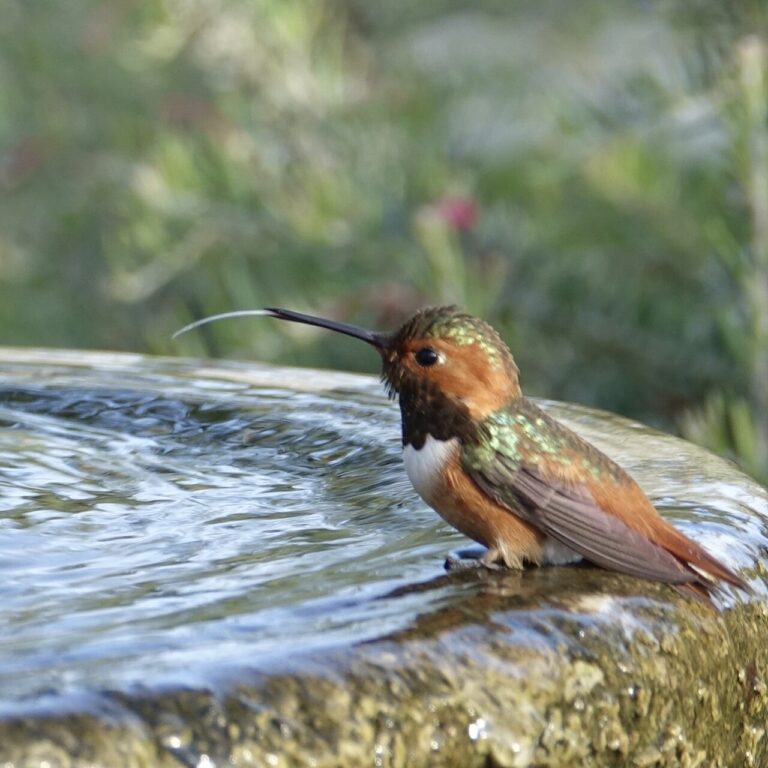
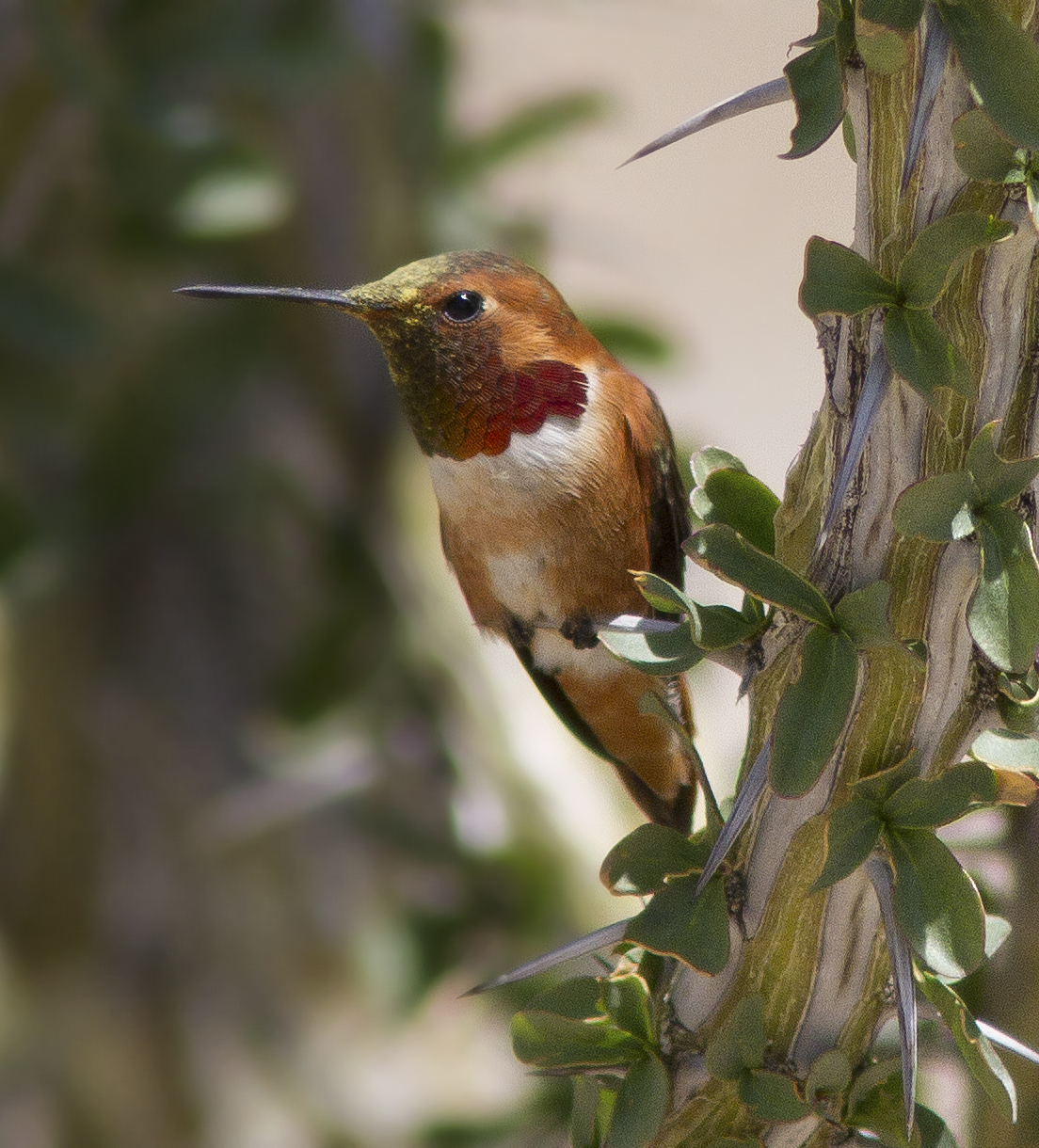
Allen’s hummingbird occupies one of the narrowest breeding ranges of any North American hummingbird, largely confined to a thin strip of California coastline plus the Channel Islands, yet within that limited range it is a common and conspicuous garden visitor. Adult males show a fiery orange rufous belly, sides, and tail paired with an iridescent orange red gorget, a combination that makes this species almost identical to the more widespread rufous hummingbird at first glance. The single most reliable difference lies on the back, where Allen’s hummingbird shows solid iridescent green rather than the rufous hummingbird’s orange tones, a subtle but consistent field mark once observers know exactly where to look, and one worth learning well given how often the two species get confused even by experienced birders working outside their usual range.
| Trait | Detail |
|---|---|
| Scientific name | Selasphorus sasin |
| Length | 3.5 in |
| Weight | 2 to 4 g |
| Range | Coastal California and Channel Islands |
| Habitat | Coastal scrub, gardens, parks, riparian woodland |
| Similar species | Rufous hummingbird |
How to Identify an Allen’s Hummingbird
Adult males show a solid iridescent green back, contrasting sharply with a rufous orange belly, flanks, and tail, along with an iridescent orange red throat that can appear gold or nearly black depending on the viewing angle. This green back is the single most useful mark separating a male Allen’s hummingbird from a male rufous hummingbird, which instead shows rufous orange across the entire back and body.
Females and juveniles are considerably more difficult, showing a green back, rufous colored sides and tail base, and a throat with only limited iridescent spotting, a plumage pattern nearly identical to female rufous hummingbirds. In practice, definitive separation of females often requires close examination of tail feather shape, typically only possible in the hand during banding studies rather than through ordinary field observation.
Body proportions run slightly smaller and more slender overall compared to a rufous hummingbird, though this difference is subtle enough that experienced observers still rely primarily on back color and, where relevant, geographic range and season to make a confident identification in the field. Bill shape and length are essentially identical between the two species, offering no useful additional clue beyond plumage and range.
Range and the Two Populations
Allen’s hummingbird exists as two distinct populations with different migratory behavior. The migratory population breeds along a narrow strip of coastal California from roughly Santa Barbara north to southern Oregon, then winters in central Mexico, following a fairly typical north-south migration pattern similar to many other western hummingbirds.
A separate, non-migratory population resides year round on the Channel Islands and a limited stretch of the adjacent southern California mainland, including the Palos Verdes Peninsula, remaining on territory throughout the year rather than undertaking any seasonal movement at all. This resident population is believed to have given rise to the migratory population over evolutionary time, or possibly the reverse, a question still debated among researchers studying the species’ history.
Because its overall range is so narrow compared to most other North American hummingbirds, Allen’s hummingbird is considered somewhat vulnerable to habitat changes along the specific stretch of California coastline it depends on for breeding each year. The resident Channel Islands population, in particular, occupies a genuinely tiny total geographic footprint compared to nearly any other regularly occurring North American bird species, making careful habitat monitoring there a genuine conservation priority for regional wildlife agencies.
Courtship Display
Male Allen’s hummingbirds perform a distinctive pendulum display during courtship, swinging back and forth in a wide arc in front of a perched female, followed by a steep climbing dive that ends in a loud, buzzy chirp produced by the tail feathers near the bottom of the descent. This two part display, arc followed by dive, is a useful behavioral clue that can help confirm identification even when plumage details are hard to judge.
According to the Cornell Lab of Ornithology, this display is broadly similar in structure to the courtship dive of the Anna’s hummingbird, though the pendulum arc phase beforehand is a distinguishing feature more closely associated with Allen’s and rufous hummingbirds specifically.
Males also defend prime display and feeding territory with persistent chasing and diving at rival males throughout the breeding season, a level of aggression that, combined with the courtship dive itself, makes spring and early summer an especially active and visible time to observe this species along the California coast.
Diet and Feeding Behavior
Nectar from coastal scrub and garden flowers forms the bulk of the diet, supplemented by small insects caught in flight or gleaned from foliage, an important protein source particularly for females during the breeding season. Allen’s hummingbird has adapted well to suburban gardens within its narrow coastal range, readily using ornamental flowering plants alongside native coastal scrub vegetation planted by homeowners throughout the region.
At feeders, standard sugar water at a 1 to 4 ratio is readily accepted, and this species can be just as territorial and aggressive at a shared feeder as its close relative the rufous hummingbird, often dominating a feeding station against other visiting hummingbirds.
This aggressive feeding behavior extends to defending favored flower patches as well, with males in particular patrolling a territory of blooming shrubs throughout the day and repeatedly chasing off other hummingbirds, including much larger species, that attempt to feed within the defended area. Females, by contrast, tend to be somewhat less territorial outside the immediate vicinity of an active nest, focusing their energy more on efficient foraging across a wider home range than on aggressively excluding every competitor from a single defended patch.
Nesting Behavior
Females build a small cup nest of plant down and moss bound with spider silk, often placed low in a shrub or tree within coastal scrub or garden habitat. Clutches typically contain 2 eggs, incubated solely by the female for about 15 to 17 days, with chicks fledging roughly 3 weeks after hatching.
The non-migratory Channel Islands population may begin nesting notably earlier in the year than the migratory mainland population, sometimes starting as early as December in the mildest coastal microclimates, a pattern that echoes the similarly early nesting behavior documented in Anna’s hummingbird along the same general coastline.
A female may attempt two broods in a favorable year, particularly within the resident island population where the extended, largely frost free breeding season allows more flexibility than the shorter window available to the migratory mainland population.
Conservation Status
Allen’s hummingbird is not currently federally listed, though its narrow breeding range makes it more vulnerable to localized habitat loss than more widely distributed hummingbird species. Coastal development pressure across much of its limited California range has raised some conservation concern, and the species is monitored closely by regional bird conservation groups given how concentrated its population is within a relatively small geographic area. For a broader overview of the family, see our hummingbird guide.
According to Audubon, continued protection of coastal scrub habitat, along with the Channel Islands themselves, remains important for maintaining a healthy population of this geographically restricted species over the long term and ensuring it does not decline further as coastal development continues.
Because the entire global population of Allen’s hummingbird is concentrated within such a narrow strip of coastline and a handful of offshore islands, even relatively localized habitat disturbance carries considerably more weight for this species than it would for a hummingbird with a broader, more continental range spanning many states.
Frequently Asked Questions
How do you tell an Allen’s hummingbird from a rufous hummingbird?
Male Allen’s hummingbirds have a solid green back, while male rufous hummingbirds have a rufous orange back across the entire body, though females of both species look nearly identical in the field and are best separated by range, season, or in-hand examination.
Where does Allen’s hummingbird live?
It breeds along a narrow strip of coastal California and Oregon, with a separate non-migratory population resident year round on the Channel Islands and nearby mainland.
Does Allen’s hummingbird migrate?
The mainland coastal population migrates to Mexico for the winter, while the Channel Islands population remains resident year round without undertaking any seasonal migration.
What does an Allen’s hummingbird eat?
It feeds on nectar from coastal scrub and garden flowers along with small insects, and readily visits backyard feeders filled with standard sugar water.
How big is an Allen’s hummingbird?
Adults measure about 3.5 inches long and weigh between 2 and 4 grams, similar in size to the closely related rufous hummingbird.
Is Allen’s hummingbird rare?
It is not considered rare within its range, but its overall breeding range is unusually narrow compared to most North American hummingbirds, making it more habitat sensitive.
What is the Allen’s hummingbird courtship display?
Males swing in a wide pendulum arc in front of a female, then perform a steep dive ending in a loud chirp produced by the tail feathers near the bottom.