Eagle Tattoo Meaning: Freedom, Strength, and Styles
An eagle tattoo means freedom, strength, courage, and vision, a symbolic package that has stayed remarkably stable across cultures for more than two thousand years. The eagle is the bird that flies highest and sees farthest, so it became shorthand for rising above circumstances, seeing clearly, and answering to no one. Layered on top of that core are more specific meanings: patriotism and military service in the United States, divine power in Roman and Aztec tradition, and rebirth in older European folklore.
The details of the design change the message. A bald eagle reads differently from a golden eagle, an eagle gripping a snake tells a story of triumph over an enemy, and a single eagle feather carries meanings that deserve real cultural care. This guide breaks down what each major eagle tattoo style means, what it signals for men and for women, and how placement changes the effect.
| Core meaning | Freedom, strength, courage, vision |
| Bald eagle | American patriotism, military service |
| Golden eagle | Raw power, hunting prowess, independence |
| Eagle and snake | Triumph of good over evil, victory in conflict |
| Aztec eagle warrior | Elite courage, sun symbolism, heritage |
| Popular placements | Back, chest, forearm, hand |
What an Eagle Tattoo Means at Its Core
Four ideas sit at the center of nearly every eagle tattoo: freedom, strength, courage, and vision. Freedom comes from the eagle’s life in open sky, beholden to nothing on the ground. Strength and courage come from its position as an apex predator that fears almost nothing in its environment. Vision is the most literal of the four, because eagles genuinely see four to five times farther than humans, and that biological fact became a metaphor for clarity, foresight, and seeing truth that others miss.
These meanings are old. Rome carried the aquila, the eagle standard, at the head of every legion, and losing it in battle was the ultimate disgrace. Norse, Celtic, Aztec, and many North American Indigenous traditions independently placed the eagle at or near the top of their symbolic hierarchies, usually as a messenger between earth and sky. When a symbol converges like that across unconnected cultures, it tends to hold its meaning in tattoo culture too, which is exactly what the eagle has done.
In modern ink, the core meaning flexes with the wearer’s story. For a veteran it leans toward service and honor. For someone marking a divorce, an addiction recovery, or an escape from a controlling situation, the same spread-winged eagle reads as hard-won freedom. That flexibility, a single strong image that can carry very different personal stories, is a large part of why eagle tattoos never cycle out of fashion the way trend-driven designs do. The eagle sits alongside a handful of other permanently popular motifs covered in our guide to bird tattoo meanings.
Eagle Tattoo Meaning for Men
For men, the eagle tattoo most often signals strength, dominance, and self-reliance, and it has decades of tradition behind that reading. American traditional tattooing made the eagle one of its flagship images alongside anchors and swallows, inked heavily on sailors and soldiers through both world wars. A chest or back eagle with spread wings became visual shorthand for a man who had served, endured, or considered himself accountable to his own code.
The military association remains strong. Bald eagle tattoos are common among veterans of every branch, often combined with unit insignia, dog tags, dates, or the flag. The “screaming eagle” with open beak carries extra aggression and is closely tied to the 101st Airborne Division, whose famous patch bears that name. For men without a service background, the same imagery still communicates discipline and protective instinct rather than aggression for its own sake.
Style choices shift the tone. A photorealistic black and gray eagle head reads as serious and commemorative. A bold American traditional eagle in red, brown, and yellow reads as heritage and old-school toughness. Smaller minimalist eagles on the hand or forearm, a fast-growing choice in recent years, signal the same values with less display, which suits men who want the meaning without a statement piece. Similar masculine-coded raptor symbolism appears in hawk symbolism, though the hawk leans more toward focus and messages than dominance.
Eagle Tattoo Meaning for Women
For women, eagle tattoos most often emphasize freedom, independence, and protective strength, and the design language usually shifts to match. Popular feminine interpretations include an eagle in flight rather than a perched, glaring bird, finer line work, watercolor treatments, and compositions that pair the eagle with flowers, moons, or script. The meaning is less about dominance and more about rising above, self-determination, and refusing to be caged.
Motherhood is a genuinely fitting layer here, not a stretch. Female eagles are larger than males, do the majority of nest defense, and are famously fierce guardians of their young. A mother eagle design, sometimes with eaglets or with a specific number of stars or feathers for children, carries the meaning of protective devotion backed by real biology. According to the Cornell Lab of Ornithology (allaboutbirds.org), female bald eagles are about 25 percent larger than males, one of the clearest size differences among North American raptors.
Placement trends differ too. Women more often choose the shoulder blade, ribs, thigh, or a smaller piece on the wrist or behind the ear, placements that keep the tattoo personal rather than public. A small eagle silhouette at the wrist reads as a private reminder of independence, while a full shoulder-to-rib eagle in flight is every bit as commanding as a man’s back piece and increasingly common. The symbolism does not shrink with the design: freedom and courage are the message at any size.
Bald Eagle vs Golden Eagle Tattoos

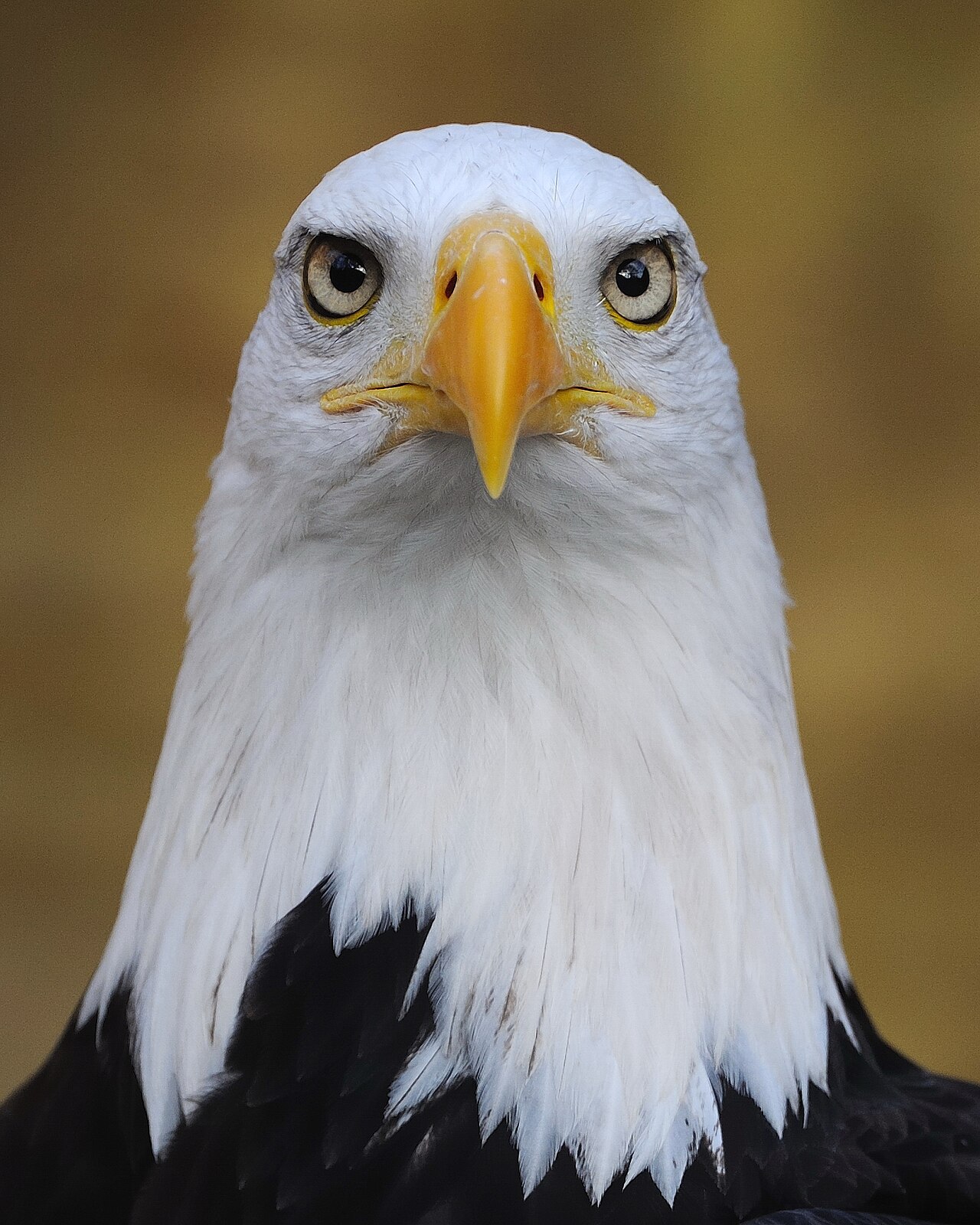
A bald eagle tattoo is, before anything else, an American symbol. The white head and yellow beak are instantly recognizable, and the design signals patriotism, national identity, and often military or first-responder service. Since 1782 the bald eagle has anchored the Great Seal of the United States, and it was formally designated the national bird in 2024, so the association is official as well as cultural. Wearers outside the US generally choose it specifically for that American connection.
A golden eagle tattoo strips away the nationalism and keeps the raw predator. Golden eagles are the more widespread species globally and the more formidable hunter, taking prey as large as foxes and young deer. As a tattoo it means power, mastery, and wildness without a flag attached, and it carries deep meaning in cultures from Mexico, where a golden eagle on a cactus anchors the national coat of arms, to Central Asia, where golden eagles are flown by traditional Kazakh hunters.
Visually, the two read differently even in black and gray. The bald eagle’s white head creates high contrast that artists exploit for drama, while the golden eagle is uniformly dark and reads as more naturalistic and subdued. If your meaning is service and country, the bald eagle is the honest choice. If your meaning is personal power and independence from any institution, the golden eagle says it more precisely, and tattoo artists increasingly steer clients through exactly that distinction.
Eagle and Snake Tattoo Meaning
The eagle fighting a snake is one of the oldest conflict images in human art, and as a tattoo it means the triumph of good over evil, victory over an enemy, or the mastery of higher nature over lower instincts. The eagle represents sky, clarity, and honor. The snake represents earth, temptation, or a specific struggle: an addiction, an illness, a rival, a past self. The eagle gripping the snake in its talons declares the outcome of that fight.
The image has serious historical anchors. Aztec legend held that the wandering Mexica people would found their city where they saw an eagle perched on a cactus devouring a snake, the sign that marked Tenochtitlan, and that exact scene sits on the Mexican flag today. For wearers with Mexican heritage, an eagle and snake tattoo is often a direct statement of national and ancestral pride rather than an abstract good-versus-evil emblem, and the design usually follows the coat of arms closely.
Composition controls the story. An eagle with the snake pinned and defeated means the battle is won. A snake coiled up an eagle’s wing with the outcome undecided means the fight is ongoing, a choice some people in recovery deliberately make as an honest status report. A few wearers even invert the sympathy, seeing the snake as resilience under attack. Because the snake half of the design carries its own rich symbolism, it is worth reading up on snake tattoo meaning before finalizing a fighting-pair composition.
Aztec Eagle Warrior and Other Cultural Eagle Tattoos
The Aztec eagle warrior tattoo depicts a fighter of the cuauhtli, the elite eagle warrior order of the Aztec military, usually shown as a profile head wearing an open-beaked eagle helmet. Eagle warriors were bound to the sun god Huitzilopochtli, and the eagle itself represented the sun’s daily rise. As a tattoo it means elite courage, discipline, and, for many wearers, a deliberate statement of Mexican or Indigenous Mesoamerican heritage. It is one of the most requested designs in Chicano tattoo tradition.
Roman and European traditions offer a different lineage. The Roman aquila stood for the authority and unity of the legion, and double-headed eagles later spread through Byzantine, Russian, Austrian, and Albanian heraldry, meaning dominion over east and west. A heraldic eagle tattoo, symmetrical and stylized, reads as order, lineage, and formal power, distinctly different in tone from the naturalistic American bald eagle even though the bird is the same.
One cultural area demands genuine care. In many North American Indigenous nations, eagle feathers are sacred items that must be earned through specific acts and are legally protected in the US, where the eagle feather law restricts possession of real feathers to enrolled tribal members. A non-Native person tattooing Native-specific sacred imagery, such as an earned feather bonnet, is widely considered appropriation. Admiring the eagle is universal; borrowing another nation’s specific sacred regalia is not, and a good artist will help you find imagery that honors the animal without crossing that line.
Eagle Feather and Eagle Wings Tattoos
A single eagle feather tattoo means honor, truth, and earned achievement, a quieter design that carries much of the full bird’s weight. In many Indigenous North American traditions an eagle feather is awarded for an act of courage or service, which is exactly why the earned-honor meaning attaches to the image. Feather designs suit people marking a specific accomplishment: a degree, a sobriety date, surviving something. Fine-line feathers along the forearm or behind the ear are among the most popular small eagle designs.
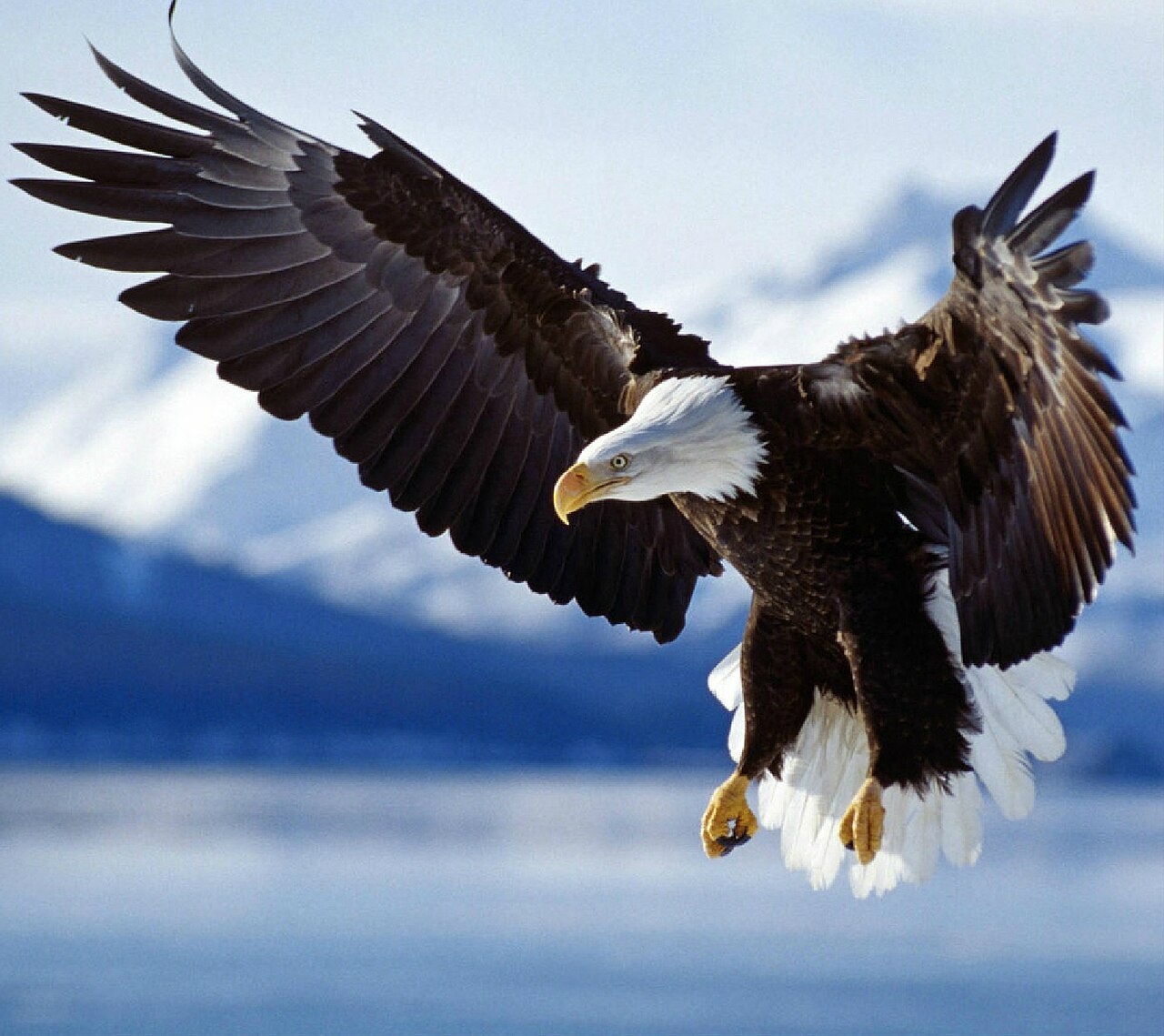
Eagle wings, especially the full spread across the upper back, mean freedom and protection simultaneously. The back placement turns the wearer into the eagle, wings unfurling from the shoulder blades, which is why back wings consistently rank among the most searched eagle designs. Smaller single-wing pieces on the ribs or calf carry the same meaning at lower commitment, and a broken or clipped wing variant is sometimes chosen to represent loss or a freedom taken away and being rebuilt.
Memorial use is common for both. A feather drifting downward with a name or date represents a loved one who has passed, drawing on the widespread idea of the eagle as a messenger between worlds. This overlaps with the way people process bird omens generally, from feathers found on a path to the heavier symbolism explored in our guide to dead bird symbolism, where endings are usually read as transitions rather than pure loss. A memorial feather tattoo makes that same hopeful reading permanent.
Best Placements: Back, Chest, Arm, and Hand
The back is the classic canvas for a full eagle, and search interest for eagle back tattoos outpaces every other placement. A spread-winged eagle across the shoulder blades uses the body’s widest flat plane, lets the wings follow the natural line of the shoulders, and scales to any style from photorealism to traditional. The symbolism of carrying the eagle on your back, protection and watchfulness behind you, appeals to veterans and to anyone who thinks of the tattoo as a guardian.
The chest places the eagle over the heart, and chest eagles traditionally face inward or spread across both pectorals with the head centered. This placement reads as identity rather than decoration, a statement that the eagle’s values are core to who you are. Forearm and upper-arm placements are the practical middle ground: large enough for detail, visible when you choose, coverable at work, and the most common choice for a first substantial tattoo.
Hand eagle tattoos have surged, driven by traditional-style eagle heads across the back of the hand. A hand tattoo is permanently visible, so it signals full commitment to the image and, fairly or not, still carries professional consequences in some fields. Sizing matters everywhere: fine details blur over decades, so a highly detailed eagle needs the real estate of a back, chest, or full sleeve, while hands, wrists, and ankles suit bold, simple designs. For contrast with a softer nocturnal counterpart, see how placement changes tone in owl tattoo meaning.
Frequently Asked Questions
What does an eagle tattoo symbolize?
An eagle tattoo symbolizes freedom, strength, courage, and clear vision. Depending on the design it can add patriotism (bald eagle), triumph over adversity (eagle and snake), earned honor (eagle feather), or heritage (Aztec eagle warrior, Mexican eagle and snake).
What does an eagle tattoo mean for a woman?
For women the eagle most often means freedom, independence, and fierce protectiveness, sometimes tied to motherhood since female eagles are larger than males and defend the nest. Designs lean toward eagles in flight, finer lines, and placements like the shoulder, ribs, or wrist.
What does an eagle with a snake tattoo mean?
An eagle gripping a snake means victory of good over evil or triumph over a specific struggle. It is also the emblem on the Mexican flag, so for many wearers it is a direct statement of Mexican heritage and pride.
Is an eagle tattoo disrespectful?
A general eagle, feather, or wing design is not disrespectful. Care is needed with Indigenous-specific sacred imagery, such as earned feather bonnets, which many Native nations consider inappropriate for outsiders to wear. When in doubt, keep the design about the bird itself.
What does an eagle tattoo mean in the military?
In US military culture the eagle means service, honor, and country, and it appears in countless veteran tattoos alongside flags, unit insignia, and dates. The screaming eagle specifically references the 101st Airborne Division.
What does a small eagle tattoo mean?
A small eagle carries the same core meaning of freedom and courage in a private, minimalist form. Small eagles on the hand, wrist, or behind the ear are typically personal reminders rather than public statements.
Do eagle tattoos have any negative meanings?
Rarely. In most contexts the eagle is entirely positive. The main cautions are cultural: certain national or heraldic eagles are tied to specific regimes or movements, so research any historical emblem you copy exactly, and avoid sacred Indigenous regalia unless it is your own heritage.