Backyard Birds of Massachusetts: 15 Common Species (2026 Identification Guide)
Massachusetts’s compact geography from the Berkshires to Cape Cod creates a remarkably diverse backyard bird community for its size. The state hosts 200+ regular bird species, with 30-40 commonly visiting suburban yards depending on region and season. Massachusetts’s position along the Atlantic Flyway makes spring and fall migration spectacular, Plum Island (Parker River NWR) is a world-class migration hotspot. The state’s mix of coastal influence (Boston, Cape Cod, North Shore), inland forests, and the western mountains creates distinct backyard communities. This guide covers the 15 most common backyard birds across Massachusetts with field marks, regional ranges, and proven attraction strategies for the state’s four-season climate.
Quick Reference: 15 Common Backyard Birds of Massachusetts
| Species | Size | Key ID Feature | When in MA |
|---|---|---|---|
| Black-Capped Chickadee (state bird) | 5.25″ | Black cap + white cheeks + black bib | Year-round |
| Northern Cardinal | 8.5″ | All red (male) + crest + black face mask | Year-round |
| Blue Jay | 11″ | Blue crest + black necklace + white below | Year-round |
| Tufted Titmouse | 6.5″ | Gray crest + buff flanks + black eye | Year-round |
| American Goldfinch | 5″ | All yellow (summer male) + black wings | Year-round |
| House Finch | 5.5″ | Red head/breast (male) + streaky belly | Year-round |
| Mourning Dove | 12″ | Tan + long pointed tail + small head | Year-round |
| White-Breasted Nuthatch | 5.75″ | Gray back + black cap + walks down trees | Year-round |
| Downy Woodpecker | 6.75″ | Small + short bill + checkered wings | Year-round |
| Dark-Eyed Junco | 6″ | Slate-gray + white belly + pink bill | Winter (Oct-Apr) |
| American Robin | 10″ | Rust-orange breast + gray-brown back | Year-round |
| Eastern Bluebird | 7″ | Blue back + rust breast + white belly | Year-round (most areas) |
| House Sparrow | 6.25″ | Gray crown + black bib (male) | Year-round |
| Common Grackle | 12.5″ | Iridescent + keel tail + yellow eye | March-November |
| Cedar Waxwing | 7.25″ | Sleek + crested + yellow tail tip + black mask | Year-round nomadic |
Species Identification
Black-Capped Chickadee (State Bird)
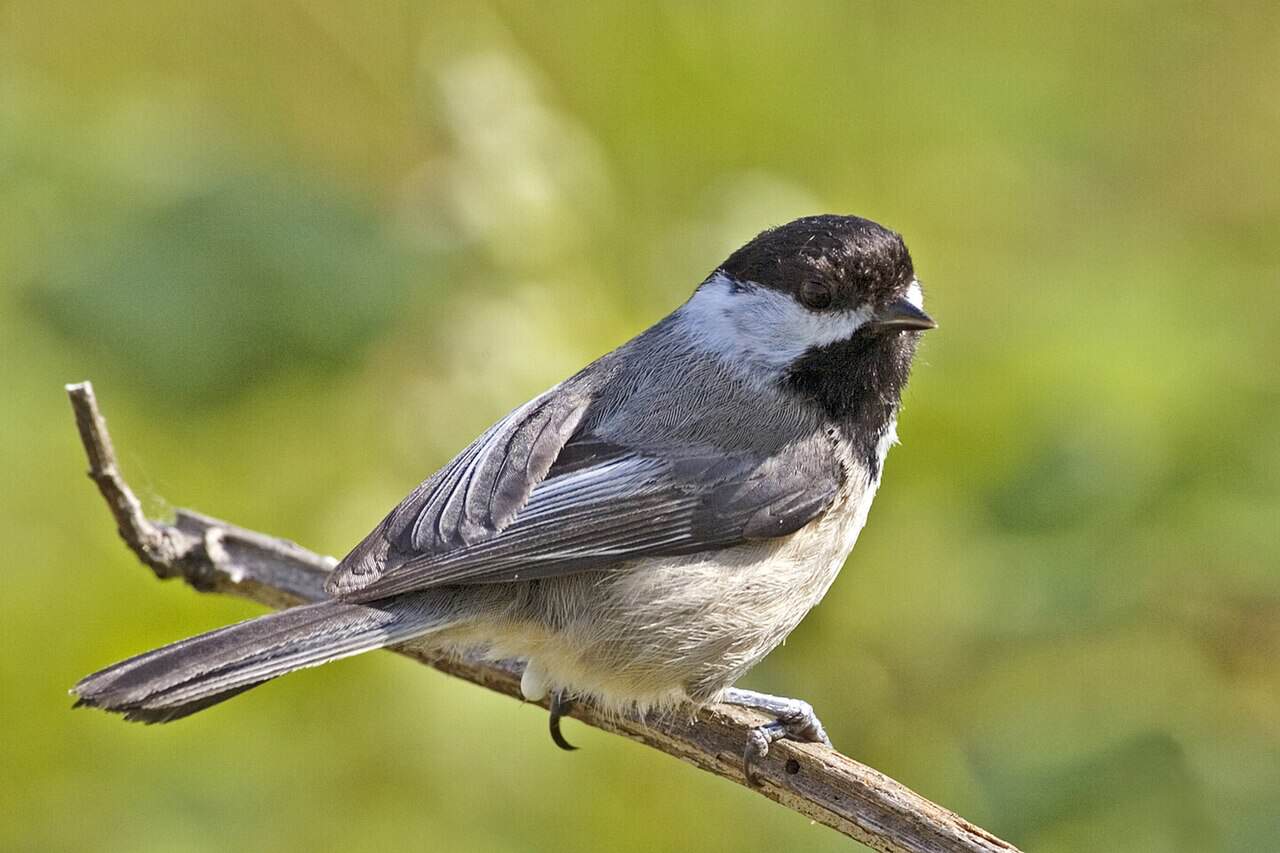
Massachusetts’s official state bird, designated in 1941. Black-Capped Chickadees have a distinctive black cap, black bib (throat), white cheeks, gray back and wings, and buffy flanks. Their cheerful ‘chick-a-dee-dee-dee’ call is the soundtrack of Massachusetts winters. Among the bravest birds during winter snowstorms, often the first to arrive at feeders.
Range in Massachusetts: Statewide year-round.
Habitat: Forests, parks, suburban yards with mature trees.
Key ID: Black cap + black bib + white cheeks + small size. The classic ‘chickadee’ look.
Where to see: Common at backyard feeders. Will eat sunflower seed, peanuts, and suet. Will use small nest boxes (1.125 inch hole).
Northern Cardinal
Massachusetts’s beloved year-round red bird. Male Northern Cardinals are brilliant red overall with a pointed red crest, black face mask, and thick orange-red bill. Females are tan-brown with red highlights. Cardinals have expanded into Massachusetts dramatically over the past century, once rare, now ubiquitous across the state.
Range in Massachusetts: Statewide year-round.
Habitat: Yards with shrubby cover, parks, woodland edges, urban areas with brush.
Key ID: Brilliant red + pointed crest + black face mask + thick orange-red bill (male). The most photogenic year-round Massachusetts yard bird.
Where to see: Hopper or platform feeders with sunflower or safflower seed. Cardinals prefer dawn/dusk feeding. Plant native shrubs (red-twig dogwood, native viburnums) for nesting cover.
Blue Jay
Massachusetts’s familiar crested blue bird. Blue Jays have bright blue heads, wings, and backs (with black markings), white chests, and a prominent blue crest. Loud, intelligent, and dominant at feeders. Massachusetts Blue Jays cache thousands of acorns each fall, significantly contributing to oak forest regeneration across the state.
Range in Massachusetts: Statewide year-round.
Habitat: Forests, parks, suburban backyards with mature trees.
Key ID: Blue + black necklace + prominent crest + white below. The largest common blue bird in Massachusetts.
Where to see: Platform feeders with peanuts in shell, sunflower seed, and corn. Bird baths regularly.
Tufted Titmouse
Massachusetts’s perky crested feeder companion. Tufted Titmice have a clean gray back, white underparts with buff flanks, a pointed gray crest, large black eyes, and a small black forehead patch. Their loud ‘peter-peter-peter’ calls fill Massachusetts woodlands year-round. Range has expanded northward dramatically, once primarily a southern bird, now common throughout Massachusetts.
Range in Massachusetts: Statewide year-round.
Habitat: Mature deciduous forests, parks, suburban yards.
Key ID: Gray crest + buff flanks + black eye + small size. Distinctive crest separates from chickadees.
Where to see: Common at backyard feeders with sunflower seed, peanuts, and suet. Often in mixed flocks with Black-Capped Chickadees and nuthatches.
American Goldfinch
Massachusetts’s brightest summer bird. Summer male American Goldfinches are brilliant lemon-yellow overall with jet-black wings (with white wing bars) and a black cap. Females and winter birds are duller olive-brown with pale yellow wash. Goldfinches breed late (July-September) to coincide with peak thistle and weed seed availability.
Range in Massachusetts: Statewide year-round.
Habitat: Open habitat with weeds, gardens, parks, suburban yards.
Key ID: Brilliant yellow (summer male) + black wings + black cap. Winter birds duller olive-brown.
Where to see: Nyjer (thistle) feeders. Will also visit sunflower feeders. Often in flocks throughout winter.
Eastern Bluebird
Massachusetts’s bluebird species, and a major conservation success story. Male Eastern Bluebirds have brilliant royal-blue heads and backs, rust-orange throats and breasts, and clean white bellies. Females are paler. Once severely declining due to nest box competition with introduced species, Massachusetts Eastern Bluebird populations have rebounded through extensive nest box programs.
Range in Massachusetts: Statewide year-round in most areas.
Habitat: Open habitat with scattered trees, pastures, golf courses, parks, suburbs with old trees.
Key ID: Bright blue back + rust-orange breast + clean white belly. Eastern form has white belly.
Where to see: Install NABS-approved bluebird nest boxes on poles in open areas. Provide mealworms (live or freeze-dried). Plant native berry shrubs like Eastern Red Cedar, Winterberry Holly.
Cedar Waxwing
Massachusetts’s elegant nomadic visitor. Cedar Waxwings have sleek silky-brown bodies, prominent crests, black face masks edged in white, pale yellow bellies, and bright yellow tail tips. The red ‘wax’ tips on their wings (giving them their name) are visible at close range. Highly social, usually seen in flocks of 10-50+ birds.
Range in Massachusetts: Year-round but nomadic, flocks follow fruit availability.
Habitat: Anywhere with berry-producing trees and shrubs, parks, suburbs, woodlands.
Key ID: Sleek brown + crest + black mask + yellow tail tip. The yellow tail tip is unique.
Where to see: Plant native berry-producing trees (Eastern Red Cedar, Winterberry, Mountain Ash, Serviceberry). Provide a bird bath, waxwings frequently bathe in flocks. They don’t visit seed feeders.
Dark-Eyed Junco
Massachusetts’s classic winter sparrow, called ‘snowbirds’ for their winter arrival. Massachusetts hosts the ‘Slate-Colored’ form: uniformly slate-gray above (males darker than females), clean white belly, and a pink conical bill. White outer tail feathers flash in flight. Migrate south from northern breeding grounds for Massachusetts winters.
Range in Massachusetts: Statewide in winter; some breed at high elevations in western Massachusetts.
Habitat: Forests in summer (higher elevations); backyards, gardens, and edges in winter.
Key ID: Slate-gray + clean white belly + pink bill + white outer tail. Ground-feeding flocks in winter yards.
Where to see: Winter feeders. Ground-feeding birds, prefer platform feeders or scattered seed.
House Finch
Massachusetts’s most common feeder finch. Male House Finches have red wash over the head, breast, and rump with brown-streaked flanks. Females are uniformly brown-streaked. Originally a Western US species, House Finches were illegally released in Long Island in the 1940s and have since spread across the entire East, including all of Massachusetts.
Range in Massachusetts: Statewide year-round.
Habitat: Urban, suburban, agricultural, anywhere with human-modified landscapes.
Key ID: Red on head/breast (male) + brown-streaked flanks. Smaller than cardinals. Conical bill.
Where to see: Tube feeders with nyjer or sunflower seed. Often in small flocks.
Mourning Dove
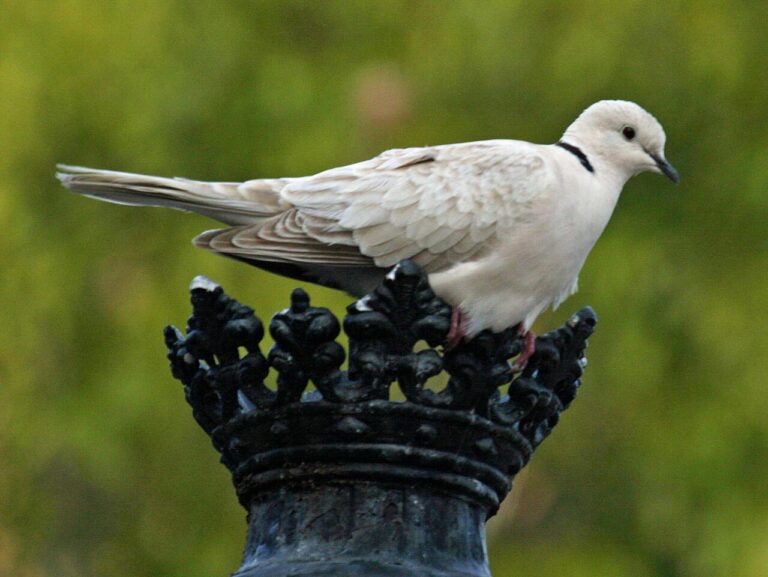
Massachusetts’s most widespread dove. Mourning Doves have sleek tan-brown bodies, small heads, and long pointed tails with white edges. Their distinctive whistling wing sound on takeoff is recognizable in every Massachusetts yard.
Range in Massachusetts: Statewide year-round.
Habitat: Open habitat, suburbs, parks, agricultural areas.
Key ID: Tan-brown + long pointed tail + small head. Whistling wing-sound in flight.
Where to see: Ground feeders or platform feeders with mixed seed, sunflower, or cracked corn. Often in pairs.
White-Breasted Nuthatch
Massachusetts’s ‘upside-down bird.’ White-Breasted Nuthatches have a blue-gray back, black cap (males) or gray cap (females), pure white face and underparts, and chestnut on the lower belly/undertail. They walk DOWN tree trunks headfirst, opposite of woodpeckers.
Range in Massachusetts: Statewide year-round.
Habitat: Mature deciduous forests, parks, mature suburban trees.
Key ID: Gray back + black/gray cap + white face + walks down trees headfirst. The descending behavior is diagnostic.
Where to see: Common at sunflower and suet feeders. Often in mixed flocks with chickadees and titmice.
Downy Woodpecker
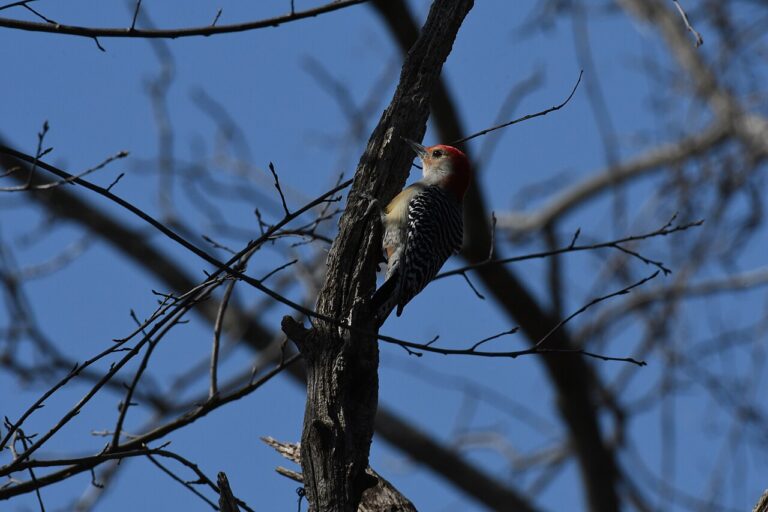
Massachusetts’s smallest and most common backyard woodpecker. Downy Woodpeckers have a clean black-and-white checkered pattern on the wings, a white back stripe, white underparts, and males have a small red patch on the back of the head.
Range in Massachusetts: Statewide year-round.
Habitat: Forests, parks, backyards with mature trees.
Key ID: Small size (6.75 inches) + short bill (1/3 head length) + checkered pattern + small red nape (male).
Where to see: Common at suet feeders. Will also eat sunflower seed and peanuts at platform feeders.
Regional Variations Across Massachusetts
Massachusetts’s geographic compactness still creates distinct backyard bird communities by region. The Berkshires and western Massachusetts (Pittsfield, Williamstown, Lenox) host higher-elevation species: Hermit Thrushes, Black-Throated Blue Warblers (summer), Magnolia Warblers, plus occasional winter species like Common Redpolls, Pine Grosbeaks, and Evening Grosbeaks in irruption years.
Central Massachusetts (Worcester, Springfield, Holyoke) hosts the most representative state bird community, typical of southern New England. Cardinals, Chickadees, Titmice, Blue Jays, Mourning Doves are common year-round. Spring and fall migration bring spectacular warbler waves through the Connecticut River Valley.
Eastern Massachusetts and Boston metro (Boston, Cambridge, Lowell, Lawrence, Brockton) hosts adapted urban populations. Same species as central MA but in suburban densities. Spring migration along the Atlantic coast is especially spectacular.
North Shore and Cape Ann (Gloucester, Newburyport, Rockport) hosts coastal specialists during migration: gulls, terns, plus warbler concentrations at Plum Island (Parker River NWR), one of America’s premier birding hotspots. Yards near these locations see periodic migrant warbler visitors.
Cape Cod (Hyannis, Provincetown, Falmouth, Chatham) has its own distinct coastal climate. Year-round Carolina Wrens (less common in mainland MA), Northern Cardinals, plus seasonal specialties. Winter brings Snowy Owls in some years (more accessible than mainland populations).
South Shore and Plymouth area host transitional species, Pine Warblers in summer (in pine forests), Carolina Wrens year-round, plus typical eastern MA backyard species.
Martha’s Vineyard and Nantucket islands have their own ecology, Carolina Wrens established, plus reliable autumn vagrants (rare birds blown off course).
The Black-Capped Chickadee: Massachusetts’s Cheerful Year-Round Resident
The Black-Capped Chickadee (Poecile atricapillus) was designated Massachusetts’s official state bird in 1941. The choice celebrated the species as a symbol of Massachusetts’s hardy, cheerful character, chickadees stay year-round, including through brutal Massachusetts winters.
Black-Capped Chickadees have remarkable adaptations enabling winter survival. Their tiny bodies (only 0.4 oz) lose heat rapidly, but chickadees can lower their body temperature 10-12°F at night to conserve energy (‘controlled hypothermia’). They cache food (sunflower seeds, suet bits) in thousands of hiding spots across their territory, and remember where each cache is.
Chickadees form winter flocks with strict social hierarchies. The dominant pair leads the flock; subordinate birds (often young from the previous year) follow. Other species (titmice, nuthatches, woodpeckers) join chickadee flocks during winter, creating mixed-species ‘foraging guilds’ that pass through yards.
Massachusetts chickadees are nonmigratory, the same individual birds may visit your feeders for years (chickadees can live 10+ years). Banding studies have documented some chickadees as old as 12+ years in the wild.
Chickadees are among the bravest birds at feeders during winter snowstorms. They visit feeders during heavy snow when other birds shelter. Their cheerful ‘chick-a-dee-dee-dee’ calls during winter storms remind Massachusetts birders that their state bird is reliably present year-round.
To attract Black-Capped Chickadees, provide black oil sunflower seed in tube or hopper feeders, plus suet in cage feeders. Install small nest boxes (1.125 inch entrance hole) on tree trunks in your yard, chickadees may use them for nesting (April-June). They’re often the easiest backyard bird to hand-feed, patience plus sunflower seeds on an outstretched palm often results in chickadees landing on your hand within a week or two.
How to Attract Massachusetts Backyard Birds
Massachusetts’s four-season climate (cold winters, hot summers, dramatic spring/fall migrations) creates year-round backyard birding opportunities. Winter (December-March) is the most rewarding feeder-watching season, natural food sources are scarce, and birds rely heavily on backyard feeders to survive Massachusetts’s harsh cold.
Winter feeding strategy: black oil sunflower seed in tube and hopper feeders (universal favorite). Suet (in cage feeders) delivers maximum energy per gram, critical when winter temperatures drop below zero. Peanuts (shelled, raw) for Blue Jays, chickadees, titmice, and nuthatches. Nyjer (thistle) seed in small-port feeders for goldfinches and Pine Siskins.
Heated bird baths are valuable Massachusetts equipment. Water freezes daily December-March across most of the state. A heated bath becomes a reliable water source unmatched by anything else. Birds need water in winter as much as food.
Spring migration (April-May) brings warblers, vireos, thrushes, tanagers, and orioles passing through Massachusetts. Mount Auburn Cemetery (Cambridge), Plum Island, and other migration hotspots are world-famous. Most migrants don’t visit seed feeders but appreciate fruit (oranges, grape jelly for orioles), mealworms, and water features.
Summer (June-August) is breeding season. Provide nest boxes for cavity nesters: Eastern Bluebirds (1.5 inch hole, in open areas), House Wrens (1.25 inch), chickadees (1.125 inch), Tree Swallows. Suet consumption drops but continues year-round.
Native plant landscaping is the highest-impact long-term strategy. Massachusetts-native plants support 10-100x more caterpillars (essential nesting bird food) than non-native landscaping. Plant native oaks, maples, dogwoods, serviceberries, native viburnums.
Manage squirrels with baffles on pole-mounted feeders. Eastern Gray Squirrels are abundant Massachusetts feeder raiders. Weight-activated ‘squirrel-proof’ feeders work well for high-traffic stations.
For Cedar Waxwings, they don’t visit seed feeders but reliably visit yards with berry-producing trees. Plant Eastern Red Cedar, Mountain Ash, Serviceberry, and Winterberry Holly. Waxwings often arrive in flocks of 20-50 to strip berries from a single tree over 1-3 days.
Avoid pesticides if possible. Pesticides reduce insect populations supporting nesting birds. Most lawn ‘pests’ (grubs, caterpillars) are actually critical food for nesting birds.
Top Native Massachusetts Plants for Backyard Birds
**White Oak (Quercus alba) or Northern Red Oak (Q. rubra):** Massachusetts’s native oaks support hundreds of caterpillar species, the most productive single plantings for MA yards. Acorns feed Blue Jays, woodpeckers, Tufted Titmice, and many other species.
**Eastern Red Cedar (Juniperus virginiana):** Native conifer producing blue-gray berries that feed Cedar Waxwings (named for them), American Robins, Yellow-Rumped Warblers, and many other species. Provides essential winter cover.
**Serviceberry (Amelanchier species):** Native small tree producing dark purple berries in early summer. Feeds American Robins, Cedar Waxwings, Northern Cardinals, and 30+ other species. Spectacular early spring white flowers.
**Winterberry Holly (Ilex verticillata):** Native deciduous holly producing bright red berries that persist into late winter. Critical winter food when other berries are gone. Feeds American Robins, Cedar Waxwings, Eastern Bluebirds.
**Mountain Ash (Sorbus americana):** Native small tree producing brilliant orange-red berry clusters in fall that persist into winter. Top Cedar Waxwing food source. Tolerates Massachusetts winters.
**Native Viburnum species (Viburnum dentatum, V. lentago, V. trilobum):** Native shrubs producing berries that feed dozens of bird species. American Highbush Cranberry (V. trilobum) provides red berries persisting through winter, critical late-winter food.
Frequently Asked Questions
What’s the most common backyard bird in Massachusetts?
Black-Capped Chickadee (the state bird), Northern Cardinal, Mourning Dove, House Finch, House Sparrow, Blue Jay, Tufted Titmouse, and American Goldfinch are all extremely common across Massachusetts year-round. In winter, Dark-Eyed Juncos become abundant ground feeders. The exact most-common species varies by season and habitat.
Do hummingbirds visit Massachusetts yards?
Yes, Ruby-Throated Hummingbirds are the only common hummingbird species in Massachusetts. They breed across the state and visit hummingbird feeders mid-May through early October. Most migrate to Central America for winter. Plant native salvias, bee balm, jewelweed, and cardinal flower to attract them.
When do juncos arrive in Massachusetts?
Dark-Eyed Juncos typically arrive in Massachusetts backyards in late October as winter visitors. They stay through April. Many Massachusetts birders consider their arrival the official start of winter bird-feeding season. They’re ground-feeders, use platform feeders or scattered seed to attract them.
How do I attract Black-Capped Chickadees (Massachusetts’s state bird) to my yard?
Provide black oil sunflower seed in tube or hopper feeders, plus suet in cage feeders. Install small nest boxes (1.125 inch entrance hole) on tree trunks. Once chickadees discover your feeders, they’ll typically visit reliably for years. With patience, you can train chickadees to take sunflower seeds from your outstretched palm, they’re among the easiest birds to hand-feed.
What’s that bird with the crest and yellow tail tip in my Massachusetts yard?
Cedar Waxwing, a nomadic Massachusetts visitor (year-round but flocks follow fruit availability). Sleek brown body, prominent crest, black mask, yellow belly, and brilliant yellow tail tip. Often arrives in flocks of 20-50 to strip berries from a single tree. Plant Eastern Red Cedar, Mountain Ash, and Winterberry Holly to attract them.
Are there Carolina Wrens in Massachusetts?
Yes, especially in coastal areas, Cape Cod, and the islands (Martha’s Vineyard, Nantucket). Carolina Wrens have expanded northward dramatically with climate change. They’re rich rust-brown with a bold white eyebrow and loud ‘tea-kettle’ song. Cold winters with deep snow can reduce populations, but they typically rebound.
What’s the difference between House Sparrow and other Massachusetts sparrows?
House Sparrow: introduced from Europe, common in urban/suburban yards, males have gray crowns and black bibs, females are uniformly brown. Native sparrows (Song Sparrow, White-Throated Sparrow, Chipping Sparrow, etc.) are more refined-looking with distinctive markings. Massachusetts has 15+ sparrow species, most are native and helpful to ecosystems.
What native plants attract the most Massachusetts birds?
White Oak and Northern Red Oak are the single most productive plantings for MA yards, supporting hundreds of caterpillar species. Other top natives: Serviceberry, Eastern Red Cedar, native viburnums, Mountain Ash, Winterberry Holly. Plant native, not non-native ornamentals, native plants support 10-100x more bird food.