Types of Quail: A Complete Guide
North America is home to several types of quail, including the northern bobwhite in the East and the California, Gambel’s, scaled, mountain, and Montezuma quail in the West. These plump, ground-dwelling birds are known for traveling in family groups called coveys and, in many species, for the jaunty topknot on their heads. This guide covers how many types of quail there are, common species you can see, how to tell them apart, where they live, and how to attract quail. Among the smallest kept in captivity is the button quail, a tiny aviary favorite.
| Quail | Key Features |
|---|---|
| Northern Bobwhite | Eastern, whistles “bob-white” |
| California Quail | Curved topknot, scaly belly |
| Gambel’s Quail | Topknot, desert Southwest |
| Scaled Quail | Pale, scaly, “cotton top” |
| Mountain Quail | Straight plume, mountains |
| Montezuma Quail | Bold face pattern, secretive |
How Many Types of Quail Are There?
There are several species of quail native to North America, part of a group of small, plump ground birds. The most widespread in the East is the northern bobwhite, famous for its clear, whistled call, while the West is home to several species, including the California quail, Gambel’s quail, scaled quail, mountain quail, and the secretive Montezuma quail. Quail are generally round-bodied, short-tailed birds that spend most of their time on the ground, running and foraging rather than flying, though they can burst into rapid flight when startled. Many quail sport a distinctive topknot or plume on the head, and they are often beautifully patterned in intricate browns, grays, and other markings. Quail are social birds that gather in groups called coveys, especially outside the breeding season, providing safety in numbers. This variety of quail, from the eastern bobwhite to the western desert species, makes them a charming group of ground birds, quite different from the water birds in our guide to types of ducks.
Common Types of Quail
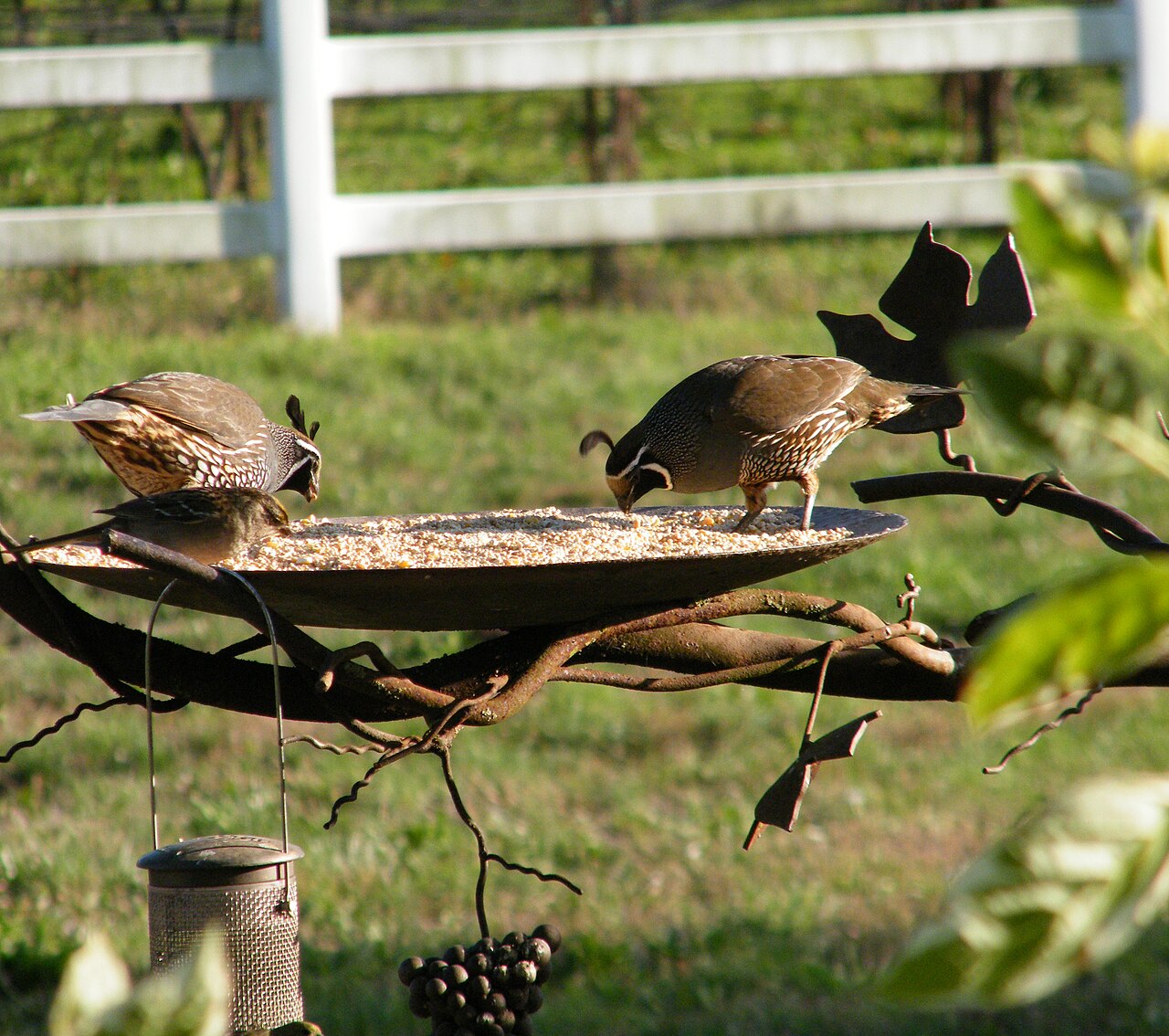
Several types of quail are especially notable. The northern bobwhite is the quail of the East and Midwest, a round, reddish-brown bird best known for the male’s clear, whistled bob-white call that gives it its name. The California quail is a handsome gray and brown bird with a forward-curving black topknot and a scaly belly pattern, common in the West. Gambel’s quail is similar but lives in the desert Southwest, with a comma-shaped topknot and a plain, unscaled belly with a dark patch on the male. The scaled quail, sometimes called the cottontop, is a pale grayish quail of arid country with a scaly pattern and a whitish crest. The mountain quail is a larger western quail with a long, straight head plume and lives in mountainous areas. The Montezuma quail is a small, secretive quail with a striking, boldly patterned face, found in the mountains of the Southwest. Each has its own beauty and range.
How to Tell Quail Apart
Telling quail apart is easier when you use the head plume, body pattern, and especially geographic range. Start with range, since the northern bobwhite is the quail of the East, while the others are western, each favoring particular regions and habitats. Look at the topknot or plume, as the California and Gambel’s quail have curved, comma-shaped topknots, the mountain quail has a long straight plume, and the bobwhite lacks a showy plume. Note the body pattern, such as the scaly belly of the California quail versus the plain belly with a dark patch of Gambel’s quail, the overall pale, scaled look of the scaled quail, and the bold face pattern of the Montezuma quail. Habitat helps distinguish the desert species from the mountain dwellers. Listen for calls too, like the bobwhite’s whistle. By combining range, head plume, body pattern, and habitat, you can identify most quail, a rewarding challenge for these ground birds, as explored in our guide to state birds, several of which are quail.
Where Quail Live
Quail live in a variety of habitats across North America, generally favoring brushy, open, or grassy areas where they can forage on the ground and find cover. The northern bobwhite inhabits farmland, grasslands, brushy fields, and open woodlands in the East and Midwest, though its numbers have declined in many areas. In the West, the California quail favors brushy areas, chaparral, oak woodlands, parks, and gardens, and it readily lives near people. Gambel’s quail and scaled quail are desert birds, living in arid scrublands and deserts of the Southwest, while the mountain quail inhabits brushy mountain slopes and forests. The Montezuma quail lives in grassy oak and pine-oak woodlands in the mountains of the Southwest. Quail generally need a mix of cover for protection and open ground for foraging, and many rely on shrubs and brush for shelter. Because several quail, like the California quail, live in gardens and brushy areas, they can sometimes be seen near homes in the right regions, as detailed in our guide to plants that attract birds.
How to Attract Quail
Attracting quail to your yard is possible in areas where they occur, especially with the right food and cover. Quail are primarily seed-eaters that forage on the ground, so scattering seed such as cracked corn, millet, and other grains on the ground or on low platforms can draw them in, much as it does other ground-feeding birds. Providing dense, brushy cover is very important, since quail need shrubs, hedges, brush piles, and other protective vegetation to feel safe and to shelter from predators, so a yard with natural, brushy areas is far more attractive to them. Planting native shrubs and seed-bearing plants offers both food and cover. A ground-level source of water for drinking is also welcome, especially in dry regions. Because quail value safety, keeping cats indoors and leaving some wild, sheltered areas helps. With ground-offered seed, dense cover, native plantings, and water, you can make your yard inviting to quail in regions where they live, enjoying these charming coveys, as reflected in our guide to the best bird seed.
The Northern Bobwhite’s Famous Whistle
The northern bobwhite is the quail most people in the East know, largely thanks to its distinctive voice. According to the Cornell Lab of Ornithology, the northern bobwhite is named for the male’s clear, whistled bob-white call, and quail gather in groups called coveys. This cheerful, rising whistle, which sounds like the bird is saying its own name, is a familiar sound of farmland, grasslands, and brushy fields in the East and Midwest, especially in spring and summer when males call to defend territory and attract mates. The bobwhite itself is a round, reddish-brown quail that spends most of its time on the ground, and it is often heard before it is seen. Sadly, northern bobwhite numbers have declined significantly in many areas due to habitat loss, making its whistle less common than it once was. Recognizing the bobwhite’s signature call is a wonderful way to detect this charming quail, one of the most beloved ground birds, as explored in our guide to bird symbolism.
Quail Coveys and Family Life
One of the most endearing aspects of quail is their social family life, centered on the covey. Outside the breeding season, quail gather in groups called coveys, which may consist of family members and other birds, and these coveys forage together, watch for danger collectively, and provide safety in numbers. At night, quail in a covey often roost on the ground in a tight circle with their tails pointed inward and their heads facing outward, an arrangement that conserves warmth and allows them to burst away in all directions if a predator approaches. During the breeding season, coveys break up as pairs form and raise their young, with the precocial chicks able to walk and feed themselves soon after hatching, following their parents closely. In some species, both parents help care for the brood. This strong social structure and devoted family life make quail especially charming birds to observe, adding to the appeal of these ground dwellers, as reflected in our guide to plants that attract birds.
Related reading: Button Quail.
Related reading: Coturnix Quail.
Frequently Asked Questions
How many types of quail are there?
North America has several quail species, including the northern bobwhite, California quail, Gambel’s quail, scaled quail, mountain quail, and Montezuma quail.
What is the most common quail?
The northern bobwhite is the most familiar quail in the East, known for its whistled call, while the California quail is very common in the West.
What quail has a topknot?
The California and Gambel’s quail have forward-curving, comma-shaped topknots, while the mountain quail has a long, straight head plume. These plumes are distinctive features.
What is a group of quail called?
A group of quail is called a covey. Quail gather in coveys, especially outside the breeding season, foraging together and roosting in a tight circle for safety.
How do you tell quail apart?
Use geographic range, the shape of the head plume, and the body pattern. The bobwhite is eastern, while the topknotted California and Gambel’s quail are western.
How do you attract quail?
Offer seed like cracked corn and millet on the ground, provide dense brushy cover with shrubs and brush piles, plant native shrubs, and supply ground-level water.
Where do quail live?
Quail live in brushy fields, grasslands, deserts, chaparral, and mountain woodlands across North America, with the bobwhite in the East and several species in the West.