Carolina Wren: Facts, Identification, and Song Guide
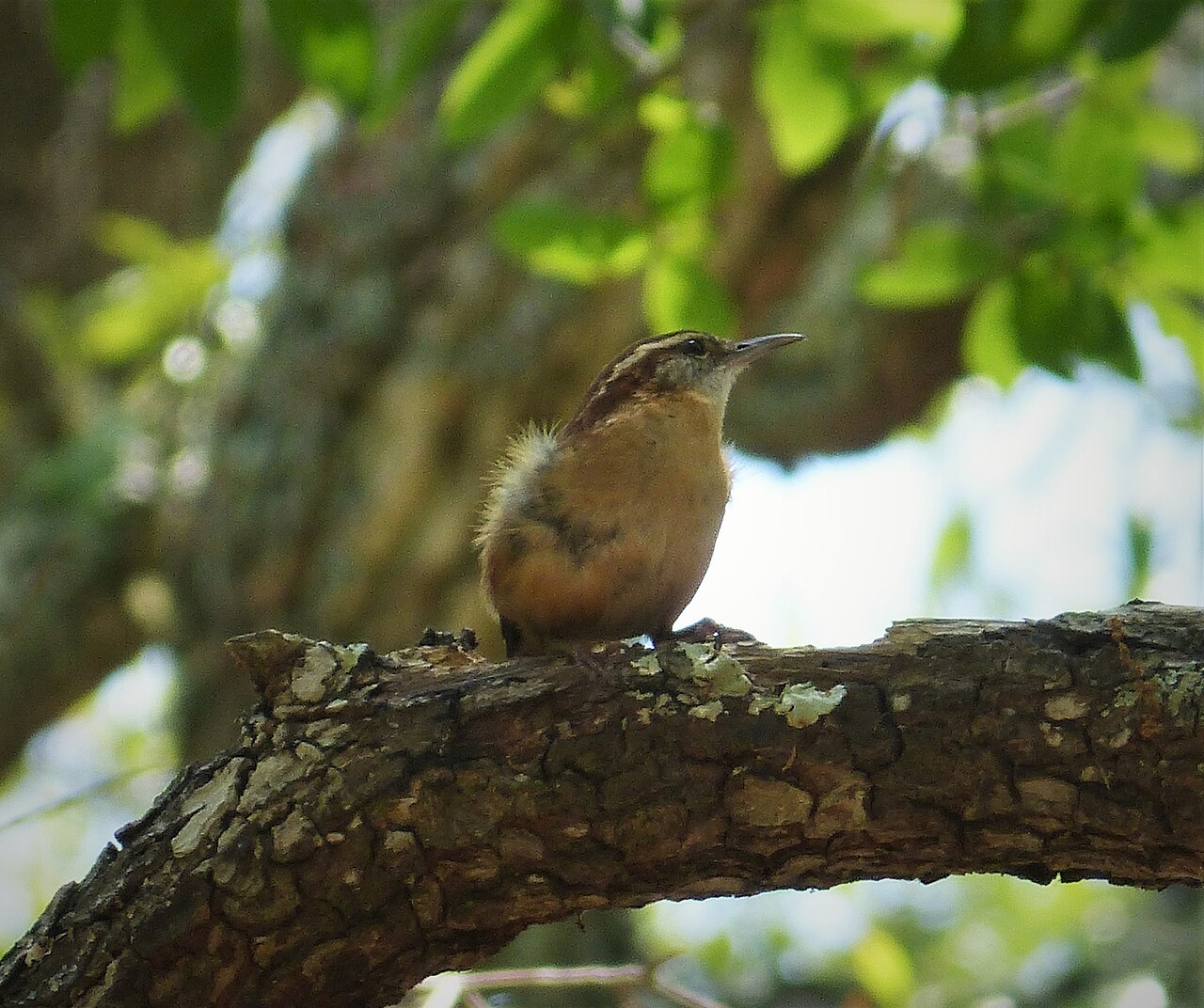
The Carolina wren is a small, energetic, rusty brown songbird best known for a voice far bigger than its body. Roughly five inches long, it wears a warm cinnamon back, a buff belly, and an unmistakable bold white eyebrow stripe, and it usually carries its tail cocked upward at a jaunty angle. Found across the eastern and southeastern United States, this year round resident is a backyard favorite that fills winter mornings with its ringing teakettle song. This guide covers how to identify it, what it sounds like, where it nests, and how to welcome one to your yard.
| Length | 4.7 to 5.5 inches |
| Key marks | Rusty brown back, buff belly, bold white eyebrow, cocked tail |
| Song | Loud, ringing teakettle teakettle teakettle |
| Range | Eastern and southeastern US, year round |
| Diet | Mostly insects and spiders, plus berries and suet in winter |
| Nest | Domed nest with side entrance in low cavities and nooks |
| Behavior | Non migratory, mates for life, forages in pairs |
How to Identify a Carolina Wren
Size and shape come first. The Carolina wren is compact and rounded, with a short neck, a longish slightly downcurved bill, and a tail that is frequently flicked up over the back. The upperparts are a rich reddish brown, warmer than most other wrens, and the underparts are a warm buff to pale orange. The single most useful field mark is the crisp white eyebrow stripe that runs from the bill back over the eye, contrasting sharply with the darker crown and cheek. Males and females are identical in plumage, so you cannot sex them by appearance.
Among backyard wrens this is the largest and most richly colored. The smaller, grayer, plainer other wren species lack that deep rusty tone and bold eyebrow. According to the Cornell Lab of Ornithology, the Carolina wren has expanded its range northward over recent decades as winters have warmed, so birders farther north are now seeing it for the first time.
What Does a Carolina Wren Sound Like?
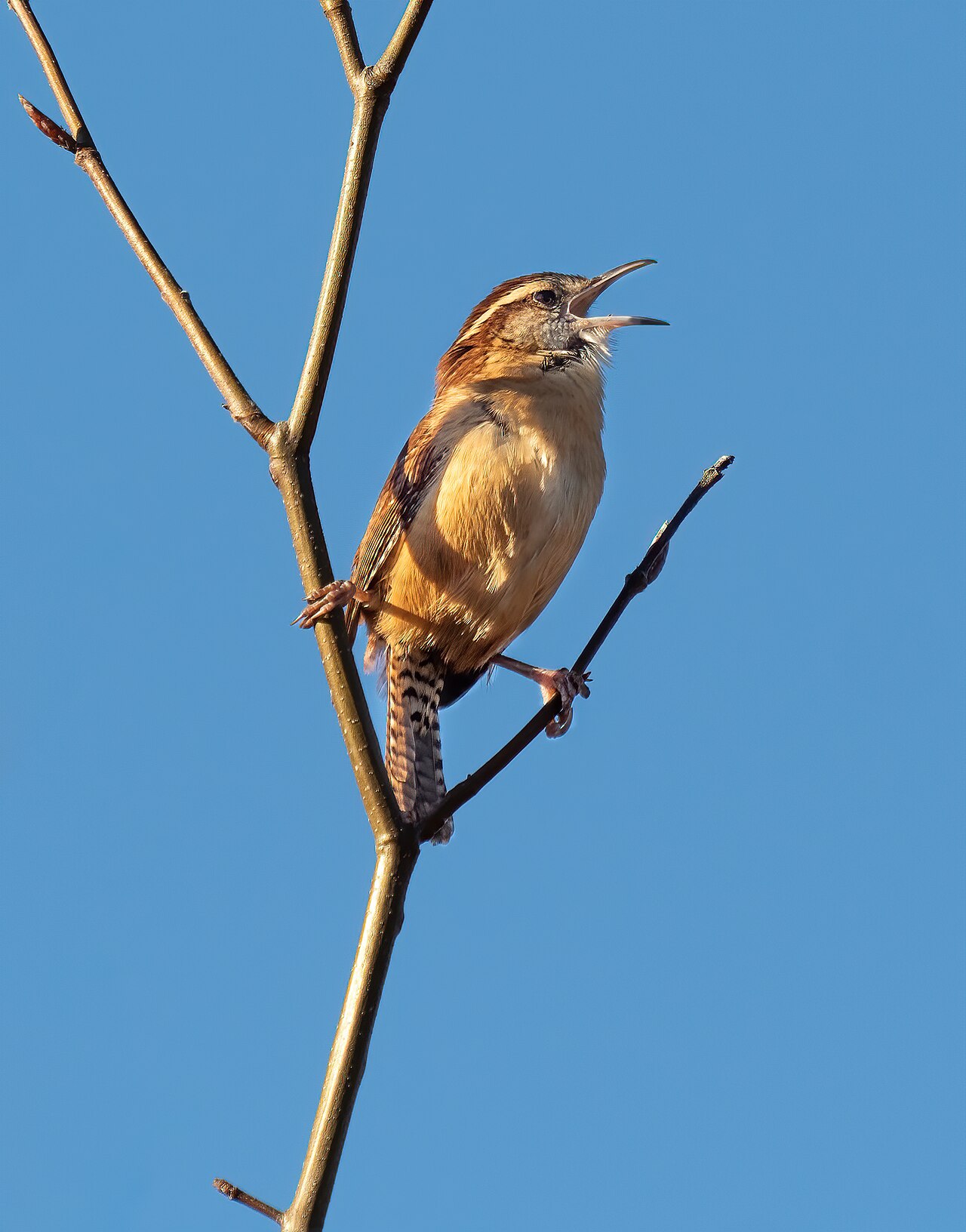
The voice is the reason most people notice this bird. The male sings a loud, clear, repeated phrase that birders universally transcribe as teakettle teakettle teakettle, delivered with startling volume from a low perch. A single male may know dozens of song variations and can sing several hundred times a day. Both sexes also produce a dry, harsh, buzzy chatter used to scold predators and intruders, and a variety of sharp contact notes that pairs use to stay in touch as they forage. If you hear an outsized ringing song from a shrub in winter, a Carolina wren is the likely source.
Where Do Carolina Wrens Nest?
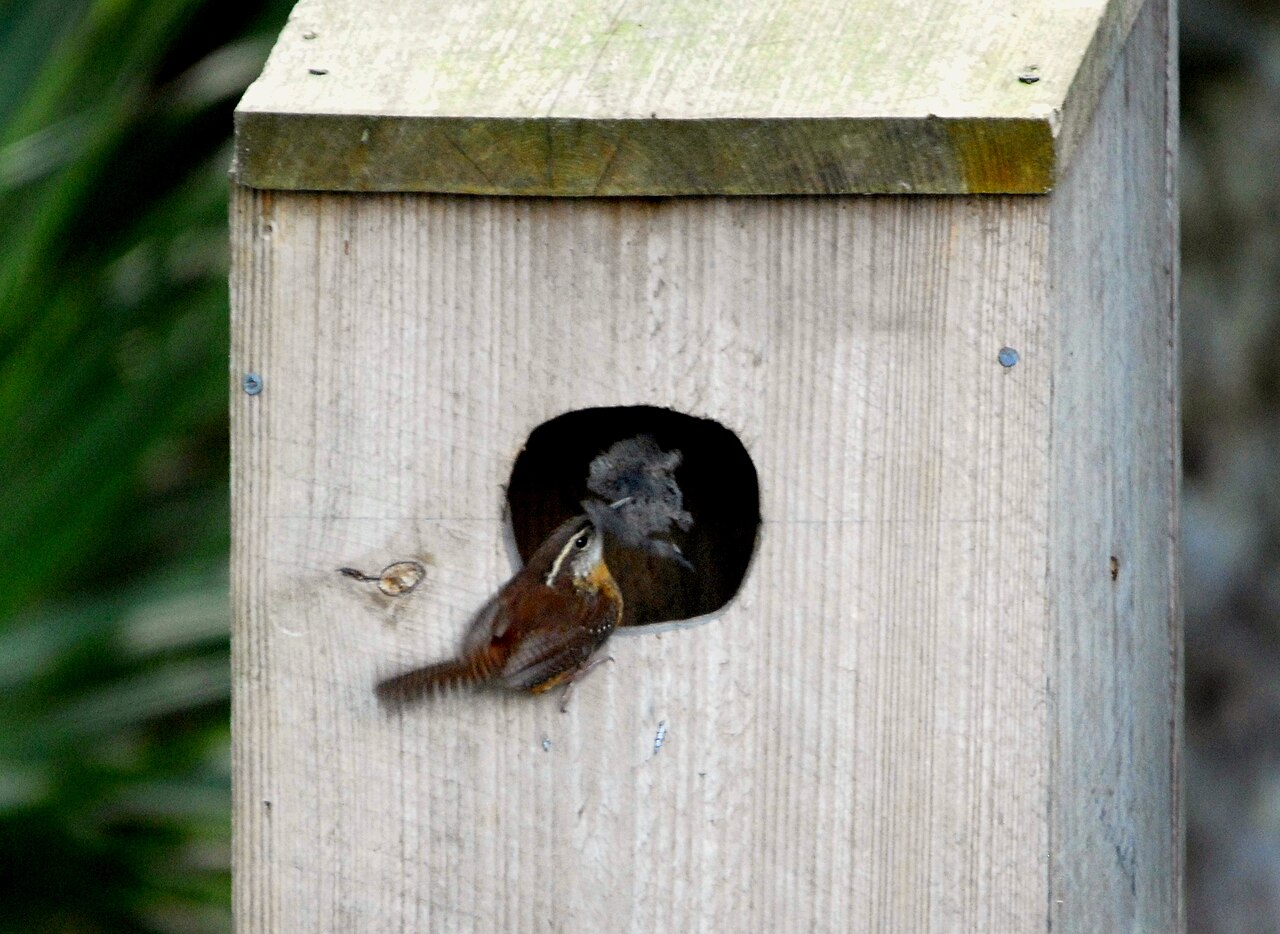
Carolina wrens are famous for nesting almost anywhere with a roof and a hole. In the wild they choose natural cavities, stumps, upturned root masses, and dense brush. Around homes they readily use mailboxes, hanging flower baskets, garage shelves, coat pockets, flowerpots, grill covers, and boots left on a porch. Both members of the pair build a bulky domed nest with a side entrance, woven from twigs, leaves, moss, and lined with softer material. The female lays four to six eggs, and pairs often raise two or three broods in a season. Because nests sit low and close to human activity, this is one of the easiest backyard birds to observe raising a family. For how they compare to other cavity users, see our house wren guide.
What Do Carolina Wrens Eat?
These are primarily insectivores. They spend the day probing bark crevices, flipping leaf litter, and creeping along the underside of branches in search of spiders, caterpillars, beetles, ants, and other invertebrates. That appetite for insects makes them valuable garden allies. In cold weather, when insects are scarce, they broaden the menu to include berries, small fruits, and seeds, and they will readily come to feeders offering suet, hulled peanuts, and mealworms. Offering these winter foods can help a local pair survive a hard freeze, which matters because they do not fly south to escape it. Our feeder guide covers the styles wrens use most.
Do Carolina Wrens Mate for Life?
Yes. Carolina wrens form strong, long lasting pair bonds and stay together on a shared territory throughout the year rather than only during the breeding season. The pair forages together, roosts near one another, and both birds defend the territory and help raise the young. This constant togetherness is part of what gives them such a strong presence in a yard: you are often watching a devoted couple, not a lone bird. They join a select group of birds that mate for life.
Carolina Wren Range and Seasonal Behavior
The Carolina wren is a permanent resident across the southeastern and eastern United States, from Florida and Texas up through the Mid Atlantic and into the lower Midwest and Northeast. Crucially, it does not migrate. Holding a territory through winter is a gamble at the northern edge of the range, where a severe cold snap can kill many birds and temporarily push the population back south. In milder years the population rebounds and pushes north again. This boom and retreat cycle, tied to winter severity, is a defining feature of the species and a reason feeder support matters in cold regions. To see which other species share your yard, browse our regional roundups such as backyard birds of Georgia.
Carolina Wren Behavior and Personality
Part of what makes the Carolina wren such a beloved yard bird is its bold, inquisitive character. Unlike many shy songbirds, it investigates porches, sheds, garages, and open windows with fearless curiosity, poking into every nook in search of insects and nesting spots. Pairs stay together year round and keep up a constant, chattering communication as they forage, so a yard with Carolina wrens is rarely quiet. They are acrobatic foragers, creeping along branches, hanging upside down under bark, and probing crevices like tiny brown mice with wings. This combination of boldness, energy, and vocal presence gives the Carolina wren an outsized personality that endears it to anyone who hosts a pair.
How to Attract Carolina Wrens to Your Yard
Because Carolina wrens do not migrate, supporting them through winter can genuinely help a local pair survive, and it is easy to do. Offer high energy foods they favor: suet, hulled peanuts, mealworms, and peanut butter blends draw them reliably, especially in cold weather when insects vanish. A brushy, layered yard with native shrubs, a leaf litter layer, and a brush pile provides both foraging habitat and shelter. Carolina wrens will also use nest boxes and, famously, all sorts of odd cavities, so leaving a wren sized box or an open topped ledge in a shed can invite a pair to raise a family where you can watch. Because they roost in sheltered spots on cold nights, a roost box or dense evergreen offers valuable winter refuge. Our feeder guide covers the suet and platform feeders wrens use most, and native plants round out the habitat.
Related reading: Brown Thrasher.
Frequently Asked Questions
What does a Carolina wren look like?
A Carolina wren is a small, plump, rusty brown bird with a warm cinnamon back, a buff or pale orange belly, and a bold white eyebrow stripe over each eye. It has a slightly downcurved bill and often holds its tail cocked straight up. Both sexes look alike.
What does a Carolina wren sound like?
The male sings a loud, ringing, repeated phrase often written as teakettle teakettle teakettle. The song is remarkably loud for such a small bird. Carolina wrens also give a harsh, buzzy scolding chatter when alarmed.
Where do Carolina wrens nest?
They nest in cavities and nooks close to the ground, including tree holes, brush piles, mailboxes, hanging planters, garage shelves, and boots left on a porch. The domed nest has a side entrance and is built by both members of the pair.
Do Carolina wrens mate for life?
Yes. Carolina wrens form long term pair bonds and stay together year round on a defended territory. Pairs forage together and both help build nests and feed young.
What do Carolina wrens eat?
They are mainly insect eaters, taking spiders, caterpillars, beetles, and other invertebrates gleaned from bark and leaf litter. In winter they also eat berries and will visit feeders for suet, peanuts, and mealworms.
Are Carolina wrens year round residents?
Yes. Unlike many songbirds, Carolina wrens do not migrate. They hold their territory through winter, which is why harsh cold snaps can reduce their numbers at the northern edge of the range.
How can you tell a male from a female Carolina wren?
You cannot tell them apart by sight. Males and females have identical plumage. The main behavioral clue is song, since typically only the male produces the loud teakettle song, while both sexes give calls.