Eastern Screech-Owl: Identification, Sounds, and Facts
The Eastern Screech-Owl is a small, stocky owl of eastern North America that, despite its name, does not screech but instead gives a soft, whinnying trill. Barely the size of a soda can, it is a master of camouflage, coming in two color forms, rufous (reddish) and gray, that let it disappear against tree bark. It is one of the most common owls across the eastern United States, thriving in woodlands, parks, and leafy suburbs, and it will happily move into a nest box in a backyard. This guide covers how to identify an Eastern Screech-Owl, its haunting calls, what it eats, how it nests, and how you can invite one to your own yard.
| Feature | Detail |
|---|---|
| Scientific name | Megascops asio |
| Length | 6 to 10 in (16 to 25 cm) |
| Wingspan | 18 to 24 in (46 to 61 cm) |
| Weight | 4 to 8 oz (121 to 244 g) |
| Color forms | Rufous (red) and gray morphs |
| Diet | Insects, small mammals, birds, worms |
| Conservation | Least Concern (common) |
How to identify an Eastern Screech-Owl
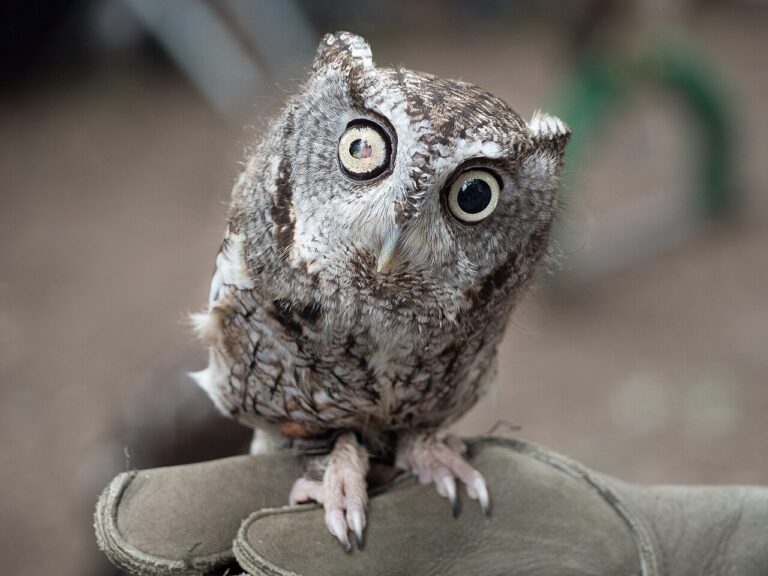
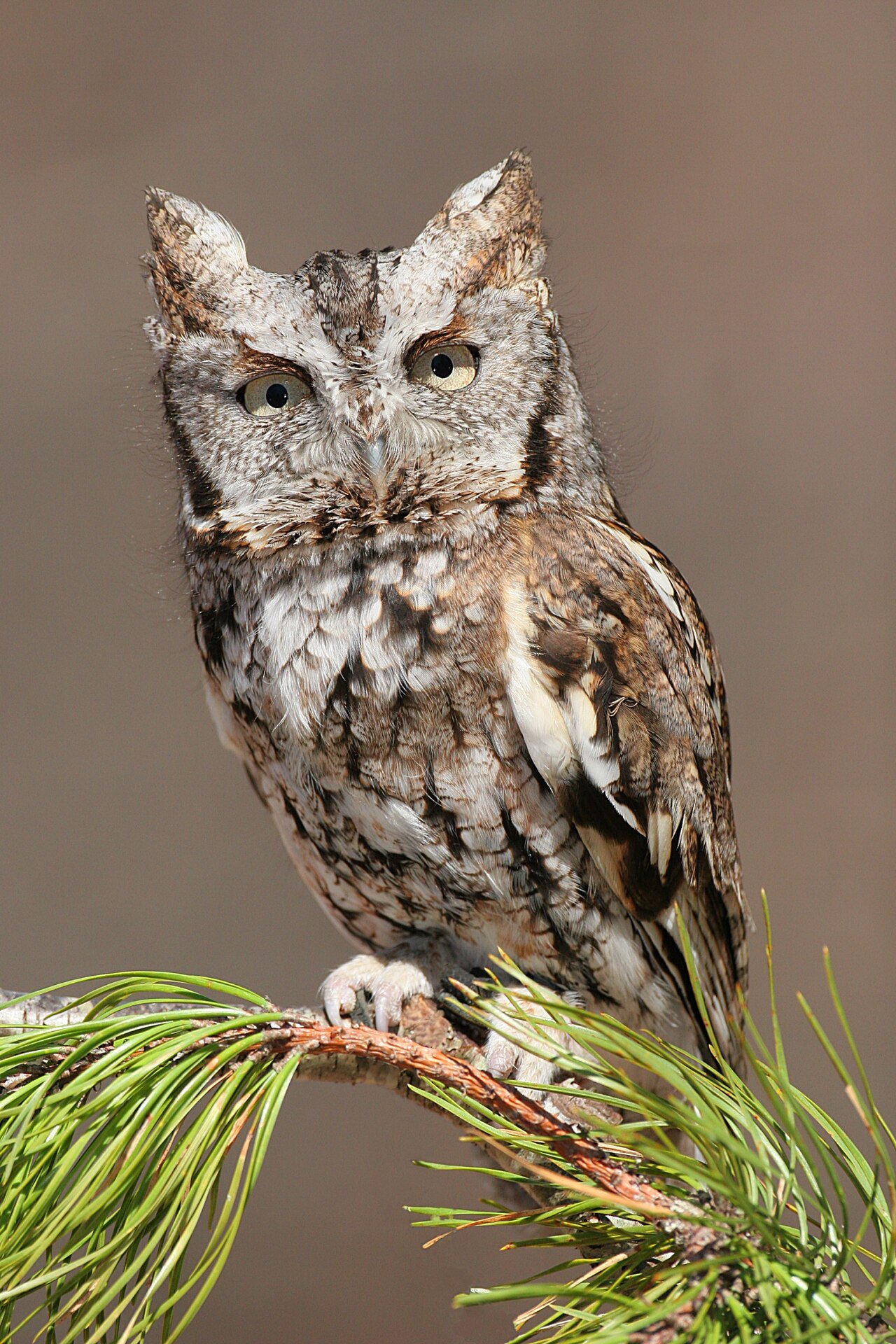
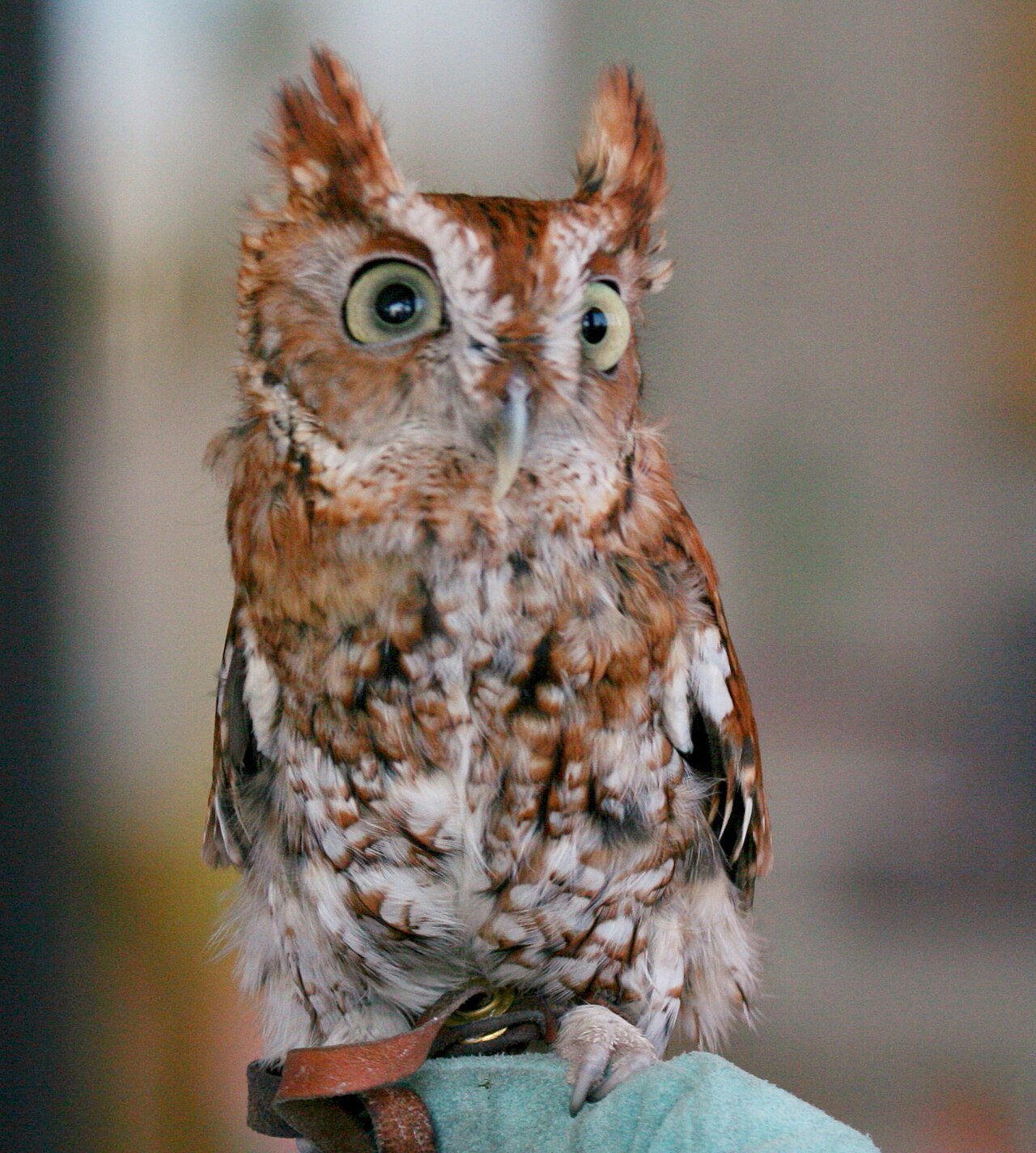
The Eastern Screech-Owl is a tiny owl, only six to ten inches tall, with a large head, bright yellow eyes, and short ear tufts that it can raise or flatten. Its most striking feature is that it comes in two distinct color forms: a rufous or reddish-brown morph and a gray morph, both intricately patterned with streaks and bars that mimic tree bark. This camouflage is so effective that a roosting screech-owl often looks like a broken branch or a knot in a trunk.
Its small size sets it apart instantly from larger owls like the Great Horned Owl or Barred Owl. Within its range the main confusion is with the very similar Western Screech-Owl, but the two barely overlap geographically, and the Eastern typically shows a pale greenish-yellow bill. If you find a small, ear-tufted owl roosting in a cavity or peering from a nest box in the East, it is almost certainly this species. See where it fits in our owl types guide.
Range and habitat
The Eastern Screech-Owl lives throughout the eastern United States, from the Great Plains to the Atlantic coast and from southern Canada into Mexico. It is remarkably adaptable, occupying deciduous and mixed woodlands, forest edges, orchards, riverside trees, city parks, and suburban neighborhoods with mature trees. As long as there are cavities to nest in and some open space to hunt, it can make a home almost anywhere in the East, including well-treed backyards.
This tolerance for human company makes the Eastern Screech-Owl one of the owls people are most likely to host without realizing it. They are non-migratory and hold small territories year-round, often roosting by day in a tree cavity or nest box with just their face showing at the entrance. Their abundance in suburbs is a reminder that owls live closer to us than most people imagine.
What Eastern Screech-Owls eat
For such a small owl, the Eastern Screech-Owl has a surprisingly broad diet. It is an opportunistic hunter that takes large insects such as moths, beetles, and crickets, along with small mammals like mice and voles, songbirds, earthworms, crayfish, and even small snakes and frogs. This flexibility lets it thrive in habitats from wild woodland to manicured suburbs, where it hunts insects around porch lights and rodents in gardens.
Screech-owls hunt mainly at night, watching from a low perch and pouncing on prey below. In one charming quirk, some Eastern Screech-Owls bring live blind snakes back to the nest, where the snakes live in the debris and eat insect larvae that would otherwise harm the owlets. Their varied menu fits the pattern described in our guide to what owls eat.
Eastern Screech-Owl sounds and calls
Despite the name, the Eastern Screech-Owl does not screech. Its two main sounds are a soft, descending whinny that sounds like a small horse, used to defend territory, and an even-pitched, rolling trill on one note, used between mates and family members. Both are gentle, tremulous sounds rather than harsh screeches, and they carry a haunting, wavering quality that many people find beautiful once they learn to recognize it.
These calls are most frequent from late winter through spring as pairs court and nest, and on autumn nights as young birds disperse. Because the sounds are quiet, learning them is the best way to detect this well-hidden owl. If you hear a soft, descending whinny or a steady trill from a wooded suburb at night, an Eastern Screech-Owl is calling nearby.
Nesting and life cycle
The Eastern Screech-Owl is a cavity nester. It uses natural tree hollows, old woodpecker holes, and nest boxes, laying its eggs directly on whatever debris lines the cavity floor rather than building a nest. The female lays three to five white eggs, typically in early spring, and incubates them for about a month while the male hunts for the family. Because it takes so readily to boxes, this is one of the easiest owls for people to help.
The owlets hatch downy and grow quickly, leaving the cavity after about four weeks and staying with their parents for a while as they learn to hunt. Adults are devoted defenders and will dive at intruders near the nest. With a lifespan that can reach eight to ten years in the wild, a screech-owl pair may use the same favored cavity or box year after year, becoming a beloved fixture of a neighborhood.
Conservation and interesting facts
The Eastern Screech-Owl is listed as Least Concern and remains common, helped by its adaptability and willingness to live alongside people. Its main threats are collisions with vehicles, loss of large old trees with nesting cavities, and rodenticides that poison the small mammals it eats. Providing nest boxes and keeping mature trees standing are simple ways homeowners can support local populations, and the Cornell Lab of Ornithology ranks the Eastern Screech-Owl among the most common owls of eastern woodlands.
A few facts highlight its charm: the red and gray color morphs can even occur in the same brood, its camouflage is so good that people walk past roosting owls daily without noticing, and it is among the most frequent owls to appear in backyards. Small owls like this one have inspired centuries of owl symbolism and the folklore behind an owl visit. To learn which owls share your state, browse regional guides such as types of owls in Texas.
Red morph versus gray morph
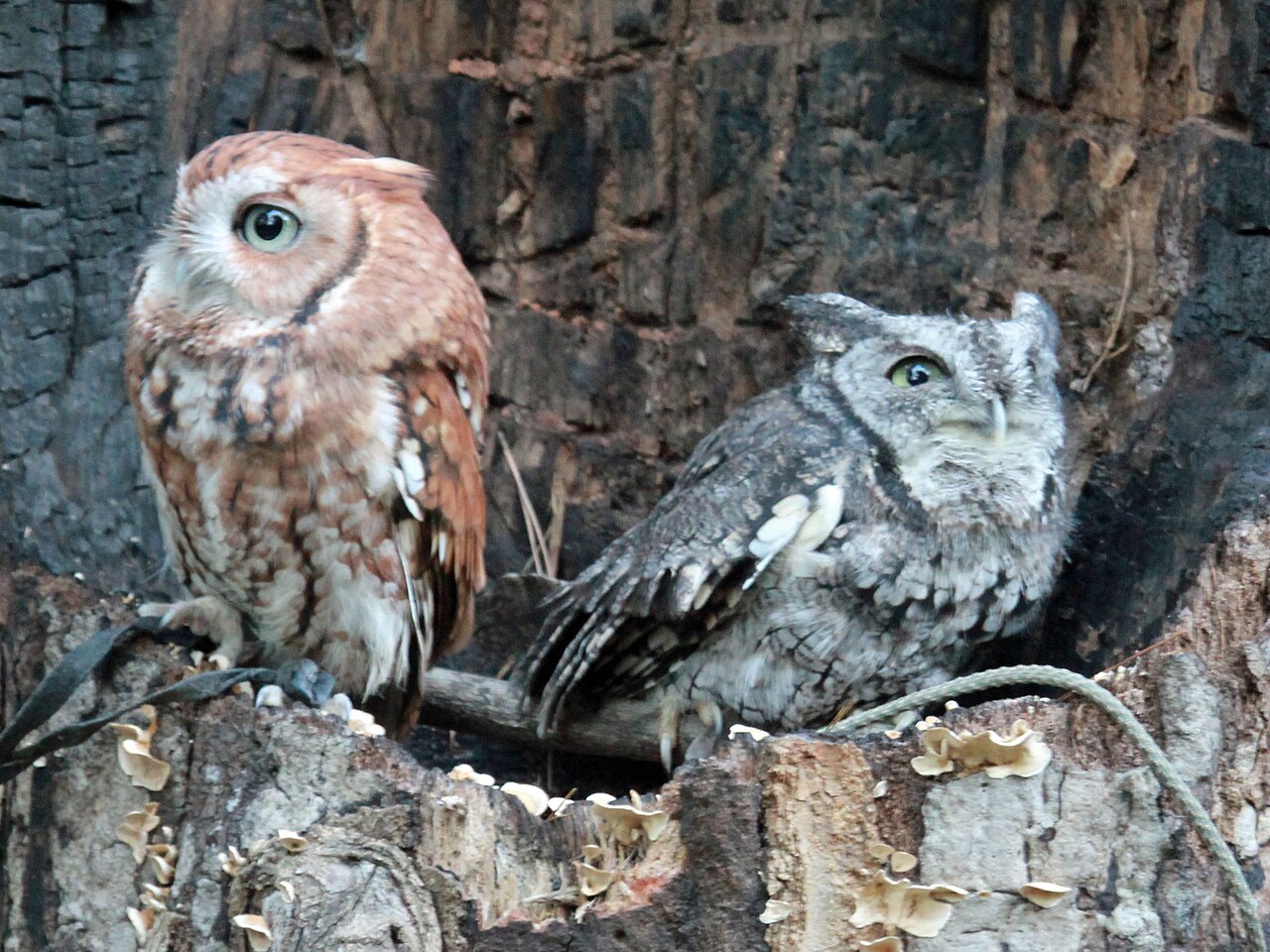
One of the Eastern Screech-Owl’s most fascinating traits is its color polymorphism. Individuals come in a rufous (reddish-brown) morph and a gray morph, and occasionally an intermediate brown form, regardless of sex or age. The two colors can even appear among siblings in the same brood. The proportion of red to gray birds varies geographically, with more rufous owls in the humid Southeast and more gray owls in colder and drier regions.
Research suggests the gray morph may survive cold winters slightly better, which could explain the geographic pattern, while the rufous morph blends beautifully into reddish bark and leaf litter. Whatever the cause, both morphs share the same excellent bark camouflage, and a roosting screech-owl of either color can be nearly impossible to spot pressed against a matching trunk. This variability is part of what makes the species so interesting to backyard owl watchers.
Eastern versus Western Screech-Owl
The Eastern Screech-Owl has an almost identical western counterpart, the Western Screech-Owl, and telling them apart comes down to range, voice, and a couple of subtle marks. The two species barely overlap geographically, so location is usually the first answer. Where they approach each other near the Great Plains, the Eastern typically shows a pale greenish-yellow bill, while the Western has a darker, blackish bill.
Voice is the most reliable difference. The Eastern Screech-Owl gives a descending horse-like whinny and an even, one-pitch trill, whereas the Western gives an accelerating “bouncing ball” series of whistles. If you hear a soft descending whinny in the eastern half of the country, you have an Eastern Screech-Owl. See how both fit among relatives in our owl types guide.
Related reading: Northern Saw-whet Owl.
Frequently Asked Questions
What does an Eastern Screech-Owl sound like?
Despite its name, it does not screech. It gives a soft, descending whinny that sounds like a small horse and an even-pitched, rolling trill on one note. Both are gentle, tremulous sounds.
How big is an Eastern Screech-Owl?
Very small, just 6 to 10 inches tall with an 18 to 24 inch wingspan, weighing only 4 to 8 ounces. It is roughly the size of a soda can.
Why are some Eastern Screech-Owls red and others gray?
The species comes in two color morphs, rufous (red) and gray, both providing bark camouflage. The two forms can even appear in the same brood, and color does not indicate sex or age.
Will Eastern Screech-Owls use a nest box?
Yes, readily. Mount a box 10 to 30 feet high in a quiet, shaded spot near open hunting ground before late winter, with wood shavings inside, and you may attract a resident owl.
What do Eastern Screech-Owls eat?
They have a broad diet of large insects, small mammals like mice, songbirds, earthworms, crayfish, and small snakes and frogs, which lets them thrive in both wild and suburban habitats.
Where do Eastern Screech-Owls live?
Throughout the eastern United States in woodlands, parks, orchards, and leafy suburbs. They are one of the owls most likely to live near people, often unnoticed in tree cavities.
Are Eastern Screech-Owls active during the day?
They are mainly nocturnal but sometimes sun themselves at a cavity entrance by day. You are most likely to spot one roosting with just its face showing in a tree hole or nest box.
How long do Eastern Screech-Owls live?
In the wild they can live eight to ten years, and a pair may reuse the same favored cavity or nest box for many years, becoming a long-term neighborhood resident.