Mallard Duck: Identification, Habitat, and Behavior Guide
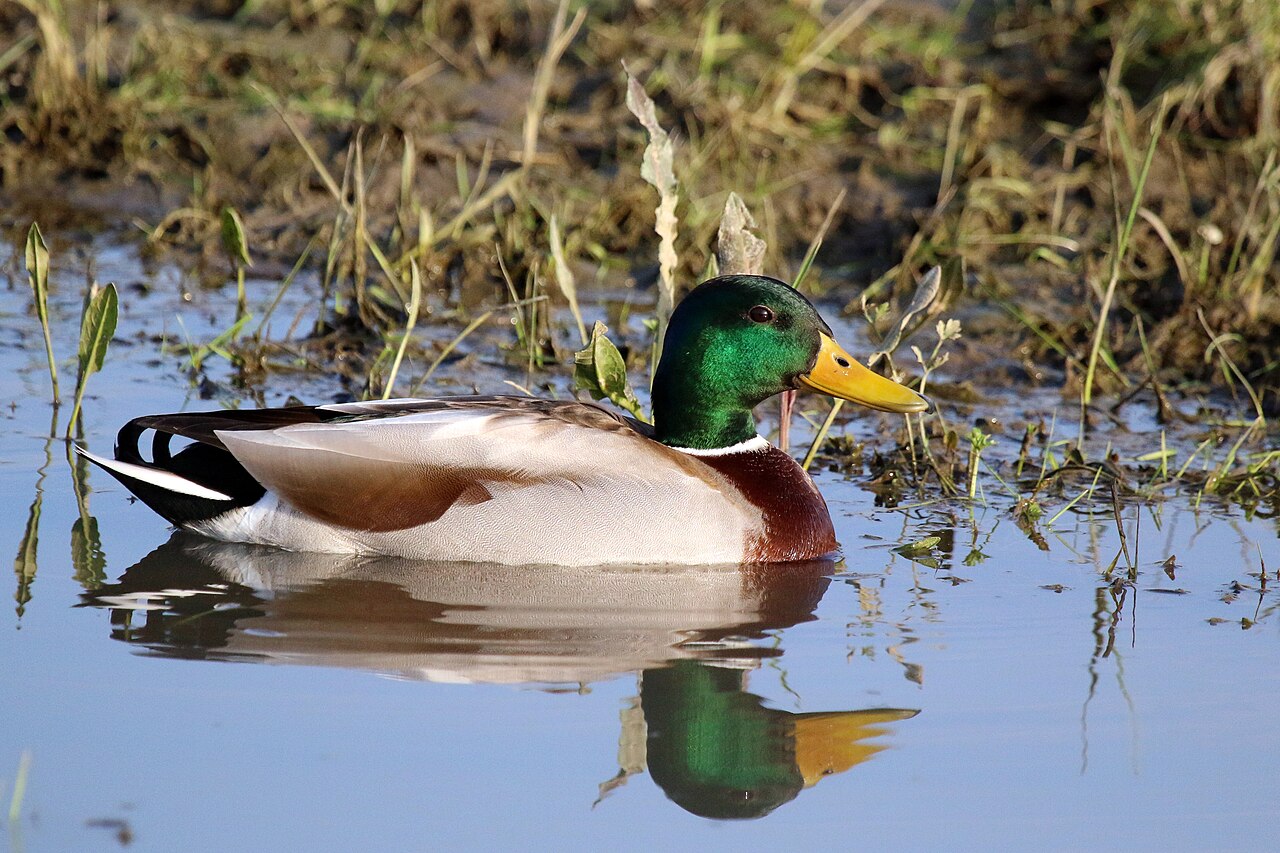
The mallard (Anas platyrhynchos) is the most widespread and recognizable duck in North America, known for the male’s glossy green head, white neck ring, and chestnut brown breast. Female mallards look entirely different, covered in mottled brown feathers that provide camouflage while nesting on the ground. Found on ponds, lakes, city parks, and slow-moving rivers across nearly every US state, mallards are also the wild ancestor of almost every domestic duck breed alive today, a lineage that stretches back thousands of years to early domestication efforts in Asia and Europe.
| Quick Reference | Detail |
|---|---|
| Length | 20 to 26 inches |
| Wingspan | 32 to 39 inches |
| Weight | 1.6 to 3.5 lbs |
| Male (drake) color | Green head, white neck ring, chestnut breast, gray body |
| Female (hen) color | Mottled brown, orange and black bill |
| Diet | Aquatic plants, seeds, insects, small invertebrates |
| Lifespan | 5 to 10 years in the wild |
Male vs Female Mallard Identification
Male mallards, called drakes, have an iridescent green head that can look almost black in poor light, a narrow white ring around the neck, a chestnut-brown breast, and a mostly gray body with a black rear end and curled tail feathers. Female mallards, called hens, are mottled brown all over with a darker eye stripe, an orange bill marked with black splotches, and no bright colors at all. This camouflage helps hens stay hidden while incubating eggs on the ground, where a bright green head would be a serious liability against predators. Outside of breeding season, drakes molt into a duller “eclipse” plumage that resembles the female, making late summer the hardest time of year to sex a mallard by sight. During this eclipse period, drakes are also temporarily flightless as they molt their flight feathers all at once, a vulnerable few weeks that they typically spend hidden in dense marsh vegetation rather than out in the open on visible water.
The Distinctive Blue Speculum
Both male and female mallards share one identical field mark: a blue speculum, a patch of iridescent blue secondary feathers on the wing, bordered by white bars on both edges. This patch is visible whether the bird is swimming, standing, or in flight, and is one of the most reliable ways to confirm a mallard identification when the head and body plumage are ambiguous, such as during eclipse plumage or when the bird is a hybrid. The speculum can appear more green or purple depending on the angle of light, but the white borders on both sides remain constant, which is the detail experienced birders check first when the color itself looks uncertain in dim conditions or against a dark water background.
Diet and Feeding Behavior
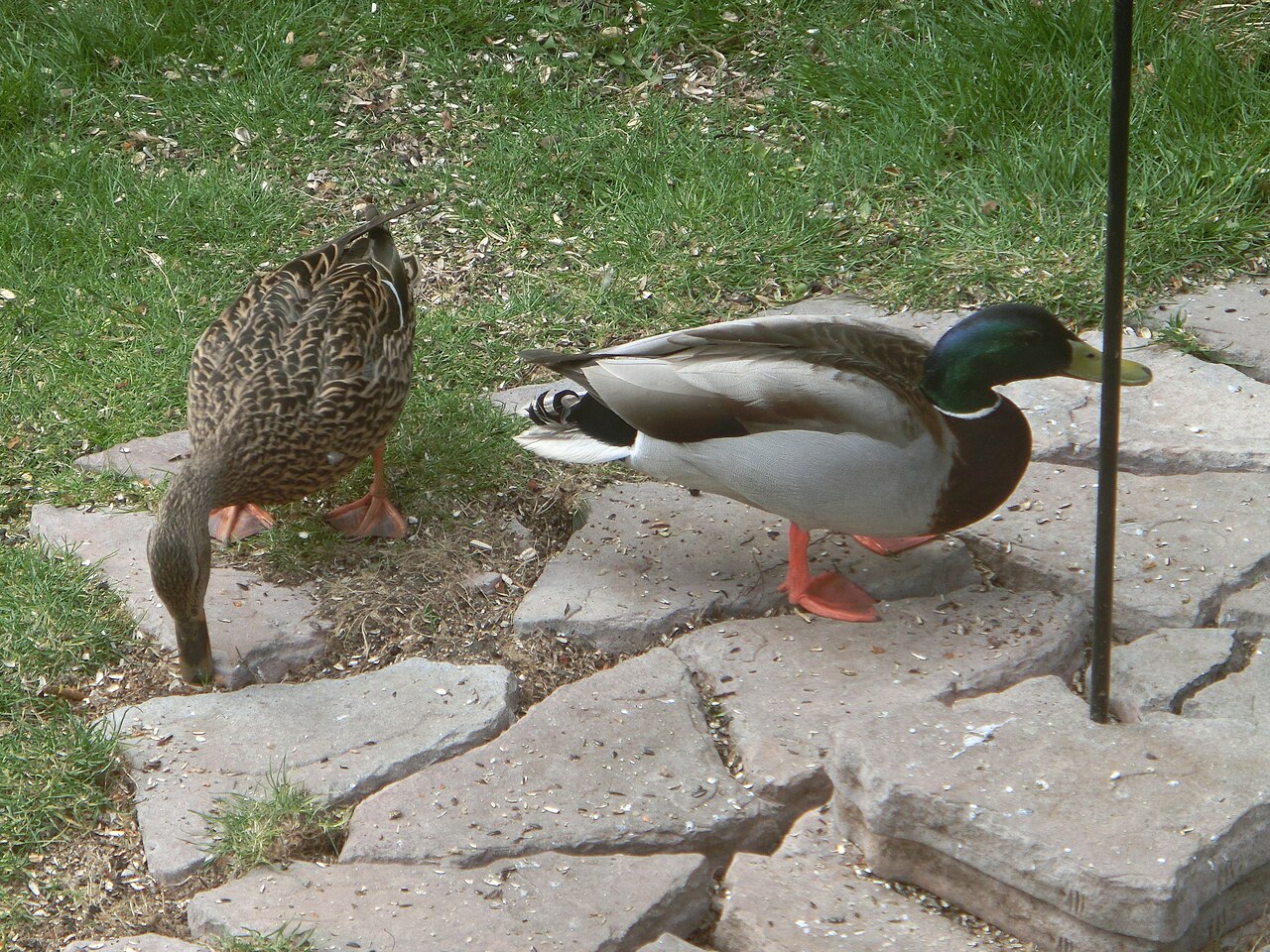
Mallards are dabbling ducks, meaning they feed at the surface or by tipping forward with their tail in the air rather than diving underwater. Their diet includes aquatic vegetation, seeds, grains, aquatic insects, snails, and small crustaceans, making them highly adaptable to both wild wetlands and urban ponds where they are often fed bread by visitors. Bread offers little nutritional value and can cause a condition called “angel wing” in ducklings if fed in excess, so wildlife agencies recommend cracked corn, oats, or commercial waterfowl feed instead. Mallards will also readily forage on land in agricultural fields after harvest, gleaning waste grain much like flocks of Canada geese do in the same fields during fall and winter.
Mallard Hybrids and Look-Alikes
Because mallards interbreed so readily with both domestic ducks and several closely related wild species, hybrid individuals showing unusual color combinations, patchy white patches, odd bill colors, or an atypical body shape are common on park ponds where wild and domestic birds mix freely. In the wild, mallards can also hybridize with American black ducks and mottled ducks where their ranges overlap, producing offspring with intermediate plumage that can be genuinely difficult to identify with confidence. This tendency to hybridize is considered a conservation concern for some of these rarer relatives, since genetic swamping from the far more abundant mallard can gradually dilute distinct regional duck populations over time.
Habitat and Range
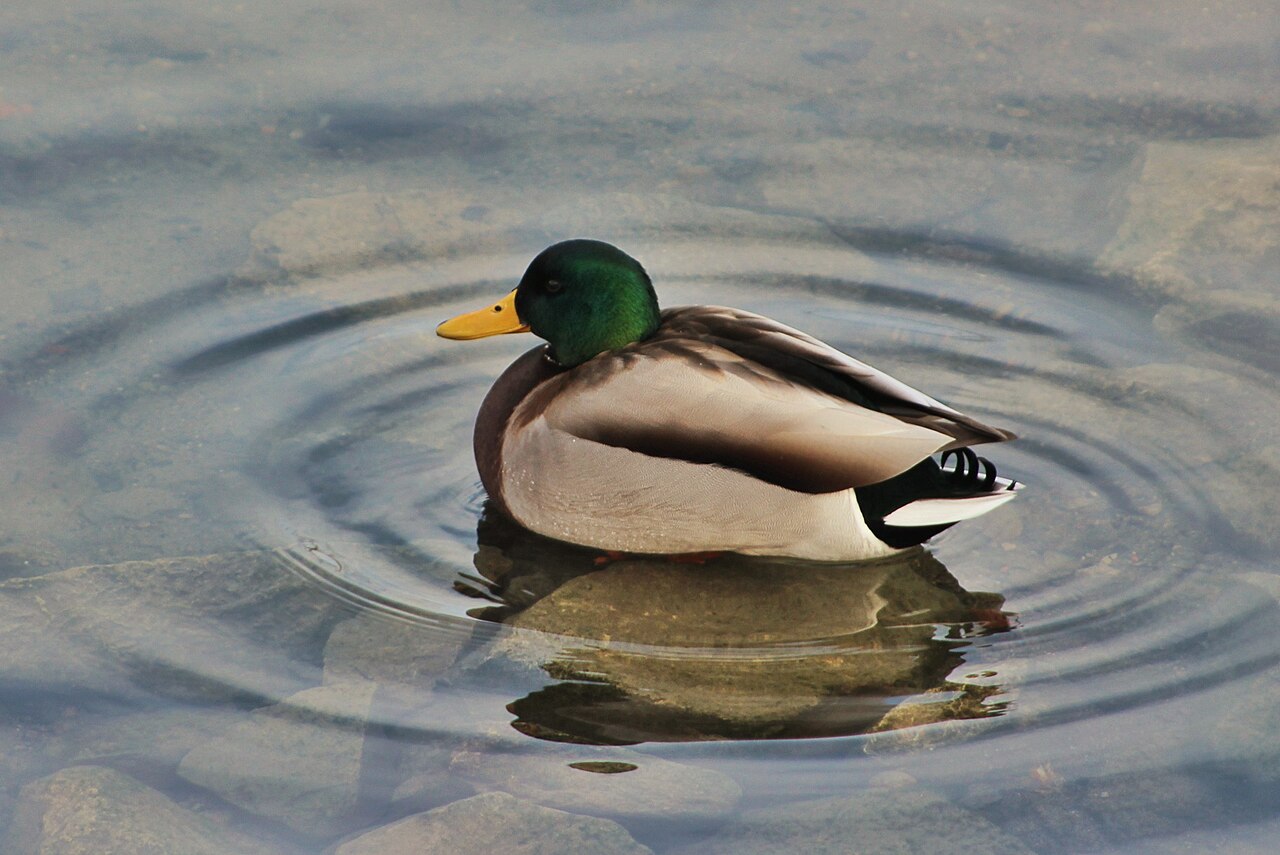
Mallards are found across nearly all of North America and are equally at home on a remote wilderness marsh or a fountain in a city park. They tolerate a wide range of water conditions, from shallow ponds and slow rivers to large lakes and coastal estuaries, and are one of the few duck species that regularly breed in urban and suburban settings, often alongside other adaptable waterfowl like the Canada goose. This adaptability, more than any other trait, is why mallards are the duck most people picture when they think of “a duck.”
Conservation Status and Population Trends
Mallards remain one of the most abundant duck species in North America, with a population in the millions, though Audubon notes that some regional surveys have shown gradual declines tied to wetland habitat loss and, in parts of the range, increasing hybridization pressure from domestic and feral ducks. Because mallards adapt so readily to human-altered landscapes, from farm ponds to retention basins, their overall numbers have stayed far more stable than many other waterfowl species that depend on undisturbed wetland habitat, making them one of the better conservation success stories among North American ducks.
Breeding and Nesting
Mallards typically pair up in fall or winter, well before the spring breeding season, though the male takes no part in incubation or raising the ducklings, a division of labor also seen in the wild turkey, where hens raise poults entirely alone. The hen builds a shallow nest on the ground, often hidden in dense grass near water, and lays 8 to 13 eggs that she incubates alone for about 26 to 30 days. Ducklings are precocial, meaning they can walk, swim, and feed themselves within hours of hatching, following the hen to water almost immediately after the last egg hatches.
Mallards as the Ancestor of Domestic Ducks
Nearly every breed of domestic duck, including Pekin, Rouen, and Khaki Campbell, descends from wild mallards domesticated thousands of years ago. This shared ancestry is why domestic ducks retain the mallard’s blue speculum wing patch and why domestic and wild mallards can interbreed freely, sometimes producing hybrids with unusual plumage combinations seen on park ponds where domestic and wild birds mix. Domestication selected heavily for larger body size, calmer temperament, and in some breeds a pure white coloring, but the underlying genetics remain close enough to wild mallards that a domestic Pekin duck and a wild mallard can still produce fertile offspring, something not possible between mallards and more distantly related duck species.
Vocalizations
The classic “quack” most people associate with ducks comes specifically from female mallards, used in a descending series especially when alarmed or communicating with ducklings. Males make a quieter, raspier call and a soft, breathy whistle during courtship displays, which is far less recognizable to most listeners than the hen’s quack, unlike the loud gobble used by male wild turkeys to advertise territory. For other waterfowl you might see alongside mallards, see our guide to common duck species in North America.
Frequently Asked Questions
How can you tell a male and female mallard apart?
Males have an iridescent green head, white neck ring, and chestnut breast, while females are mottled brown all over with an orange and black bill and no bright colors. Size can help as a secondary clue too, since males average slightly larger and heavier than females across most populations.
What do mallards eat?
Mallards eat aquatic vegetation, seeds, grains, insects, snails, and small crustaceans, feeding at the surface or by tipping forward rather than diving.
Why do male mallards look brown in late summer?
Male mallards molt into a duller “eclipse” plumage that resembles the female after breeding season, making them harder to sex by sight until they regain full color in fall.
Are mallards the ancestor of domestic ducks?
Yes, nearly every breed of domestic duck descends from wild mallards, which is why domestic ducks still show the mallard’s blue wing patch and can interbreed with wild birds.
How many eggs do mallards lay?
A hen typically lays 8 to 13 eggs per clutch and incubates them alone for about 26 to 30 days before they hatch. If an early clutch is lost to a predator or flooding, a hen is often capable of laying a replacement clutch later in the same season.
What is the blue patch on a mallard’s wing called?
It is called the speculum, an iridescent blue patch on the secondary feathers bordered by white bars, present on both male and female mallards.
Is it bad to feed bread to mallards?
Yes, bread has little nutritional value and can contribute to a wing deformity in ducklings if overfed; cracked corn, oats, or waterfowl feed are healthier alternatives.