Crested Caracara: Identification, Range, and Behavior Guide
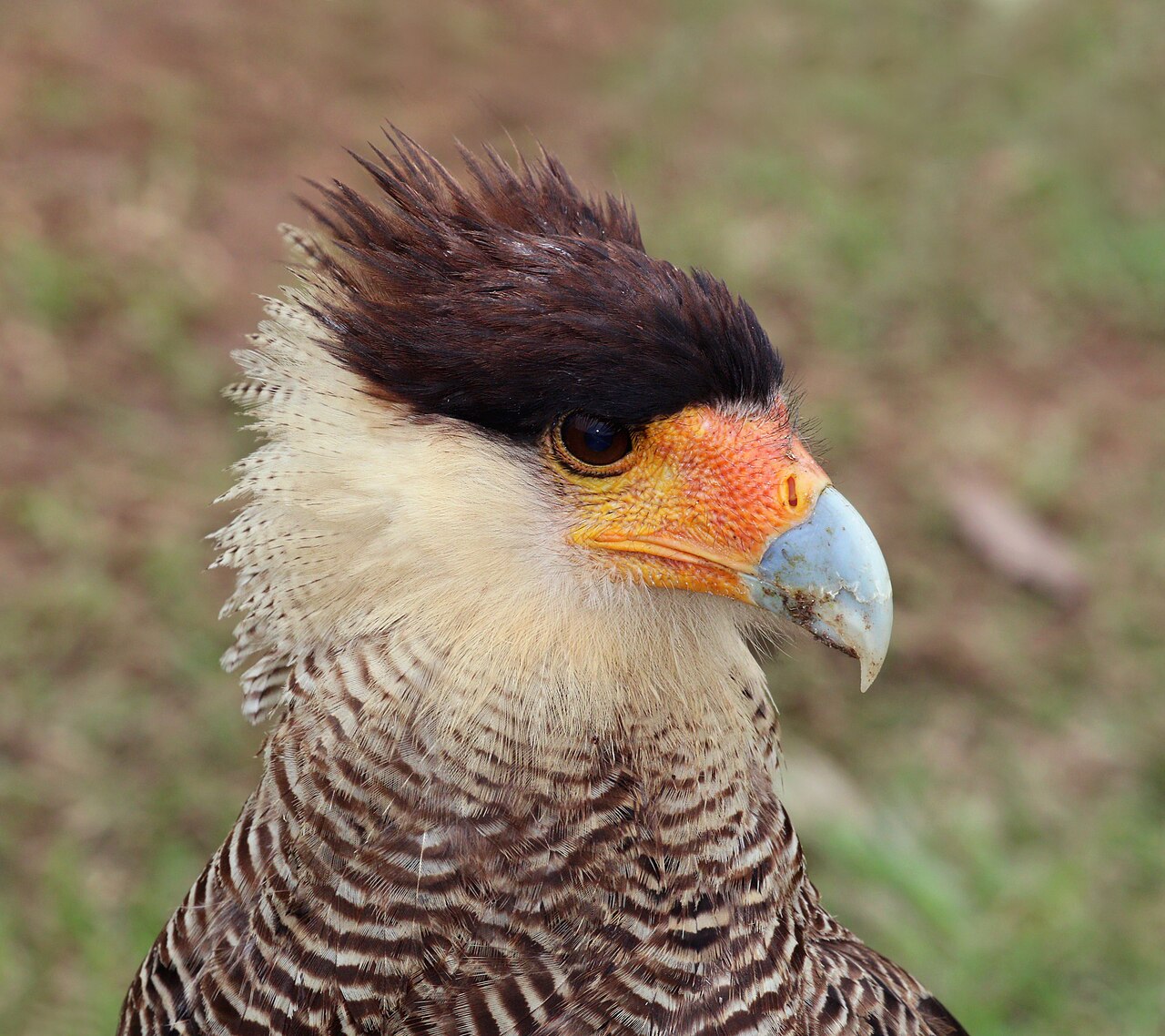
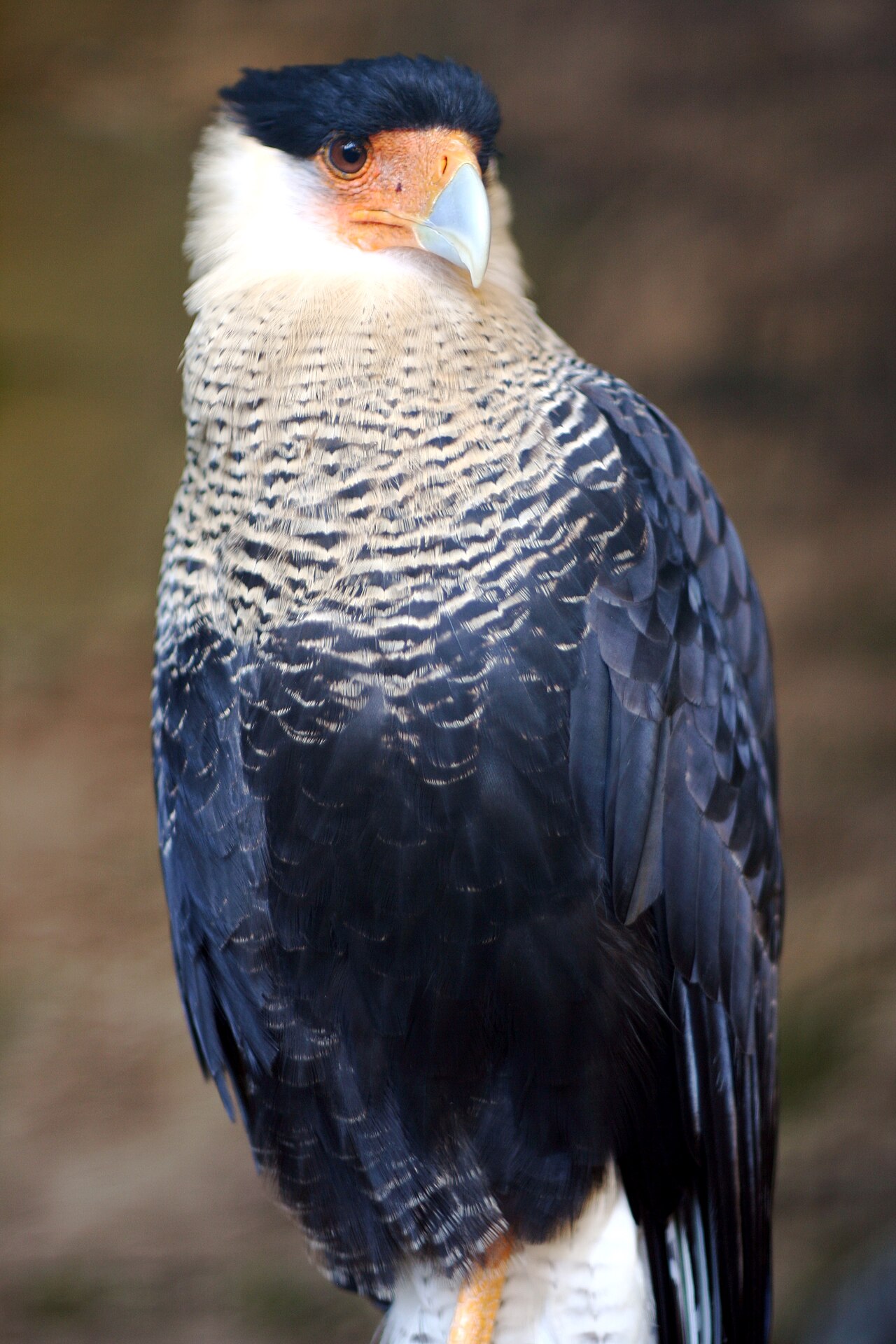
The crested caracara looks like it was assembled from spare parts of several different birds, and in behavior terms that is not far from the truth. Technically a member of the falcon family, it walks confidently on long legs across open ground, scavenges carrion alongside vultures, and shows a bold black cap, bare orange-red facial skin, and a heavy hooked bill more reminiscent of a small eagle than a typical falcon. Widespread across Texas, Florida, and parts of Arizona, the crested caracara is one of the more unusual and easily identified raptors found in open country across the southern United States.
| Trait | Detail |
|---|---|
| Scientific name | Caracara plancus |
| Length | 19 to 23 in |
| Wingspan | 48 to 50 in |
| Weight | 1.8 to 3.1 lb |
| Range | Texas, Florida, Arizona, south through Mexico |
| Habitat | Open grassland, savanna, agricultural land, roadsides |
How to Identify a Crested Caracara
Adults show a black cap and crest contrasting with a pale, cream colored neck and throat, bare orange-red skin on the face, and a heavy gray bill hooked at the tip. The body is mostly dark brown to black, with a barred chest and prominent white patches near the wingtips and base of the tail that flash clearly in flight. Legs are noticeably long and yellow-orange, built for walking on the ground rather than perching for extended periods like a typical falcon.
In flight, the caracara shows a flat, direct flight style on broad wings, often flapping steadily rather than soaring like a vulture or gliding like a true falcon. The white wingtip patches and pale neck stand out clearly against the dark body even at a distance, making this one of the easier large raptors to identify once seen in reasonable light.
Juvenile caracaras look broadly similar to adults but show a more streaked, brownish chest rather than crisp barring, along with paler, less saturated facial skin that gradually brightens to the full orange-red of an adult over the bird’s first year or two of life.
Range and Habitat
In the United States, crested caracaras are found year round in central and southern Texas, peninsular Florida, and parts of southern Arizona, with the core of the North American range extending south through Mexico and Central America into South America. Unlike most raptors on this list, the species does not migrate, remaining on territory throughout the year in the areas it occupies.
Preferred habitat includes open grassland, savanna, agricultural fields, and roadsides, particularly areas that support cattle ranching, since caracaras frequently forage near livestock and along highways where roadkill provides a reliable food source. The species has adapted well to human altered landscapes compared to many other large raptors.
Texas holds the largest and most secure US population by a wide margin, concentrated across the vast ranchland of the southern and coastal plains, where scattered mesquite and live oak provide nest sites within easy reach of the open pasture the birds prefer for foraging. This close association with working cattle ranches means the species has, if anything, benefited from certain traditional land uses that have persisted across the region for generations.
Diet and Foraging Behavior
Crested caracaras are opportunistic omnivores, feeding heavily on carrion but also actively hunting small mammals, reptiles, amphibians, insects, and the eggs and nestlings of other birds. At a carcass, caracaras often dominate over turkey vultures and black vultures despite the vultures’ larger numbers, using their strong legs and aggressive posture to claim the best feeding position.
Ground foraging is a defining trait of this species, and caracaras will walk steadily across fields turning over cow patties and debris in search of insects, a behavior almost unheard of among other North American falcons. This willingness to forage on foot, combined with scavenging, gives the caracara an ecological role somewhere between a typical raptor and a vulture.
Family groups sometimes forage together outside the breeding season, with young birds from the previous year occasionally remaining near their parents’ territory and joining in group feeding at larger carcasses, a loosely social pattern that stands out among falcons, most of which forage and hunt alone outside of the breeding pair.
Nesting Behavior
Nests are large, bulky stick structures built in the top of a palm, oak, or mesquite tree, sometimes reused across multiple breeding seasons. Clutches typically contain 2 to 3 eggs, incubated by both parents over about 28 to 32 days, with both adults sharing chick-feeding duties after hatching.
Pairs are often monogamous and may remain together on the same territory year round, a pattern consistent with the species’ generally non-migratory lifestyle. Nesting success is closely tied to the availability of open foraging habitat within range of the nest site.
Cultural Significance and Status
The crested caracara holds significant cultural weight as the national bird of Mexico, appearing on the national coat of arms in the well known image of an eagle-like bird gripping a snake atop a cactus, a depiction long associated with this species and its close relatives and rooted in Aztec founding legend. In the United States, the Florida population, sometimes recognized as a distinct subspecies known as Audubon’s crested caracara, is considered a threatened species at the state level due to habitat loss from development in central Florida’s dry prairie region.
This Florida population is geographically isolated from the much larger Texas population by several hundred miles, making it particularly vulnerable to local habitat loss even though the broader North American and South American population remains stable overall.
According to the Cornell Lab of Ornithology, caracara populations in Texas have expanded somewhat in recent decades, benefiting from the combination of cattle ranching and highway networks that provide reliable carrion, a trend that stands in contrast to the more precarious status of the isolated Florida population.
Crested Caracara vs Similar Birds
At a distance, a perched caracara can be mistaken for a vulture, but the black cap, pale neck, and orange facial skin quickly separate it once seen clearly, along with its more upright, alert posture compared to a hunched vulture. In flight, the caracara’s flat, steady wingbeats and white wingtip patches distinguish it from both black and turkey vultures, which soar with wings held in a shallow V and rarely flap for extended periods.
Compared to true falcons like the peregrine falcon, the caracara is far less aerial, spending much more time walking and standing on the ground than in sustained flight. Its ground-walking, scavenging habits also set it apart sharply from more typical open-country raptors such as the red-tailed hawk or the fast-diving falcons it is technically related to, and it shares more behavioral overlap with the other unusual raptors covered on this site than with any conventional hawk.
Attracting and Watching Crested Caracaras
This species cannot be attracted to a typical backyard feeder, but it is one of the more visible large raptors across its Texas and Florida range, often seen perched on fence posts, utility poles, or standing directly in open pastures. Rural highways through cattle country in south and central Texas offer particularly reliable sightings, especially in the early morning hours when foraging activity peaks.
Crested Caracara Calls and the Origin of the Name
The name caracara is itself onomatopoeic, borrowed from Indigenous South American languages to mimic the bird’s distinctive rattling call, a harsh, cackling series of notes often delivered with the head thrown back over the shoulders in a display posture unlike almost any other North American raptor. This throw-back call display is frequently used both to communicate between mates and to assert dominance at a carcass over competing scavengers.
Beyond the rattling call, caracaras also produce softer clucking notes during interactions between paired adults, particularly around the nest site during the breeding season, a vocal repertoire noticeably more varied than that of the vultures they often feed alongside.
Frequently Asked Questions
What does a crested caracara eat?
It feeds on carrion as well as small mammals, reptiles, amphibians, insects, and the eggs and nestlings of other birds, foraging both on the ground and at carcasses.
Where do crested caracaras live?
They are year round residents of central and southern Texas, peninsular Florida, and southern Arizona, with the broader range extending through Mexico and Central America.
Is the crested caracara a falcon?
Yes, it belongs to the falcon family taxonomically, though its ground-walking, scavenging lifestyle looks very different from typical aerial falcons like the peregrine.
Why is the crested caracara Mexico’s national bird?
It is closely associated with the eagle depicted in Mexico’s national coat of arms, gripping a snake atop a cactus, a symbol drawn from Aztec legend.
How big is a crested caracara?
Adults measure 19 to 23 inches long with a wingspan of 48 to 50 inches, weighing between 1.8 and 3.1 pounds.
Do crested caracaras migrate?
No, populations in the United States are year round residents that remain on territory throughout the year rather than migrating seasonally.
How can you tell a caracara from a vulture?
The caracara shows a black cap, pale neck, and orange facial skin, with flat, steady wingbeats in flight, while vultures soar with wings held in a shallow V.