Whip-poor-will Sounds: The Night Call Explained
A whip-poor-will says its own name: an emphatic three-syllable WHIP-poor-WILL with the stress on the first and last syllables, repeated tirelessly through the night. The call is loud, clear, and given from a perch or the ground, and a single bird will deliver it hundreds of times in a row without pausing. One documented count recorded 1,088 consecutive calls from one individual before it stopped.
The eastern whip-poor-will, Antrostomus vociferus, is a nightjar rather than an owl, and it calls mainly at dusk, at dawn, and through moonlit nights. Its activity tracks the lunar cycle closely enough that the birds time their nesting so chicks are largest when the moon is fullest, which is one of the more precise cases of lunar synchronisation in any bird.
| Feature | Detail |
|---|---|
| Call | Three syllables, WHIP-poor-WILL |
| Repetition | Hundreds in a row, one count of 1,088 |
| Timing | Dusk, dawn, and moonlit nights |
| Family | Nightjar, not an owl |
| Daytime | Roosts on the ground or along a branch |
| Look-alike calls | Chuck-will’s-widow, common poorwill |
| Population trend | Steep long-term decline |
What a Whip-poor-will Sounds Like
The call is one of the few bird sounds that genuinely matches its English name. Three syllables, with the first and third accented and the middle one lower and quicker, produce a rhythm that people transcribe consistently across two centuries of writing. The tone is clear and whistled rather than harsh, and it carries several hundred metres through woodland.
Delivery rate is roughly one call per second, sustained for long stretches. There is a faint preliminary cluck before each call that is audible only within about 30 m, so hearing that cluck means the bird is very close, often closer than people expect given how loud the main call is.
Both sexes have a low growling call used at close range, and birds also give a short quirt note in flight. These are rarely heard because they carry so poorly compared with the advertisement call, which is what almost everyone means when they talk about whip-poor-will sounds.
Why the Call Repeats So Many Times
The advertisement call does the same work song does in a daytime bird: it holds a territory and attracts a mate. Because nightjars are almost invisible at night and rely entirely on sound, there is no visual display to share the load, so the call has to carry all of the signalling by itself.
Sustained calling also demonstrates fitness. A male calling for hours has energy to spare and is advertising that fact to any female within range, which is the same honest-signal logic behind long song bouts in songbirds. Rate and persistence both correlate with the caller’s condition.
Males also shift position between bouts, calling from one perch for several minutes and then moving a short distance before resuming. This makes a single bird sound like several, and it is a common reason people overestimate how many whip-poor-wills are present at a site. Careful listeners counting territories rely on simultaneous calls from fixed points rather than on total calls heard.
Calling concentrates in two windows, roughly the first hour after sunset and the last hour before dawn, with a lull in the middle of the night on dark nights. On bright moonlit nights the lull largely disappears and birds call through, which is why the same location can seem full of whip-poor-wills one week and empty the next.
Whip-poor-wills and Moonlight
Whip-poor-wills feed on flying insects, mostly moths and beetles, caught in flight with an enormous gape fringed by stiff bristles. They hunt visually, and on a dark night they simply cannot see well enough to forage efficiently, so activity rises and falls with available moonlight.
The nesting timing is the striking part. Egg laying is arranged so that the chicks reach their period of maximum food demand during the bright half of the lunar cycle, when the adults can hunt for most of the night. Researchers have documented this synchronisation across the species’ range, and it means the breeding calendar shifts slightly from year to year with the moon rather than following fixed dates.
The practical consequence for listeners is straightforward. If you want to hear a whip-poor-will, go out on a clear night within a few days of the full moon, in late May or June, and listen at dusk. On a new-moon night in the same spot you may hear nothing at all and wrongly conclude the birds have gone.
Where Whip-poor-wills Go During the Day
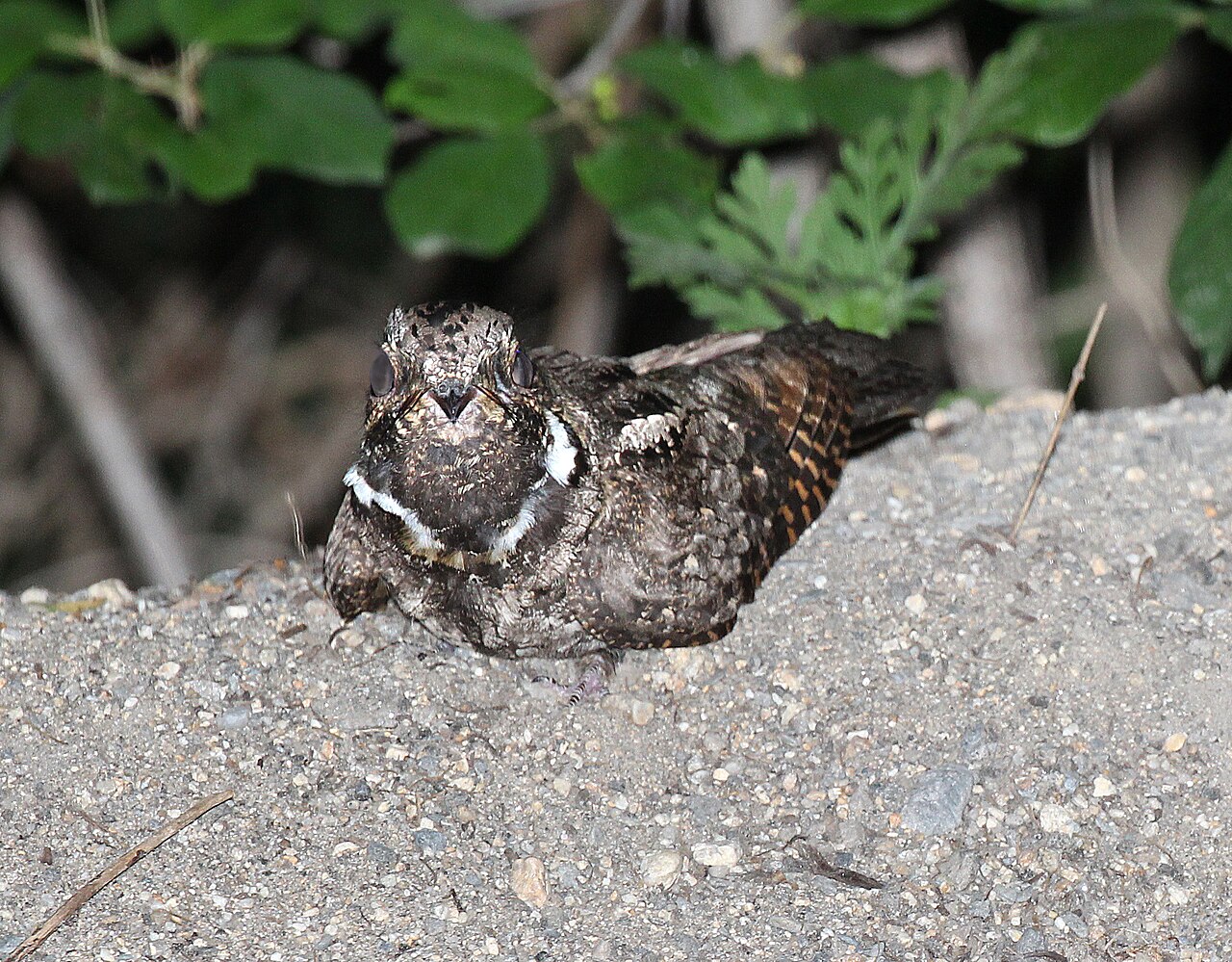
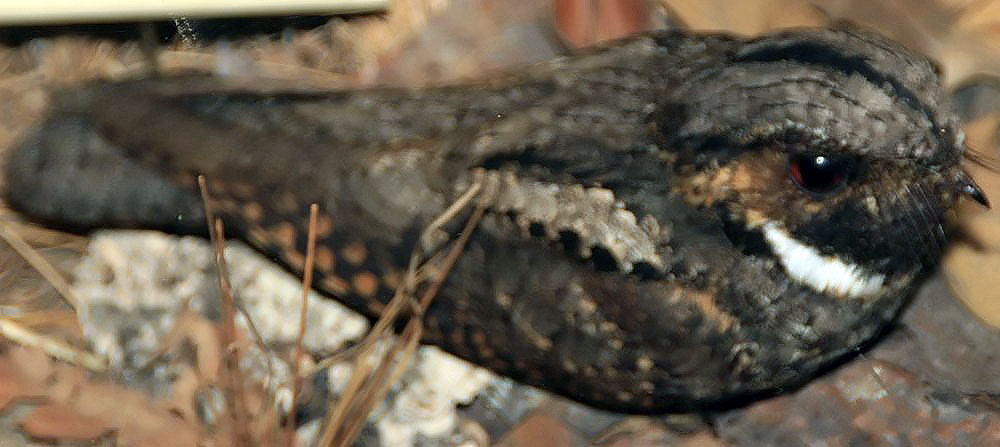
They roost in plain sight and are nearly impossible to find. A whip-poor-will spends the day either on the forest floor among leaf litter or perched lengthwise along a horizontal branch rather than across it, and its mottled grey-brown plumage matches bark and dead leaves so precisely that birds are routinely stepped over.
Nesting works the same way. There is no nest structure at all: the two eggs are laid directly on leaf litter, and the incubating adult relies entirely on camouflage. Disturbed birds flush at the last possible moment, often from directly underfoot, which is startling enough that it is many people’s only encounter with the species.
This is also why the answer to whether they are rare to see is that they are common to hear and genuinely hard to see. Most confirmed sightings come from birds caught in headlights on quiet rural roads at night, where their eyes reflect a distinctive orange. Our guide to what moths eat covers the prey base that determines where they hunt.
Birds Mistaken for a Whip-poor-will
Chuck-will’s-widow is the most frequent confusion in the Southeast. It is a larger nightjar with a four-syllable call, chuck-will’s-WID-ow, lower and more slurred than the crisp three-note whip-poor-will. Anywhere the two overlap, counting syllables settles it immediately.
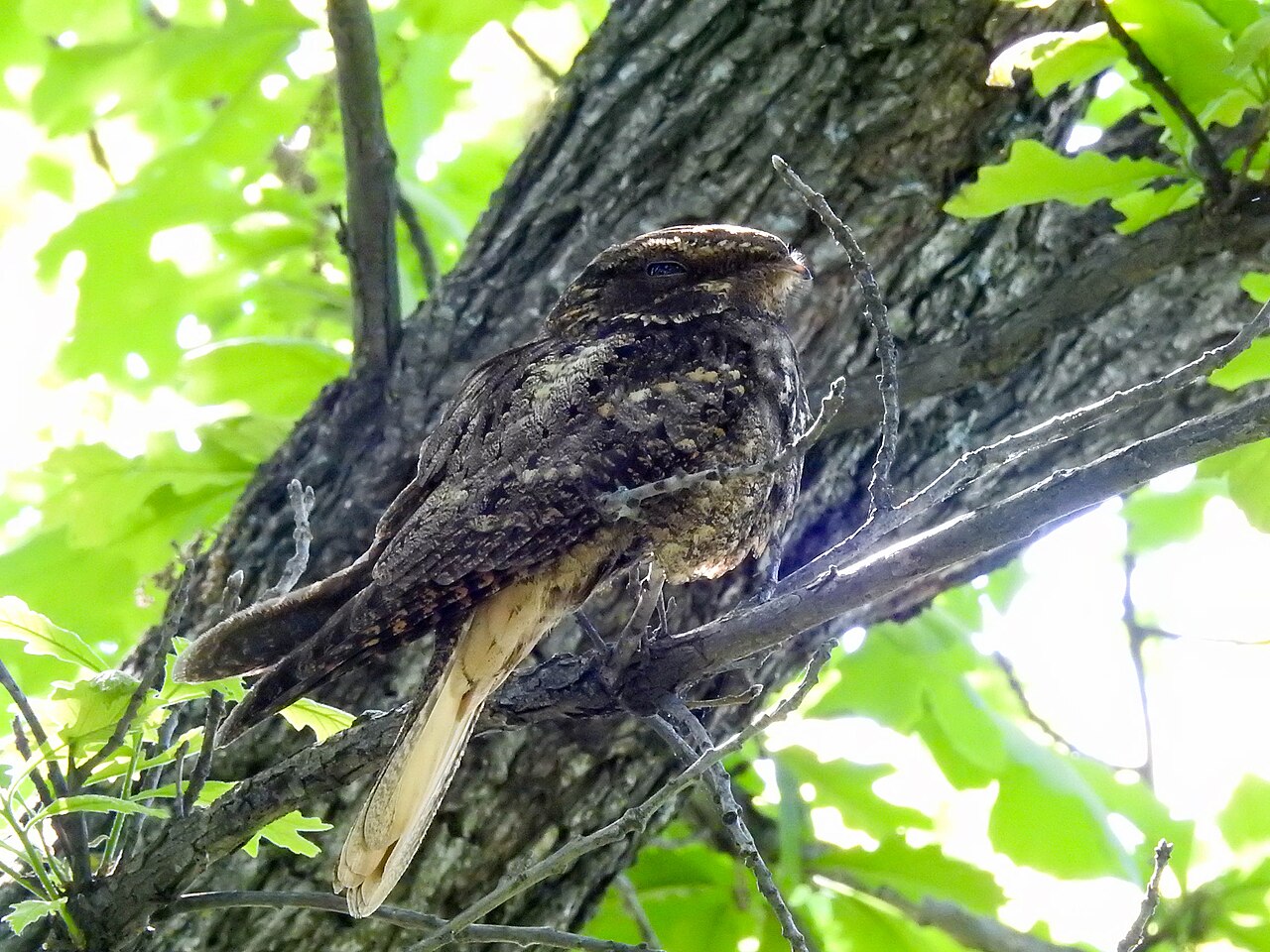
The common poorwill of the West gives a two-syllable poor-will, sometimes with a faint third note audible only at close range. It is the smallest North American nightjar and is also the only bird known to enter true extended torpor, a hibernation-like state lasting weeks.
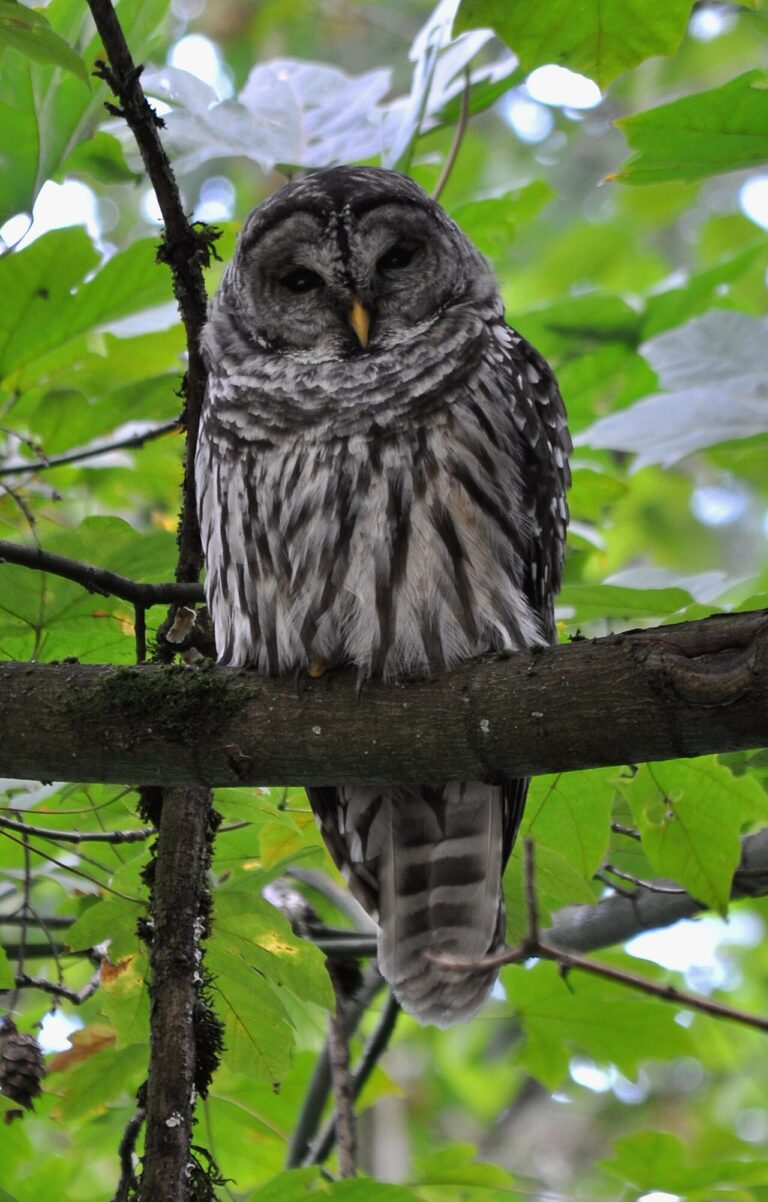
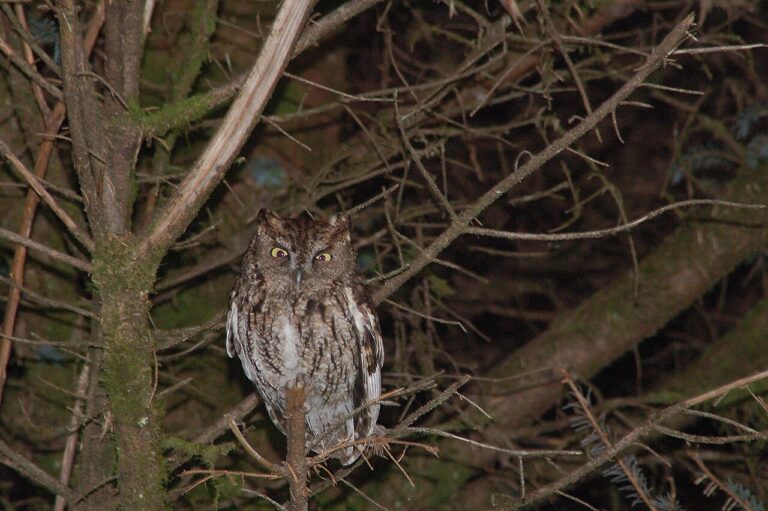
Eastern screech-owls generate the most misidentifications outside the nightjar family, because people assume any repetitive night sound is an owl. The screech-owl’s trill and whinny are tonal and have no syllabic structure, so they sound nothing like a whip-poor-will once compared directly. Our guides to eastern screech owl sounds, owl sounds, and barn owl sounds cover the owls most often blamed.
Why You Hear Fewer Whip-poor-wills Now
Whip-poor-will numbers have fallen steeply across most of the range over the past half century, and Breeding Bird Survey data compiled by the U.S. Geological Survey (usgs.gov) shows one of the sharper long-term declines among widespread North American birds. People who remember hearing them constantly in childhood and hear none now are describing something real.
Three drivers dominate. Forest maturation removed the young, open, shrubby woodland the species needs, since eastern forests that were farmland a century ago have grown into closed canopy. Insect declines removed the food base, particularly large moths. Development and road density fragmented what remained.
Free-roaming cats and increased predator populations add pressure on a bird that nests on bare ground with no structure. The combination means whip-poor-wills persist in patches of suitable habitat and disappear from large areas that look superficially unchanged, which is why the loss feels sudden to people who notice it locally.
What It Means to Hear a Whip-poor-will
Folklore across Appalachia and New England treats a whip-poor-will calling close to a house as an omen of death, and the belief appears widely enough in nineteenth century writing to have shaped how the bird is portrayed in American literature. The usual version holds that the bird can sense a departing soul.
Other traditions are less grim. In several regional versions an unmarried person who hears a whip-poor-will can count the calls to learn how many years remain until marriage, and a bird calling near a house was sometimes read as a straightforward sign of coming change rather than of death.
The prosaic explanation is that whip-poor-wills call from the edges of clearings, and rural houses sat in clearings. A bird calling near a home in 1880 was using the habitat structure the home had created, and in an era of high mortality the coincidence of a death following any notable natural event was frequent enough to reinforce the belief.
How to Attract Whip-poor-wills
Habitat is the whole answer, and it is not something most properties can offer. Whip-poor-wills need a mosaic of open young forest, clearings, and edges, ideally several acres, with leaf litter for nesting and open airspace for hunting moths. Nest boxes are useless since the birds do not use cavities.
On land where the habitat exists, the useful interventions are keeping some areas in early successional growth rather than letting everything close over, avoiding broad-spectrum insecticides, and minimising outdoor lighting. Artificial light disrupts moth behaviour and reduces the prey concentrations these birds depend on.
For anyone who simply wants to hear one, the realistic approach is to travel rather than to attract. State wildlife agencies and local Audubon chapters maintain lists of reliable sites, and going in the right week of the lunar cycle matters more than anything else you can control. Our guide to why birds chirp at night covers the other species you are likely to hear on the same trip.
Frequently Asked Questions
What sound does a whip-poor-will make?
An emphatic three-syllable WHIP-poor-WILL with the stress on the first and last syllables, delivered about once a second and repeated hundreds of times without a break. There is a faint cluck before each call audible only within about 30 m, so hearing it means the bird is very close.
Why do whip-poor-wills only call at night?
They are nightjars, active at dusk, dawn, and through the night, and they hunt flying moths and beetles visually in low light. Since they are effectively invisible after dark, sound carries all of their territorial and mate-attraction signalling, which is why the call is so loud and so persistent.
Why are whip-poor-wills tied to the moon?
They hunt insects by sight, so bright moonlight lets them forage through the night instead of only at dusk and dawn. They time nesting so chicks reach peak food demand during the bright half of the lunar cycle, which means the breeding calendar shifts slightly each year with the moon.
What is mistaken for a whip-poor-will?
Chuck-will’s-widow in the Southeast gives a lower four-syllable call, and the common poorwill in the West gives a two-syllable poor-will. Eastern screech-owls cause the most confusion outside the nightjar family, though their trill and whinny are tonal and lack any syllabic structure.
Where do whip-poor-wills go during the day?
They roost on the forest floor among leaf litter or perched lengthwise along a horizontal branch, and their mottled plumage matches bark and dead leaves so well that they are routinely walked past. They lay eggs directly on leaf litter with no nest structure at all.
Why don’t we hear whip-poor-wills anymore?
Populations have declined steeply over the past half century. Eastern forests matured and closed over, removing the young open woodland the species needs, large moth populations fell, and development fragmented remaining habitat. Ground-nesting also makes them vulnerable to free-roaming cats and increased predator numbers.
What does it mean if you hear a whip-poor-will?
Folklore across Appalachia and New England treats a whip-poor-will calling near a house as an omen of death, while other regional traditions read the number of calls as years until marriage. The practical explanation is that the birds call from clearing edges, and rural houses sat in clearings.