Was That an Eagle? 7 Birds That Look Like Eagle Species
Most birds that look like eagles turn out to be vultures, Ospreys, or big hawks, and the shape of the wings tells them apart within seconds. You saw a large dark bird circling overhead and want to know if it was the real thing.
The types of eagles found in the lower 48 states number just two, the Bald Eagle (Haliaeetus leucocephalus) and the Golden Eagle (Aquila chrysaetos). Everything else soaring over a highway is a vulture, an Osprey, a hawk, a harrier, or a falcon, or a young Bald Eagle mistaken for a Golden Eagle.
The birds most often mistaken for eagles are Turkey Vultures, Ospreys, and Red-tailed Hawks. A Bald Eagle holds long, broad wings flat as a plank and shows a big head. A Golden Eagle holds its wings in a slight V. A vulture wobbles on raised wings, and an Osprey bends its wings into an M.
| Lookalike | Telltale field mark | Where it’s typically seen |
|---|---|---|
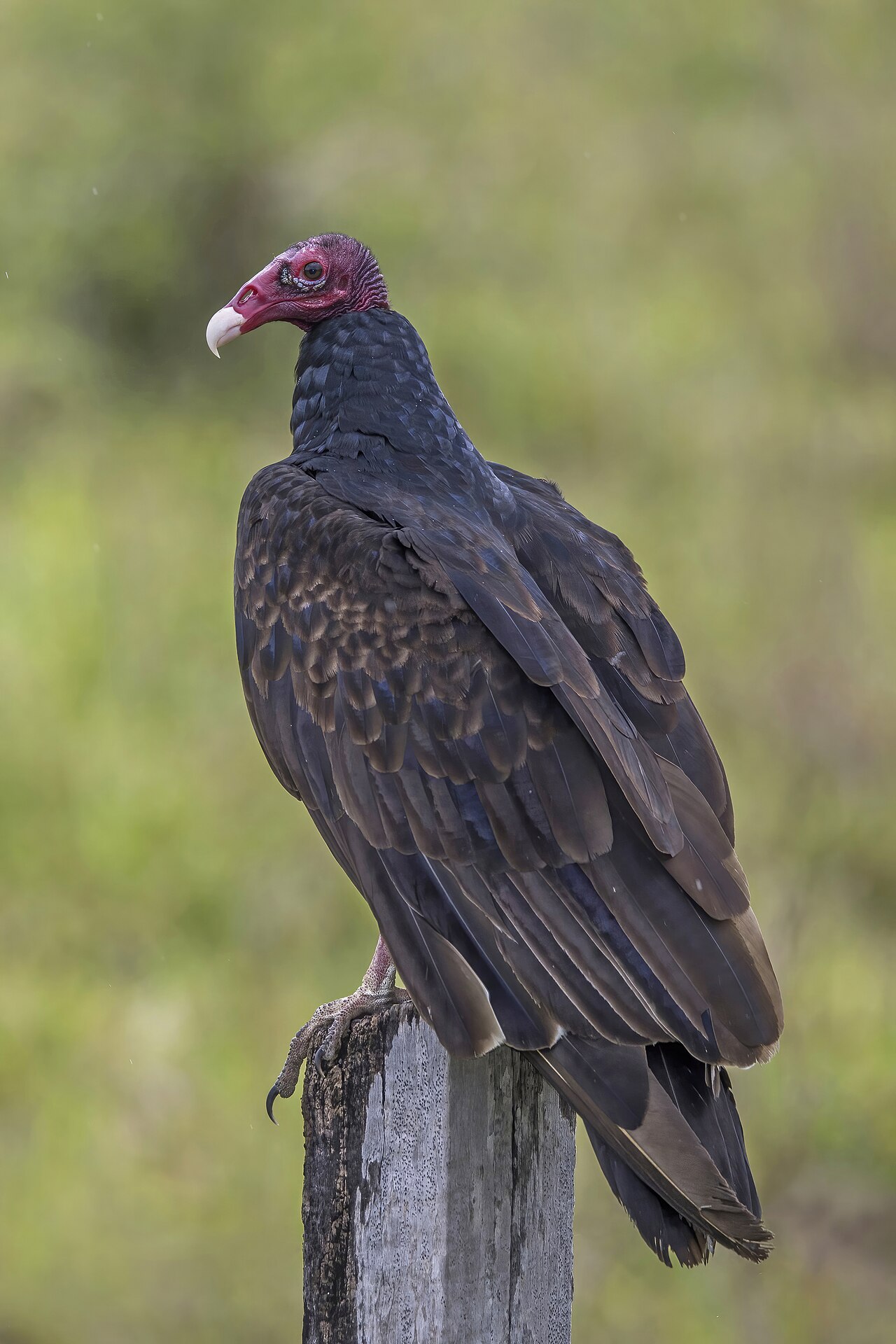
| Turkey Vulture | Bare red head, silvery flight feathers under a black body | Roadsides, open farmland, roosts on towers |
| Black Vulture | Gray head, white patches near the wingtips | Southeast and Mid-Atlantic roadsides, landfills |
| Osprey | White belly, dark eye stripe, dark wrist patches | Lakes, rivers, coasts, nest platforms on poles |
| Juvenile Bald Eagle | Mottled brown with white blotches under the wings | Near large rivers, lakes, and reservoirs |
| Red-tailed Hawk | Dark belly band, brick-red tail on adults | Highway edges, fields, utility poles |
| Rough-legged Hawk | Dark wrist patches, white tail base with a dark band | Open fields in northern states in winter |
| Northern Harrier | Bright white rump patch | Marshes, grasslands, wet meadows |
Birds Most Often Mistaken for Eagles
The Turkey Vulture (Cathartes aura) is one of the birds people most often mistake for an eagle. It soars with its wings raised in a shallow V and rocks from side to side as if balancing on a wire. It rarely flaps.
The Black Vulture (Coragyps atratus) has a short, square tail and flaps in quick, choppy bursts between glides. It travels in groups and crowds onto carcasses with Turkey Vultures.
The Osprey (Pandion haliaetus) bends its long wings at the wrist into an M. It hovers over water and plunges feet-first after fish, and its white head and belly make it the classic stand-in for a Bald Eagle. A young Bald Eagle is a real eagle that gets misnamed. It wears mottled brown for 4 to 5 years before the white head comes in, so people call it a Golden Eagle.
Hawks and Harriers That Pass for Eagles
Among hawks, the Red-tailed Hawk (Buteo jamaicensis) draws the most eagle reports. This stocky buteo soars in wide circles and perches on roadside poles and fence posts. Adults show a brick-red tail from above and a dark band across a pale belly. Bald Eagle sounds are a thin, high chatter, and the piercing scream that films dub over eagles belongs to this hawk.
The Rough-legged Hawk (Buteo lagopus) has legs feathered to the toes. The Golden Eagle shares that trait, and both hunt open country, so a winter field sighting gets confusing fast. The Rough-leg hangs in place on beating wings over one spot.
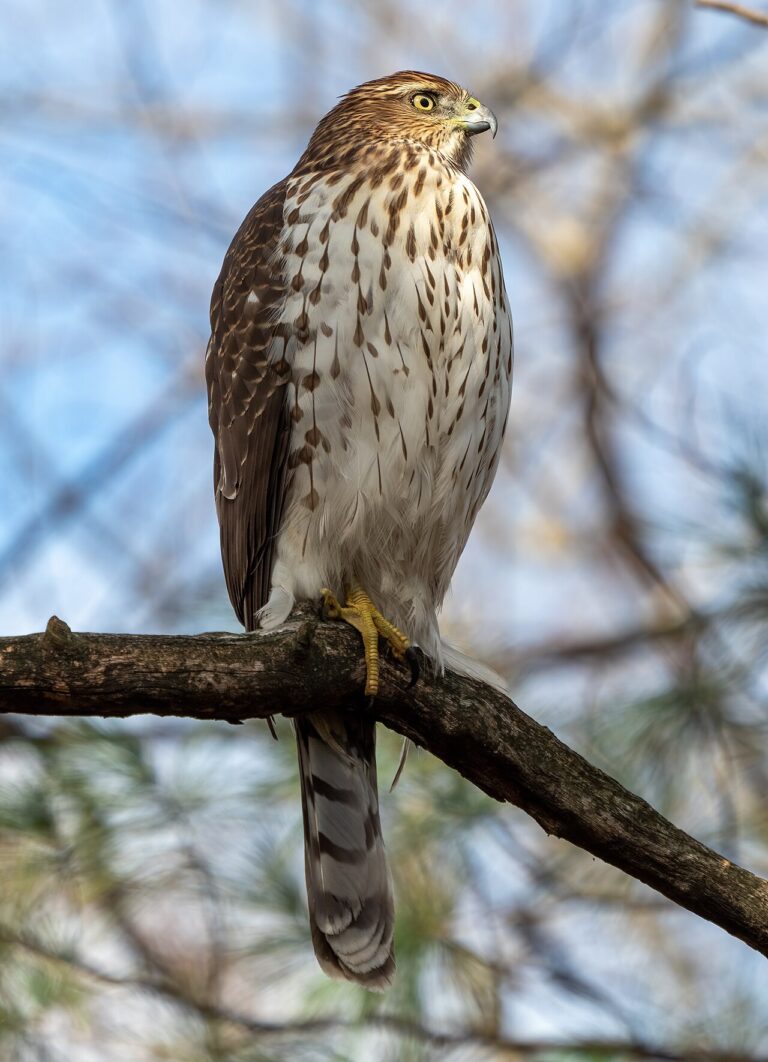
The Northern Harrier (Circus hudsonius) glides low over marsh and fields with its wings held in a V. Cooper’s Hawk (Astur cooperii) and Sharp-shinned Hawk (Accipiter striatus) are far too small, with short rounded wings, a long tail, and a flap-flap-glide rhythm. They still get reported as eagles.
Eagle, Hawk, or Falcon? Size, Shape, and Flight Clues
A flying Bald Eagle holds long, broad wings flat like a plank and soars in a slow, steady line with barely a wobble. The head juts forward more than half the length of the tail, while a Golden Eagle’s head reaches less than half. Hawks and eagles differ most in that proportion, since a hawk carries a smaller head and shorter wings for its body.
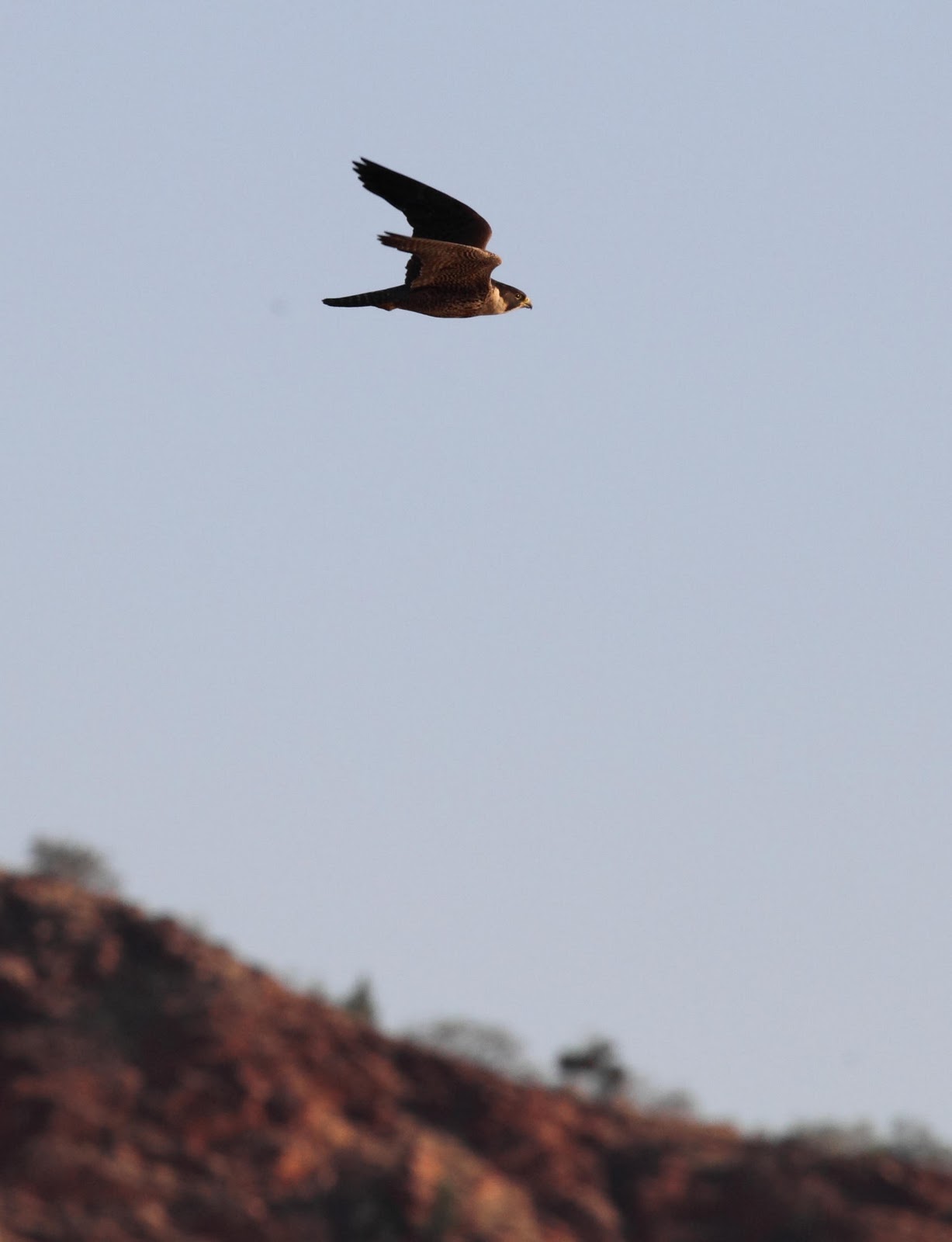
Falcons fly on pointed, swept-back wings and drive through the air with fast, powered beats. They rarely circle slowly on rising air the way eagles do. Of the American Kestrel (Falco sparverius), Merlin (Falco columbarius), Prairie Falcon (Falco mexicanus), Peregrine Falcon (Falco peregrinus), and Gyrfalcon (Falco rusticolus), only the Peregrine and the Gyrfalcon, at 3.3 to 4.3 ft wingspan, get mistaken for eagles.
Nearby crows and gulls make the best ruler. An eagle dwarfs a crow and looks bigger than any gull it passes. An American Crow spans about 3 ft, a Red-tailed Hawk about 4 ft, a Turkey Vulture close to 6 ft, and a Bald Eagle 6 to 7.5 ft, so size alone cannot rule out a vulture.
Related reading: eagles that look like bald eagles.
Frequently Asked Questions
Is a Red-tailed Hawk as big as an eagle?
No. A Red-tailed Hawk spans about 4 ft and weighs 1.5 to 3.2 lb, while a Bald Eagle spans 6 to 7.5 ft and weighs 6.6 to 14 lb, three to four times as heavy.
Do eagles and vultures feed at the same carcass?
Yes. Bald Eagles feed on fish but often scavenge carrion too, especially in winter, so a roadkill deer can draw both to the same spot.
Sources
- Cornell Lab, Bald Eagle Identification
- Cornell Lab, Turkey Vulture Identification
- Cornell Lab, Red-tailed Hawk Identification