What Does It Mean When You See a Black Bird?
Seeing a black bird most often symbolizes change, mystery, and the arrival of a message, and across many cultures it is read as a sign to pay closer attention to what is shifting in your life. Because black birds are intelligent, watchful, and hard to ignore, people have attached meaning to them for thousands of years, from Norse ravens carrying news to the gods to crows treated as messengers between worlds. The exact meaning depends on your own beliefs, the culture you draw from, and the situation you find yourself in. It also depends on which bird you actually saw, since crows, ravens, grackles, and blackbirds each carry slightly different lore. This guide covers both sides: the symbolism people assign to black birds, and the real ornithology behind the bird at your feeder.
| Encounter | Common symbolic reading |
|---|---|
| A single black bird | A message, a moment of change, or a call to be observant |
| A large flock | Community, transition, or a shift on the horizon |
| A black bird at your window | News arriving, or attention drawn to your inner world |
| A black bird crossing your path | A turning point or a decision approaching |
| Repeated sightings | Often read as a personal sign worth reflecting on |
Seeing a black bird is most often read as change, mystery and a message worth noticing. Which bird you actually saw shapes the reading: crows and ravens carry intelligence and prophecy, grackles and starlings carry noise and abundance, and a lone blackbird carries introspection.
What a black bird symbolizes
In most Western folklore, a black bird symbolizes transformation and the unknown. Black is the color of night, endings, and the parts of life we cannot fully see, so black birds became emblems of mystery, intuition, and change rather than simple bad luck. Many traditions also treat them as messengers, creatures that move between the ordinary world and something larger. Their well documented intelligence reinforces this: crows and ravens use tools, recognize human faces, and solve problems, which made ancient people see them as knowing something we do not.
It is worth saying plainly that these are cultural beliefs, not predictions. A black bird in your yard is first and foremost a wild animal doing bird things. The meaning you take from it is personal, and the healthiest way to read one is as a prompt for reflection rather than a literal omen of fortune or doom. For the broader picture, see our overview of bird symbolism.
Which black bird are you actually seeing?
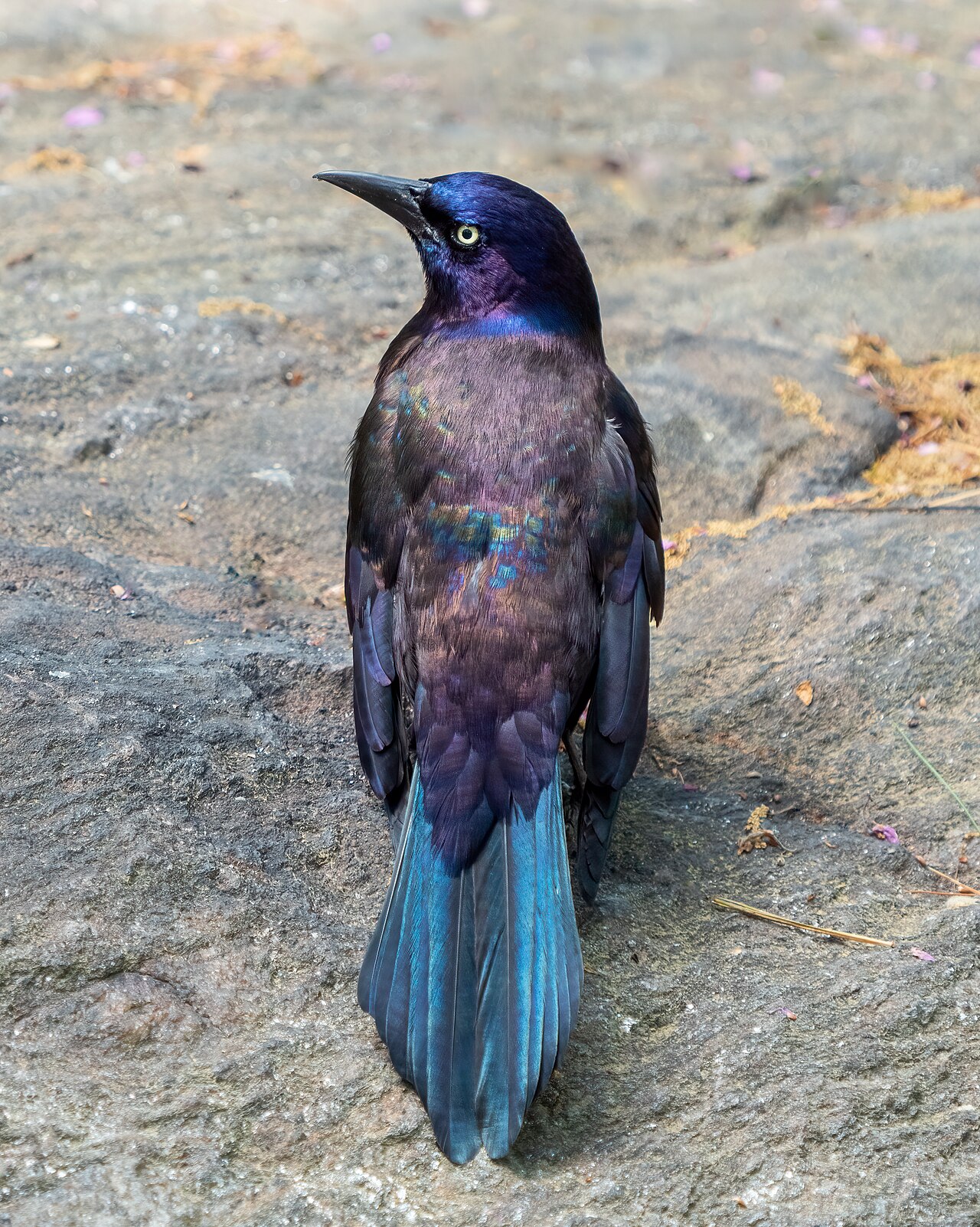
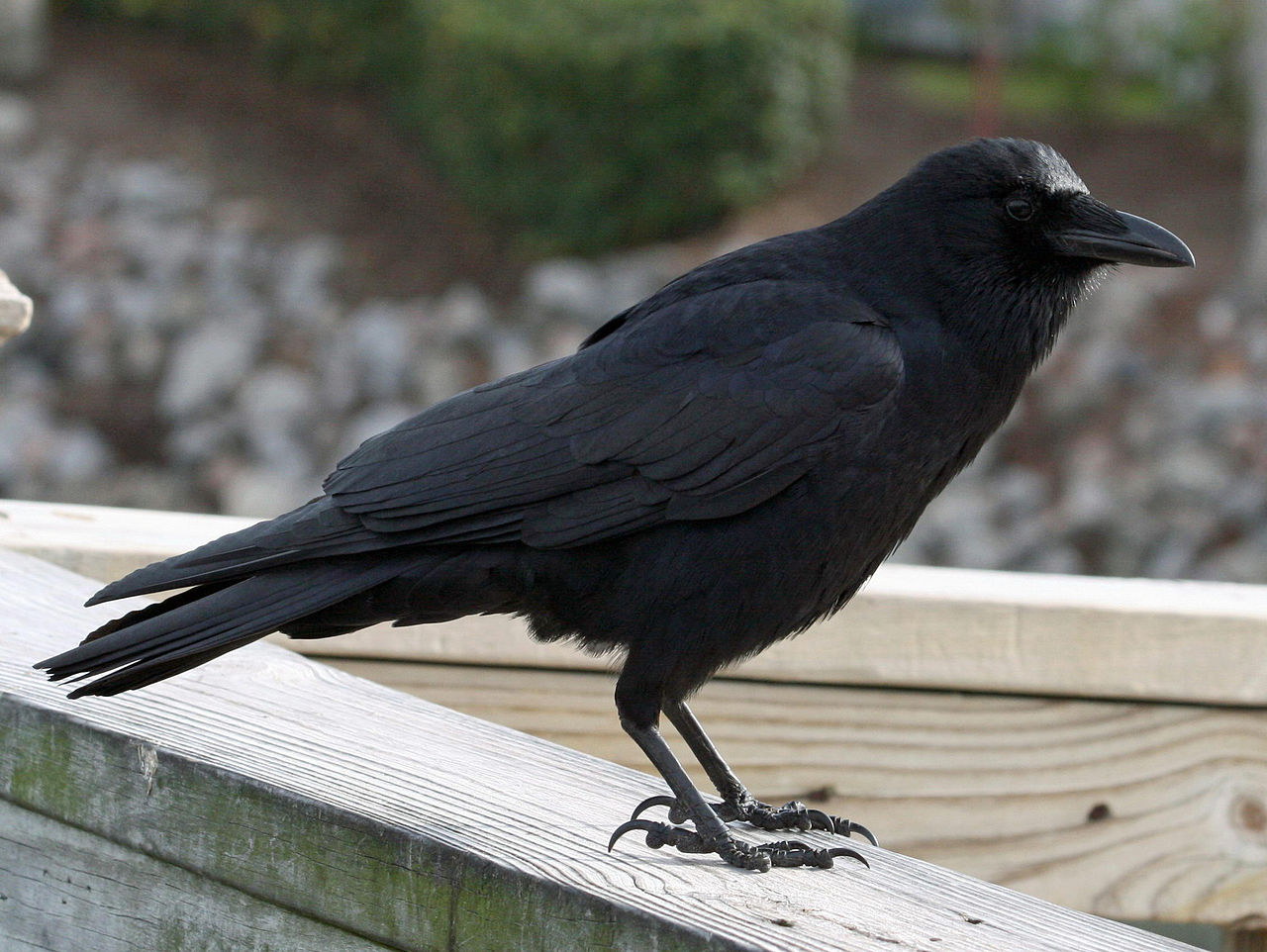
Before reading meaning into a sighting, it helps to know the species, because North America has several very different black birds. The most common backyard visitors are American Crows, Common Ravens, Common Grackles, Red-winged Blackbirds, European Starlings, and Brown-headed Cowbirds. Crows are large and all black with a fan shaped tail; ravens are bigger still, with a wedge shaped tail and a deep croak. Grackles look black but flash iridescent bronze and purple in sunlight and have long, keel shaped tails. Starlings are smaller, short tailed, and speckled in winter.
Getting the identification right matters, because the lore differs by bird. According to the Cornell Lab of Ornithology, grackles and starlings often gather in enormous mixed flocks in fall and winter, which is why a sudden “swarm” of black birds is usually a normal seasonal roost rather than anything unusual. You can sort the look-alikes in our guides to types of blackbirds and common black birds.
Black bird symbolism across cultures
Different traditions read black birds in strikingly different ways. In Norse mythology, the god Odin kept two ravens, Huginn and Muninn (thought and memory), who flew across the world and returned with news, making the raven a symbol of wisdom and insight. Many Native American traditions honor the crow and raven as clever tricksters and creators, associated with transformation and sacred knowledge rather than misfortune. In Celtic lore, black birds were linked to the otherworld and to prophecy.
European folk superstition is where the “bad omen” reputation mainly comes from, tied to old associations between black birds, battlefields, and death. Even there the picture is mixed: a well known counting rhyme treats one crow as sorrow but larger numbers as joy, gold, and secrets. In Christian symbolism the raven appears in the story of Noah and later as a bird that fed the prophet Elijah, a provider rather than a curse. The takeaway is that no single “true” meaning exists; the reading depends entirely on the tradition. Our guides to crow symbolism and raven symbolism go deeper on each.
Common black bird encounters and what they suggest
Within symbolic traditions, the details of a sighting shape the reading. A single black bird is usually taken as a focused message or a nudge toward awareness. A black bird tapping at or flying into a window is often read as news arriving or attention being drawn inward, though the everyday cause is usually a bird seeing its reflection; we cover that in what it means when a bird hits your window. A large flock wheeling overhead tends to symbolize community and coming change. A black bird that crosses your path is frequently interpreted as a turning point or a decision drawing near.
Black birds as spirit animals and totems
In modern spiritual practice, people who feel a connection to a black bird often describe it as a spirit animal or totem representing transformation, adaptability, and the courage to face the unknown. The crow totem is commonly associated with intelligence and seeing through illusions; the raven with magic, creativity, and deep change; the blackbird with intuition and the threshold between the seen and unseen. These frameworks are tools for self reflection, ways to name qualities you want to develop, rather than fixed rules.
If a particular black bird resonates with you, it can be a useful mirror. Ask what the bird’s real traits, resourcefulness, boldness, and sharp attention, might be inviting you to notice in yourself. That kind of grounded reflection is where symbolism does its best work.
Why we attach meaning to black birds
There is a reason black birds feature so heavily in folklore worldwide. They are large, vocal, social, and unusually smart, so they command attention in a way sparrows do not. Human brains are pattern seekers, and a striking, intelligent, jet black bird that seems to watch us back is exactly the kind of thing our ancestors turned into story. Add the color black, already loaded with associations of night and the unknown, and the symbolism almost writes itself.
None of that makes the meaning meaningless. Symbols help people process change, grief, and hope. Seeing a black bird as a reminder to stay alert, adapt, or reflect can be genuinely useful, as long as it stays a prompt for thought rather than a source of anxiety. If a sighting ever leaves you uneasy, the antidote is usually knowledge: learn the species, watch its behavior, and let curiosity replace worry.
What different numbers of black birds mean
Folklore often reads meaning into how many black birds you see, most famously through the old counting rhyme that begins “one for sorrow, two for joy, three for a girl, four for a boy, five for silver, six for gold, seven for a secret never to be told.” Originally sung about magpies, it is widely applied to crows and other black birds today. Under this tradition a lone black bird is the one people worry about, while larger groups turn increasingly fortunate, joy, wealth, and hidden knowledge.
Take the rhyme as playful heritage rather than instruction. In real life, the number of black birds you see reflects the season far more than your fortune: crows, grackles, and starlings gather in huge communal roosts from fall through winter, so a sky full of them simply means the flocking season has arrived. A single black bird in summer is often a territorial resident. Reading the count as a nudge toward optimism is harmless fun, as long as it stays fun.
Black birds in the morning versus at night
Some traditions also weigh the time of day. A black bird seen or heard at dawn is frequently read as a fresh message or the start of something, fitting for the hour of new beginnings, while one calling at dusk or in the dark leans toward mystery, reflection, and the unknown. A black bird active at night is unusual for most species and simply memorable, which is part of why it feels significant.
Grounded in biology, morning is when birds are most vocal and visible during the dawn chorus, so encountering black birds then is entirely expected. The symbolic layer is something you add to a natural rhythm. Used gently, it can make an ordinary morning sighting feel like a small, hopeful start to the day.
What a Black Bird at Your Window Means
A black bird at a window is traditionally read as a message arriving, and in most European folklore the window is specifically the threshold between the outside world and your private life, which is why the same bird on a fence carries less weight than one at the glass. The common readings are news on the way, an ancestor checking in, or a prompt to pay attention to something you have been avoiding.
The behaviour behind it is usually territorial rather than mystical. A bird that returns to the same window repeatedly, taps at it or flutters against it is almost always attacking its own reflection, which it reads as a rival intruding on its territory. This peaks in spring during breeding season, it is most common in grackles, robins, cardinals and mockingbirds, and it stops when the reflection is broken up with a screen, film or soap marks on the outside of the glass.
Both readings can sit together comfortably. The bird has a reason of its own for being there, and what you take from the encounter is yours. Audubon’s Common Grackle account covers the species behind many of these sightings.
Frequently Asked Questions
Is seeing a black bird bad luck?
Not inherently. The bad luck reputation comes mainly from European folk superstition. Many other traditions, including Norse and several Native American cultures, treat black birds as symbols of wisdom, transformation, and messages rather than misfortune.
What does it mean to see a single black bird?
A single black bird is usually read as a focused message or a call to pay attention to change in your life. In the old counting rhyme, one crow is linked to sorrow, but this is folklore, not prediction.
What does a black bird at my window mean?
Symbolically it is often read as news arriving or attention turning to your inner world. The everyday cause is usually a bird seeing its own reflection in the glass and reacting to it.
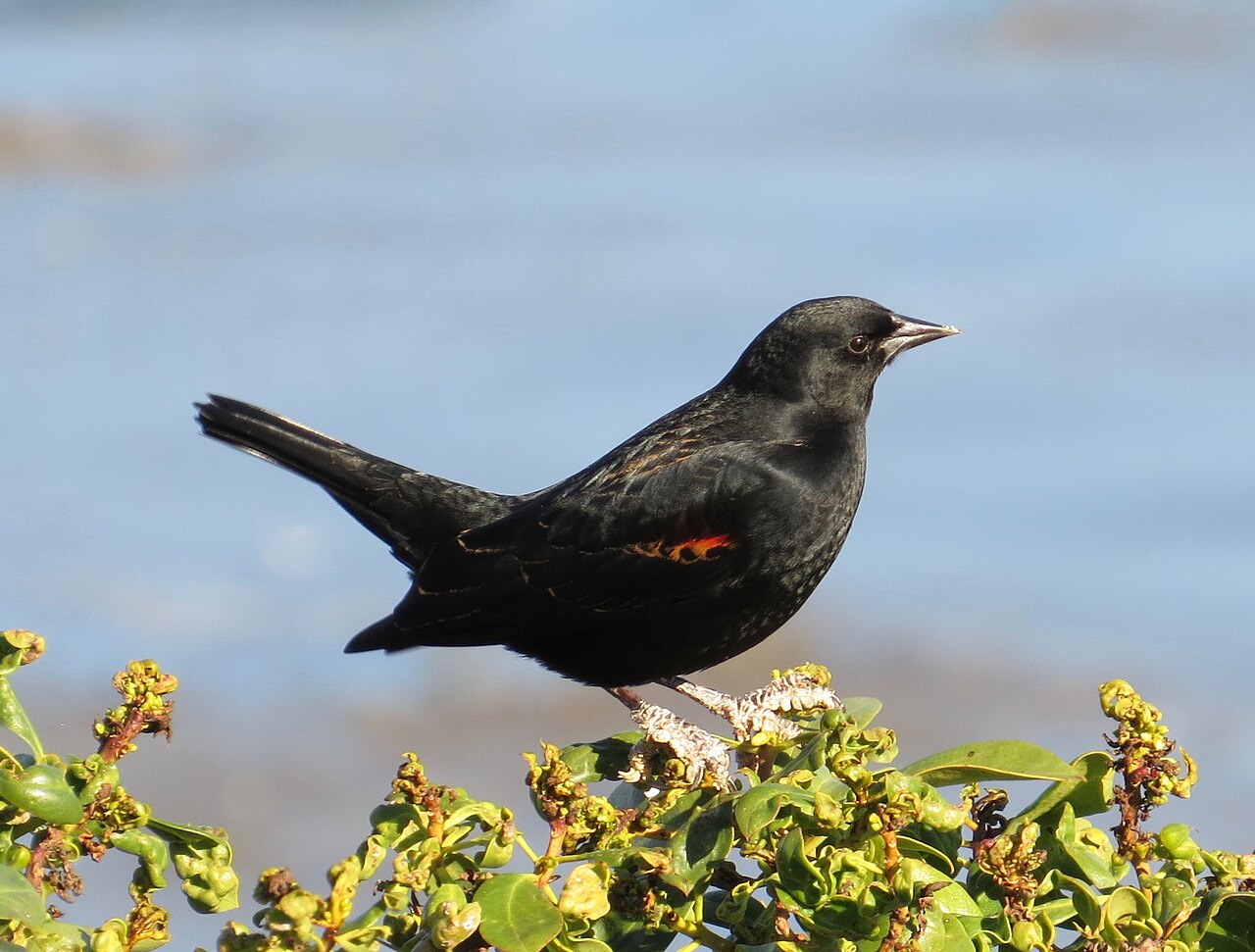
What is the spiritual meaning of a red-winged blackbird?
Red-winged blackbirds are often associated with confidence, protecting your space, and standing out, reflecting the males’ bold territorial displays. You can read more in our black bird symbolism guides.
What does it mean to dream about a black bird?
Black birds in dreams are commonly linked to transformation, the unknown, or a message from the subconscious. We cover dream imagery in detail in our guide to birds in dreams.
What is the biblical meaning of a black bird?
In the Bible ravens appear as providers, feeding the prophet Elijah, and as the first bird Noah released from the ark. They are portrayed more as instruments of provision and testing than as evil omens.
What black bird is a spirit animal?
Crows and ravens are the most common black bird spirit animals, usually representing intelligence, adaptability, transformation, and the ability to see through illusion.
Why do I keep seeing black birds?
Most repeated sightings have a practical cause, such as a nearby roost, nest, or food source, especially in fall and winter when grackles and starlings flock. If it feels meaningful to you, treat it as a prompt for reflection rather than a fixed sign.