Mourning Dove: Complete Identification, Diet, and Behavior Guide (2026)
The Mourning Dove (Zenaida macroura) is one of the most abundant and widespread native birds in North America. With sleek tan-brown plumage, a long pointed tail, and a distinctive mournful ‘coo-OO-oo-oo-oo’ song, Mourning Doves are familiar fixtures in backyards from coast to coast. They’re also one of the most ecologically successful native species in human-modified landscapes, populations have grown alongside human settlement, supported by reliable food sources at backyard feeders and agricultural fields. This comprehensive guide covers everything you need to know about Mourning Dove identification, range, diet, behavior, nesting (including their famously simple nests), vocalizations, and proven strategies for attracting Mourning Doves to your backyard.
The Mourning Dove is a slender tan-brown dove with a long pointed tail, black spots on the wings and a mournful coo-OO-oo-oo-oo call. It is among North America’s most abundant birds, feeds almost entirely on seeds taken from the ground, and can nest up to six times a year.
Mourning Dove: Key Facts at a Glance
| Attribute | Detail |
|---|---|
| Scientific Name | Zenaida macroura |
| Family | Columbidae (Doves and pigeons) |
| Size | 9-13 inches (23-34 cm) length |
| Wingspan | 17-18 inches (43-46 cm) |
| Weight | 4-6 oz (113-170 g) |
| Lifespan | 1.5 years average; up to 19 years recorded |
| Diet | Almost entirely seeds (99% of diet) |
| Habitat | Open habitats, yards, fields, parks, agricultural areas |
| Range | All of North America from Canada to Panama |
| Population Status | Very abundant, 350 million estimated North American population |
| Conservation Status | Least Concern (IUCN) |
| State Bird Of | Wisconsin (state symbol) |
| Distinctive Feature | Tan-brown + long pointed tail + small head + whistling wings |
| Song | Mournful ‘coo-OO-oo-oo-oo’ |
| Annual Hunting | Most heavily-hunted bird in North America (legal game in 41 states) |
Mourning Dove Identification: How to Identify a Mourning Dove
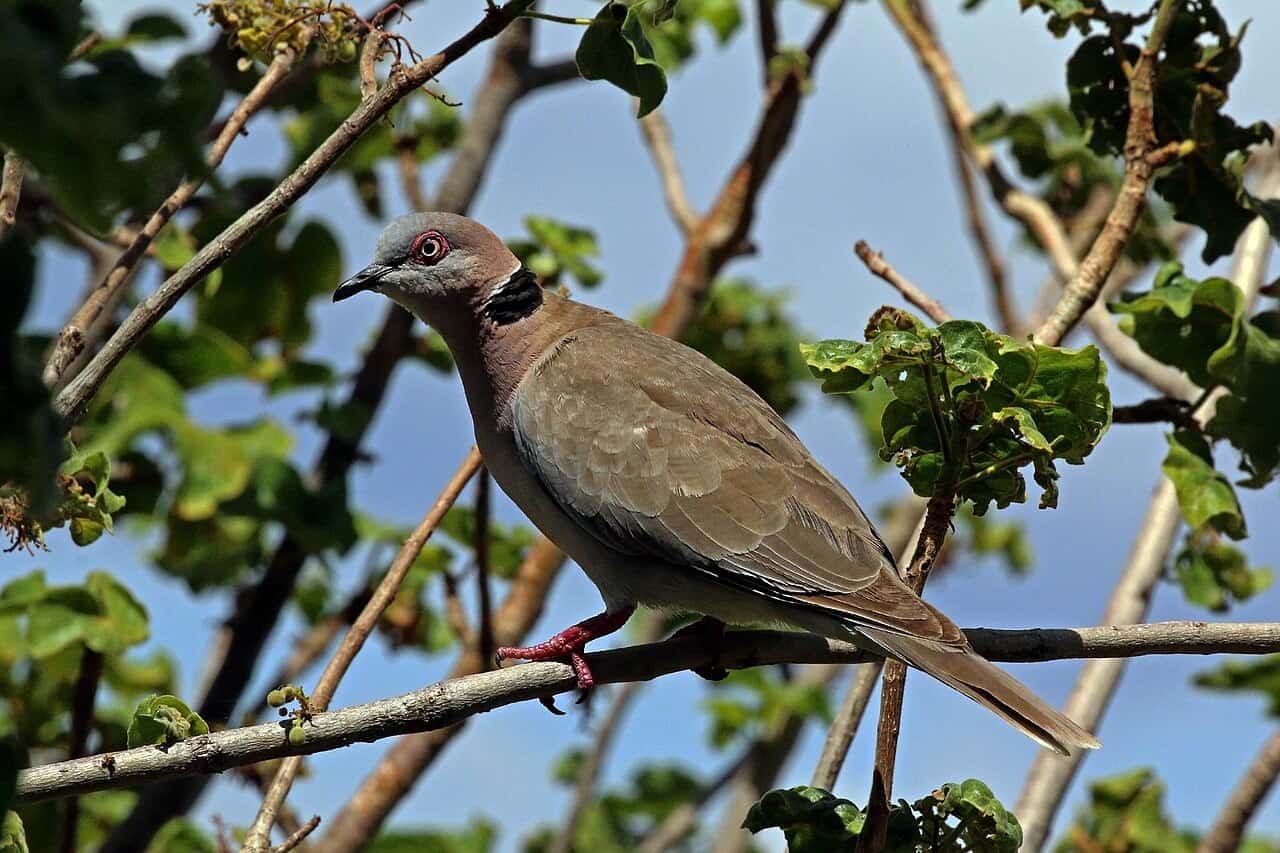
Mourning Doves are sleek and graceful: tan-brown overall (lighter on the belly), with black spots on the wings, a long pointed tail with white outer edges (visible in flight), a small round head, dark eyes with a pale blue eye-ring, and a thin black bill. The combination of small head + sleek body + long pointed tail is diagnostic.
Male and female Mourning Doves look nearly identical. Males MAY have slightly bluer crowns and more iridescent neck patches, but the differences are subtle. Most birders don’t distinguish sexes in the field.
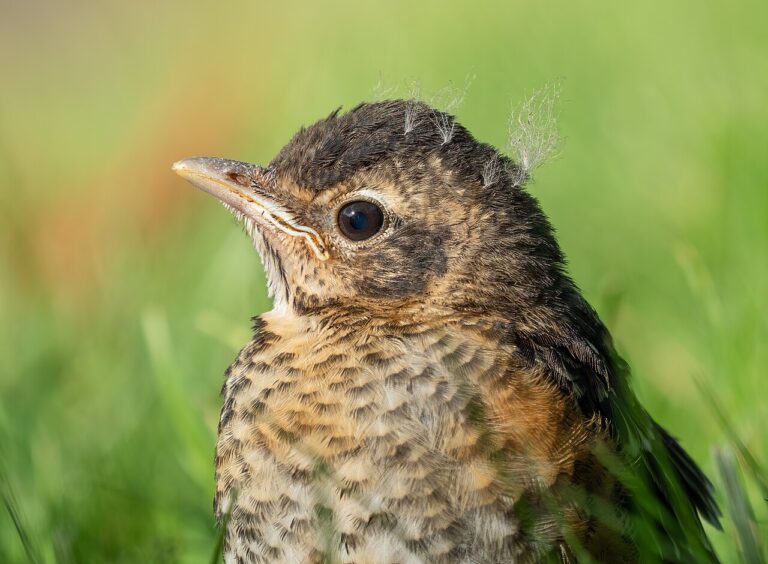
Juvenile Mourning Doves look like duller versions of adults, with pale-edged feathers giving a scaly appearance. They lose the scaly pattern as they mature in their first 2-3 months.
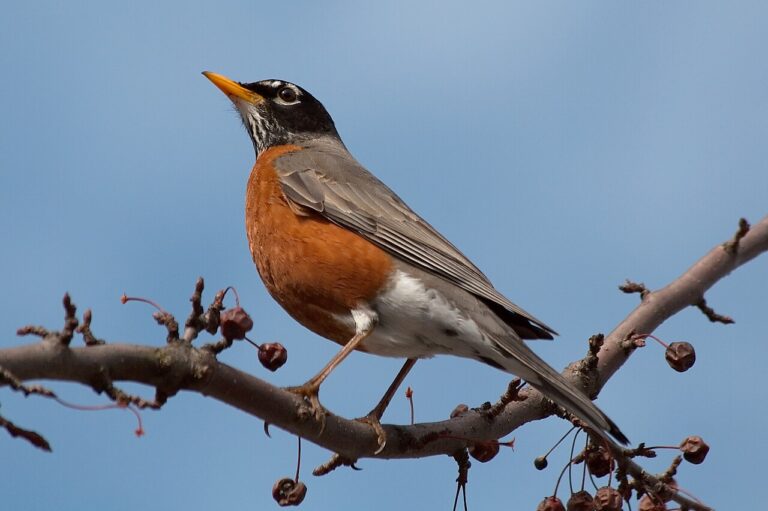
Size: Mourning Doves are 9-13 inches long, among the larger backyard birds, comparable to American Robins (10 inches) but with a much more streamlined body shape.
Mourning Dove vs Pigeon: People often confuse Mourning Doves with Rock Pigeons (Common Pigeons). Mourning Doves: smaller, sleeker, long pointed tail, tan-brown coloring. Rock Pigeons: larger, stockier, fan-shaped tail, gray-and-white coloring with iridescent green/purple neck patches. Mourning Doves are also wilder, they’re rarely as tame as Rock Pigeons.
Mourning Dove vs Eurasian Collared-Dove: An introduced species expanding rapidly across North America. Eurasian Collared-Doves are LARGER, more pale gray (not tan-brown), have a distinctive black neck collar/necklace, and a SQUARE tail (not pointed). Their range now overlaps with Mourning Doves across most of North America. Distinguishing them: Mourning Dove tail = pointed, Collared-Dove tail = square.
Wing whistling: Mourning Doves’ wings produce a distinctive whistling sound when they take off and fly. This whistling is caused by air rushing through specialized wing feathers. The sound is so characteristic that experienced birders can identify Mourning Doves taking off without even seeing them.
Mourning Dove Range and Habitat
Mourning Doves have one of the largest North American ranges of any native bird, they’re year-round residents across most of the continent. Their range extends from southern Canada through the United States, Mexico, and into Central America. Northern populations migrate south for winter; southern populations are year-round residents.
The range has expanded dramatically due to human activity. Conversion of forests to agricultural land, gardens, and lawns has created ideal Mourning Dove habitat. Year-round bird feeders provide reliable winter food, supporting larger populations than historically possible.
Mourning Doves are habitat generalists. They thrive in open habitats with scattered trees: yards, parks, agricultural fields, suburbs, roadsides, golf courses, cemeteries. They avoid dense forests and treeless prairies, they need scattered trees for roosting and nesting but open areas for foraging.
Adaptability: Mourning Doves are perhaps the most adaptable native North American bird. They’ve increased substantially despite being the most heavily-hunted bird in North America (legally hunted as game in 41 states, with annual harvests of 20-30 million birds). Population growth in face of intense hunting reflects their remarkable reproductive success.
Migration: Northern Mourning Doves (Canada, northern US) migrate south for winter. Southern populations (most of the lower 48 states) are typically year-round residents. Migration patterns are highly variable, some Northern individuals may overwinter in feeder-rich suburbs while others migrate hundreds of miles.
Mourning Dove Diet: What Do Mourning Doves Eat?
Mourning Doves are almost entirely granivorous, seeds make up 99% of their diet. This makes them one of the most specialized seed-eaters among backyard birds. They eat virtually any small seeds: weed seeds, grass seeds, agricultural grains (corn, wheat, sorghum, millet), garden flower seeds, and bird feeder offerings.
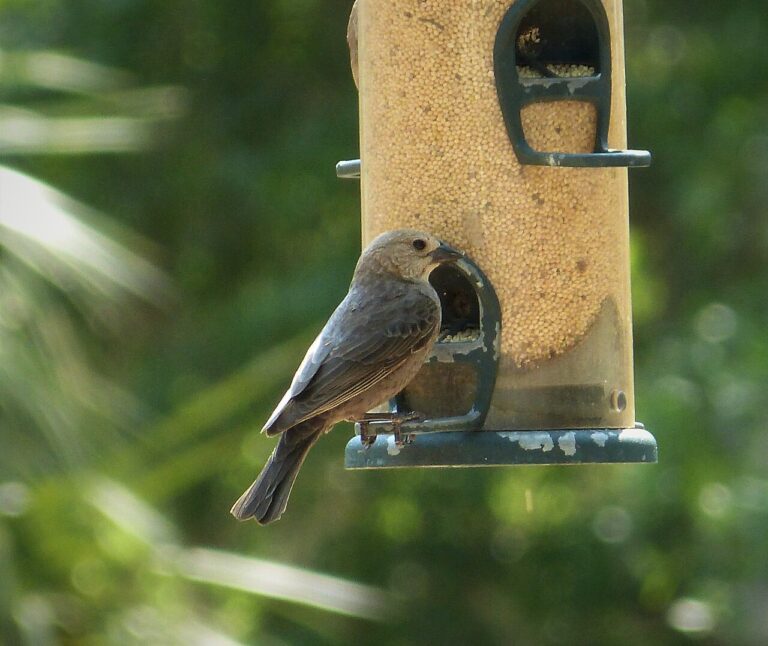
Top backyard feeder choices: white millet (the universal Mourning Dove favorite, they prefer it over almost any other seed), black oil sunflower (cracked or whole), safflower, cracked corn, milo (sorghum). Mourning Doves feed on the GROUND or on large platform feeders, they don’t use tube feeders or small perch feeders.
Feeding behavior: Mourning Doves swallow seeds whole and store them in their crop (an enlarged section of the esophagus that can hold considerable food). After filling their crop, they fly to a safe location to digest. Crop contents are gradually moved to the muscular stomach (gizzard) where the seeds are ground for digestion using small pebbles the doves have swallowed.
Water requirements: Mourning Doves drink considerably more water than many backyard birds because they need water to digest their dry seed diet. They visit bird baths multiple times daily. Unique among most birds, Mourning Doves SUCK water (rather than scooping it and tipping back to swallow). They put their bill in water and drink directly, like a straw.
‘Pigeon milk’ or ‘crop milk’: Mourning Doves (like all members of family Columbidae, doves and pigeons) feed their nestlings ‘crop milk’, a nutritious fluid secreted from the parents’ crop lining. Crop milk is rich in protein, fat, and antibodies, comparable to mammalian milk in composition. Both parents produce crop milk, and both feed nestlings. This unique adaptation allows seed-eating birds to feed nestlings without the protein-rich insects that most other songbirds use.
Mourning Dove Behavior and Social Structure
Mourning Doves are highly social. They form small flocks year-round, with larger flocks during fall and winter migration. Pairs remain together during breeding season but join larger groups outside breeding.
Pair bonds: Mourning Dove pairs typically form during spring, although bonds may not always persist for life. They’re more flexible than Cardinal pair bonds, with some pair changes occurring between breeding seasons. Pairs do show coordinated behavior during nesting season, sharing incubation duties, feeding nestlings, and defending territories together.
Foraging behavior: Mourning Doves typically forage in pairs or small groups. They walk on the ground picking up seeds, they don’t dig or scratch like sparrows. They have keen eyesight and quickly spot dropped seed beneath feeders.
Vigilance: Mourning Doves are notably wary. They’re often the first birds to fly off at a perceived threat. Their wings whistle on takeoff, possibly serving as an alarm signal to other doves and birds.
Sun-bathing: Mourning Doves often ‘sun bathe’ on bare ground or rooftops, spreading their wings to expose their bodies to direct sunlight. The behavior may help with parasite control (heat kills feather lice and mites) and feather maintenance. Often mistaken for injured or distressed birds, but it’s normal behavior.
Lifespan: Wild Mourning Doves have been recorded surviving 19 years (banded bird), though this is exceptional. Average lifespan is 1.5 years due to extreme first-year mortality. First-year mortality rates can be 75-80%, among the highest of any North American bird. Adults that survive their first year may live 5-7 years. Major mortality factors: hunting (legal game in 41 states, ~20-30 million harvested annually), predation by Cooper’s Hawks (major predator), window strikes, vehicles, and various other causes.
Mourning Dove Breeding and Nesting
Mourning Doves are remarkable breeders, they have one of the longest breeding seasons and most prolific reproduction of any North American bird.
Breeding season: Mourning Doves breed from March through October in most of their range, with year-round breeding in some southern regions. A successful pair may raise 4-6 broods per year (occasionally more). This high reproductive output explains how populations have grown despite intense hunting pressure.
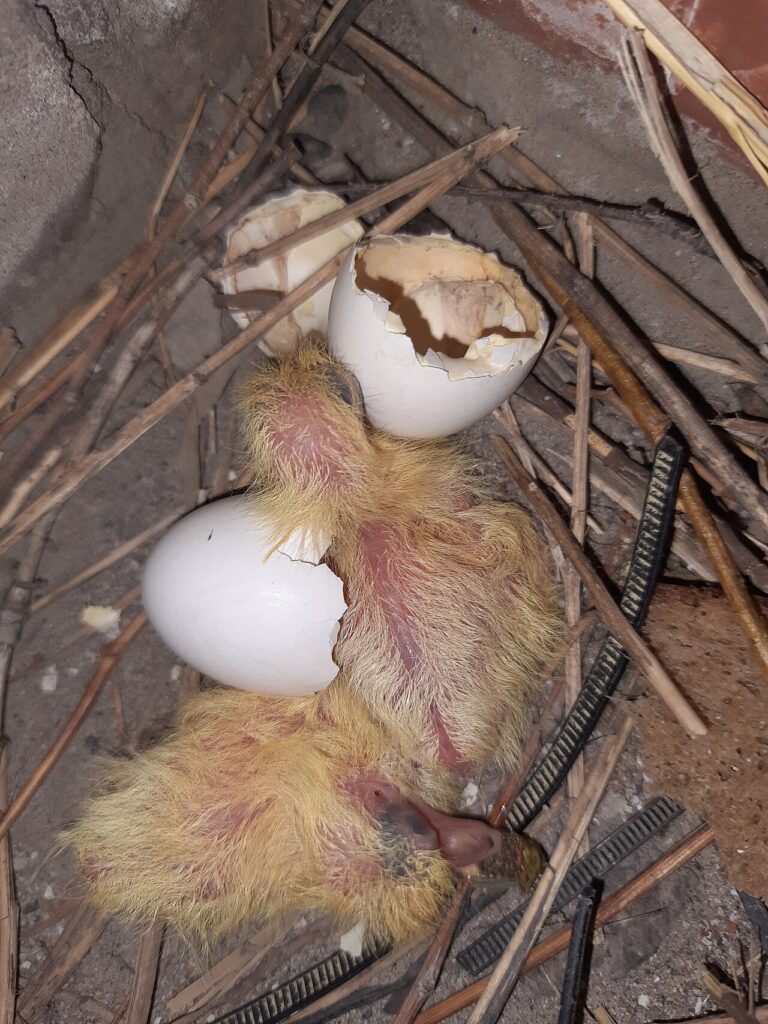
Nest construction: Mourning Doves build remarkably simple nests, often described as some of the most poorly-constructed nests of any North American bird. Nests are loose platforms of twigs, with so little structure that eggs are sometimes visible through the bottom. Male and female both build, but nests typically take only 2-4 days to complete.
Nest placement: Mourning Doves use diverse nest sites: tree branches, shrubs, building ledges, gutters, hanging plants, window air conditioners. Almost any flat surface 4-30 feet above ground. Their willingness to nest on diverse surfaces is one reason they’re so well-adapted to human environments.
Eggs: Each clutch contains 2 eggs (occasionally 1 or 3). Mourning Dove eggs are pure white. Incubation takes 14-15 days, with both parents participating, males typically take daytime shifts, females take nighttime shifts.
Nestling period: Nestlings (called ‘squabs’) grow extraordinarily fast on their parents’ crop milk diet. They fledge (leave the nest) at just 14-15 days, much faster than most backyard birds. After fledging, juveniles remain with parents for 1-2 weeks while learning to forage, then become independent.
Multiple broods: Mourning Doves often begin building a second nest while still feeding nestlings from the first. The female may lay the next clutch of eggs in a new nest while the male continues caring for the just-fledged young. This ‘overlapping’ breeding allows the extreme high productivity.
Mourning Dove Vocalizations and Songs
The Mourning Dove’s signature ‘coo’ song is one of the most familiar and distinctive sounds of North American backyards. The mournful, melodic ‘coo-OO-oo-oo-oo’ (sometimes written as ‘whoo-OO-whoo-whoo-whoo’) consists of 5-7 notes with a distinctive emphasis on the second syllable. The slow, sad-sounding tempo gives the species its name.
Males produce the cooing song. They sing primarily during breeding season (March-August) from prominent perches, tree branches, telephone wires, rooftops, and chimneys. Mourning Doves often sing during early morning, with peak singing in the first hour after sunrise.
Common confusion: New backyard birders often mistake Mourning Dove coos for owl hoots. The sounds are similar, but Mourning Doves coo during daytime (especially morning), while owls hoot at night. Listen for the timing, daytime cooing is Mourning Dove; nighttime hooting is an owl.
Wing whistling: Mourning Doves produce distinctive wing whistling sounds during takeoff and flight. The whistling is caused by air rushing through modified wing feathers. The sound may serve as an alarm call to alert other doves to danger. Experienced birders recognize Mourning Dove flight by sound alone.
Other vocalizations: Mourning Doves produce soft cooing calls between pairs and family members, distress calls when caught or threatened, and various contact calls used between flock members.
Coo as state symbol: The mourning dove is so beloved that it’s been chosen as Wisconsin’s official state symbol of peace (separately from the state bird American Robin). The coo represents tranquility and peace in many cultures.
Mourning Dove Subspecies and Regional Variations
Mourning Doves are divided into five recognized subspecies across their massive range. Differences are subtle, most birders simply identify all as ‘Mourning Dove’ without further distinction.
Eastern Mourning Dove (Z. m. carolinensis): The most familiar subspecies across the eastern and central US.
Western Mourning Dove (Z. m. marginella): Western US. Slightly paler overall than Eastern Mourning Doves.
Florida Mourning Dove (Z. m. macroura): Florida and the Caribbean. Slightly smaller than other subspecies.
Cuban Mourning Dove and Panama Mourning Dove: Additional subspecies found outside the contiguous US.
Regional adaptations: Northern Mourning Doves are slightly larger than southern populations, an example of Bergmann’s Rule (larger body size in colder climates for better heat retention). Western birds tend to be paler than eastern birds.
Year-round vs migratory: Northern populations migrate; southern populations are year-round. The same species shows dramatic regional behavioral variation.
Hybridization: Mourning Doves can hybridize with other dove species in captivity, though wild hybridization is rare. They don’t typically hybridize with Eurasian Collared-Doves (the major introduced dove sharing their range) despite range overlap.
How to Attract Mourning Doves to Your Backyard
Mourning Doves are among the easiest backyard birds to attract, once you understand they’re ground feeders that prefer specific foods. Their reliable presence in nearly every American backyard makes them rewarding subjects for new bird-watchers.
1. Offer white millet on the ground or platform feeders. White millet is the universal Mourning Dove favorite. They prefer it over almost any other seed. Scatter millet directly on the ground or use a low platform feeder (1-2 feet above ground). Don’t use millet in tube feeders, Mourning Doves don’t perch well on small feeder ports.
2. Provide ground feeding. Mourning Doves are dedicated ground feeders. They prefer scattered seed directly on the ground or large platform feeders. A 1-2 foot platform feeder accommodates Mourning Doves well. Place feeders away from dense cover where predators could hide, Mourning Doves need clear sight lines to detect approaching threats.
3. Use a quality bird bath. Mourning Doves visit bird baths multiple times daily. They drink considerable water due to their dry seed diet. A bath with steady access (cleaned daily, heated in winter) becomes a major Mourning Dove attractant. Mourning Doves drink unusually, they SUCK water like through a straw rather than scooping and tipping like most birds.
4. Provide gravel or grit. Mourning Doves need small pebbles in their gizzards to grind seeds. Scatter coarse sand or fine gravel near feeding areas. Mourning Doves swallow these pebbles, which then aid digestion of their seed diet.
5. Plant native sunflowers, cosmos, and other seed-producing flowers. Native flowers produce seeds Mourning Doves consume directly from plants. Native sunflowers (Helianthus species), coneflowers, asters, and grasses all attract Mourning Doves naturally.
6. Provide nest sites. Mourning Doves nest on diverse surfaces, tree branches, building ledges, hanging plants, window air conditioners. They’re easy to attract for nesting. They prefer 4-30 feet above ground with overhead cover. Many homeowners have Mourning Doves nesting on their porches or window ledges year after year.
7. Avoid pesticides. Mourning Doves can accumulate pesticides through their seed diet. Reducing pesticide use protects them.
8. Manage outdoor cats. Mourning Doves are highly vulnerable to outdoor cat predation, especially when ground feeding. Keeping cats indoors substantially improves Mourning Dove survival.
9. Maintain feeders consistently. Once Mourning Doves discover your yard, they’ll visit reliably for years. Many backyard birders find Mourning Doves to be the most consistent feeder visitors, present in larger numbers than almost any other species.
Related reading: Mourning Dove Symbolism.
Related reading: Dove Symbolism.
Related reading: Mourning Dove Sounds.
Related reading: Baby Mourning Dove.
Why a Mourning Dove’s Wings Whistle
The sharp whistling twitter a Mourning Dove makes on takeoff is not a vocalisation. It is produced mechanically by the wings, specifically by air passing over modified outer primary feathers, and it is one of the most recognisable sounds in a North American backyard even for people who have never identified the bird.
The whistle carries information. It is loudest and most urgent when a dove flushes suddenly, and research on related doves has shown that flock members respond to the alarm version of the sound by taking off themselves, which makes it a genuine warning signal rather than an accidental by-product of flight. A dove leaving a feeder calmly produces a much softer version.
It also explains a common misidentification. People often report the whistle as the dove’s call and then cannot match it to the low mournful cooing they hear at dawn, which is the actual song and comes from perched males. Two completely different sounds, one bird. Audubon’s Mourning Dove account covers both the song and the flight sound.
Frequently Asked Questions
What does it mean when a Mourning Dove visits you?
In various spiritual and folk traditions, Mourning Doves symbolize peace, hope, comfort, and presence of departed loved ones. The mournful coo is associated with calm and meditation. Scientifically, Mourning Dove visits typically just mean your yard offers reliable food and water. But the personal meaning people attach to these gentle, peaceful birds is part of why they’re so beloved.
Why do Mourning Doves make a whistling sound when they fly?
The whistling sound comes from specialized modified wing feathers, particularly the outer primaries on the wings. As the bird takes off, air rushes through these feathers, creating the distinctive high-pitched whistle. The sound likely serves as an alarm signal, when one dove takes off whistling, other doves and birds receive a danger warning. Experienced birders can identify Mourning Dove flight by sound alone.
Do Mourning Doves mate for life?
Mourning Doves form pair bonds during breeding season, and many pairs remain together for multiple seasons. However, the bonds are more flexible than some species (like Cardinals). Some pair changes occur between seasons. Within breeding season, pairs work together, sharing incubation duties, feeding nestlings, and even both producing ‘crop milk’ to feed young.
How fast can Mourning Doves fly?
Mourning Doves are among the fastest backyard birds. They can sustain flight speeds of 55 mph, with bursts up to 70 mph. This speed is partially what makes them such challenging hunting targets. Their long, pointed wings are optimized for speed and endurance. They can fly hundreds of miles during migration.
Why are Mourning Dove nests so flimsy?
Mourning Dove nests are among the most poorly-constructed of any North American bird. Eggs are sometimes visible through the bottom of nests. Why? The trade-off favors quick reproduction over nest quality. Mourning Doves raise 4-6 broods per year, they invest minimal time in each nest. Most nests fail (50%+ predation rate), but the rapid reproduction more than compensates. Quality nests would slow reproduction unnecessarily.
What’s the difference between Mourning Dove and Eurasian Collared-Dove?
Mourning Dove: smaller, tan-brown overall, LONG POINTED TAIL, no neck collar, native to North America. Eurasian Collared-Dove: larger, pale gray, SQUARE TAIL, distinctive black neck collar, introduced to North America (now widespread). Mourning Doves are the original native; Collared-Doves arrived in North America in the 1980s and have spread rapidly. Tail shape (pointed vs square) is the easiest distinguishing feature.
What is ‘crop milk’?
‘Crop milk’ (or ‘pigeon milk’) is a unique nutritious fluid produced by the crop lining of Mourning Doves and other family Columbidae members. It’s similar to mammalian milk, rich in protein, fat, and antibodies. Both male and female parents produce crop milk and feed nestlings exclusively on this for the first 5-7 days. Then they gradually incorporate seeds. This unique adaptation lets seed-eating birds feed nestlings the protein they need without insects.
How many Mourning Doves are there in North America?
Estimated 350+ million Mourning Doves in North America, making them one of the most abundant native bird species on the continent. The population has actually GROWN over the past century despite being the most heavily-hunted bird in North America (~20-30 million harvested annually). The growth reflects their remarkable reproductive success, 4-6 broods per year per pair.
More in this series: how to attract mourning doves.
Related reading: types of doves.