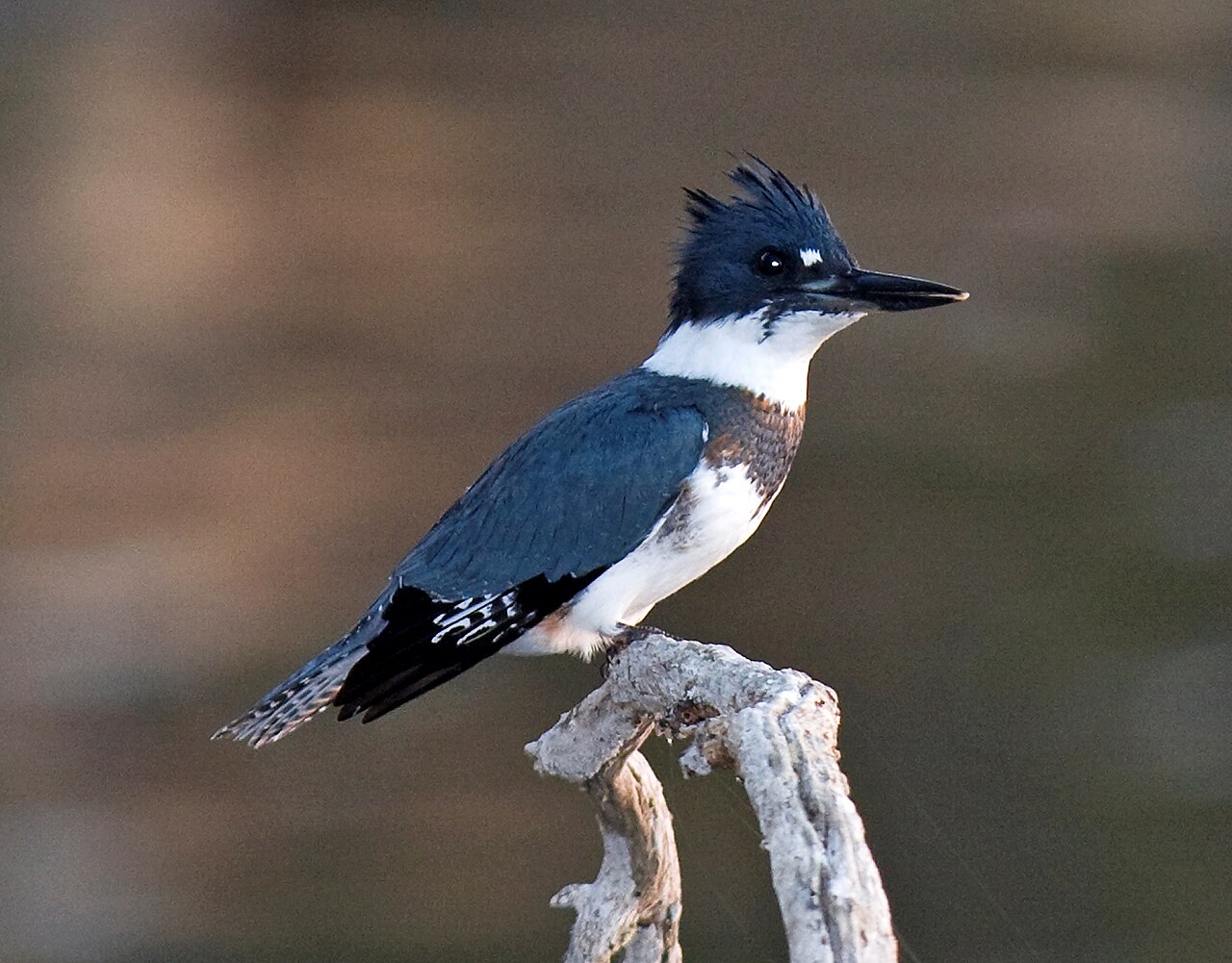
Blue and White Bird: How to Identify What You Saw
A blue and white bird spotted in a US yard is most often a belted kingfisher, a tree swallow, or a blue jay, three species that combine blue tones with white markings in very different patterns. Many people searching for a blue and white bird are also thinking of the indigo bunting, which is solid blue without any white at all.
Habitat is one of the fastest ways to sort between these species. A blue and white bird perched over water is almost certainly a kingfisher, while one gliding low over open fields is more likely a swallow. This guide covers all four species and the questions people typically ask once they spot one.
The most common true blue and white birds in the US are the belted kingfisher, tree swallow, and blue jay. The indigo bunting is often searched alongside them but is actually solid blue with no white. Habitat and behavior are the fastest ways to tell them apart.
| Species | Color Pattern | Habitat | Size | Rarity |
|---|---|---|---|---|
| Belted kingfisher | Blue-gray back, white belly and collar | Near rivers, lakes, ponds | 11 to 14 in | Common but localized to water |
| Tree swallow | Iridescent blue-green back, white belly | Open fields, near water, nest boxes | 5 to 6 in | Common in season |
| Blue jay | Blue, white, and black | Woodlands, suburban yards | 9 to 12 in | Very common |
| Indigo bunting | Solid blue, no white | Brushy fields, forest edges | 4.5 to 5.5 in | Common in summer range |
What Kind of Bird Is Blue and White?
A blue and white bird in the US is most commonly one of three species: the belted kingfisher, the tree swallow, or the blue jay, each combining blue tones with distinct white markings. These three differ enough in size and habitat that a location description alone often narrows the identification significantly.
Many searches for a blue and white bird are actually about the indigo bunting, a small, solid blue songbird with no white markings at all. Its bright, saturated color and popularity as a backyard visitor make it a frequent point of confusion despite the mismatch in pattern.
All four species covered in this guide are common across large parts of their range, so a sighting of any one of them is a routine backyard or waterside event rather than anything unusual.
Belted Kingfisher Identification
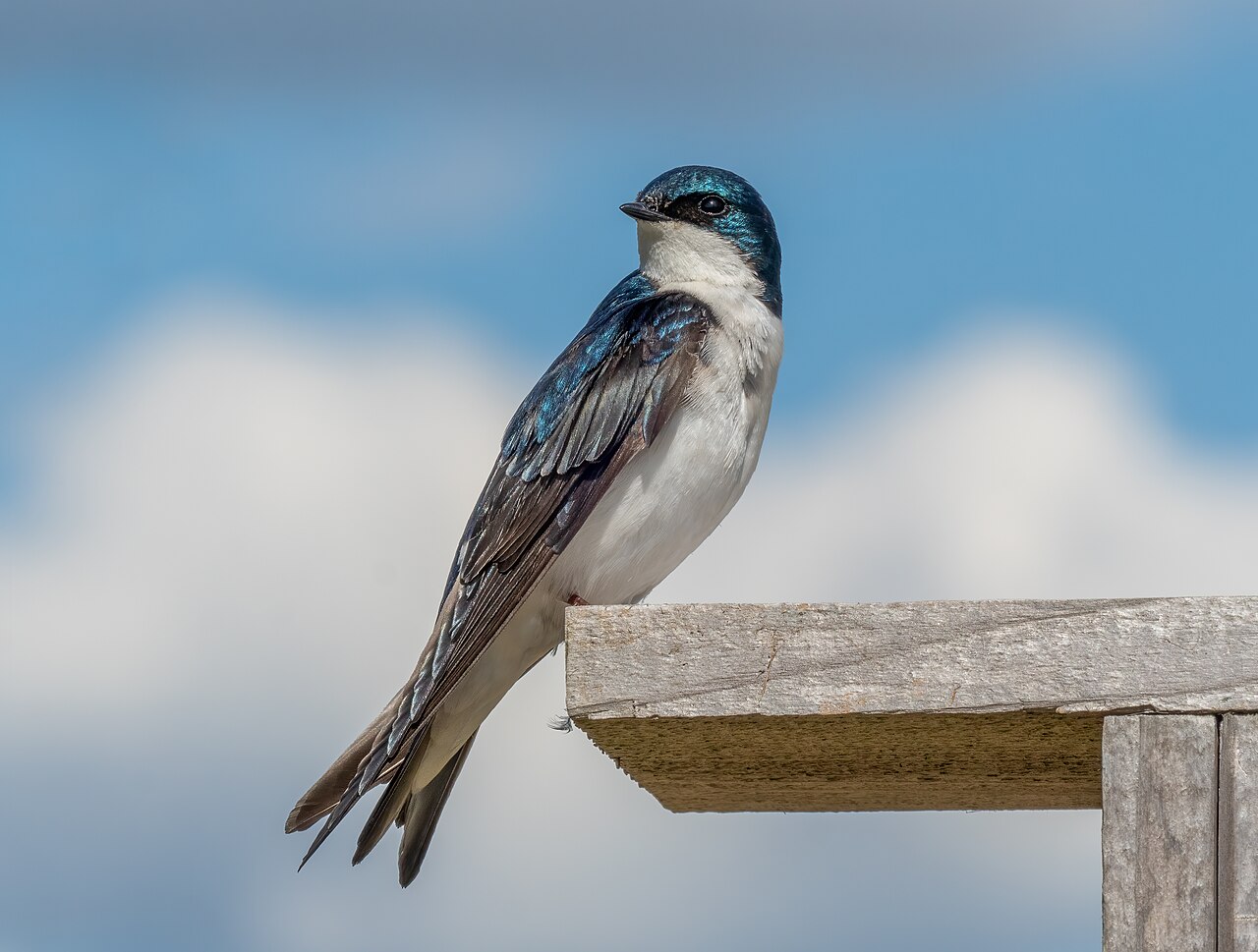
The belted kingfisher has a blue-gray back and head with a shaggy crest, a white collar, and a white belly, making it one of the most recognizable blue and white birds found near water. Females add a rust-colored band across the chest that males lack.
This species is almost always found perched on branches or wires directly over rivers, lakes, and ponds, where it watches for small fish before diving headfirst to catch them. Its loud, rattling call is often heard before the bird itself is spotted.
According to Cornell Lab of Ornithology’s All About Birds, belted kingfishers are found across nearly all of North America near suitable water, making them one of the more widespread water-associated birds on the continent.
Tree Swallow Identification
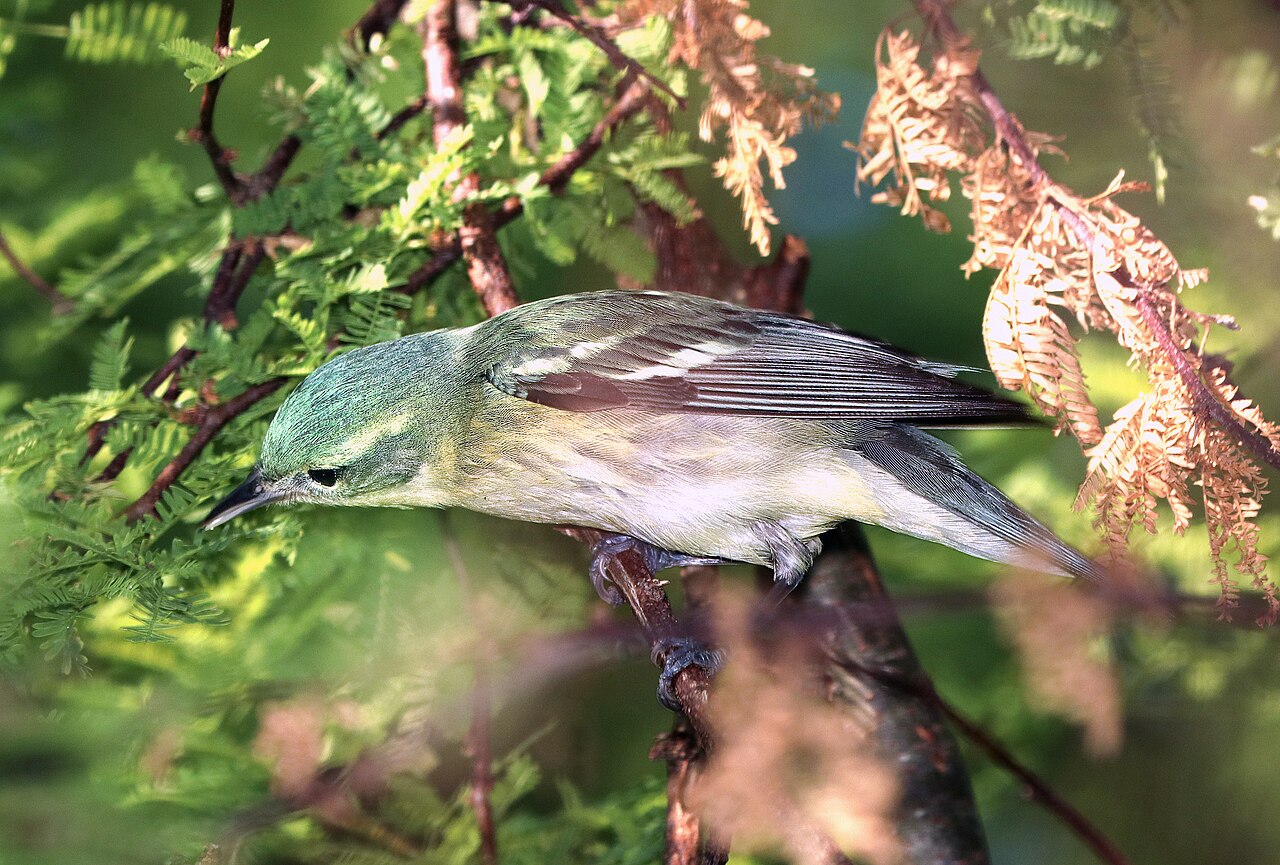
The tree swallow has an iridescent blue-green back that can look deep blue in certain light, paired with a clean white belly and throat. Its streamlined body and pointed wings are built for fast, agile flight.
This species nests in tree cavities and nest boxes near open fields, meadows, and water, and is highly social, often seen in large flocks during migration. It feeds almost entirely on flying insects caught in mid-air.
Tree swallows are one of the earliest migratory songbirds to return in spring, which makes an early-season sighting of a blue and white bird over an open field a strong clue toward this species.
Blue Jay: The Other Common Blue and White Bird
The blue jay combines a bright blue back, white underparts, and bold black markings around the face and wings, making it one of the most familiar blue and white birds in eastern and central US yards. Its prominent crest and loud calls make it hard to miss.
Unlike the kingfisher and swallow, blue jays are habitat generalists found in woodlands, parks, and suburban yards year-round rather than being tied to water or open fields. They are frequent visitors to backyard feeders, particularly for peanuts and sunflower seeds.
Blue jays are also known for mimicking the calls of hawks, which can temporarily clear other birds away from a feeder, a behavior some researchers believe helps jays get uncontested access to food.
Indigo Bunting: Blue but Not White
The indigo bunting is a small songbird that appears entirely deep blue in good light, with no white markings anywhere on its body, despite frequently coming up in searches for blue and white birds. Its blue coloring comes from light refraction in feather structure rather than pigment, which is why the bird can look almost black in shade.
This species favors brushy fields, forest edges, and overgrown areas rather than the water or woodland habitats preferred by the other three species in this guide. Only breeding males show the vivid blue color, while females and non-breeding males are a plain brown.
Its strong association with the word “blue” in casual conversation, combined with its popularity as a backyard sighting, is likely why it appears so often alongside genuinely blue and white species in search results.
Is It Rare to See a Blue Jay?
Blue jays are not rare and are considered one of the most common and widespread backyard birds across the eastern and central United States. Their loud calls and bold behavior at feeders make them one of the more noticeable species in any given yard.
Populations have remained relatively stable over recent decades, and blue jays are present year-round across most of their range rather than being a strictly seasonal visitor. Sightings can vary locally based on nearby oak and hickory trees, since jays rely heavily on acorns and nuts.
A yard without visiting blue jays usually reflects a lack of preferred food sources or cover nearby rather than any regional scarcity of the species itself.
Is It Rare to See an Indigo Bunting?
Indigo buntings are not rare within their breeding range across the eastern and central US, though their brushy field and forest edge habitat means they are less commonly seen in dense urban areas or manicured lawns. They are considered a common summer breeding species where suitable habitat exists.
Because only breeding males display the bright blue color, and females and juveniles are plain brown, casual observers may see the species more often than they realize without recognizing the duller individuals.
Sightings peak during the breeding season from late spring through summer, with the birds migrating south for winter, which is why a bright blue sighting reported in winter is more likely a different species entirely.
What Attracts Indigo Buntings to a Yard?
Indigo buntings are drawn to yards bordering brushy edges, overgrown fields, or a mix of shrubs and open space rather than closely mowed lawns alone. Nyjer and small white millet seed offered in a feeder can attract them during migration and the breeding season.
Native grasses and wildflowers left to grow along a property edge provide both food and cover that this species prefers over a heavily manicured landscape. A brush pile or unmown corner of a yard can make a meaningful difference in attracting them.
Because indigo buntings favor edge habitat over open lawns, yards bordering fields, woodlots, or overgrown areas tend to have far more consistent sightings than yards surrounded entirely by other manicured properties.
Where Do Indigo Buntings Nest?
Indigo buntings build their nests low in dense shrubs or brambles, typically within a few feet of the ground, favoring the same brushy edge habitat where they forage. The nest is a compact cup woven from grasses, bark strips, and leaves.
Females select the nest site and build it alone, usually choosing a spot with dense cover that hides the nest from predators. This preference for low, thick vegetation is another reason the species avoids closely mowed yards.
Nesting typically occurs from late spring through mid-summer, with pairs sometimes raising a second brood if conditions and timing allow.
What Foods Do Indigo Buntings Like?
Indigo buntings eat a mix of small seeds and insects, shifting toward more insects during the breeding season to feed protein-hungry chicks. At feeders, they favor small seeds such as nyjer and white millet over larger sunflower seeds.
During migration and late summer, this species also feeds heavily on seeds from grasses and weedy plants along field edges, which is part of why brushy, unmanicured areas attract them so reliably. Insects such as caterpillars, beetles, and grasshoppers make up a significant part of the summer diet.
Offering a mix of small seed alongside naturally growing native plants gives this species both a direct food source and access to the insects it also relies on.
What Does It Mean When You See a Blue and White Bird?
Various folk traditions associate blue birds broadly with happiness, hope, or good news, an idea reflected in phrases like the bluebird of happiness found across several cultures. These interpretations are cultural rather than based on the specific species involved.
Biologically, a sighting simply reflects the presence of suitable habitat and food nearby, whether that is open water for a kingfisher, insect-rich air for a swallow, or dense brush for a bunting. The timing of a sighting is driven by migration and breeding schedules rather than any deeper significance.
Whatever symbolic meaning a person attaches to the encounter, it has no bearing on the bird’s actual behavior, which remains guided entirely by its own biology.
Related reading: Blue Bird with Orange Chest.
Frequently Asked Questions
What kind of bird is blue and white?
The most common true blue and white birds in the US are the belted kingfisher, tree swallow, and blue jay. The indigo bunting is often searched alongside them but is solid blue with no white.
What does it mean when you see a blue and white bird?
Various folk traditions associate blue birds with happiness or good news, though this is a cultural interpretation rather than a fact about the bird itself.
Is it rare to see a Jay?
No, blue jays are common and widespread across the eastern and central United States, and are frequent visitors to backyard feeders.
Is it rare to see an indigo bunting?
No, they are common within their breeding range wherever suitable brushy or edge habitat exists, though they are less common in closely mowed urban lawns.
What attracts indigo buntings to your yard?
Brushy edges, native grasses, and small seed such as nyjer or white millet attract indigo buntings more reliably than a closely mowed lawn alone.
Why should you sprinkle coffee grounds around your bird feeder?
Coffee grounds are sometimes used as a mild deterrent for ants and certain crawling pests near a feeder base, though they have no meaningful effect on the birds themselves. Keeping the feeder area clean of spilled seed is generally more effective for pest control than coffee grounds alone.
Related reading: blue birds, blue bird meaning, black and white birds, colorful birds, what birds eat, and why your feeder isn’t attracting birds.