Cardinal Nest: Building, Eggs & Lifecycle
Cardinal nests are open cups of twigs, bark strips, and grasses built by the female in dense shrubs or vine tangles, usually three to ten feet off the ground. She lays two to five pale eggs speckled with brown, incubates them for about twelve days, and the young leave the nest just nine to eleven days after hatching. Cardinals rarely reuse a nest and often raise two or three broods in a single season. Knowing what a cardinal nest looks like, and where they choose to build, helps you protect an active nest and enjoy watching the whole family without disturbing them.
| Detail | Cardinal Nest |
|---|---|
| Builder | Female (male brings some material) |
| Location | Dense shrubs and vines, 3 to 10 ft high |
| Materials | Twigs, bark strips, grass, rootlets, leaves |
| Shape | Open cup, roughly four layers |
| Eggs | 2 to 5, pale gray-green with brown speckles |
| Incubation | 11 to 13 days |
| Broods per year | 2 to 3 |
What Does a Cardinal Nest Look Like?
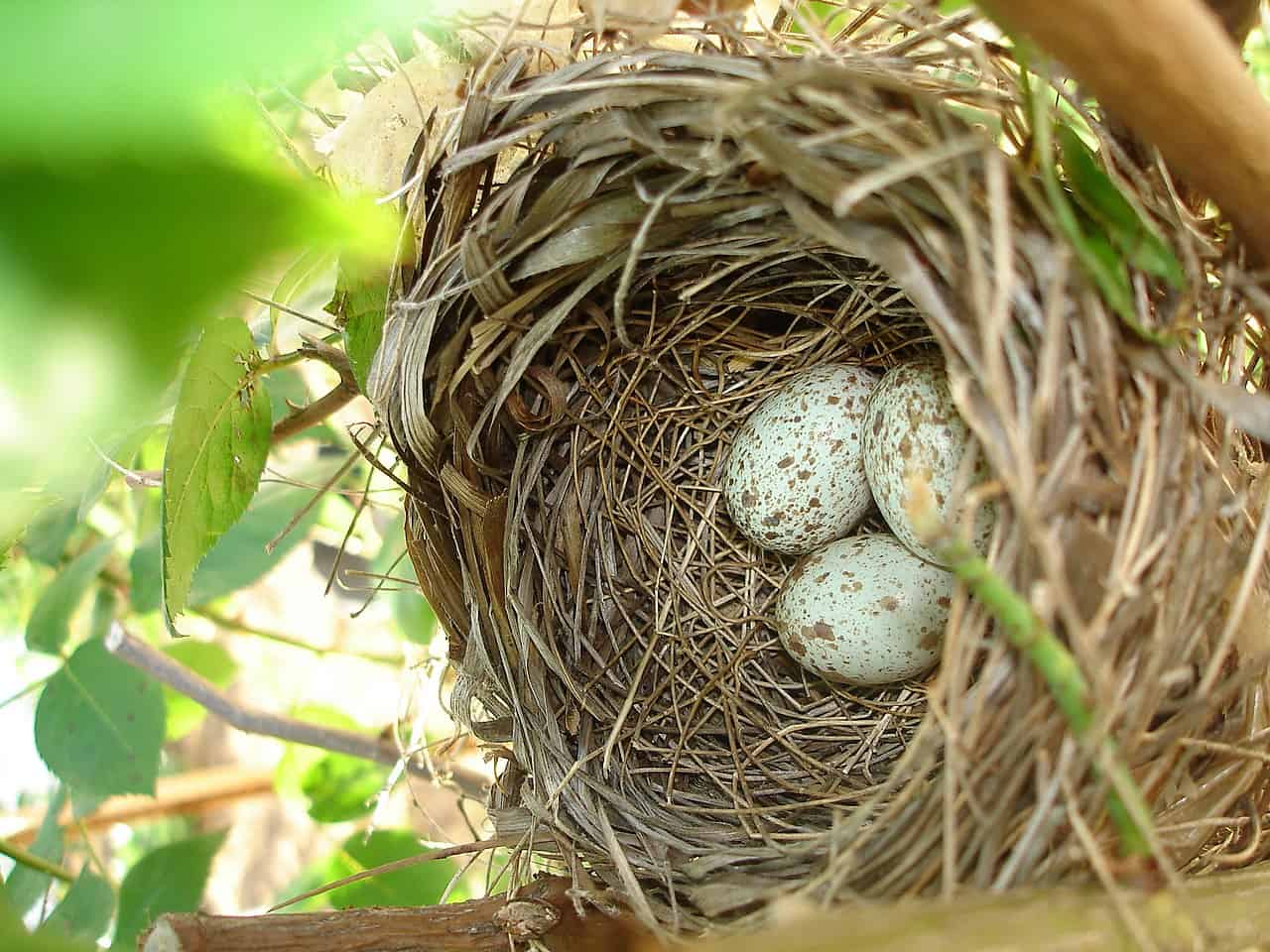
A cardinal nest is a fairly loose, open cup with a surprisingly intricate four-layer construction. The female starts with a base of coarse twigs, adds a layer of leafy material and bark strips, lines that with softer grasses and rootlets, and finishes with a lining of fine grass or hair. The result is a cup roughly two to three inches across on the inside, sturdy enough to hold a growing brood but light enough to tuck into flimsy outer branches. Cardinals hide their nests in the densest cover they can find, thick shrubs, brambles, hedges, or tangles of vine and climbing rose, usually between three and ten feet off the ground, where foliage screens both the nest and the incubating female cardinal.
Because the nest is built low and buried in heavy cover, you often notice it only when a bird flushes out of a bush as you pass. If you do find one, admire it from a distance and avoid pushing aside the surrounding branches, since opening up the cover can expose the nest to predators and prompt the parents to abandon it.
Cardinal Eggs: Appearance and Timeline
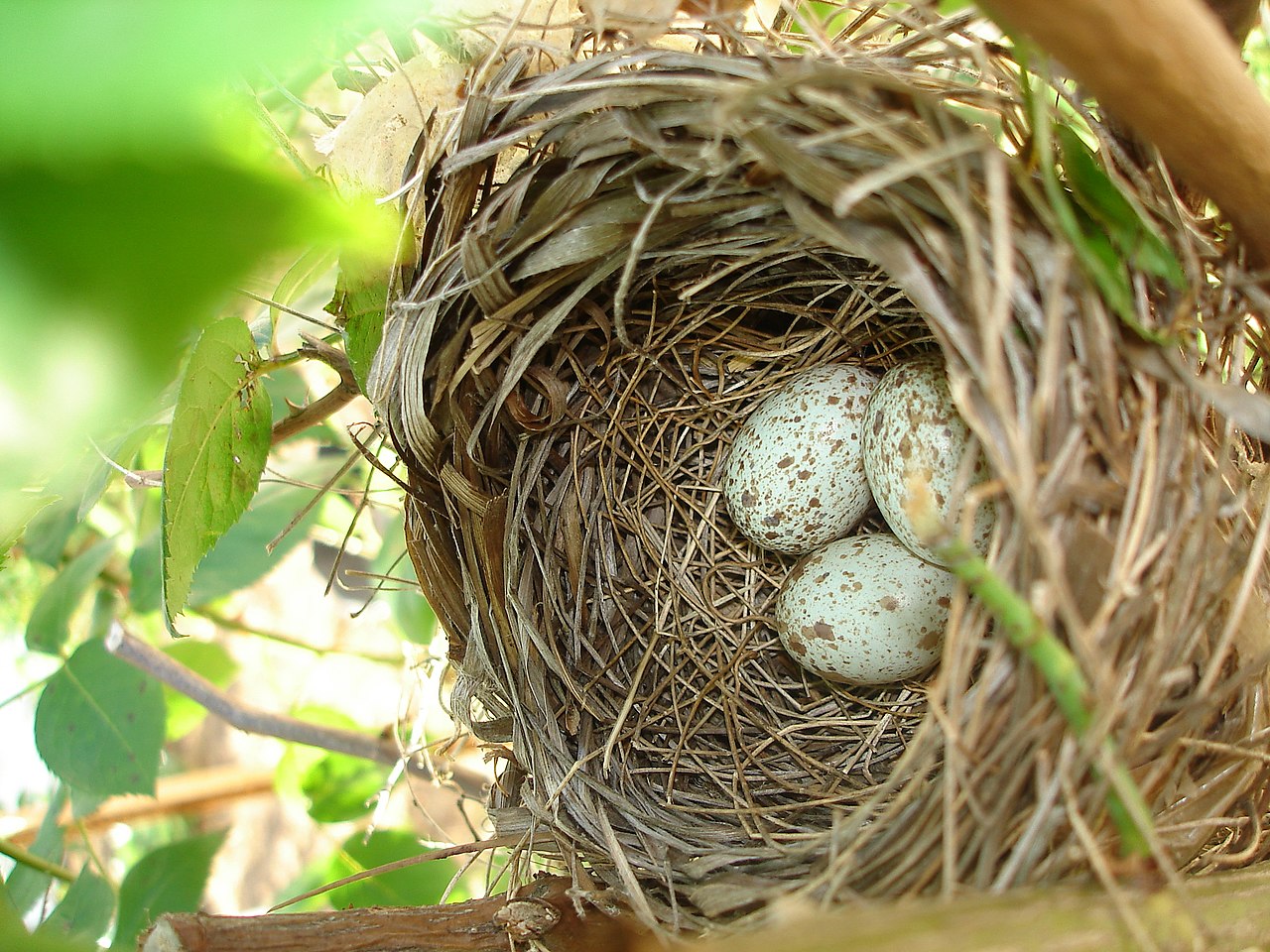
A typical clutch is three to four eggs, occasionally as few as two or as many as five. The eggs are pale grayish-white or greenish-white, heavily speckled and blotched with brown, gray, and lavender, especially concentrated toward the larger end. The female does nearly all of the incubating for eleven to thirteen days while the male brings her food, a courtship-feeding behavior that continues from before laying right through incubation. Once the chicks hatch, both parents switch to feeding them a protein-rich diet of insects around the clock. You can see exactly what the hatchlings look like, and how they change day by day, in our baby cardinal guide.
The Cardinal Nesting Cycle, Step by Step
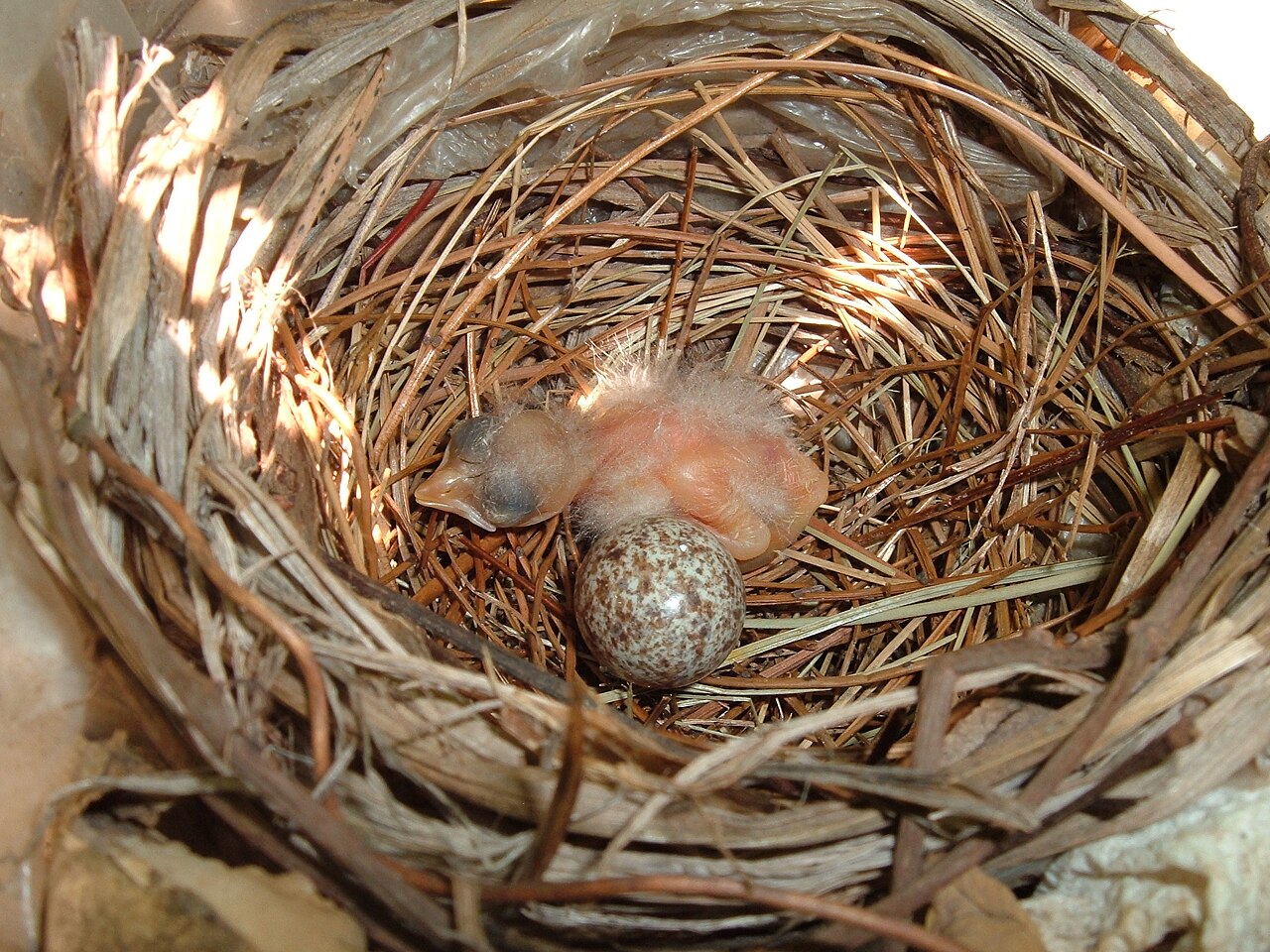
The breeding season runs from early spring into late summer across most of the range, and the sequence is remarkably consistent. After a pair forms, the female builds the nest over roughly three to nine days while the male brings some material and guards her. She then lays one egg per day until the clutch is complete and begins steady incubation. The eggs hatch after about twelve days, and the nestlings grow with astonishing speed, fueled by a constant stream of insect deliveries from both parents.
In just nine to eleven days the young fledge, often before they can fly well, and scatter into nearby cover. The male then takes over feeding these fledglings for another two to three weeks while the female frequently starts a second nest, and this overlap is how cardinals squeeze two or three broods into one season. Supporting the adults with the right food matters most during this demanding period, so our guide to what cardinals eat and our bird seed guide explain exactly what to offer a busy nesting pair.
Where Do Cardinals Build Their Nests?
Cardinals are shrub nesters, not cavity nesters, which shapes everything about where they choose to build. They favor dense, twiggy vegetation between about three and ten feet up: think thick hedges, dogwood and hawthorn thickets, honeysuckle and grape tangles, brambles, and ornamental shrubs with plenty of interior branching. The key ingredient is concealment, a site where leaves and twigs hide the nest from hawks, jays, and climbing predators. This preference is also why cardinals will not use an enclosed birdhouse no matter how inviting it looks.
If you want to encourage nesting, the most effective step is planting or preserving dense native shrubs rather than putting up boxes. Our bird houses guide explains which birds do and do not use enclosed nest boxes and why cardinals fall firmly in the “open shrub” camp.
How Long Does It Take a Cardinal to Build a Nest?
Nest construction is surprisingly quick given the intricate result. The female usually completes the four-layered cup in about three to nine days, working mostly in the morning and gathering material from the immediate area. She crushes twigs in her beak to make them bend, then turns her body against the growing cup to shape the interior to her own size, which is why finished cardinal nests fit their owner so snugly.
Material choice follows whatever is close at hand, which is why suburban cardinal nests often include odd bits alongside the usual twigs and grass, small scraps of plastic, string, or paper sometimes turn up woven into the structure. If you want to help without interfering, leaving natural material available nearby, fine twigs, dead grass, and thin bark strips, gives nesting birds clean options. Avoid offering dryer lint or long strands of human hair or string, which can tangle around delicate legs. For more on supporting nesters safely, see our bird houses guide.
Do Male Cardinals Help With the Nest?
The male’s role is real but specialized, and understanding it explains a lot of the behavior you see in the yard. He does not typically build the nest or incubate, that is almost entirely the female’s job, but he is far from idle. Throughout building and incubation he guards the territory, sings from prominent perches to warn off rivals, and feeds the female directly so she can stay on the eggs. According to the Cornell Lab of Ornithology, this courtship feeding continues well into incubation, and the male’s steady food deliveries are what make the female’s near-constant sitting possible.
Once the chicks hatch, the male steps up dramatically. Both parents feed the nestlings, and after the young fledge, the male often takes primary responsibility for feeding the first brood while the female begins a second nest. That hand-off is the engine behind the cardinal’s two-to-three-brood season, and it is why you will sometimes see a bright red male shepherding several begging brown youngsters around the yard in midsummer.
How to Attract Nesting Cardinals
The recipe for hosting a cardinal pair is dense cover plus reliable food and water. Plant thick native shrubs, let some corners of the yard grow a little wild, and you provide exactly the tangled, protected sites cardinals seek out. Keep feeders stocked with black oil sunflower seed, add a birdbath or other water source, and avoid pruning shrubs during the nesting months when a hidden nest could be inside. Keeping cats indoors matters more here than almost anywhere, because ground-level predators are the single biggest threat to low cardinal nests. Our full guide on how to attract birds to your yard walks through the specific plantings, feeder placement, and water features that make a yard genuinely cardinal-friendly.
Related reading: Cardinal Symbolism.
Frequently Asked Questions
What does a cardinal nest look like?
A cardinal nest is an open cup of twigs, bark strips, and grasses, about two to three inches across inside, tucked into dense shrubs or vines three to ten feet off the ground.
How many eggs do cardinals lay?
Cardinals typically lay two to five eggs per clutch, most often three or four. The eggs are pale gray-green with brown speckles.
How long do cardinal eggs take to hatch?
The female incubates the eggs for about eleven to thirteen days before they hatch.
Do cardinals reuse their nests?
No. Cardinals rarely reuse a nest and usually build a fresh one for each brood, often raising two or three broods per season.
Where do cardinals build their nests?
They choose dense cover, thick shrubs, hedges, brambles, or vine tangles, typically three to ten feet above the ground where foliage hides the nest.
Do cardinals use birdhouses?
No. Cardinals are shrub nesters, not cavity nesters, so they will not use enclosed birdhouses. Dense plantings attract them to nest far better than boxes.
How many broods do cardinals raise per year?
Cardinals usually raise two or three broods per season, with the male tending fledglings while the female starts the next nest.
Do male cardinals help with the nest?
Males rarely build or incubate but they guard the territory, feed the female on the eggs, and help feed the chicks. After fledging, the male often tends the first brood while the female starts a second nest.